Fasil Ghebbi
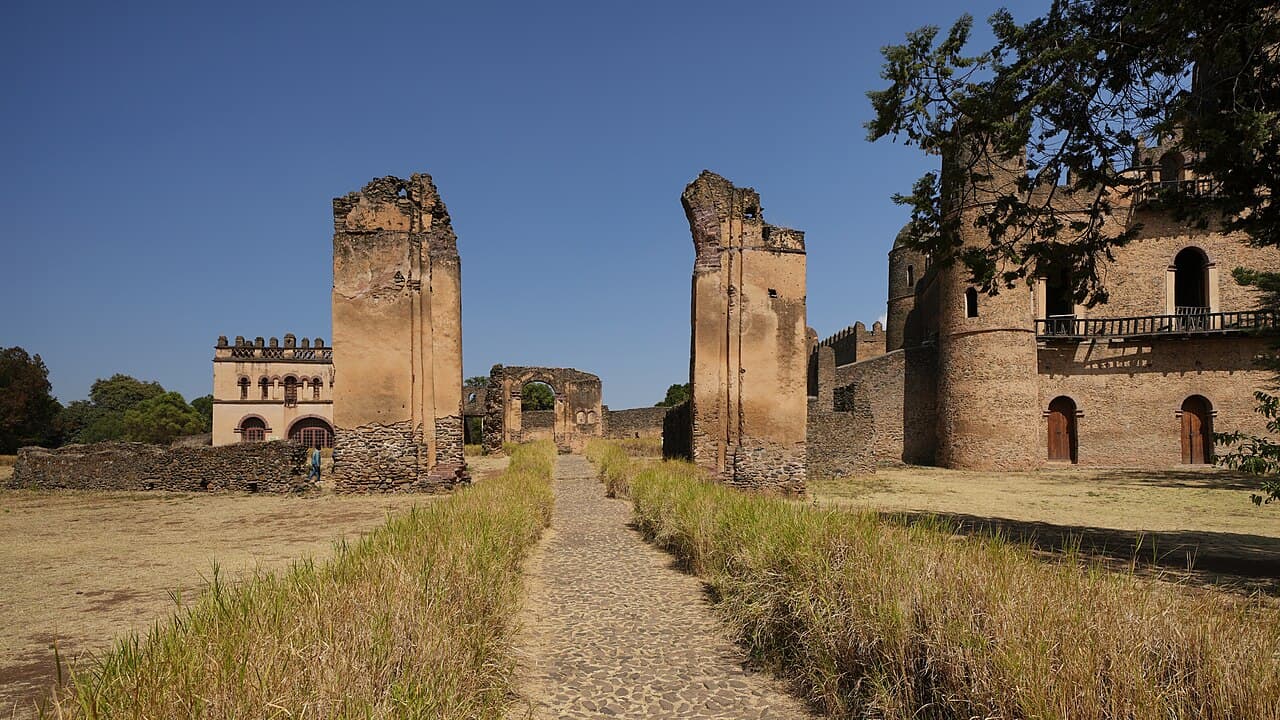
Fasil Ghebbi, also known as the Royal Enclosure, stands as a remarkable fortress city in Gondar, located in the Amhara Region of Ethiopia. Founded in 1636 by Emperor Fasilidas of the Solomonic Dynasty, it represents a pivotal moment in Ethiopian history as the first permanent capital established by an Ethiopian ruler. Prior to this, Ethiopian monarchs led a nomadic lifestyle, moving frequently with their courts in tents. The establishment of Fasil Ghebbi marked the beginning of a new era of settled governance and architectural grandeur in Ethiopia.
The fortress city served as the Ethiopian capital until approximately 1855, during which time it expanded significantly. According to Ethiopian tradition, each successive emperor was required to build his own palace rather than reside in that of his predecessor, which contributed to the growth of the complex. This tradition resulted in a sprawling architectural ensemble that included palaces, churches, libraries, gardens, and various functional buildings enclosed within fortified walls.
Legend and location
Fasil Ghebbi is surrounded by intriguing legends that contribute to its cultural significance. One popular legend claims that an archangel prophesied the Ethiopian capital would thrive in a place beginning with the letter "G." Earlier attempts to establish the capital in cities like Guzara and Gorgora did not fulfill this prophecy until Gondar was chosen. Another tale recounts that Emperor Fasilidas was led by a buffalo during a hunt to the site of Gondar, which then became the chosen location for the capital. Situated at an altitude of over 2,000 meters, near Lake Tana and flanked by two mountain streams, Gondar was destined to be the historical and cultural heart of Ethiopia.
Architectural features and construction
The construction of Fasil Ghebbi began in 1636, quickly becoming a marvel admired by travelers of the era for its vitality and imposing presence. The complex is surrounded by a circular stone wall approximately 900 meters in circumference, fortified with 12 towers that provide defensive strength. The walls are crenellated, a feature reminiscent of medieval European castles, yet the design incorporates distinct Ethiopian architectural elements.
The centerpiece of the complex is the palace of Emperor Fasilidas, completed around 1640. This building is notable for its two-story structure, a novel feature in Ethiopian architecture at the time. Its massive stone walls, rounded towers, and battlements evoke the style of a European fortress while blending with local construction techniques and materials.
Within the enclosure, the complex included not only royal residences but also churches, libraries, gardens, a banquet hall, a complex of swimming pools, stables, and other auxiliary buildings, reflecting the multifaceted life of the imperial court. The layout and scale of Fasil Ghebbi illustrate the ambition of the Solomonic emperors to create a capital that symbolized their power and divine right to rule.
Developments under successive emperors
Each emperor who succeeded Fasilidas contributed to the expansion and embellishment of the fortress city. Notably, Emperor Iyasu I the Great, the grandson of Fasilidas, is remembered for his exceptional patronage of architecture and the arts. His palace, though now in ruins, was famed for its elegance and sophistication. Contemporary chronicles describe interiors adorned with ivory carvings, mirrors, paintings, and ceilings covered in gold leaf and precious stones, highlighting the wealth and cultural refinement of his reign.
Unfortunately, Iyasu's reign ended tragically; after the death of his beloved concubine, he fell into depression and was eventually killed by his son. The subsequent rulers of Gondar faced similar fates, including assassination and forced deposition, reflecting a turbulent period in Ethiopian history. In 1704, a powerful earthquake damaged several buildings in the complex, further challenging the preservation of its grandeur.
Peace was restored during the reign of Emperor Bakaffa in 1721, who commissioned new buildings within Fasil Ghebbi, including palaces for himself and his wife, Empress Mentewab. These additions continued the tradition of architectural innovation and royal patronage within the fortress city.
Later history and preservation
The last emperor of the Solomonic dynasty to contribute to the complex was Iyasu II, who expanded the city with new buildings outside the castle walls. After his death, notable figures such as Axum Mikael-Şuhut rose to prominence, building their own residences near the royal enclosure, reflecting Gondar's continued political and cultural importance.
Despite its significance, Fasil Ghebbi suffered during periods of conflict. In the late 19th century, it was attacked and looted during the Mehdist War by Sudanese forces. The Italian occupation in the 20th century and British air raids during World War II further damaged the site. Post-war conflicts with neighboring countries delayed restoration efforts.
Recognizing its cultural and historical value, UNESCO designated Fasil Ghebbi as a World Heritage Site in 1979. Restoration efforts began in earnest towards the end of the 20th century, spanning over a decade. The site was reopened to the public in 2005 and today stands as one of Ethiopia's most important tourist attractions and a symbol of its rich imperial heritage.
Architectural significance and style
Fasil Ghebbi is a unique example of mixed architectural styles, combining indigenous Ethiopian design with influences from Portuguese, Indian, and Arab architecture. The fortress features robust stone walls, rounded bastions, and crenellated parapets characteristic of defensive structures, while the palaces exhibit intricate woodwork, vaulted ceilings, and decorative motifs.
The complex's design reflects the Solomonic emperors' desire to assert their authority and connect their reign to both local traditions and broader global influences. The presence of churches within the enclosure also underscores the importance of the Ethiopian Orthodox Church in imperial governance and cultural life.
Defensive features
The stone curtain wall encircling Fasil Ghebbi, reinforced by twelve towers, provided formidable defense against external threats. The towers allowed for surveillance and archery defense, while the crenellated walls offered protection for defenders. The fortress's elevated position and natural water barriers further enhanced its security.
Palatial architecture
The palaces within Fasil Ghebbi, including the main palace of Fasilidas and those of his successors, are notable for their multi-story construction, a rarity in Ethiopian architecture. The use of stone and timber, combined with intricate carvings and painted decorations, created spaces that were both functional and aesthetically impressive.
Cultural and historical legacy
Fasil Ghebbi remains a potent symbol of Ethiopia's imperial past and architectural ingenuity. It encapsulates the transition from a nomadic monarchy to a centralized state with a permanent capital. The fortress city embodies centuries of political power, religious significance, and artistic achievement.
As a UNESCO World Heritage Site, Fasil Ghebbi attracts scholars, historians, and tourists alike, offering insights into the Solomonic dynasty's rule and the broader history of the Horn of Africa. Its preservation and continued study contribute to a deeper understanding of Ethiopia's unique cultural heritage and its place in world history.
Frequently asked questions (FAQ)
- What is Fasil Ghebbi?
- Fasil Ghebbi is a UNESCO World Heritage Site located in Gondar, Ethiopia. It is an impressive fortress complex that served as the royal palace for the Ethiopian emperors in the 17th and 18th centuries, showcasing a blend of Ethiopian, Portuguese, and Indian architectural styles.
- When was Fasil Ghebbi built?
- Construction of Fasil Ghebbi began in the late 17th century, with the majority of the complex completed during the reign of Emperor Fasilides. The site features various structures built over several decades, reflecting the historical and cultural evolution of the region.
- What are the opening hours for Fasil Ghebbi?
- Fasil Ghebbi is typically open to visitors from 8:00 AM to 6:00 PM daily. However, it's recommended to check for any seasonal changes or special events that may affect access.
- Can I take guided tours of Fasil Ghebbi?
- Yes, guided tours are available at Fasil Ghebbi, and they are highly recommended to gain deeper insights into the history and architecture of the site. Local guides can provide valuable context and stories that enhance the visiting experience.
- Is it possible to take photographs inside Fasil Ghebbi?
- Photography is generally allowed at Fasil Ghebbi, but visitors should respect any specific rules regarding flash photography or restricted areas. Capturing the stunning architecture and beautiful landscapes is encouraged, so be sure to bring your camera!
- What is the best time to visit Fasil Ghebbi?
- The best time to visit Fasil Ghebbi is during the dry season, which runs from October to April. During this period, the weather is more pleasant, making it ideal for sightseeing and exploring the grounds.
- Are there any nearby attractions to Fasil Ghebbi?
- Yes, there are several nearby attractions, including the Debre Birhan Selassie Church and the Royal Enclosure. These sites offer additional insights into Ethiopia's rich history and culture, making it worthwhile to explore the surrounding area.
- What are the ticket prices for Fasil Ghebbi?
- As of the latest updates, the entrance fee for Fasil Ghebbi is quite affordable and typically ranges from a few Ethiopian Birr for locals to a higher fee for international tourists. It's advisable to check the current pricing upon arrival, as fees may change.
- How do I get to Fasil Ghebbi?
- Fasil Ghebbi is located in Gondar, which is accessible by road from major Ethiopian cities like Addis Ababa. Visitors can choose to travel by bus, hire a taxi, or organize a private tour for convenience and ease of access.

Information
Loading map...
Visitor reviews
No reviews yet. Been here? Write the first review and help other travelers!
Write the first reviewVisited this castle? Share your experience
Your review helps other travelers and adds first-hand knowledge to our encyclopedia.