Palace of Queen Arwa
The Palace of Queen Arwa (Arabic: قَصْر ٱلْمَلِكَة ٱلْحُرَّة, lit. 'Palace of the Noble Queen') stands as a significant historical monument in the town of Jibla, Yemen. This palace was the royal residence of Queen Arwa al-Sulayhi, a prominent ruler of the 11th century CE during the High Medieval period. Queen Arwa was a powerful figure in Yemeni history, known for her political acumen and contributions to architecture and culture. The palace reflects her status and the architectural ambitions of the Sulayhid dynasty.
Historical context and significance
Queen Arwa al-Sulayhi ruled Yemen from 1067 to 1138 CE, a period marked by political consolidation and cultural flourishing under the Sulayhid dynasty. The palace was constructed as a symbol of her authority and the dynasty's power. It served not only as a royal residence but also as an administrative center and a cultural hub. The palace's location in Jibla was strategic, as the town was an important city in the Yemeni highlands, providing both defense and access to trade routes.
Architectural features and layout
The palace complex was extensive, with historical records and archaeological surveys indicating it originally contained 365 rooms, symbolizing perhaps a room for each day of the year. This vast number of chambers included residential quarters, administrative offices, reception halls, and service areas. The layout was likely designed to accommodate a large court and the various functions of governance and daily life.
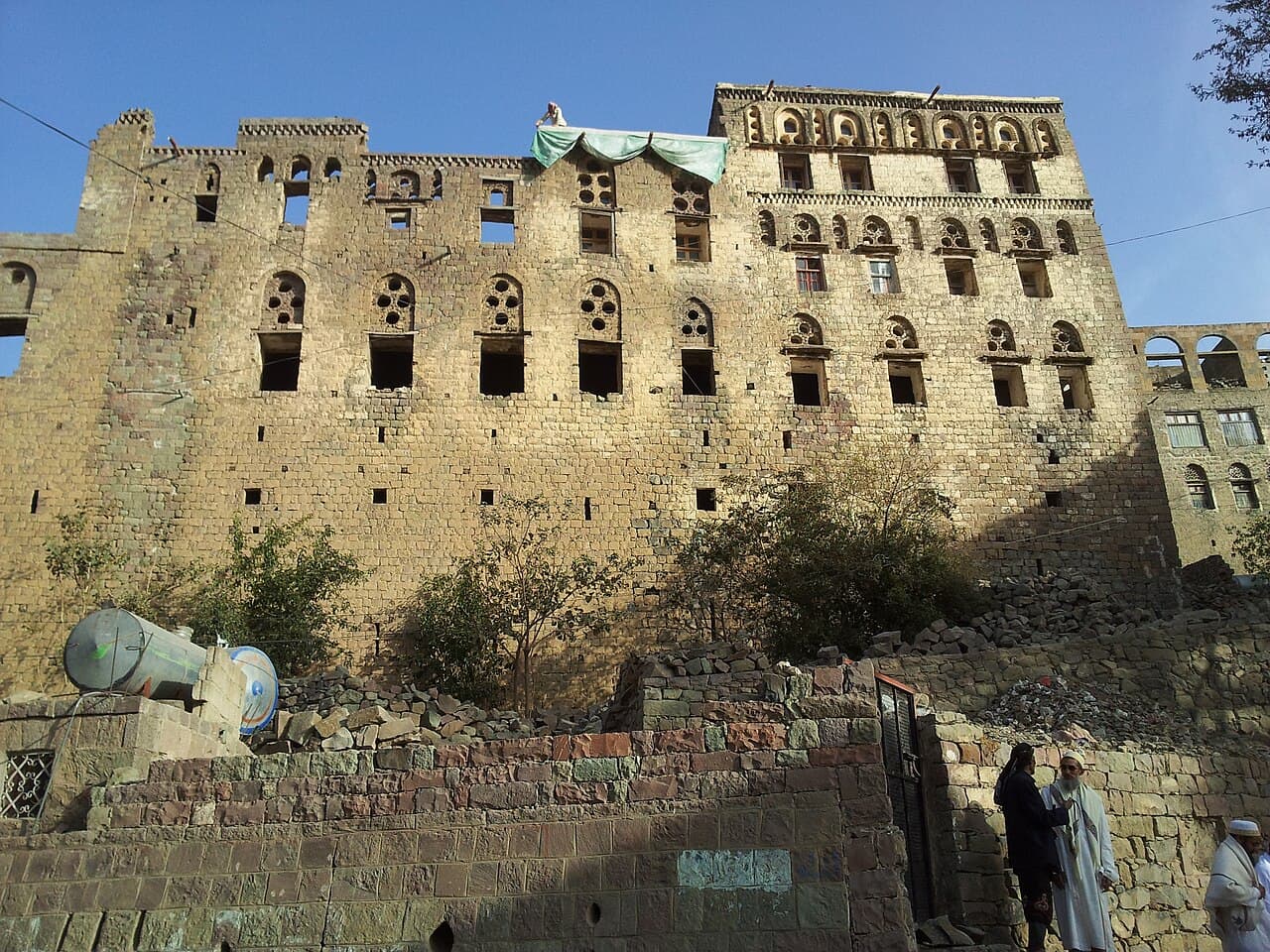
Although now in a ruined state, the remnants of the palace reveal elements typical of Islamic architecture from the High Medieval period. The use of stone masonry, intricate decorative motifs, and the spatial organization reflect the architectural styles prevalent in Yemen during the Sulayhid era. The palace would have featured fortified walls, towers, and possibly gardens or courtyards, although much of this is subject to ongoing archaeological research.
Construction techniques and materials
The palace was primarily constructed using local stone and mortar, materials that provided durability in the Yemeni climate. The craftsmanship included detailed stone carving and stucco work, which were common in Islamic architecture of the time. The design balanced defensive needs with aesthetic considerations, incorporating both functional and ornamental features.
Current condition and conservation efforts
Today, the Palace of Queen Arwa exists largely as archaeological ruins. Many of the walls and structures have collapsed or deteriorated due to centuries of exposure and lack of continuous maintenance. However, the site remains a valuable cultural heritage landmark in Yemen.
Efforts by the Yemeni Ministry of Culture and the General Organization for the Preservation of Historic Cities aim to protect and restore parts of the palace. These initiatives seek to stabilize the ruins, prevent further decay, and possibly reconstruct some architectural elements to provide insight into the palace's original grandeur. The site has also been submitted to UNESCO for recognition, highlighting its importance as a historical and architectural treasure.
Architectural and cultural legacy
The palace is a testament to the Sulayhid dynasty's architectural innovation and the prominent role of Queen Arwa in Yemeni history. Its scale and complexity demonstrate the sophistication of medieval Islamic architecture in Yemen. The palace influenced later architectural developments in the region and remains a symbol of female leadership and cultural achievement in Islamic history.
Visitors and scholars interested in medieval Islamic architecture and Yemeni history regard the palace as a crucial site for understanding the social, political, and cultural dynamics of the 11th century Arabian Peninsula.
Frequently asked questions (FAQ)
- How do I get to the Palace of Queen Arwa?
- The Palace of Queen Arwa is located in Jibla, Yemen, and can be accessed by car or local transport from major cities like Sana'a. It's advisable to hire a local guide who can provide insights and enhance your experience while navigating the area.
- What is the historical significance of the Palace of Queen Arwa?
- The Palace of Queen Arwa is an important historical site, known for its association with Queen Arwa bint Ahmed al-Sulayhi, who ruled Yemen in the 11th century. It serves as a testament to the architectural and cultural achievements of the Sulayhid dynasty, showcasing the region's rich history.
- When was the Palace of Queen Arwa built?
- The Palace of Queen Arwa was constructed during the 11th century, specifically around the time Queen Arwa ascended to power in 1067 AD. Its construction reflects the architectural styles and techniques of that era, making it a valuable historical artifact.
- Can I take photographs inside the Palace of Queen Arwa?
- Yes, visitors are generally allowed to take photographs of the exterior and certain areas of the Palace of Queen Arwa. However, it is essential to respect any signs or guidelines regarding photography, especially in sacred spaces or areas with restrictions.
- Why is the Palace of Queen Arwa considered an architectural marvel?
- The Palace of Queen Arwa is considered an architectural marvel due to its intricate designs, ornate decorations, and the use of traditional Yemeni architectural techniques. Its layout and construction methods reflect the advanced engineering skills of the time, making it a unique example of historical architecture.
- Is it possible to explore the Palace of Queen Arwa on my own?
- While it is possible to explore the Palace of Queen Arwa independently, hiring a local guide is recommended for a richer experience. Guides can provide detailed historical context and help you navigate the various sections of the palace.
- What are the opening hours of the Palace of Queen Arwa?
- The Palace of Queen Arwa typically opens to visitors from 9 AM to 5 PM, although hours may vary seasonally or during holidays. It's advisable to check ahead for any changes in operating hours before planning your visit.
- What are the ticket prices for visiting the Palace of Queen Arwa?
- The ticket prices for visiting the Palace of Queen Arwa are generally quite affordable, with discounts available for students and children. It's recommended to check the latest prices online or at the entrance, as they may vary depending on the season or special events.
- What is the best time to visit the Palace of Queen Arwa?
- The best time to visit the Palace of Queen Arwa is during the fall and spring months when the weather is mild and pleasant. Avoiding the peak summer heat will enhance your experience as you explore the grounds and surrounding areas.
- Are there any nearby attractions to visit after the Palace of Queen Arwa?
- Yes, after visiting the Palace of Queen Arwa, you can explore nearby attractions such as the historic town of Jibla and other ancient sites in the region. The beautiful mountainous landscape also offers opportunities for hiking and enjoying local scenery.
Photo gallery

Information
Loading map...
Visitor reviews
No reviews yet. Been here? Write the first review and help other travelers!
Write the first reviewVisited this castle? Share your experience
Your review helps other travelers and adds first-hand knowledge to our encyclopedia.