Fårösund Fortress
Fårösund Fortress is a bastioned fortress located in Fårösund on the island of Gotland, Sweden. Constructed between 1885 and 1886, it represents Sweden's strategic response to geopolitical tensions following the Crimean War (1854–1856). The war exposed vulnerabilities in Sweden's coastal defenses, prompting the British and French to encourage Sweden to fortify key naval inlets, including the one at Fårösund, to maintain Swedish neutrality and protect the Baltic Sea approaches.
Strategic importance and historical context
The location of Fårösund Fortress was chosen for its control over the narrow strait between Gotland and the smaller island of Fårö, a critical maritime passage. The fortress was part of a broader effort to modernize Sweden's coastal defenses in the late 19th century, reflecting advances in military technology and shifting naval tactics. Its construction was a direct result of international pressure and the recognition that Sweden needed to secure its maritime borders against potential incursions.
Architectural design and fortifications
Fårösund Fortress was designed as a bastioned fortress, a style characterized by angular bastions projecting from the main walls to provide overlapping fields of fire and minimize blind spots. The fortress comprised three fixed artillery batteries equipped with naval guns and was supplemented by naval mines in the surrounding waters to deter enemy ships. The design emphasized both static defense and the ability to control naval traffic through the strait.
Armament and upgrades
Initially, the fortress housed traditional artillery suitable for the period, but by the turn of the 20th century, it underwent significant modernization. Batteries I and II were upgraded with quick-firing 57 mm guns, four per battery, enhancing the fortress's ability to respond rapidly to fast-moving naval threats. These upgrades reflected the evolution of artillery technology and the increased importance of rapid-fire capabilities in coastal defense.
Decommissioning and subsequent uses
In 1919, following changes in military strategy and the reduced threat level after World War I, the fortress was officially decommissioned. All military equipment was removed, marking the end of its role as an active defense installation. Subsequently, the site was repurposed by the Swedish Prison and Probation Service, which established a penitential center within the fortress. This use was part of a plan to house socially dangerous offenders, contingent on legislative developments.
Current status and cultural significance
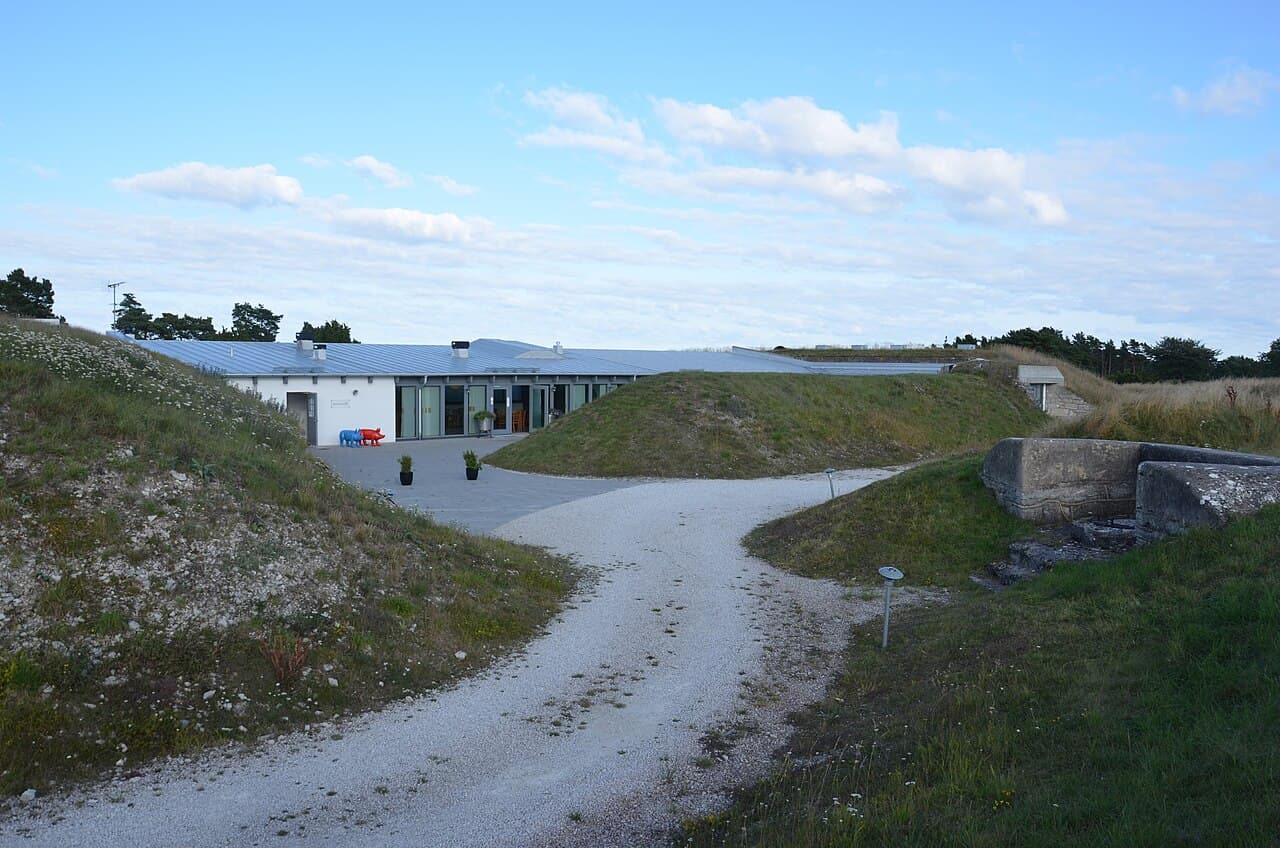
Today, Fårösund Fortress has been transformed into a hotel and restaurant, preserving much of its historic structure while adapting it for tourism and hospitality. The fortress stands as a tangible reminder of Sweden's military history and coastal defense strategies during the modern period. Its well-preserved bastions and batteries offer visitors insight into late 19th-century fortification design and the geopolitical concerns of the era.
Visitor experience
Guests at the fortress can explore the robust bastioned walls and the remains of the artillery batteries, gaining an understanding of the strategic importance of the site. The conversion into a hotel allows for immersive experiences within the historic setting, combining cultural heritage with modern amenities. The fortress's location on Gotland also makes it a gateway for exploring the broader maritime history of the Baltic Sea region.
Frequently asked questions (FAQ)
- When was Fårösund Fortress built and why?
- Fårösund Fortress was constructed between 1885 and 1886 to strengthen Sweden's coastal defenses after the Crimean War exposed vulnerabilities in its neutrality protection.
- What type of fortress is Fårösund and what are its key architectural features?
- Fårösund is a bastioned fortress featuring angular bastions designed to provide overlapping artillery fire, with three fixed batteries and naval mines for coastal defense.
- What happened to Fårösund Fortress after it was decommissioned?
- The fortress was decommissioned in 1919, after which it was taken over by the Swedish Prison and Probation Service and later converted into a hotel and restaurant.
- Can visitors stay at Fårösund Fortress today?
- Yes, the fortress has been converted into a hotel and restaurant, allowing visitors to experience the historic site with modern amenities.
- Where is Fårösund Fortress located?
- The fortress is located in Fårösund on the island of Gotland, Sweden, controlling a strategic maritime passage between Gotland and Fårö.
Photo gallery

Information
Sources & official resources
Verify the information above using these authoritative references.
Loading map...
Visitor reviews
No reviews yet. Been here? Write the first review and help other travelers!
Write the first reviewVisited this castle? Share your experience
Your review helps other travelers and adds first-hand knowledge to our encyclopedia.