Falkenštejn Castle
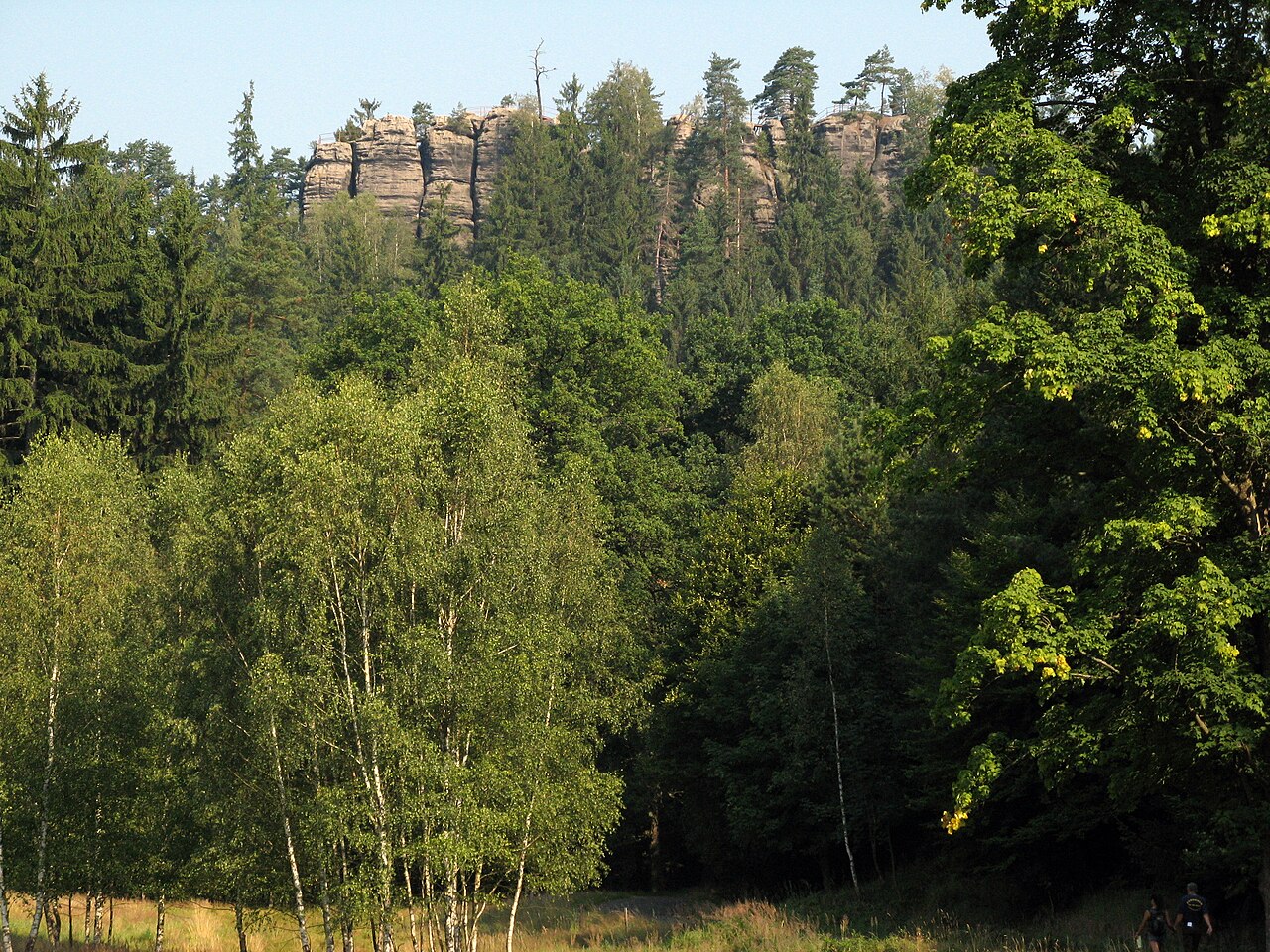
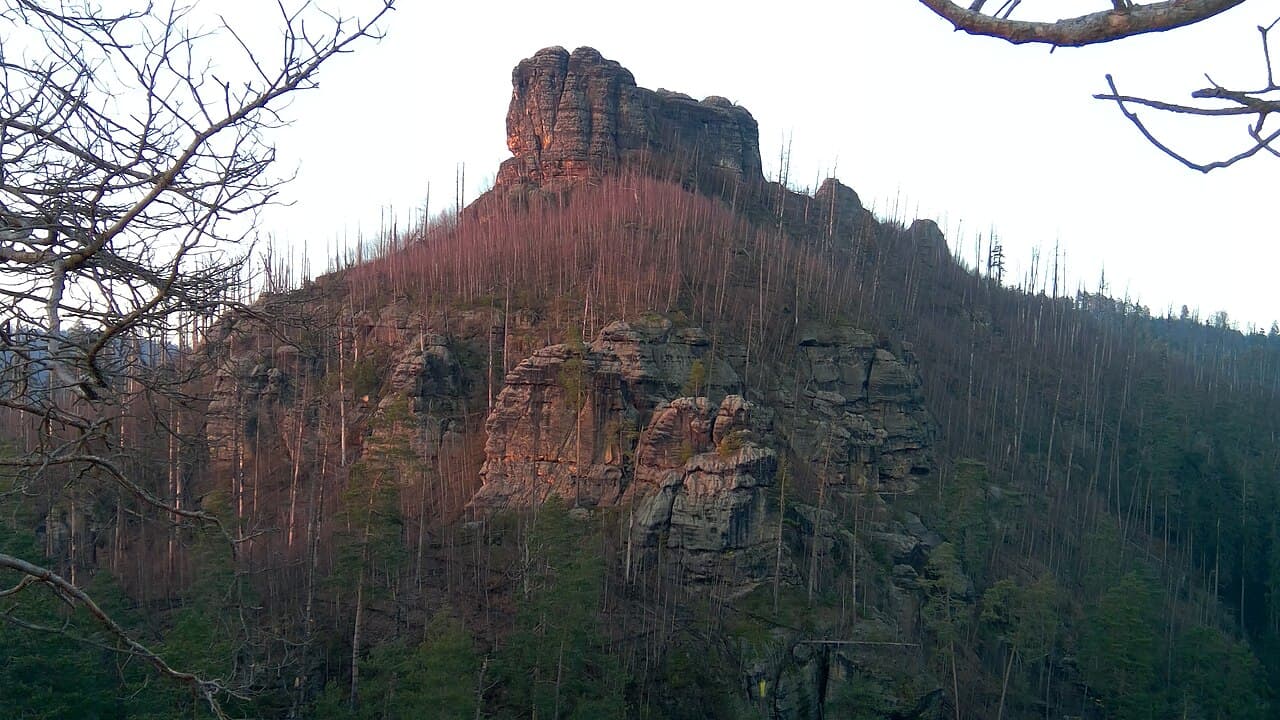
Falkenštejn Castle stands as a remarkable example of a medieval hill castle uniquely integrated into a natural sandstone rock formation near the municipality of Jetřichovice in Czechia. Constructed toward the end of the 13th century, this fortress reflects the strategic and architectural ingenuity of the Bohemian medieval period, serving both defensive and territorial purposes amid the region's complex feudal landscape.
Historical background and ownership
The castle's origins are closely tied to the expansion of noble families in Bohemia during the high medieval period. Initially, Falkenštejn was part of the estates of the Michalovic family in the 12th and 13th centuries, a prominent local dynasty. The first documented reference to the castle dates to 1395, naming Nice Hokacker as its governor under Jan III of Michalovic. This record attests to the castle's role as a feudal stronghold and administrative center.
In 1406, ownership transferred to the Berka of Dubá family, another influential noble lineage. During the turbulent years of the Hussite Wars in the early 15th century, members of this family, notably Jan and Jindřich Berka, are documented to have used Falkenštejn as a base for raiding expeditions into Lusatia, reflecting the castle's strategic military significance and the period's widespread conflict.
By 1428, the castle came under the control of Zikmund Děčínský of Vartenberk. Although the Vartenberk family did not reside permanently at Falkenštejn, they maintained a military garrison there throughout the Hussite conflicts. The castle became notorious as a refuge for robber knights, who launched plundering raids in the surrounding regions. Recorded attacks in 1427 and 1430 highlight its role in regional instability, with such activities possibly continuing until around 1444.
In a decisive military action, the castle was besieged and destroyed in 1444 by the forces of the Upper Lusatian Six-City League, a coalition formed to maintain regional security and order. After this destruction, Falkenštejn was abandoned and gradually fell into ruin. The last historical mentions of the castle appear in documents from 1457 and 1460, marking the end of its active historical role.
Architectural features and layout
Falkenštejn Castle exemplifies the adaptation of medieval fortification techniques to a challenging natural environment. The castle is classified as a hill castle, perched atop a prominent sandstone rock outcrop, which provided natural defensive advantages. The layout is characterized by a fortified outer bailey situated below the summit, protected by an earth rampart and a surrounding ditch. These earthworks would have served to slow and expose attackers, enhancing the castle's defensibility.
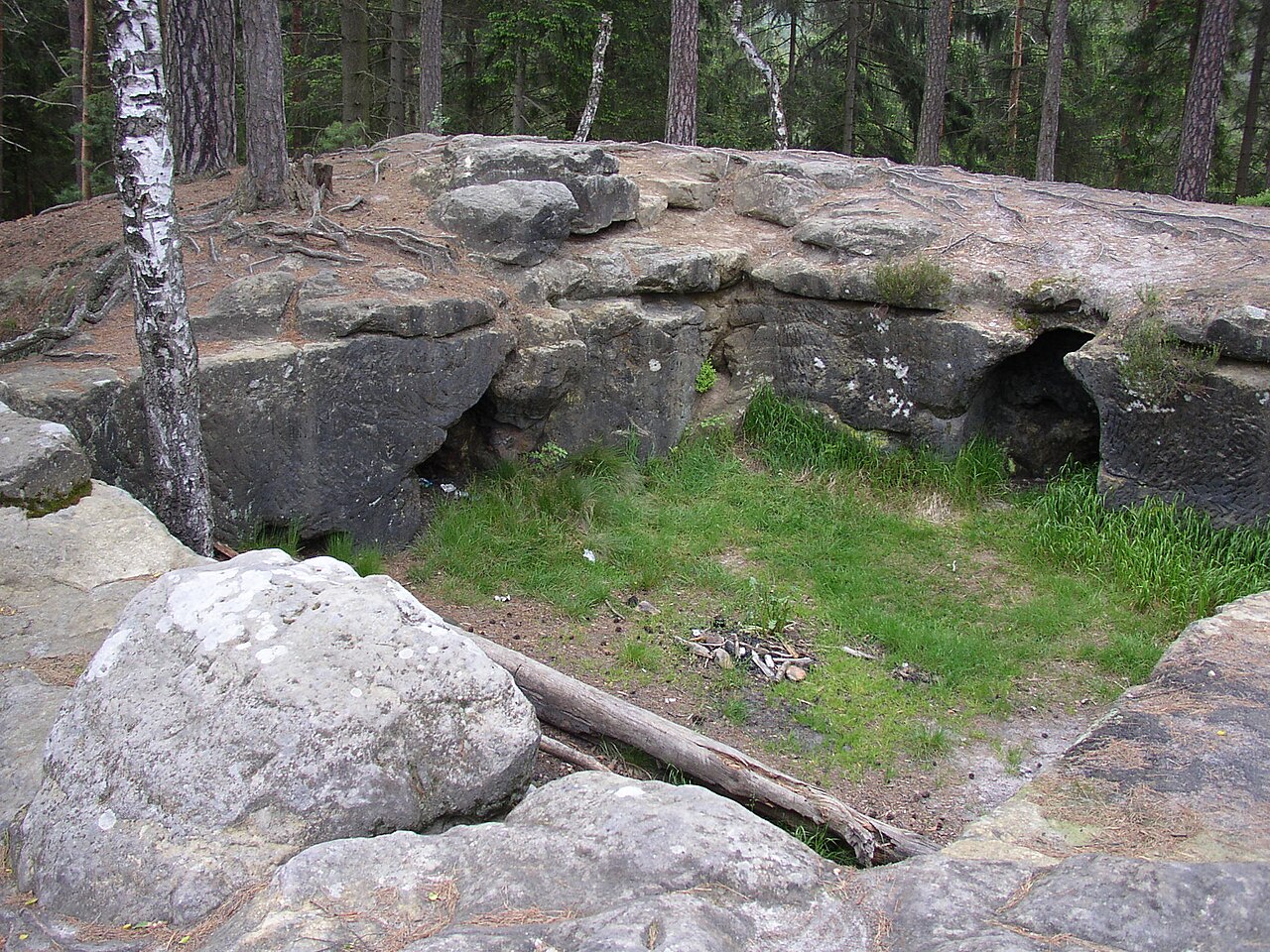
Access to the summit was ingeniously routed through a natural fissure in the rock, which was modified to function as a secure entrance passage. This narrow approach limited enemy movement and facilitated defense. At the plateau on top of the rock, the remains of a hall measuring approximately 6 by 12 meters are still visible. This hall featured a window with built-in seating, an architectural detail that provided both natural light and comfort for the castle's occupants.
Adjacent to the hall lies a smaller carved chamber believed to have served as a chapel, indicating the presence of religious practices within the fortress. The integration of a chapel reflects the importance of spiritual life in medieval castles and the self-sufficiency of such fortifications.
Historical evidence suggests that the summit was once crowned by a wooden tower surrounded by a wooden palisade. The presence of numerous beam sockets carved directly into the sandstone confirms the existence of significant timber structures, although these wooden elements have long since decayed. These features illustrate a mixed construction approach, combining natural rock formations with timber defenses.
A particularly notable architectural element is a deep shaft or well, approximately 25 meters in depth, carved into a vertical fissure in the sandstone. This feature would have been essential for providing a reliable water source during sieges, enhancing the castle's ability to withstand prolonged attacks.
The castle's decline and preservation
Following its destruction in 1444, Falkenštejn Castle was not rebuilt or reoccupied. Over the centuries, natural erosion and the decay of wooden structures have reduced the site to a series of rock-cut rooms, beam sockets, and earthworks. Despite this, the castle remains a valuable archaeological and cultural heritage site, offering insights into medieval defensive architecture and feudal history in Bohemia.
Preservation efforts focus on protecting the fragile sandstone surfaces from further erosion. Measures include restricting visitor access to vulnerable areas and stabilizing the remaining rock-cut features. These efforts aim to maintain the site's integrity and allow ongoing study and appreciation of its historical significance.
Visitor experience and significance
Today, Falkenštejn Castle is accessible to visitors interested in medieval history, architecture, and natural landscapes. The castle's dramatic setting atop a sandstone rock formation provides scenic views and a tangible connection to the region's medieval past. Interpretive signage and guided tours help contextualize the site’s history and architectural features.
The castle’s story, from its origins in the high medieval period through its role in the Hussite Wars and eventual destruction, reflects broader themes of feudal power struggles, military conflict, and adaptation to natural landscapes. Falkenštejn remains a compelling destination for those seeking to explore the layered history of Czechia’s medieval fortifications.
Frequently asked questions (FAQ)
- How do I get to Falkenštejn Castle?
- Falkenštejn Castle is located near Jetřichovice in the Ústí nad Labem Region of Czechia. Visitors can reach the site by car or local transport followed by a hike through marked trails in the surrounding sandstone landscape.
- What is the historical significance of Falkenštejn Castle?
- Falkenštejn Castle played a strategic role during the high medieval period and the Hussite Wars, serving as a noble residence, military garrison, and base for raiding parties. Its destruction in 1444 marked the end of its active use.
- Can I explore the castle ruins?
- Yes, visitors can explore the rock-cut remains, including the hall, chapel chamber, and defensive earthworks. However, some areas are protected to prevent erosion, so access may be limited to preserve the fragile sandstone.
- When is the best time to visit Falkenštejn Castle?
- The best time to visit is during the warmer months from late spring to early autumn when the trails are accessible and the weather is favorable for hiking and outdoor exploration.
- Is there an entrance fee to visit Falkenštejn Castle?
- There is no entrance fee to visit the ruins of Falkenštejn Castle, making it an accessible historical site for all visitors.
Photo gallery

Information
Website
Visit websiteSources & official resources
Verify the information above using these authoritative references.
Loading map...
Visitor reviews
No reviews yet. Been here? Write the first review and help other travelers!
Write the first reviewVisited this castle? Share your experience
Your review helps other travelers and adds first-hand knowledge to our encyclopedia.