Falkenstein Castle
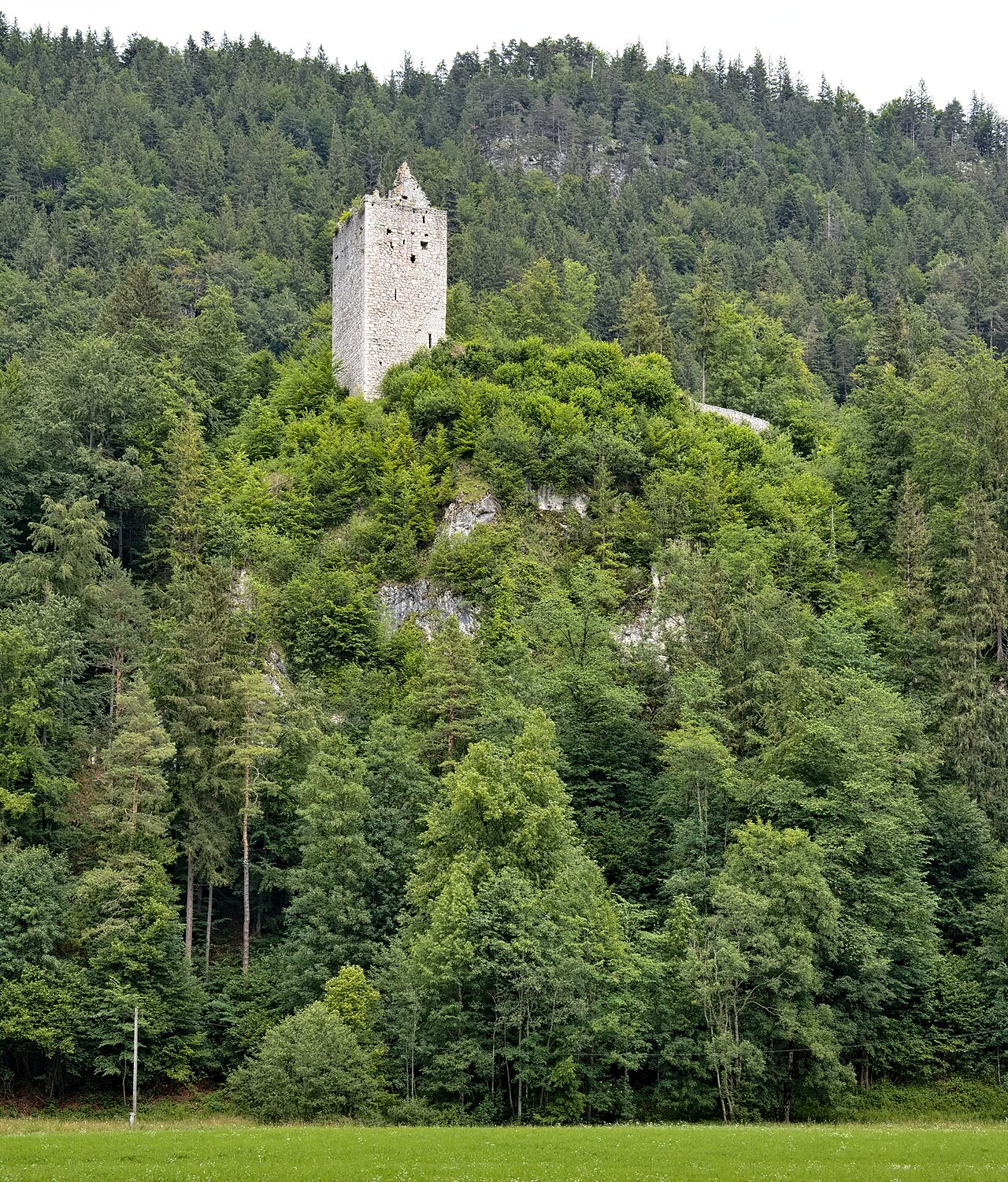
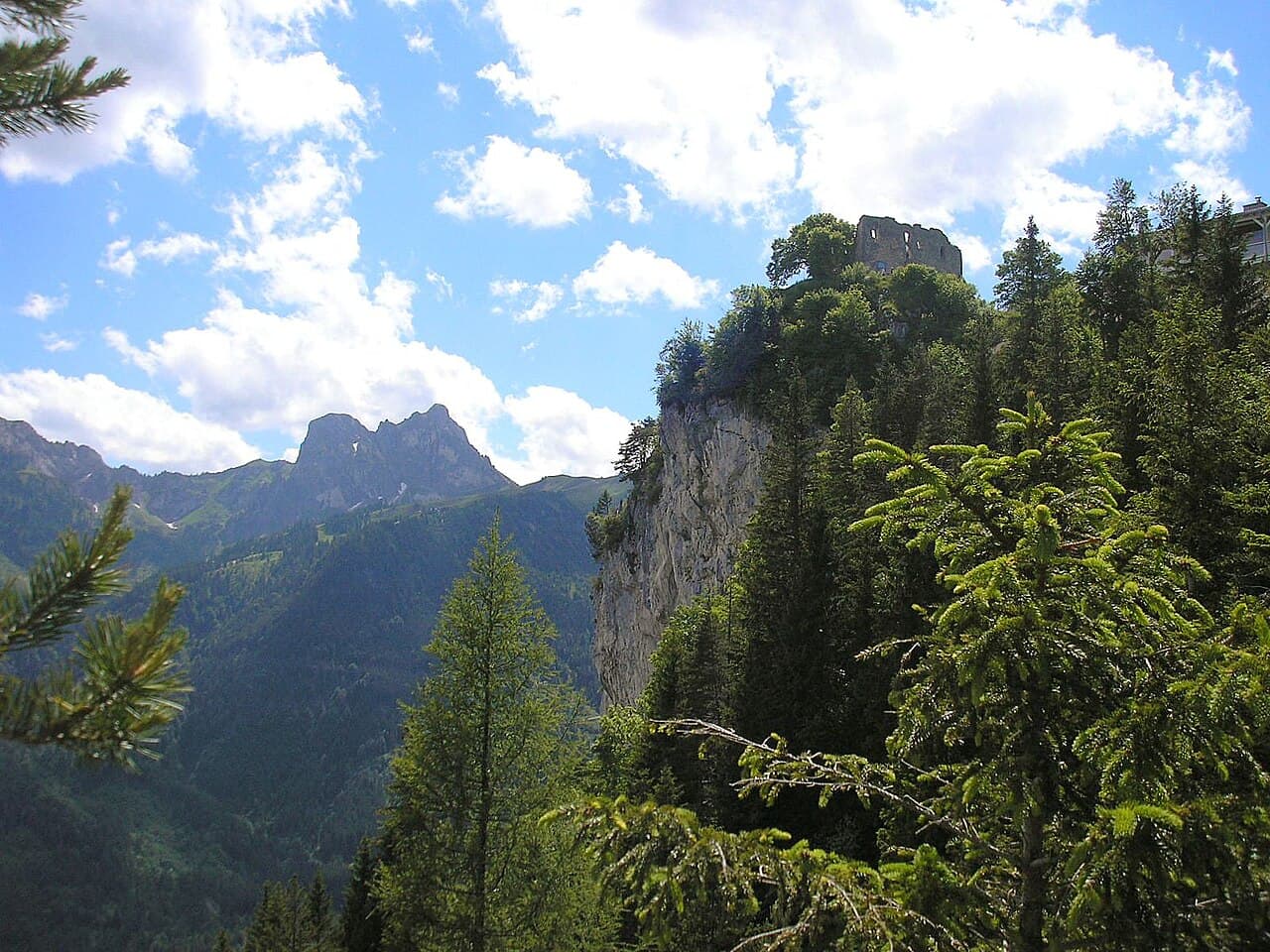
Falkenstein Castle, locally known as Burg Falkenstein, is a remarkable high medieval hill castle situated near the town of Pfronten in the Bavaria region of Germany. Perched at an elevation of 1,268 meters above sea level on a mountain just 200 meters from the Austrian border, it holds the distinction of being one of the highest castles in Germany. Founded around 1280 by Meinhard II, Count of Gorizia and Tyrol, the castle was intended as a potent symbol of his territorial power and a strategic fortification against the neighboring Duchy of Bavaria.
Founding and early history
The original castle was constructed on a rocky summit, commanding sweeping views of the surrounding alpine landscape. Initially named Pfronten Castle, the name Falkenstein—meaning "Falcon Rock"—only emerged in the 15th century, reflecting the castle's dramatic setting and symbolic association with falconry, a noble pastime of the era.
In 1290, the castle was transferred to Wolfhard von Rath, the Bishop of Augsburg, marking the beginning of ecclesiastical stewardship. For nearly three centuries, Falkenstein served as the seat of a castellan appointed by the bishop, who administered the castle and surrounding lands.
Architectural features and modifications
The castle's architecture exhibits characteristics typical of high medieval fortifications, built primarily in stone with robust defensive elements adapted to its exposed alpine environment. The original structure was Romanesque in style, constructed between 1120 and 1150, but underwent significant expansions and modifications, especially in the mid-16th century, which imbued it with a more fortified character.
Key features included a bergfried (main tower), shield walls designed to deflect projectiles, outer baileys, and a cistern for water storage, crucial for withstanding sieges. The castle's layout was terraced to conform to the steep rocky ridge, with multiple defensive wards separated by deep ditches and gates.
Despite its strong defensive design, the castle's exposed location made it vulnerable to harsh winters and difficult to inhabit comfortably. This led to the castellan relocating to the valley below in 1582, signaling the beginning of the castle's decline as a residence.
Destruction and later history
During the Thirty Years' War, in 1646, the castle faced a critical moment when the Protestant Swedish army advanced toward the region. To prevent the fortress from falling into enemy hands, the Tyrolean government ordered its abandonment and deliberate destruction by fire. This scorched-earth tactic was also applied to nearby castles Eisenberg and Hohenfreyberg.
Ironically, the Swedish army altered its route shortly after, sparing the region from direct conflict, but the damage to Falkenstein was irreversible, leaving it a ruin.
In 1883, the ruined castle was purchased by King Ludwig II of Bavaria, renowned for his fairy-tale castles like Neuschwanstein. Ludwig envisioned reconstructing Falkenstein as a smaller romantic castle in a dramatic High Gothic style. Architect Christian Jank, who designed Neuschwanstein, and Georg Dollmann were commissioned to develop plans. However, Ludwig's untimely death in 1886 halted these ambitious projects, and the ruin remained untouched.
Modern use and cultural significance
Today, Falkenstein Castle stands as a well-preserved ruin, freely accessible to visitors who come to experience its breathtaking views of the Bavarian Alps and Austrian borderlands. While the remaining structures may not rival the grandeur of Ludwig's completed castles, the site offers valuable insights into medieval castle construction and regional history.
The castle is nestled within protected forested areas, contributing to its serene and picturesque setting. Nearby lie the ruins of other medieval fortresses such as Ackeburg and Old Falkenstein Castle, enriching the area's historical landscape.
Falkenstein also hosts a museum and serves as a venue for cultural events, connecting visitors with the region's rich heritage. Its story reflects the complex interplay of medieval power struggles, architectural evolution, and the romantic revival of the 19th century.
Architectural and historical context
Falkenstein Castle exemplifies the strategic use of natural terrain in medieval fortification. Its location on a steep mountain ridge provided a commanding vantage point for surveillance and defense. The castle's design incorporates multiple layers of defense, including a formidable bergfried with a drop-shaped ground plan, thick shield walls oriented toward expected attack directions, and a series of baileys and zwingers (outer wards) to delay and repel invaders.
The castle's Romanesque origins are evident in the robust masonry and simple geometric forms, while later Gothic influences introduced more elaborate defensive and residential features. The mid-16th century expansions reflect the evolving needs of military architecture in response to advances in siege technology.
Falkenstein's history is intertwined with the regional politics of the Holy Roman Empire, particularly the rivalry between the Counts of Tyrol and the Dukes of Bavaria. Its founding by Meinhard II was a deliberate assertion of territorial claims and power projection.
King ludwig ii's vision
King Ludwig II's acquisition of Falkenstein Castle was part of his broader fascination with medieval romanticism and fairy-tale architecture. Although his plans for reconstruction were never realized, the preliminary designs by Christian Jank and Georg Dollmann reveal an intent to transform the rugged ruin into a dramatic, Gothic-inspired palace, complementing his other projects like Neuschwanstein and Linderhof.
Visitor experience
Visitors to Falkenstein Castle today can explore the ruins, enjoy panoramic alpine views, and learn about the castle's storied past through onsite exhibits. The site offers hiking opportunities in the surrounding forests and is a popular destination for history enthusiasts and nature lovers alike.
The castle's accessibility and scenic location make it an ideal spot for photography, cultural events, and educational tours, preserving its legacy as a symbol of medieval power and Bavarian heritage.
Frequently asked questions (FAQ)
- How do I get to Falkenstein Castle?
- Falkenstein Castle is located in Pfronten, Germany, and can be reached by car or public transport. The nearest train station is in Pfronten, from where you can take a short taxi ride or hike to the castle. Parking is available near the entrance for those driving.
- What is the historical significance of Falkenstein Castle?
- Falkenstein Castle, built in the 13th century, is a remarkable example of medieval architecture and served as a strategic fortification in the region. It played a significant role in the local history until it fell into disrepair in the early modern period. Today, it stands as a testament to the rich history of the area and offers insights into the life during the Middle Ages.
- When was Falkenstein Castle built?
- Falkenstein Castle was constructed in the early 13th century, around 1200 AD. It was established by the Counts of Falkenstein and has undergone various renovations over the centuries. The castle's long history has contributed to its unique architectural features and charming ruins.
- Can I take guided tours of Falkenstein Castle?
- Yes, guided tours are available at Falkenstein Castle, providing visitors with detailed insights into its history and architecture. The tours are conducted by knowledgeable guides who share fascinating stories and facts about the castle. It's recommended to check the schedule in advance to secure your spot.
- Why is Falkenstein Castle a popular destination for visitors?
- Falkenstein Castle is popular due to its stunning panoramic views of the surrounding Alps and its rich historical background. Visitors enjoy exploring the ruins and learning about the medieval lifestyle. The picturesque setting makes it an ideal destination for photography and outdoor activities.
- Is it possible to visit Falkenstein Castle year-round?
- Yes, Falkenstein Castle is open to visitors year-round, although access may vary depending on weather conditions, especially in winter. It's advisable to check the official website or local visitor information for any seasonal changes in opening hours. The castle's beauty can be appreciated in every season.
- What are the opening hours for Falkenstein Castle?
- Falkenstein Castle typically opens daily from 9 AM to 6 PM during the summer months and has reduced hours in the winter. Hours may vary on holidays or due to special events, so it's best to confirm before your visit. Make sure to arrive early to fully enjoy the site.
- What are the ticket prices for visiting Falkenstein Castle?
- Ticket prices for Falkenstein Castle are generally affordable, making it accessible for families and groups. Adult tickets usually cost around €5, while discounts are available for children and seniors. Check the official website for the most current pricing and any available promotions.
- Are there any nearby attractions to visit after Falkenstein Castle?
- Yes, there are several attractions near Falkenstein Castle, including the scenic Pfronten village and the breathtaking Allgäu Alps. Visitors can also explore nearby hiking trails, lakes, and other historical sites. Plan your itinerary to make the most of your visit to this beautiful region of Bavaria.
Photo gallery

Information
Website
Visit websiteSources & official resources
Verify the information above using these authoritative references.
Loading map...
Visitor reviews
No reviews yet. Been here? Write the first review and help other travelers!
Write the first reviewVisited this castle? Share your experience
Your review helps other travelers and adds first-hand knowledge to our encyclopedia.