Falak-ol-Aflak
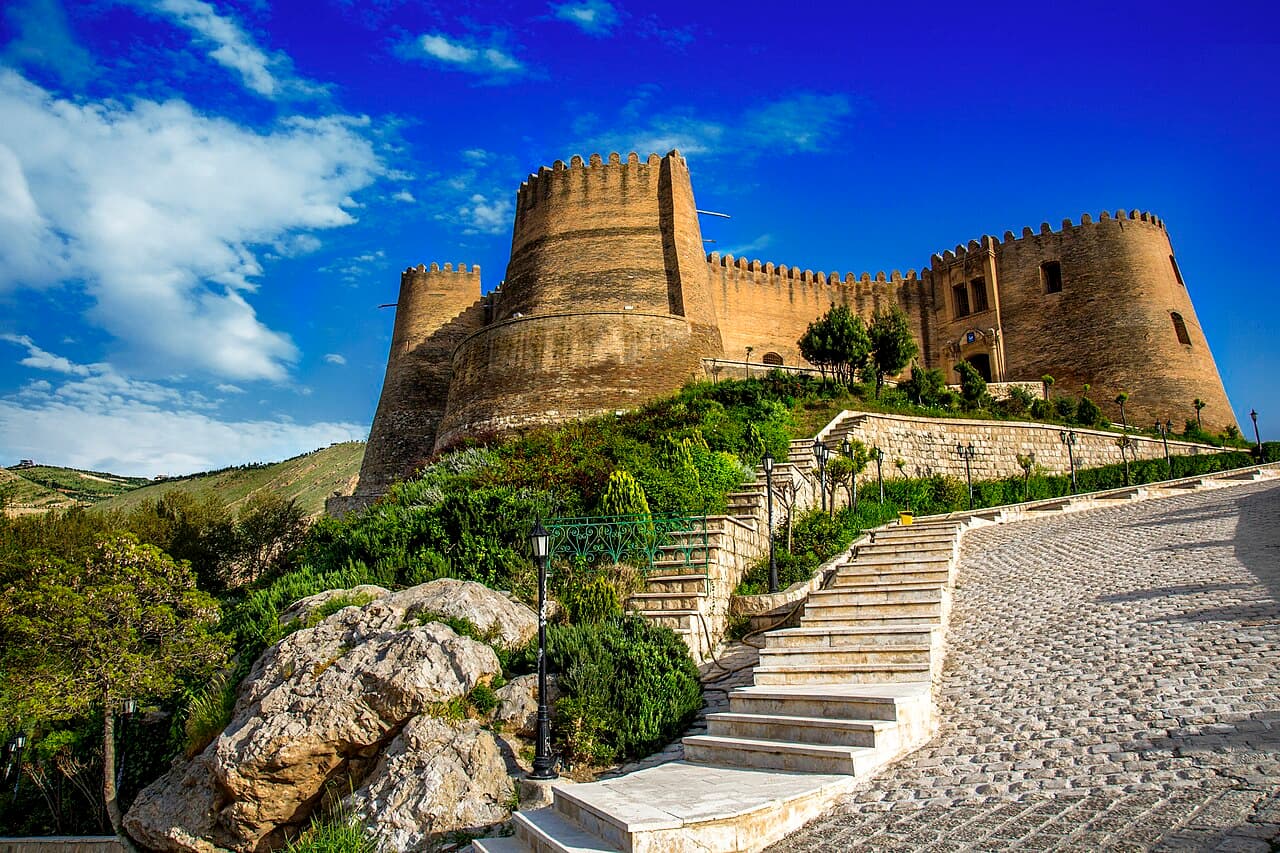
Falak-ol-Aflak fortress stands as a monumental symbol of Iranian history and architectural ingenuity, prominently located on a commanding hill in the heart of Khorramabad city, Iran. This imposing structure, with its origins dating back to the Sasanian period (224–651 CE), was originally constructed to serve as the administrative and military center for the ancient city of Shapur-Khast, the predecessor of modern Khorramabad. Its strategic hilltop position provided natural defense advantages and a commanding view of the surrounding valley, making it a critical stronghold throughout centuries of regional power shifts.
The fortress's history is deeply intertwined with the region's political and military developments. After the fall of the Sasanian Empire, Falak-ol-Aflak continued to play a pivotal role as a military and administrative hub. It was successively controlled by the Hasanwayhid dynasty and the Buyid dynasty, both influential medieval dynasties in western Iran. Later, it became the seat of the Atabegs of Little Luristan, a hereditary ruling family that governed the area and maintained the fortress as their administrative palace. This continuity of use highlights the fortress's enduring strategic and political significance across different eras.
Architectural features and construction details
The fortress occupies an irregular octagonal footprint covering approximately 5,300 square meters, perched atop a rocky hill that elevates the structure about 40 meters above the surrounding cityscape. The fortress walls themselves reach heights of up to 23 meters, constructed primarily from local stone and large red bricks, both sun-dried and kiln-fired. These materials are bonded with a traditional mortar composed of lime and gypsum. Wooden elements are incorporated to support structural and decorative components, reflecting typical Iranian fortress construction techniques.
The main entrance is a formidable feature located on the southwestern tower on the northern side, measuring about 10.2 meters wide and 3 meters high. This gate leads into a long corridor that opens onto the first courtyard, which measures approximately 31 by 22.5 meters. This courtyard is surrounded by four robust towers that provided defensive strength and vantage points for surveillance.
Beyond the first courtyard lies a second, slightly smaller courtyard measuring 29 by 21 meters, also encircled by four towers. Large halls and interconnected rooms around this inner courtyard have been adapted in modern times to house museum exhibitions, blending historical architecture with contemporary cultural functions.
The deep well and water supply system
One of the fortress’s remarkable engineering features is a deep well near the northeastern section of the first courtyard. Carved primarily from solid rock, it reaches a depth of about 40 meters. Historically, this well was fed by the nearby Golestan spring, ensuring a reliable water supply essential for the fortress’s inhabitants during sieges or droughts. The well’s entrance is framed by a tall arch, demonstrating careful architectural planning and functional design. Impressively, the well remains operational today.
Defensive walls and towers
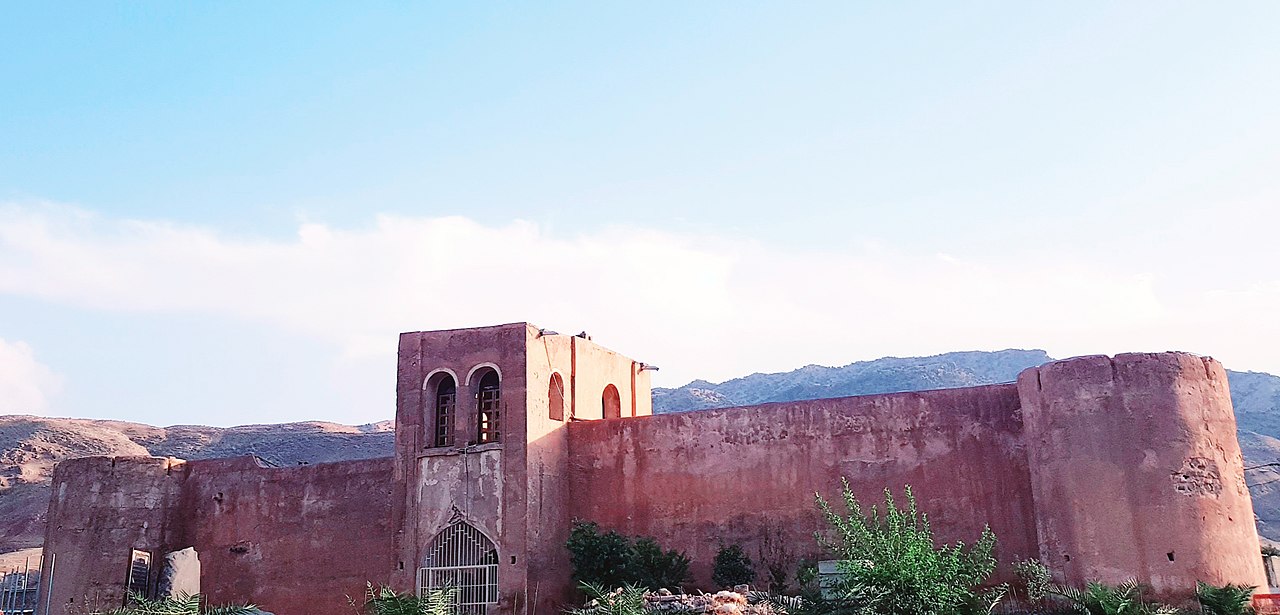
Archaeological evidence indicates that Falak-ol-Aflak was originally enclosed by a two-layered defensive wall system with a total of twelve towers. Currently, eight towers remain intact on the main fortress structure, while only two towers survive from the outer defensive wall, located on the northwest and southwest sides. Over the centuries, the fortress has sustained damage from natural disasters such as earthquakes; notably, the northwest tower collapsed in 1949, and the southwest walls were damaged in 1983. Restoration efforts have reinforced these areas with modern metal supports to preserve structural integrity.
Bathhouse and drainage innovations
Within the first courtyard are the remains of an ancient bathhouse, used until the late Qajar period. Archaeological findings include ceramic pipes, plaster fragments, and subterranean channels that reveal a complex plumbing system designed to serve the fortress community. Beneath the fortress lies an advanced moisture drainage network, consisting of broad channels over one meter in height. This system, attributed to Sasanian engineering, facilitates airflow beneath the foundations, protecting moisture-sensitive building materials from dampness and decay, showcasing early Iranian architectural ingenuity in environmental control.
Historical significance and political role
Throughout its extensive history, Falak-ol-Aflak has been a focal point of regional governance and military activity. During the Safavid and Qajar eras, it served as the residence and administrative center for local governors. In the early 19th century, significant restoration was undertaken by Mohammad Ali Mirza Dowlatshah, a Qajar prince and governor appointed in 1821. These renovations enhanced the fortress's defensive capabilities and administrative functions, reflecting its ongoing strategic importance.
In the 20th century, under the Pahlavi dynasty, the fortress’s role evolved from a military stronghold to a site for military barracks and a prison, particularly for political detainees until 1968. This period marked a shift in the fortress’s function from governance to incarceration, illustrating its adaptability to changing political climates.
Recognizing its cultural and historical value, the fortress was officially designated a national monument of Iran on October 1, 1969. After interruptions caused by the 1979 Iranian Revolution and the Iran-Iraq war, the fortress resumed its function as a museum complex in 1987. Since then, extensive restoration and conservation projects have been undertaken to preserve its structural and historical integrity, including major repairs completed in 2010 addressing earthquake damage.
Modern adaptations and cultural heritage status
Today, Falak-ol-Aflak serves as a prominent cultural landmark and museum complex, attracting visitors interested in Iran’s rich history and architectural heritage. The fortress compound includes structures from the Pahlavi period, such as stables, barracks, and administrative buildings. Two university buildings within the complex have also been recognized as heritage sites, reflecting the site’s layered historical narrative.
Internally, the fortress once housed a divan house (the governor’s audience chamber), stables, artillery stores, and prison cells. The prison cells were notably modified during the 20th century, including the excavation of a central trench within the main halls to restrain inmates. Restoration efforts in 2009-2010 focused on repairing stone paving, replacing damaged bricks, reconstructing battlements and arches, and restoring doors and windows, ensuring the fortress’s preservation for future generations.
Falak-ol-Aflak fortress stands as a testament to the enduring legacy of Iranian fortification architecture, embodying centuries of political power, military strategy, and cultural evolution. Its combination of Sasanian engineering, medieval adaptations, and modern restoration efforts make it a unique and invaluable heritage site in Iran.
Frequently asked questions (FAQ)
- What is the historical significance of Falak-ol-Aflak?
- Falak-ol-Aflak, also known as the Castle of Khorramabad, is a remarkable example of Persian architecture, dating back to the Sassanid era. It has served various purposes throughout history, including as a military fortress and a royal residence, reflecting the cultural and political evolution of the region.
- When was Falak-ol-Aflak built?
- The construction of Falak-ol-Aflak began in the 3rd century AD during the Sassanid period and was completed in the subsequent centuries. Its impressive structure showcases the architectural advancements of that time, making it a key historical landmark in Iran.
- How do I get to Falak-ol-Aflak?
- Falak-ol-Aflak is located in Khorramabad, easily accessible by road from major cities in Iran. Visitors can take local transportation or hire a taxi to reach the castle, which is situated on a hill, offering stunning views of the surrounding landscape.
- What are the opening hours for Falak-ol-Aflak?
- The castle is open to visitors daily from 9 AM to 5 PM. It is advisable to check for any seasonal changes in hours before planning your visit, as well as to consider potential holiday closures.
- Is it possible to explore the interior of Falak-ol-Aflak?
- Yes, visitors can explore the interiors of Falak-ol-Aflak, which include various rooms and halls that showcase historical artifacts and exhibits. Guided tours are often available, providing insights into the castle's rich history and architectural features.
- Can I take photographs at Falak-ol-Aflak?
- Yes, photography is allowed within the castle grounds, allowing visitors to capture the stunning architecture and beautiful surrounding scenery. However, it's advisable to be respectful of other visitors and the historical significance of the site.
- What is the best time to visit Falak-ol-Aflak?
- The best time to visit Falak-ol-Aflak is during the spring (March to May) and autumn (September to November) when the weather is mild and pleasant. These seasons provide an ideal environment for exploring the castle and enjoying the natural beauty of the area.
- Are there any nearby attractions to visit while in Khorramabad?
- Yes, nearby attractions include the Lorestan Museum, which houses artifacts from the region's history, and the beautiful Gahar Lake, known for its scenic views. These sites can enhance your experience while visiting Khorramabad and offer additional cultural insights.
- What are the ticket prices for entering Falak-ol-Aflak?
- Ticket prices for Falak-ol-Aflak are generally affordable, making it accessible to a wide range of visitors. It is recommended to check the latest pricing information before your visit, as prices can vary for locals and international tourists.
Photo gallery

Information
Website
Visit websiteSources & official resources
Verify the information above using these authoritative references.
Loading map...
Visitor reviews
No reviews yet. Been here? Write the first review and help other travelers!
Write the first reviewVisited this castle? Share your experience
Your review helps other travelers and adds first-hand knowledge to our encyclopedia.