Évora Monte Castle
Évora Monte Castle, locally known as Castelo de Évora Monte, is situated in the quiet village of Évora Monte in the Alentejo Central region of Portugal. Perched on one of the highest peaks of the Serra de Ossa mountain range at 653 meters elevation, the castle commands expansive views and historically held significant strategic importance. This elevated position allowed it to serve as a lookout and defensive stronghold, contributing to its role in regional military and political affairs.
The early medieval origins and strategic significance
The site of Évora Monte was originally reconquered from the Moors in 1160, marking the beginning of its documented history. The initial fortress was established shortly thereafter to secure the territory and support the repopulation efforts in the region. Despite the Portuguese Crown’s persistent attempts to repopulate the village throughout the 13th century, these efforts met with limited success due to the area's remote location and challenging terrain.
Medieval fortifications and royal patronage
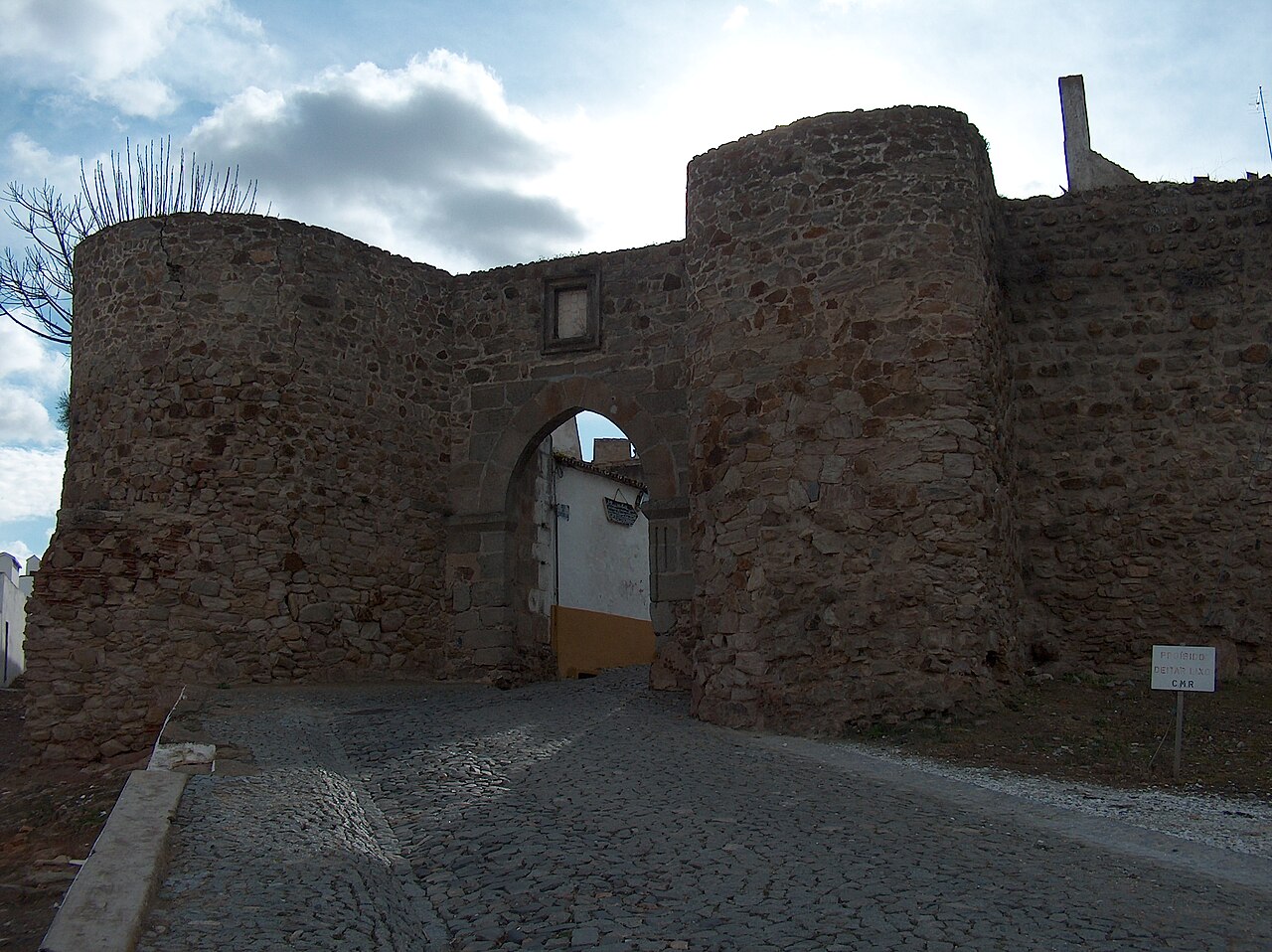
In 1306, King Denis of Portugal ordered the construction of substantial village walls and gates, enhancing the defensive capabilities of Évora Monte. These fortifications were part of a broader strategy to secure the Alentejo frontier during a period of ongoing conflict and territorial consolidation. The castle and its walls formed a critical part of the local defense network, ensuring control over the mountain pass and surrounding lands.
By the late 14th century, the castle was granted by John I of Portugal to his trusted general Nuno Álvares Pereira, a key figure in Portuguese history renowned for his military leadership during the 1383–1385 Crisis. The castle later passed into the possession of the House of Braganza, one of Portugal’s most influential noble families, further cementing its importance.
Destruction and Renaissance reconstruction
The original medieval castle suffered significant damage during the 1531 Lisbon earthquake, which affected large parts of Portugal. The destruction necessitated a major rebuilding effort. In 1532, Teodósio I, Duke of Braganza, undertook the reconstruction of the castle, transforming it into a compact palace with clear influences from the Italian Renaissance architectural style. This reconstruction marked a shift from purely military fortress to a residence with both defensive and aesthetic considerations.
Architectural features of the Renaissance castle
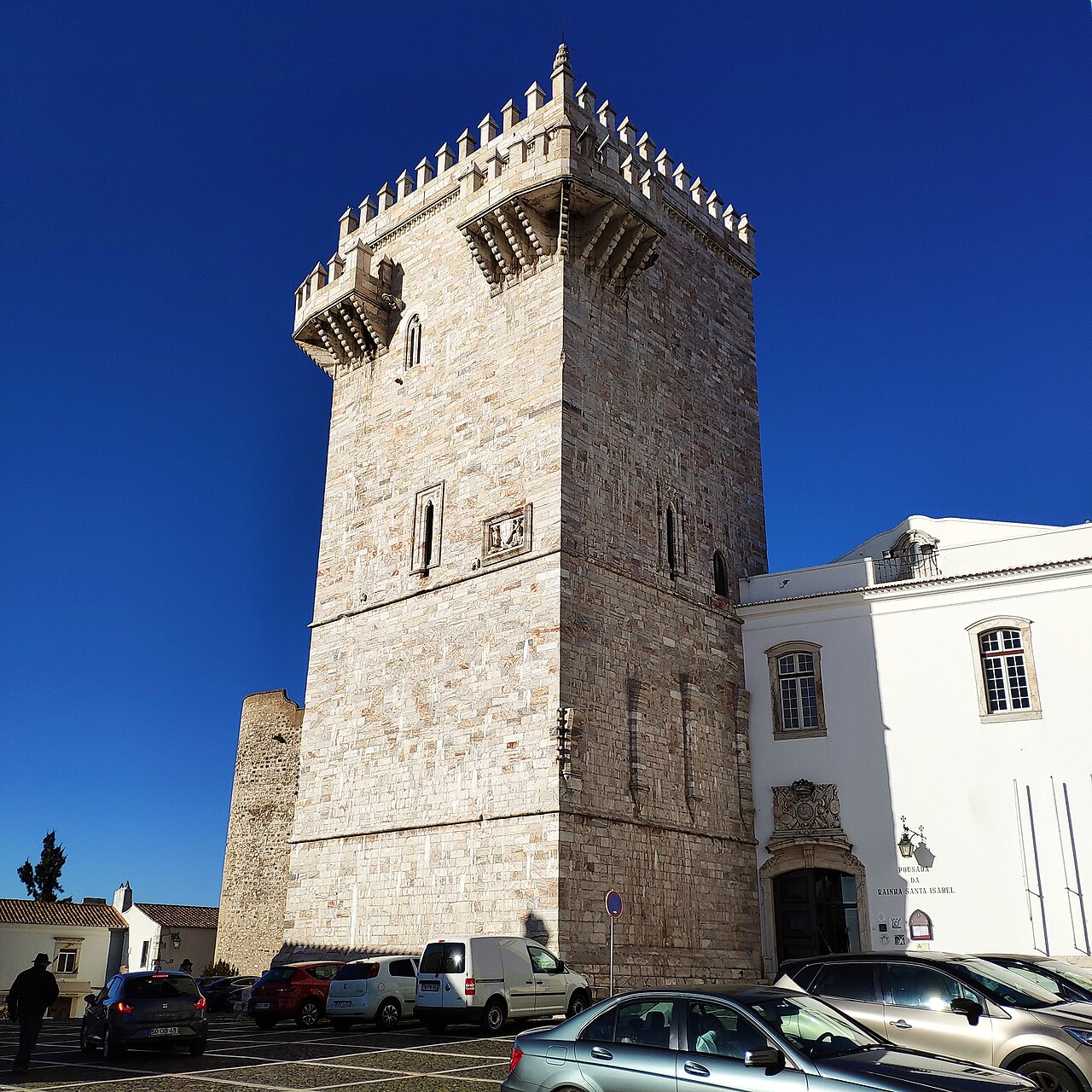
The current castle exhibits a square plan with round, conical towers at each corner, characteristic of Renaissance military architecture adapted for artillery defense. The roof functions as a gun platform, reflecting the evolution of warfare and the need to accommodate cannon fire. Distinctive cornices sculpted to resemble ropes encircle the building, with sculpted knots prominently displayed at the center of each wall, adding decorative Renaissance motifs to the otherwise austere structure.
The castle’s three floors are clearly delineated on the exterior by these sculptural elements, which blend functional fortification with artistic expression. This combination underscores the Renaissance ideal of harmonizing utility and beauty in architecture.
The castle's decline and historical legacy
Following its Renaissance transformation, Évora Monte Castle gradually lost its military importance. Its remote location and the changing political landscape reduced its strategic value. However, it reemerged in Portuguese history during the 19th century as the site of the Concession of Evoramonte in 1834. This treaty ended the Liberal Wars, a civil conflict between the absolutist forces of Miguel I and the constitutionalists led by Pedro IV, marking a pivotal moment in Portugal’s political development.
Current condition and visitor information
Today, Évora Monte Castle stands as a well-preserved Renaissance fortress reflecting its layered history from medieval origins to Renaissance reconstruction. The castle’s compact form and robust towers remain largely intact, offering visitors a glimpse into the architectural and historical evolution of Portuguese fortifications.
Visitors can explore the castle for a fee, although access may occasionally be restricted. The castle remains a prominent feature of the village, which retains its historic walled character. Notably, the castle maintains intervisibility with Estremoz Castle to the northeast, highlighting its strategic placement within the regional defense network.
Frequently asked questions (FAQ)
- How do I get to Évora Monte Castle?
- Évora Monte Castle is easily accessible by car, located just a short drive from the town of Évora. There are also local bus services that connect Évora Monte with major cities, making it convenient for visitors without a car.
- What is the historical significance of Évora Monte Castle?
- Évora Monte Castle, built in the 16th century, played a crucial role in the defense of the region during various conflicts, including the Portuguese Restoration War. Its historical architecture and strategic location make it a significant landmark in Portuguese history.
- When was Évora Monte Castle built?
- The construction of Évora Monte Castle began in the early 16th century, with its completion occurring later in the same century. The castle reflects the architectural styles and military needs of the time, showcasing the evolution of fortification techniques.
- Can I visit Évora Monte Castle year-round?
- Yes, Évora Monte Castle is open to visitors year-round, although hours may vary according to the season. It's advisable to check the official website or local tourism information for the most accurate visiting hours before planning your trip.
- Why is Évora Monte Castle considered an architectural gem?
- Évora Monte Castle is renowned for its impressive defensive walls and unique bastions, designed to withstand attacks. The blend of Renaissance and medieval architectural styles also adds to its charm, making it a must-see for architecture enthusiasts.
- Is it possible to access the castle with a wheelchair?
- While Évora Monte Castle has some accessible pathways, certain areas may be challenging for wheelchair users due to the historic terrain and steps. It is recommended to contact the castle administration in advance to inquire about specific accessibility options.
- What are the ticket prices for Évora Monte Castle?
- Ticket prices for Évora Monte Castle are typically affordable, with discounts available for students and seniors. Check the official site for the latest pricing and any special offers that may be available during your visit.
- What is the best time to visit Évora Monte Castle?
- The best time to visit Évora Monte Castle is during the spring and fall when the weather is mild, and the tourist crowds are smaller. Visiting during these seasons allows for a more enjoyable experience exploring the castle and its surroundings.
- Are there any nearby attractions to visit after Évora Monte Castle?
- Yes, after visiting Évora Monte Castle, you can explore the charming village of Évora Monte and its quaint streets. Additionally, the nearby city of Évora boasts several UNESCO World Heritage Sites, including the Roman Temple and the Cathedral of Évora.
Information
Address
Largo Dom Dinis, Portugal
Loading map...
Visitor reviews
No reviews yet. Been here? Write the first review and help other travelers!
Write the first reviewVisited this castle? Share your experience
Your review helps other travelers and adds first-hand knowledge to our encyclopedia.