Castle of Evoramonte
The Castle of Evoramonte stands as a remarkable example of medieval military architecture in Portugal, prominently located atop the Serra d’Ossa escarpment in the civil parish of Evoramonte, municipality of Estremoz, within the Evora region. Its strategic hilltop position provided commanding views over the surrounding Alentejo plains, underscoring its historical role in territorial defense and control. Construction began around 1160 during the Gothic period, shortly after the Christian reconquest of the area from Moorish rule, led by the knight Geraldo Sem Pavor. This early phase laid the foundation for a fortress that would evolve architecturally and politically over several centuries.
Medieval origins and early development
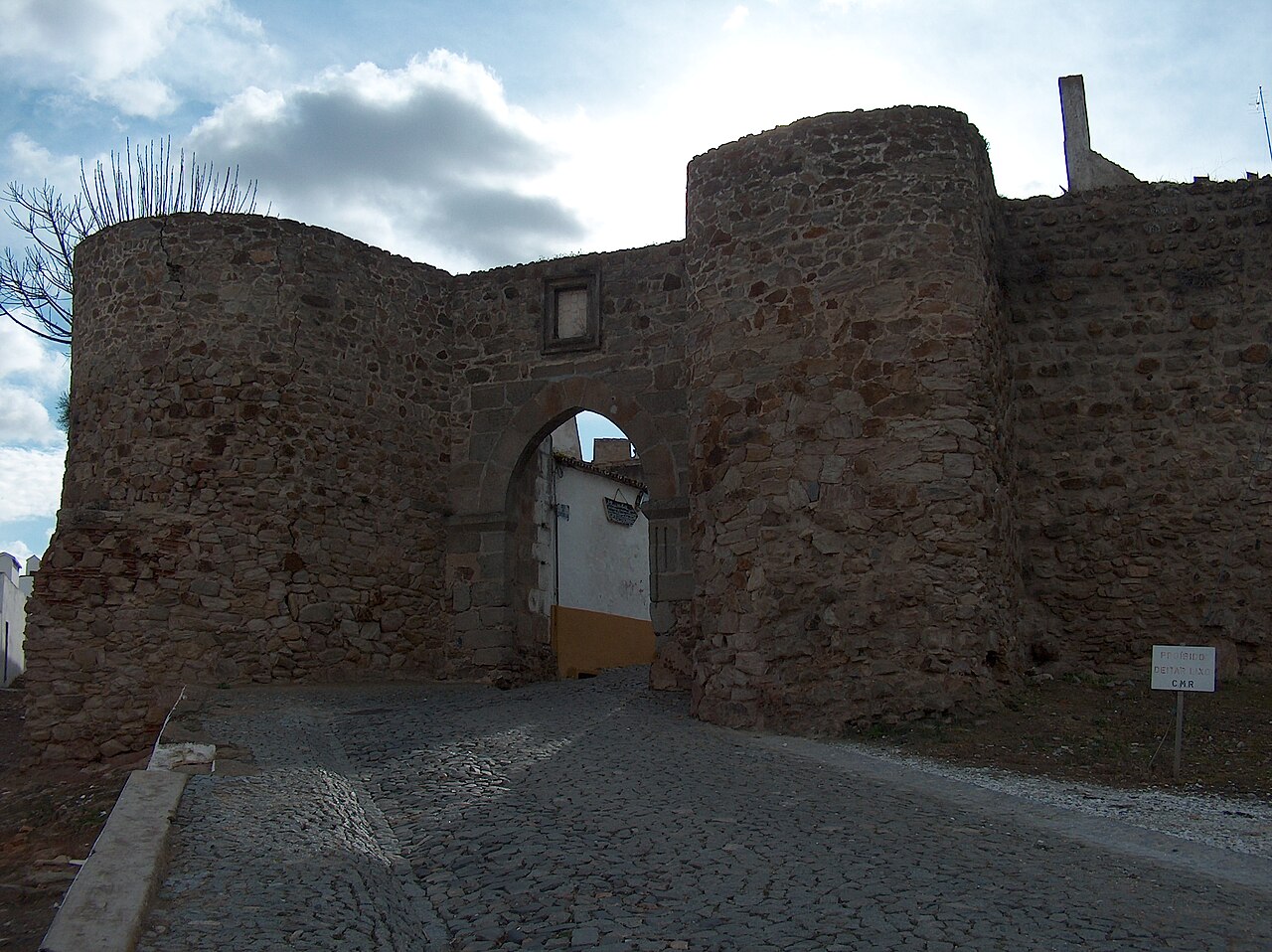
The castle's initial establishment coincided with a period of consolidation of Christian power in Portugal. In 1248, King Afonso III granted a foral (charter) to encourage settlement and development in the region, reaffirmed again in 1271. These charters were crucial in promoting population growth and economic stability around the fortress. Around 1306, King Denis ordered significant fortifications to be constructed, including the main walls, gates, and defensive structures that formed the core medieval fortification. This phase established the castle’s essential Gothic character, with robust stone walls and defensive towers designed to withstand sieges.
Renaissance transformation and architectural features
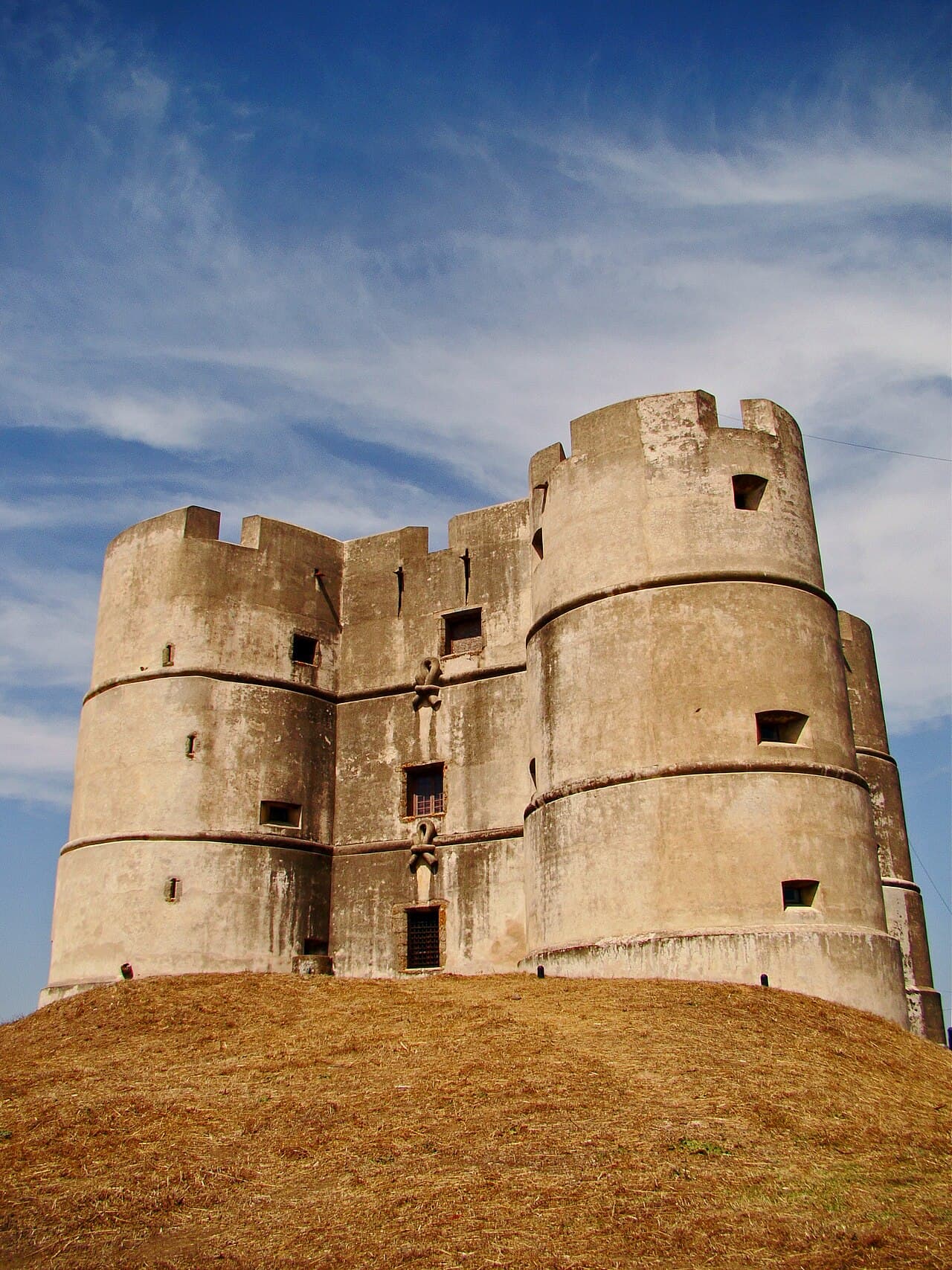
Under the reign of King Manuel I in the early 16th century, the castle underwent a major transformation reflective of Renaissance and Manueline architectural styles. In 1516, a new foral was issued, and a comprehensive reconstruction was commissioned, completed in 1531 under architect Francisco de Arruda, who was renowned for blending military functionality with ornate design. The castle was redesigned with a distinctive rectangular plan featuring four cylindrical towers at each corner. These towers, wider at the base and integrated into the walls, provided enhanced defensive capabilities and a visually striking silhouette.
The castle’s walls are built primarily from granite ashlar masonry, combining strength and durability with aesthetic appeal. The Manueline style is evident in the decorative elements such as the carved stone knots adorning the walls and the intricately designed cornices resembling twisted ropes. The battlements are crowned with large, chamfered merlons, designed to provide cover for defenders and platforms for artillery, including cannon openings cleverly narrowed inward to maximize defense.
Interior architectural details
Inside, the castle features a large salon on the first floor with an ovular vaulted ceiling supported by four sculpted columns, showcasing sophisticated ribbed vaulting that forms intricate patterns. This vaulted style is repeated on the upper floors at a smaller scale, emphasizing the blend of Gothic and Renaissance influences. Vertical circulation is facilitated by a circular staircase housed within the western cylindrical tower, a typical feature of fortified residences of this period.
Historical significance and key events
The Castle of Evoramonte is not only architecturally significant but also historically pivotal. It was the site of the Concession of Evoramonte signed on 26 May 1834, which ended the Liberal Wars in Portugal. This agreement marked the defeat of the absolutist forces loyal to Miguel of Portugal by the liberal faction supporting Queen Maria II, under the regency of Peter IV. The castle thus symbolizes a turning point in Portuguese political history, transitioning towards constitutional monarchy and liberal governance.
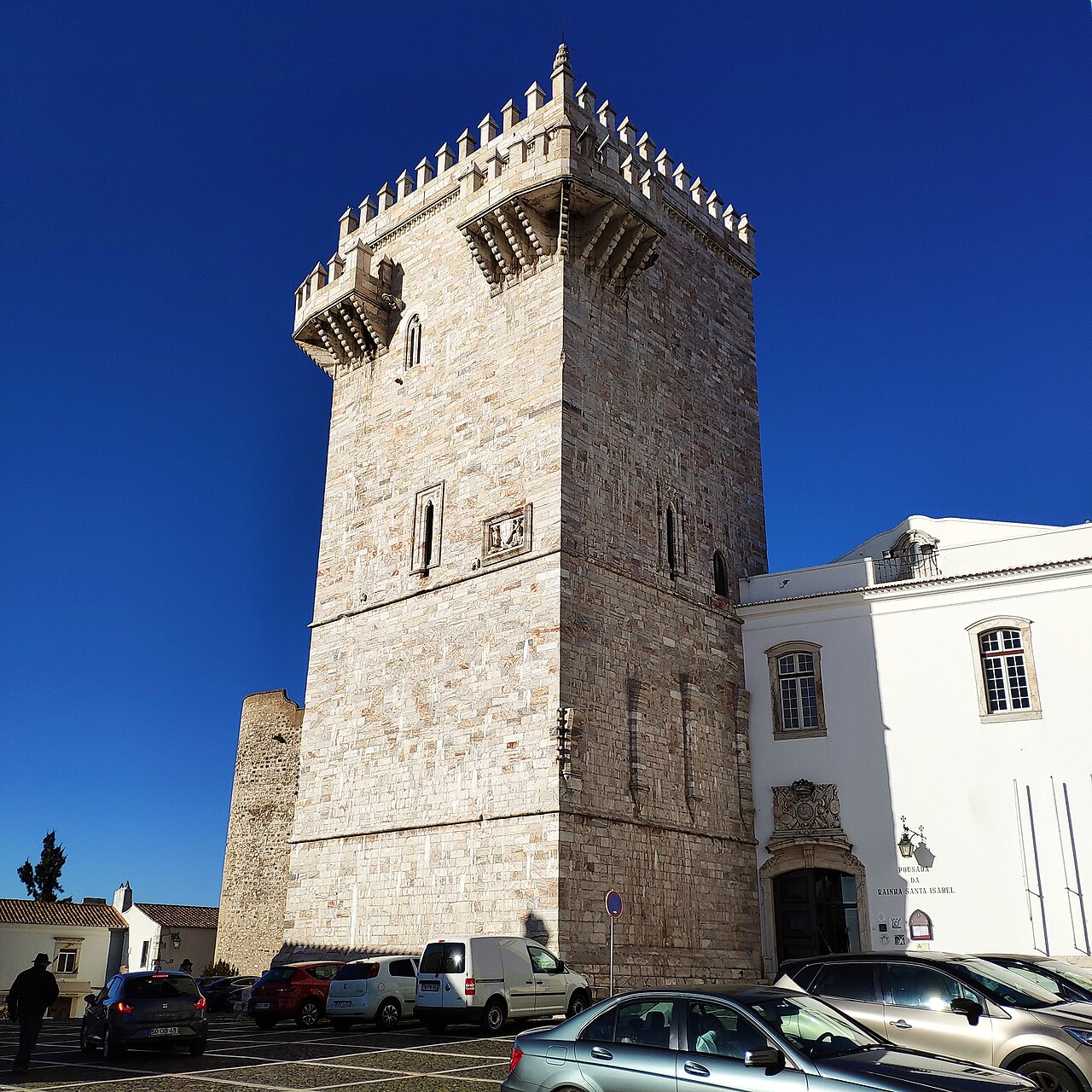
Previously, the castle had been granted to notable figures such as Constable Nuno Álvares Pereira following King John I’s ascension, highlighting its importance as a noble residence and military stronghold. The original medieval keep tower was destroyed in the 1531 Lisbon earthquake and subsequently rebuilt under the direction of Teodósio I, Duke of Braganza, preserving the castle’s defensive and residential functions.
Restoration and preservation efforts
Throughout the 20th century, the Castle of Evoramonte underwent several restoration campaigns to preserve its structural integrity and historical features. Initial efforts in the 1930s focused on repairing towers and consolidating parapets. Later, between 1971 and 1987, extensive work was done on the walls, including the installation of modern utilities to accommodate visitors. In 1992, stewardship was transferred to the Instituto Português do Património Arquitectónico (IPPAR), which undertook further rehabilitation and management.
Since its classification as a Portuguese National Monument in 1910, the castle has been protected as a cultural heritage site. In 2006, celebrations commemorated its 700th anniversary, reflecting its enduring significance in Portuguese history and architecture. Custodianship passed to the local municipality in 2021, ensuring continued preservation and public engagement.
Architectural layout and defensive design
The castle’s rectangular plan with four corner cylindrical towers creates a compact and formidable fortress. The towers’ bases are notably wider, enhancing stability and defense against artillery attacks. The three-story elevation is marked by Manueline decorative cornices and large battlements designed for both protection and artillery deployment.
The castle’s defensive features include cannon openings along the towers, narrow slits that allowed defenders to fire while minimizing exposure. The thick granite walls and elevated position further contributed to its impregnable nature. The chamfered shape of the building and the imposing merlons add to its visual dominance over the landscape.
Visitor experience and cultural importance
Today, the Castle of Evoramonte stands as a well-preserved monument offering visitors insight into Portugal’s medieval and Renaissance military architecture. Its combination of Gothic origins and Manueline embellishments provides a unique architectural narrative. The castle’s historical associations with pivotal events like the Liberal Wars enrich its cultural significance.
Visitors can explore the castle’s robust walls, towers, and interior vaulted halls, appreciating the craftsmanship of the Manueline style and the strategic ingenuity of its design. The site’s elevated location also offers panoramic views of the Alentejo region, enhancing the visitor experience with both historical and natural beauty.
Frequently asked questions (FAQ)
- How do I get to the Castle of Evoramonte?
- The Castle of Evoramonte is easily accessible by car and is located just off the A6 motorway. Public transport options may be limited, so it's recommended to plan your visit ahead of time, possibly using a local taxi service or rideshare for convenience.
- What is the historical significance of the Castle of Evoramonte?
- The Castle of Evoramonte dates back to the 12th century and played a crucial role in the Reconquista, serving as a stronghold against Moorish incursions. Its strategic location offers stunning views of the surrounding landscape, making it a significant military and defensive site in Portugal's history.
- When was the Castle of Evoramonte built?
- Construction of the Castle of Evoramonte began in the late 12th century, around the time of Portugal's foundation as a nation. Over the centuries, it has undergone various renovations and restorations, reflecting different architectural styles and historical periods.
- Can I take guided tours of the castle?
- Yes, guided tours are available at the Castle of Evoramonte, providing visitors with in-depth knowledge of its history and architecture. These tours are typically offered in multiple languages, allowing for a rich and informative experience.
- Why is the Castle of Evoramonte a popular tourist destination?
- The Castle of Evoramonte is a popular destination due to its rich history, impressive architecture, and panoramic views of the Alentejo region. Visitors are drawn to its well-preserved battlements and the chance to explore Portugal's medieval heritage.
- Is it possible to visit the castle year-round?
- Yes, the Castle of Evoramonte is open to visitors throughout the year, though hours may vary by season. It's advisable to check the official website for specific opening hours and any potential seasonal closures.
- What are the ticket prices for the Castle of Evoramonte?
- Ticket prices for the Castle of Evoramonte are generally affordable, with discounts available for seniors and children. Visitors can check the official website for the most current pricing information and any special offers.
- When is the best time to visit the Castle of Evoramonte?
- The best time to visit the Castle of Evoramonte is during the spring and fall when the weather is mild and pleasant. This allows for a comfortable exploration of the castle and its surroundings without the heat of the summer months.
- What nearby attractions should I consider visiting?
- In addition to the Castle of Evoramonte, visitors can explore the charming village of Evoramonte itself, with its quaint streets and local shops. The nearby town of Estremoz, known for its beautiful marble and historic architecture, is also worth a visit.
Photo gallery

Information
Website
Visit websiteSources & official resources
Verify the information above using these authoritative references.
Loading map...
Visitor reviews
No reviews yet. Been here? Write the first review and help other travelers!
Write the first reviewVisited this castle? Share your experience
Your review helps other travelers and adds first-hand knowledge to our encyclopedia.