Ethie Castle
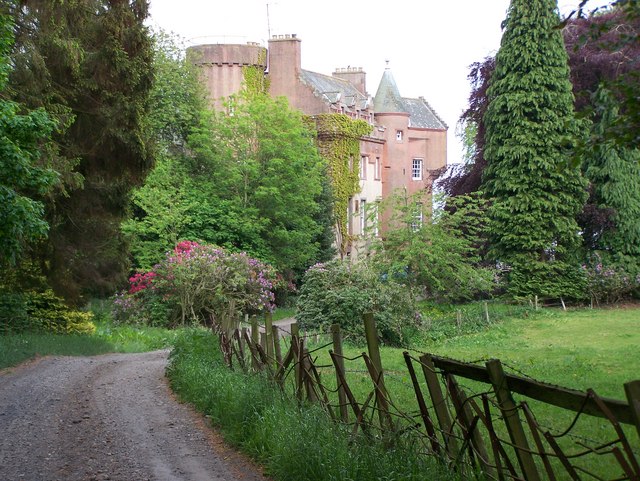
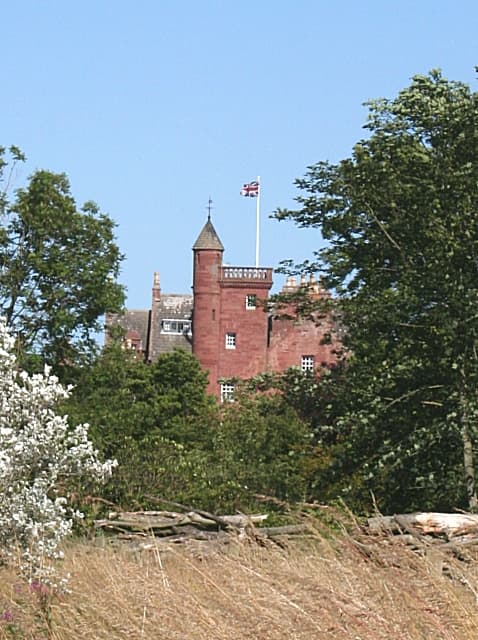
Ethie Castle is a significant historic fortress located approximately three miles north of Arbroath in Angus, Scotland. Constructed around 1300 by the monks of the nearby Arbroath Abbey, the castle originally served as a sandstone keep designed for both defense and residence. This early medieval structure reflects the influence of religious institutions in castle-building during the late medieval period.
Medieval origins and ecclesiastical connections
The castle's foundation by the monks of Arbroath Abbey highlights its initial role within the ecclesiastical landscape of medieval Scotland. The choice of sandstone masonry for the keep provided both durability and a commanding presence in the surrounding landscape. The castle's strategic location on a hill offered defensive advantages and oversight of the surrounding territory.
Ethie Castle passed into the hands of the de Maxwell family before becoming the residence of Cardinal David Beaton, Scotland's last cardinal and a prominent figure in the turbulent religious conflicts of the 16th century. Beaton's ownership left a lasting imprint on the castle's architecture and interior. Notably, the castle contains a small private chapel and the Cardinal's Sitting Room, which features a secret staircase leading discreetly to the Great Hall above. These elements underscore the castle's dual function as a religious retreat and a fortified noble residence.
Carnegie family and naval heritage
In 1665, Ethie Castle was acquired by the Carnegie family, who later became the Earls of Northesk. The castle remained in their possession for centuries, serving as a family seat and symbol of their status. The 7th Earl of Northesk distinguished himself as a Vice Admiral in the Royal Navy, fighting alongside Admiral Nelson at the Battle of Trafalgar in 1805. To commemorate this naval achievement, the family incorporated the word "Trafalgar" into their heraldic arms, which are prominently displayed in a dormer window at Ethie Castle.
Literary connections and 20th-century ownership
Ethie Castle also holds a place in literary history. It is reputed to have inspired the fictional Castle of Knockwhinnock in Sir Walter Scott's novel The Antiquary. Scott was a close friend of William Carnegie, 8th Earl of Northesk, and frequently visited Ethie Castle, which likely influenced his depiction of the fictional castle.
In the early 20th century, the castle and its grounds were purchased by William Cunningham Hector, a Glasgow artist and antique collector, who maintained the property and its historic character.
Restoration and clan seat
More recently, Ethie Castle underwent restoration under the direction of Alistair Forsyth, chief of the Forsyth Clan. These efforts revitalized the castle both structurally and historically, preserving its medieval features and adapting it as the clan's seat. The castle today stands as a well-preserved example of a late medieval hill castle with layers of history visible in its architecture and interior spaces.
Architectural features and interior highlights
The castle's footprint covers approximately 15,091 square feet, with robust sandstone walls characteristic of early 14th-century construction. The keep design includes defensive elements typical of the period, such as thick walls and limited access points.
Inside, the small chapel reflects the religious functions associated with its original monastic builders and later ecclesiastical owners. The Cardinal's Sitting Room with its secret staircase is a rare feature, indicating the need for privacy and security during Cardinal Beaton's residency. The Great Hall above served as the main communal and ceremonial space.
The dormer window bearing the Carnegie family arms with the "Trafalgar" inscription is a distinctive decorative element linking the castle to its naval heritage. These heraldic features contribute to the castle's unique character and historic narrative.
Hauntings and folklore
Ethie Castle is reputedly haunted by a Grey Lady spectre and the ghost of David Beaton, who was also Abbot of Arbroath in the 16th century. These legends add a layer of cultural intrigue and attract visitors interested in the supernatural aspects of historic Scottish castles.
Current status and visitor information
Today, Ethie Castle is privately owned by the de Morgan family and operates as a hotel, allowing guests to experience its historic ambiance firsthand. The castle's preservation and adaptive reuse ensure that its rich history remains accessible while maintaining the integrity of its late medieval architecture.
Frequently asked questions (FAQ)
- How do I get to Ethie Castle?
- Ethie Castle is located near Arbroath in Scotland. You can reach it by car via the A92 road, with ample parking available nearby. Public transport options may be limited, so checking local bus routes or considering a taxi might be the best approach for visitors.
- What is the historical significance of Ethie Castle?
- Ethie Castle has a rich history dating back to the 13th century and has been associated with various noble families over the centuries. Its architecture reflects the evolution of Scottish castle design, showcasing elements from different periods. The castle played a vital role in regional politics and has fascinating stories tied to its historical residents.
- When was Ethie Castle built?
- Ethie Castle was originally constructed in the 13th century, although it has undergone several renovations and expansions over the years. The castle's current structure reflects both its medieval roots and later architectural styles. This blend of history makes it a captivating site for those interested in Scottish heritage.
- Can I visit Ethie Castle?
- Yes, Ethie Castle is open to the public, but it is advisable to check the official website for specific visiting days and times. Guided tours may be available, offering insights into the castle's history and architecture. Visitors should also be aware of any seasonal events that may affect access.
- Is Ethie Castle accessible for visitors with disabilities?
- Ethie Castle has made efforts to improve accessibility, but due to its historical nature, some areas may still be challenging for those with mobility issues. It is recommended to contact the castle administration in advance to inquire about specific accessibility options and available accommodations during your visit.
- What are the opening hours for Ethie Castle?
- The opening hours for Ethie Castle can vary by season, so it's best to check the official website for the most current information. Typically, the castle opens during the day, with extended hours in the summer months. Planning your visit according to the opening times will ensure you make the most of your experience.
- What is the best time to visit Ethie Castle?
- The best time to visit Ethie Castle is during the spring and summer months when the weather is generally milder and the gardens are in full bloom. Additionally, many special events and guided tours are often scheduled during this time. Autumn can also be a beautiful time to visit, especially for those who enjoy the changing foliage.
- Are there any nearby attractions to visit?
- Yes, there are several attractions near Ethie Castle, including the stunning coastline of Angus and the historic town of Arbroath, famous for its abbey and smoked haddock. Other nearby sites include the scenic cliffs of the Angus coast and local nature reserves, perfect for outdoor enthusiasts. Combining your visit to Ethie Castle with these attractions can make for a fulfilling day out.
- What are the ticket prices for Ethie Castle?
- Ticket prices for Ethie Castle may vary depending on the season and any special events taking place. Typically, there is a modest entry fee, with discounts available for children, seniors, and families. Checking the castle's official website will provide the most accurate and up-to-date pricing information before your visit.
Photo gallery

Information
Sources & official resources
Verify the information above using these authoritative references.
Loading map...
Visitor reviews
No reviews yet. Been here? Write the first review and help other travelers!
Write the first reviewVisited this castle? Share your experience
Your review helps other travelers and adds first-hand knowledge to our encyclopedia.