Estrella Castle — Spain castle

Estrella Castle

Estrella castle in montiel, spain
Montiel, Castilla-La Mancha, Spain
Early Medieval (5th–10th c.)
Partially Preserved

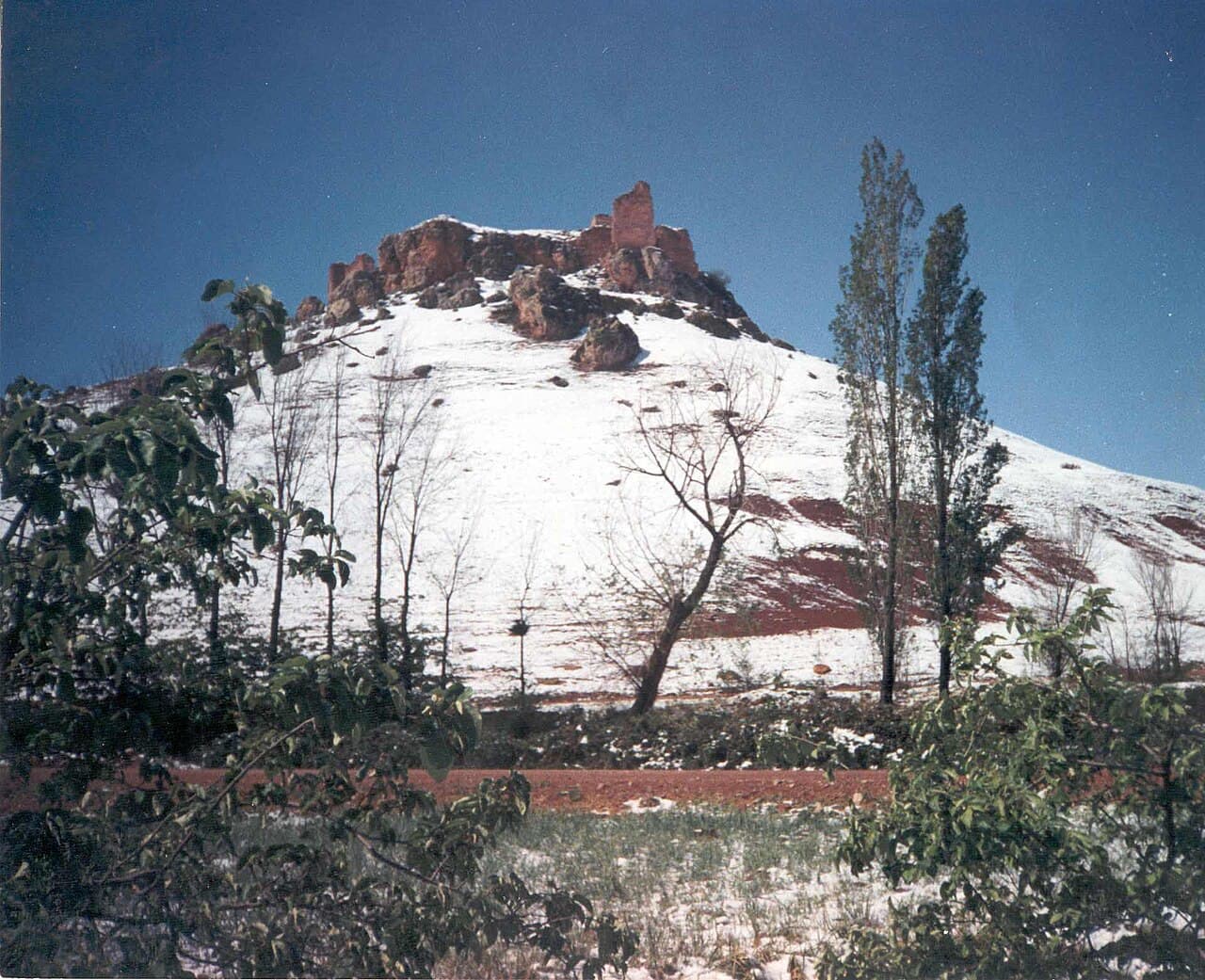
Estrella Castle, also known locally as Castillo de la Estrella or Castillo de Montiel, is a historic hilltop fortress located near the town of Montiel in the province of Ciudad Real, Spain. This castle occupies a strategic position atop a hill, overseeing the surrounding landscape and an ancient Roman road that once served as a vital communication and trade route. Its commanding location made it a key military and administrative site throughout its history.

The origins and early history of Estrella Castle

The first fortifications at Estrella Castle were likely constructed by the Arabs in the 9th century during the period of Islamic rule in the Iberian Peninsula. This early castle was built primarily to control the surrounding territory and secure the important Roman road that passed nearby. Its robust construction and strategic location made it a formidable stronghold in the region.

During the early Middle Ages, the castle remained under Muslim control and was part of the defensive network that protected the southern territories of Al-Andalus. Its strength was demonstrated during the Christian Reconquista efforts in the early 13th century.

The Christian conquest and the Order of Santiago

Beginning in 1213, Christian forces led by the Order of Santiago launched campaigns to reclaim territory from the Muslims. Despite their efforts, Estrella Castle proved difficult to capture due to its strong fortifications. The Christians resorted to constructing a siege castle nearby to blockade and eventually capture Estrella after a prolonged siege in 1227.

Following its capture, the castle and the surrounding town were granted to the Order of Santiago by Ferdinand III of Castile. The Order attempted to restore the castle and repopulate the area, although their efforts throughout the 13th century were hampered by limited resources and the ongoing Reconquista campaigns elsewhere.

Development and significance in the 14th century

In the early 14th century, Estrella Castle gained increased political, administrative, and economic importance. The Order of Santiago undertook substantial reconstruction efforts, transforming the castle into a formidable fortress. It was during this period that the castle acquired the name Castillo de la Estrella.

The castle's strategic value was underscored during the Battle of Montiel in 1369, fought in the fields nearby. This battle was a decisive conflict between the Franco-Castilian forces supporting Henry of Trastámara and the Anglo-Castilian forces loyal to his half-brother, Peter of Castile. After Henry's victory, Peter sought refuge in Estrella Castle but was soon trapped. He was eventually lured out and killed by Henry, who then ascended to the throne as Henry II of Castile.

Architecture and structure

Estrella Castle is a classic example of a hill castle, built on elevated terrain to maximize defensive capabilities. Its original Arab construction featured a robust alcazaba (citadel) with a rectangular keep, surrounded by an extensive outer ward enclosed by curtain walls with numerous towers. The castle's defenses included multiple gates and battlements designed to repel attackers.

The Christian modifications in the 13th and 14th centuries reinforced these medieval fortifications, adapting them to evolving military technologies and needs. However, much of the castle's detailed architectural elements have been lost due to centuries of neglect and the use of its stones as building materials by local populations.

Decline and current status

Estrella Castle remained inhabited until the early 16th century but gradually fell into disrepair. By the late 16th century, it had become a ruin. From the 17th century onward, the castle's remains were extensively quarried for construction materials, leading to the loss of much of its outer ward and significant structural features.

Today, Estrella Castle is undergoing archaeological excavation and partial restoration. Access to the site is limited to guided tours due to its fragile condition. While the castle does not retain extensive architectural details, its historical significance and commanding location continue to attract visitors interested in medieval Spanish history and the Reconquista.

Historical context and cultural legacy

Estrella Castle's history reflects the broader narrative of medieval Spain, marked by the clash between Muslim and Christian powers during the Reconquista. Its capture by the Order of Santiago and involvement in key battles highlight its role in shaping regional power dynamics.

The castle also illustrates the military architecture of the period, combining Islamic and Christian influences in its construction and adaptation over centuries. Despite its ruined state, Estrella Castle remains a symbol of the turbulent medieval history of Castilla-La Mancha and the enduring legacy of the orders that shaped Spain's frontier territories.

Frequently asked questions (FAQ)

How do I visit Estrella Castle in Montiel?
Estrella Castle can be visited by joining guided tours as it is currently under archaeological excavation and not freely accessible. Tours provide insight into its history and architecture.
What is the historical significance of Estrella Castle?
Estrella Castle played a key role during the Reconquista, serving as a strategic fortress held by Arabs and later the Order of Santiago. It was also the site near the Battle of Montiel in 1369.
When was Estrella Castle built?
The castle's initial fortifications were built by the Arabs in the 9th century, making it an early medieval hill castle with a long history.
Is Estrella Castle well preserved?
The castle is partially preserved, with many original structures lost due to centuries of neglect and stone removal, but ongoing excavations are stabilizing the site.
Can I explore the architectural features of Estrella Castle?
While the castle retains its basic layout and some walls and towers, detailed architectural features are limited due to its ruined state and quarrying over time.

Photo gallery

Estrella Castle
Click to view

Photo by No machine-readable author provided. Francisco Pérez assumed (based on copyright claims).•CC BY-SA 2.5

1 photo • Click any image to view in full screen

Information

Hill Castle

Address

Next to Travesía San José, Montiel, Ciudad Real, Spain

Loading map...

Visitor reviews

No reviews yet. Been here? Write the first review and help other travelers!

Write the first review

Visited this castle? Share your experience

Your review helps other travelers and adds first-hand knowledge to our encyclopedia.
Write a review

(5/5)

0/2000 characters

Your review will be visible after admin approval

Nearby castles

10.1 km
Paterno Castle — Spain castle

Paterno Castle

Albaladejo, Spain

The Castle of Paterno, also known as the Castle of Albaladejo, is a 13th-century fortress situated in the municipality of Albaladejo, within the province of Ciudad Real, Spain. This hill castle exemplifies the strategic military architecture typical of the High Medieval period in the Iberian Peninsula. Historical context and significance Constructed in the 13th century, during a time of territorial consolidation and frequent conflicts in medieval Spain, the castle served as a defensive stronghold overseeing the surrounding landscape. Its location on elevated terrain provided a tactical advantage for surveillance and protection against invasions. The castle played a role in the complex dynamics of the Reconquista, the centuries-long Christian reconquest of the Iberian Peninsula from Muslim rule. Throughout its history, the castle was part of the frontier defenses in the region of Ciudad Real, which was a contested area between Christian and Muslim forces during the Middle Ages. It likely functioned as a military outpost and a symbol of feudal authority, controlling nearby routes and settlements. Architectural features and design The Castle of Paterno is a typical example of a hill castle built for defense and control. Its construction utilized local stone materials, with thick walls designed to withstand sieges and attacks. The castle's layout likely included a keep or main tower, curtain walls, and defensive battlements, although much of the original structure may now be in ruins or partially preserved. Defensive elements such as arrow slits, battlements, and possibly a moat or ditch would have been incorporated to enhance its security. The castle’s elevated position not only provided a commanding view of the surrounding terrain but also made direct assaults more difficult for attackers. Structural components Keep (donjon): Central fortified tower serving as the last line of defense and residence for the lord or commander. Curtain walls: Thick defensive walls enclosing the castle’s inner courtyard and structures. Battlements and arrow slits: Features allowing defenders to fire upon attackers while remaining protected. Gatehouse: Controlled access point, potentially fortified with a portcullis and guard rooms. Current condition and preservation Today, the Castle of Paterno remains a significant historical site, although its condition varies from partially preserved to ruins. Some sections of the walls and towers may still be visible, providing insight into the castle’s original defensive design. Preservation efforts focus on maintaining the structural remnants and promoting the site as a cultural heritage landmark within the region. Visiting information and cultural importance The castle is accessible to visitors interested in medieval military architecture and Spanish history. While facilities may be limited due to its remote location and preservation status, the site offers a valuable experience for those exploring the historical landscapes of Ciudad Real. Its position on a hill offers panoramic views of the surrounding countryside, enhancing its appeal to hikers and history enthusiasts alike. As part of the cultural heritage of Castilla-La Mancha, the Castle of Paterno contributes to the understanding of medieval fortifications in Spain and the region’s historical evolution during the High Medieval period.

High Medieval (11th–13th c.)
Details
24.9 km

Gorgojí Tower

Alcaraz, Spain

Gorgojí Tower, known locally as Torre de Gorgojí, is a medieval fortress ruin situated in a field west of the town of Alcaraz in the province of Albacete, Spain. This tower holds historical significance due to its origins dating back to around 1100 AD, during the period of Muslim rule in the Iberian Peninsula. It represents the military architecture and territorial struggles characteristic of the High Medieval era in this region. Historical background and strategic importance The tower's foundation around the early 12th century places it within the context of the Reconquista, the centuries-long series of campaigns by Christian kingdoms to reclaim territories controlled by Muslim rulers. In 1213, the nearby town of Alcaraz was conquered by Alfonso VIII of Castile. Following this conquest, the king's soldiers and settlers repopulated Alcaraz and extended their control by capturing Gorgojí Tower, which was a strategic fortification overseeing the surrounding landscape and roads. Subsequently, the tower came under the ownership of the Knights of the Order of Santiago, a military and religious order instrumental in the defense and administration of frontier territories during the Reconquista. The Order's stewardship underscores the tower's role not only as a military outpost but also as part of the broader network of fortifications securing Christian control in the region. Architectural features and construction While much of the original structure has been lost, the remaining elements of Gorgojí Tower reveal typical features of High Medieval military architecture. The tower was likely constructed with thick stone walls designed for defense, including narrow windows or arrow slits for archers. Its location near the CM-412 road suggests it served to monitor and control movement along this important route. Over the centuries, the tower underwent various modifications, especially in later periods when it was converted into a private dwelling. Additional buildings were constructed around and adjoining the tower, which altered its original military character. However, these adaptations also reflect the tower's continuous use and integration into the local community. Modern condition and conservation efforts By the early 21st century, Gorgojí Tower had fallen into disuse and was standing empty. Plans for restoration were proposed in 2009, recognizing the tower's cultural and historical value. Unfortunately, in 2011, heavy rains and structural neglect caused half of the tower to collapse, reducing it to a ruinous state. Currently, Gorgojí Tower remains fenced off and inaccessible to the public. Despite its ruinous condition, it retains aesthetic and archaeological interest as a partially preserved medieval tower. Conservationists hope to stabilize and consolidate the remains to prevent further deterioration and to preserve this piece of Spain's medieval heritage. Visiting information and significance Although the tower is not open for visitation due to safety concerns, its location near Alcaraz makes it a point of interest for those studying medieval fortifications and the history of the Reconquista in Castilla-La Mancha. The tower's association with the Order of Santiago adds an important dimension to its historical narrative, linking it to one of the most influential military orders in medieval Spain. Gorgojí Tower exemplifies the transition of military architecture from Muslim to Christian rule and the adaptation of such fortifications over time. Its ruins serve as a tangible reminder of the region's complex past and the enduring legacy of medieval fortresses in shaping Spain's cultural landscape.

High Medieval (11th–13th c.)
Details
27.3 km

Alhambra Castle

Alhambra, Spain

Alhambra Castle, known locally as Castillo de Alhambra, is a historic fortress located on a prominent hill near the town of Alhambra in the province of Ciudad Real, Spain. This high medieval castle stands as a testament to the region's turbulent history during the Reconquista, reflecting a blend of Islamic and Christian military architecture. Early history and arab origins The site of Alhambra Castle was originally fortified in the mid-12th century by a muslim garrison. The initial structure was an arab castle that served as a defensive stronghold during the period of Muslim rule in the Iberian Peninsula. This early fortification was strategically positioned to control the surrounding territory and protect key routes. The castle's first major transition occurred between 1158 and 1169 when it was conquered by Alfonso VII of León, marking a significant turning point in the Christian Reconquista efforts. This conquest shifted control of the castle from Muslim to Christian hands, initiating a new chapter in its history. Medieval transformations and military orders Following its capture, Ferdinand II of León donated the castle to the Order of Mountjoy, a military order tasked with defending the frontier and maintaining Christian control. The possessions of this order later passed to the Order of Calatrava, another prominent military order active in the region. However, the castle's control was contested, and after the Battle of Alarcos in 1195, it was lost to Muslim forces once again. This defeat underscored the ongoing conflict between Christian and Muslim powers in the area. In 1212, the castle was recovered by Alfonso VIII of Castile following the decisive Battle of Las Navas de Tolosa, a pivotal victory for the Christian kingdoms. Two years later, in 1214, Alfonso VIII donated the castle to the Order of Santiago, reflecting the continued involvement of military orders in the castle's administration and defense. Architectural features and later developments The current structure of Alhambra Castle largely dates to the 13th century, built upon the foundations of the earlier Muslim fortress. It is attributed to Count Álvarez Núñez de Lara, who was responsible for significant construction and fortification efforts during this period. The castle is characterized as a small mountaintop fortress enclosed by a distinctive 14-sided defensive wall. These walls reach thicknesses of up to 2 meters in certain sections, demonstrating the emphasis on strong fortifications to withstand sieges and attacks. Throughout the later medieval centuries, the castle gradually lost its strategic importance as military and political dynamics shifted. This decline led to its partial abandonment and eventual ruination. In more recent centuries, the castle ruins were repurposed as a dovecote, a common practice for disused fortresses in rural Spain, where pigeons were raised for food and communication. Current status and visitor information Today, Alhambra Castle remains a well-preserved medieval ruin accessible to the public. Visitors can freely explore the site, appreciating its historic walls and the panoramic views afforded by its hilltop position. Despite its modest size, the castle offers valuable insights into the military architecture of the high medieval period and the complex history of Christian-Muslim relations in central Spain. The castle is noted for its intimate scale and authentic medieval atmosphere, making it a worthwhile destination for those interested in Spanish history, military architecture, and the Reconquista era.

High Medieval (11th–13th c.)
Details

