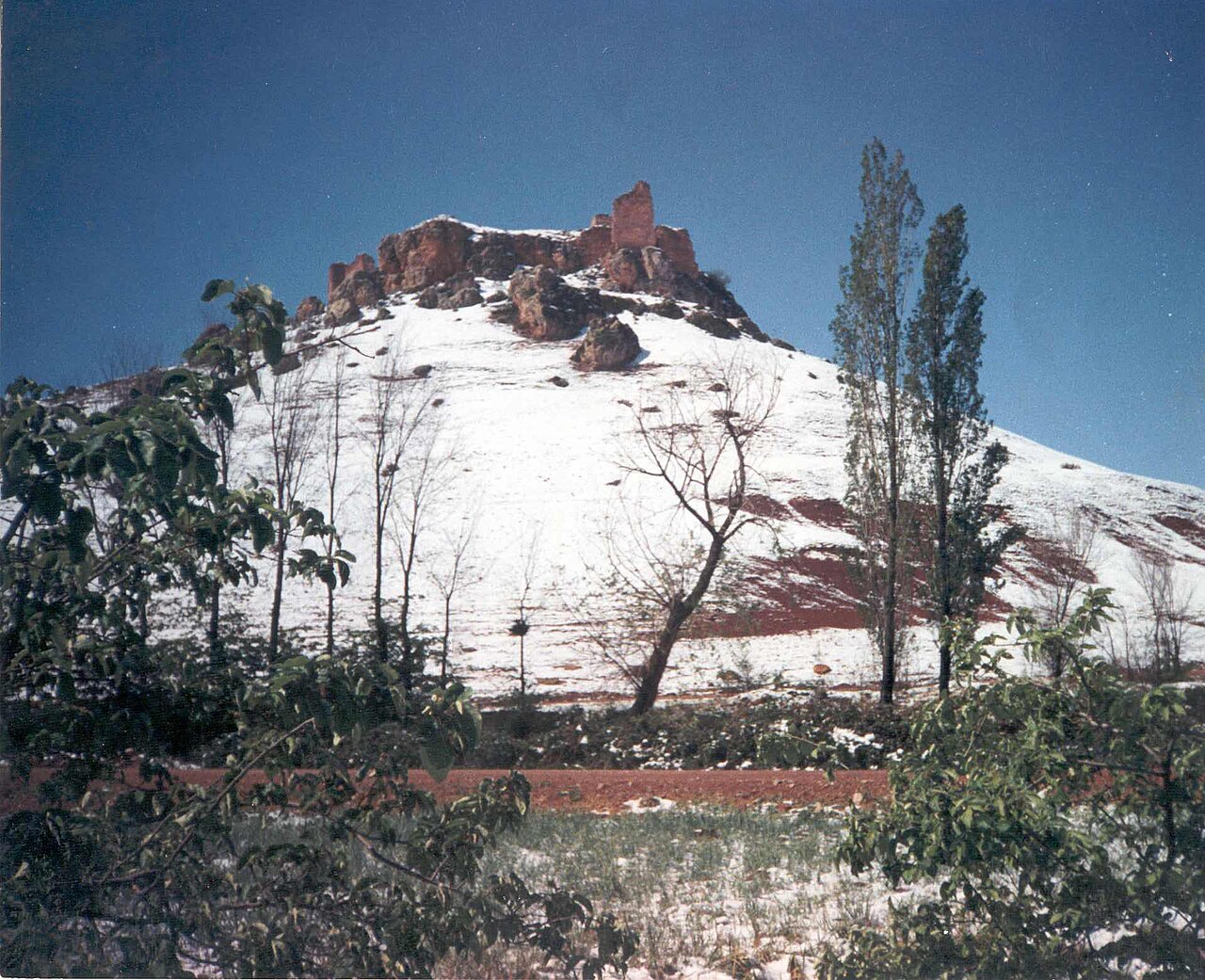
Alhambra Castle
Alhambra Castle, known locally as Castillo de Alhambra, is a historic fortress located on a prominent hill near the town of Alhambra in the province of Ciudad Real, Spain. This high medieval castle stands as a testament to the region's turbulent history during the Reconquista, reflecting a blend of Islamic and Christian military architecture.
Early history and arab origins
The site of Alhambra Castle was originally fortified in the mid-12th century by a muslim garrison. The initial structure was an arab castle that served as a defensive stronghold during the period of Muslim rule in the Iberian Peninsula. This early fortification was strategically positioned to control the surrounding territory and protect key routes.
The castle's first major transition occurred between 1158 and 1169 when it was conquered by Alfonso VII of León, marking a significant turning point in the Christian Reconquista efforts. This conquest shifted control of the castle from Muslim to Christian hands, initiating a new chapter in its history.
Medieval transformations and military orders
Following its capture, Ferdinand II of León donated the castle to the Order of Mountjoy, a military order tasked with defending the frontier and maintaining Christian control. The possessions of this order later passed to the Order of Calatrava, another prominent military order active in the region.
However, the castle's control was contested, and after the Battle of Alarcos in 1195, it was lost to Muslim forces once again. This defeat underscored the ongoing conflict between Christian and Muslim powers in the area.
In 1212, the castle was recovered by Alfonso VIII of Castile following the decisive Battle of Las Navas de Tolosa, a pivotal victory for the Christian kingdoms. Two years later, in 1214, Alfonso VIII donated the castle to the Order of Santiago, reflecting the continued involvement of military orders in the castle's administration and defense.
Architectural features and later developments
The current structure of Alhambra Castle largely dates to the 13th century, built upon the foundations of the earlier Muslim fortress. It is attributed to Count Álvarez Núñez de Lara, who was responsible for significant construction and fortification efforts during this period.
The castle is characterized as a small mountaintop fortress enclosed by a distinctive 14-sided defensive wall. These walls reach thicknesses of up to 2 meters in certain sections, demonstrating the emphasis on strong fortifications to withstand sieges and attacks.
Throughout the later medieval centuries, the castle gradually lost its strategic importance as military and political dynamics shifted. This decline led to its partial abandonment and eventual ruination.
In more recent centuries, the castle ruins were repurposed as a dovecote, a common practice for disused fortresses in rural Spain, where pigeons were raised for food and communication.
Current status and visitor information
Today, Alhambra Castle remains a well-preserved medieval ruin accessible to the public. Visitors can freely explore the site, appreciating its historic walls and the panoramic views afforded by its hilltop position.
Despite its modest size, the castle offers valuable insights into the military architecture of the high medieval period and the complex history of Christian-Muslim relations in central Spain.
The castle is noted for its intimate scale and authentic medieval atmosphere, making it a worthwhile destination for those interested in Spanish history, military architecture, and the Reconquista era.
Frequently asked questions (FAQ)
- When was Alhambra Castle originally built?
- Alhambra Castle was originally built in the mid-12th century by a Muslim garrison during the period of Islamic rule in Spain.
- Who controlled Alhambra Castle after Alfonso VII of León?
- After Alfonso VII of León conquered the castle between 1158 and 1169, it was donated to the Order of Mountjoy and later passed to the Order of Calatrava.
- What is the architectural style of Alhambra Castle?
- Alhambra Castle primarily reflects high medieval military architecture, with a 14-sided defensive wall and thick fortifications typical of 12th and 13th-century hill castles.
- Can visitors freely access Alhambra Castle today?
- Yes, Alhambra Castle is currently accessible to the public without an entrance fee, allowing visitors to explore the ruins and enjoy panoramic views from the hilltop.
- Why did Alhambra Castle lose its strategic importance?
- The castle lost strategic importance due to changing military and political conditions over the later medieval centuries, leading to its gradual abandonment and ruin.
Information
Address
Next to Avenida Tercio San Fermin A, Alhambra, Ciudad Real, Spain
Loading map...
Visitor reviews
No reviews yet. Been here? Write the first review and help other travelers!
Write the first reviewVisited this castle? Share your experience
Your review helps other travelers and adds first-hand knowledge to our encyclopedia.