Erichsburg — Germany castle

Erichsburg

Erichsburg castle in Lower Saxony, Germany
Renaissance (15th–17th c.)
Ruins

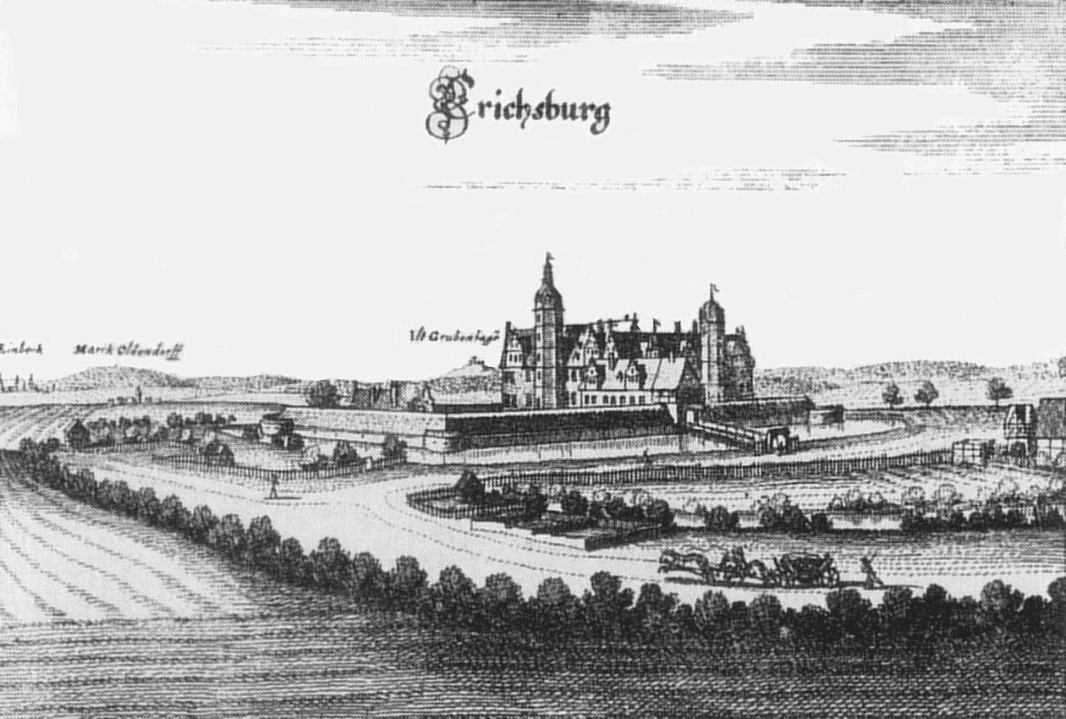
Erichsburg castle, located in the village of Erichsburg within the borough of Dassel in Lower Saxony, Germany, is a notable example of a Renaissance hill castle constructed in the 16th century. It was built during the period of the Principality of Calenberg, a subdivision of the Duchy of Brunswick-Lüneburg, reflecting the architectural and strategic priorities of the era.

Historical context and significance

The castle was erected in the mid-1500s as a fortified residence and administrative center for the ruling authorities of the region. Its construction corresponded with a time of relative political stability in northern Germany, allowing for the development of more comfortable and representative castles rather than purely military fortifications. Erichsburg thus embodies the transition from medieval fortress to Renaissance manor, combining defensive features with residential and administrative functions.

Throughout its history, Erichsburg played a role in the local governance and territorial control within the Principality of Calenberg. The castle's ownership and use evolved over centuries, reflecting broader shifts in political power and military technology that eventually rendered such castles less strategically vital.

Architectural features and layout

Erichsburg is classified as a hill castle, meaning it was constructed on elevated terrain to maximize defensive advantages. Its Renaissance architectural style is evident in the design of its buildings and fortifications, which include characteristic elements such as symmetrical layouts, ornamental stonework, and large windows that contrast with the narrow arrow slits typical of earlier medieval castles.

The castle complex traditionally included a main residential building, surrounded by curtain walls and defensive towers. Although much of the original structure has suffered from neglect, some elements of the curtain walls and gatehouses remain visible. The castle's position on a hill provided natural defense, supplemented by man-made fortifications such as moats or ditches, though specific details about these features at Erichsburg are limited.

Current condition and preservation

As of the early 21st century, particularly noted in 2007, Erichsburg was reported to be in a poor state of repair. The castle has not undergone extensive restoration, and many parts have deteriorated due to weathering and lack of maintenance. Despite this, the ruins still offer valuable insights into Renaissance castle architecture in Lower Saxony.

Efforts to preserve or restore Erichsburg have been limited, and the site remains largely inaccessible to the public. Its condition reflects the challenges faced by many lesser-known castles in Germany, where funding and interest often focus on more prominent landmarks.

Location and accessibility

Erichsburg is situated in a rural area of Lower Saxony, within the administrative borough of Dassel. The village and castle are relatively remote, contributing to the castle's obscurity and the limited tourism infrastructure. Visitors interested in Renaissance castles or German regional history may find Erichsburg a point of interest, though access and facilities are minimal.

Architectural and cultural importance

Despite its current condition, Erichsburg remains an important cultural heritage site. It represents the architectural transition from medieval fortresses to Renaissance residences in northern Germany. The castle's historical association with the Principality of Calenberg adds to its regional significance, linking it to the broader political and social history of Lower Saxony.

Preserving knowledge of Erichsburg's design and history contributes to understanding the evolution of castle architecture and the shifting role of such structures in European history.

Frequently asked questions (FAQ)

How do I get to Erichsburg Castle?
Erichsburg Castle is located in the picturesque region of Germany and is easily accessible by car or public transport. If you are traveling by train, the nearest station is approximately 10 kilometers away, and there are local buses that connect to the castle. For those driving, ample parking is available nearby.
What is the historical significance of Erichsburg Castle?
Erichsburg Castle dates back to the 12th century and is a remarkable example of medieval military architecture. It played a crucial role in the regional defense system and has witnessed numerous historical events over the centuries. Today, it stands as a testament to the rich heritage of the area.
When was Erichsburg Castle last renovated?
The last significant renovation of Erichsburg Castle took place in the early 2000s, restoring many of its original features while ensuring its preservation for future generations. The restoration efforts have helped maintain the castle’s structural integrity and enhance its historical appeal for visitors. Ongoing maintenance is conducted to keep the site in excellent condition.
Can I take guided tours of Erichsburg Castle?
Yes, guided tours are available at Erichsburg Castle, providing an in-depth look at its history and architecture. The knowledgeable guides share fascinating stories and insights, making it a great experience for history enthusiasts. It is advisable to check the schedule in advance, as tours may vary by season.
Why is Erichsburg Castle popular among tourists?
Erichsburg Castle is popular for its stunning architecture, rich history, and breathtaking views of the surrounding landscape. The castle offers a unique glimpse into medieval life and attracts visitors interested in both history and culture. Additionally, its proximity to other attractions makes it a convenient stop for tourists exploring the region.
Is it possible to host events at Erichsburg Castle?
Yes, Erichsburg Castle can host various events, including weddings, corporate gatherings, and cultural events. The unique setting and beautiful surroundings provide a memorable backdrop for special occasions. It is recommended to contact the castle administration for availability and specific arrangements.
What are the opening hours for Erichsburg Castle?
Erichsburg Castle is open to visitors from April to October, with varying hours depending on the season. During peak tourist months, the castle typically opens from 9 AM to 6 PM. It’s best to check the official website for the most current opening hours and any seasonal changes.
What are the ticket prices for visiting Erichsburg Castle?
Ticket prices for Erichsburg Castle are generally affordable, with discounts available for students and seniors. Adults usually pay a standard entry fee, while children under a certain age may enter for free or at a reduced rate. For the latest pricing and any special offers, be sure to visit the castle's official website.
When is the best time to visit Erichsburg Castle?
The best time to visit Erichsburg Castle is during the spring and early autumn months when the weather is mild and the surrounding landscapes are particularly beautiful. Additionally, visiting during weekdays can help avoid larger crowds, allowing for a more enjoyable experience. Special events and festivals are often held in the summer, adding to the charm of your visit.
Are there any nearby attractions to Erichsburg Castle?
Yes, there are several attractions near Erichsburg Castle, including picturesque hiking trails and charming villages that showcase local culture. Additionally, visitors can explore other historical sites and museums in the region. Make sure to allocate time to discover the surrounding beauty and heritage during your visit.

Photo gallery

Erichsburg
Click to view

Photo by Matthäus Merian•Public domain

1 photo • Click any image to view in full screen

Information

Hill Castle

Loading map...

Visitor reviews

No reviews yet. Been here? Write the first review and help other travelers!

Write the first review

Visited this castle? Share your experience

Your review helps other travelers and adds first-hand knowledge to our encyclopedia.

Write a review

(5/5)

0/2000 characters

Your review will be visible after admin approval

Nearby castles

15.3 km

Burg Greene

Einbeck, Germany

Burg Greene is a notable medieval hill castle located near the village of Greene in the municipality of Einbeck, Germany. Constructed in the late Middle Ages, it served as a strategic fortress for the noble von Homburg family, who built it to protect their lands and control a vital trade route along the Leine River. This castle's history reflects the complex political and military dynamics of medieval Germany, as well as its evolving role through subsequent centuries. Early defensive structures and founding Before the establishment of Burg Greene in 1308, the site was preceded by an earlier hillfort situated about one kilometer south on a spur overlooking the Leine valley. Archaeological evidence dates this predecessor to between the 10th and 12th centuries, highlighting the area's long-standing strategic importance. The decision to build Burg Greene in the early 14th century was driven by the von Homburg family's need to fortify their holdings and oversee regional trade routes. Architectural layout and features Burg Greene is a classic example of a spur castle, characterized by its location on a projecting ridge that provides natural defensive advantages. The castle's design includes a distinct two-part layout comprising a lower outer bailey and a slightly elevated inner bailey, separated by a robust dividing wall approximately 1.5 meters thick. This wall not only served as a defensive barrier but also supported the imposing bergfried or keep, which remains the most prominent surviving structure. The bergfried stands about 25 meters tall and features a square base with walls nearly 2.8 meters thick at ground level, emphasizing its defensive purpose as both a lookout and a refuge during attacks. The castle's main buildings were enclosed by an outer curtain wall, likely two stories high and constructed from stone, topped with timber-framed upper floors. This combination provided a balance between strong fortification and habitable living spaces. Access to Burg Greene was originally from the south, via a drawbridge crossing a neck ditch. This entrance was protected by a modest gatehouse controlling access to the outer bailey, which itself had a roughly triangular courtyard shape. Archaeological traces indicate the presence of various perimeter buildings within the outer bailey, likely serving administrative, residential, and service functions. Historical ownership and political significance The castle's history is closely tied to the fortunes of the von Homburg family, who established it as a symbol of their territorial control. After the death of the last male von Homburg in 1409, his widow Schonette exercised her widow's rights over the castle, but this period was marked by contested claims. Duke Bernhard of Brunswick asserted control, leading to disputes with the Bishopric of Hildesheim. In 1414, the castle was sold to the bishopric by the ruling Welf family, although a repurchase clause allowed the Welfs to regain it in 1499. Following its reacquisition, the Welf family used Burg Greene as an administrative center for regional governance. This shift from purely military fortress to administrative hub illustrates the changing nature of castle functions during the late medieval and early modern periods. Conflicts, destruction, and restoration Burg Greene's military role was tested during several conflicts. In 1553, the castle suffered significant damage during a raid led by Vollrad von Mansfeld. The destruction prompted Duke Heinrich the Younger to undertake prompt rebuilding efforts to restore the castle's defensive capabilities. The castle endured further hardship during the Thirty Years' War in the early 17th century, when it fell into the hands of Imperial forces after the Battle of Lutter. By the late 17th century, the castle's importance as a military and administrative site waned. New government offices were established elsewhere, and Burg Greene was officially abandoned in 1694 under Dukes Rudolf August and Anton Ulrich. The castle's decline accelerated as it was inhabited only by day laborers, and many of its stones were repurposed for local construction. By 1757, only the tower remained largely intact. 20th-century memorial significance In the 20th century, Burg Greene acquired a new symbolic role. In 1953, the site was designated as a federal memorial dedicated to German prisoners of war from World War II. The castle's bergfried was repurposed as an honorary tower, housing millions of signatures on petitions advocating peace and remembrance. This memorial function continued until 1961, when concerns about the tower's structural stability led to the relocation of the tribute. The tower's exterior bears a memorial cross commemorating prisoners of war, while inside, wall shrines representing the federal states of Germany were installed. These elements underscore Burg Greene's layered history as both a medieval fortress and a site of modern remembrance. Current remains and visitor experience Today, visitors to Burg Greene can explore the remnants of its medieval past, including parts of the outer curtain wall, the restored bergfried, and the gate archway that leads into the inner bailey. The bergfried offers extensive views across the Leine valley, providing a tangible connection to the castle's original defensive purpose. Though much of the castle has been lost over time, the surviving structures and archaeological traces provide valuable insight into its architectural form and historical functions. Burg Greene stands as a testament to the region's medieval heritage and its evolving role through centuries of conflict, governance, and commemoration.

Late Medieval (14th–15th c.)
Details
27.3 km

Burg Adelebsen

Adelebsen, Germany

Burg Adelebsen is a prominent hill castle situated within the municipality of Adelebsen in Lower Saxony, Germany. Established in the early 13th century, this castle stands on a natural sandstone spur overlooking the Schwülme valley, offering a commanding view of the surrounding Solling hills. Its strategic location and robust medieval architecture reflect its historical role as a fortified noble residence and administrative center. Early history and noble lineage The origins of Burg Adelebsen trace back to the early 1200s when the noble family of Wibbecke relocated their seat to the sandstone ridge. The family, later known as de Adelevessen and eventually von Adelebsen, is first mentioned in documents dating to 1234. The castle itself appears in records by 1253, with clear documentation by 1295. For nearly eight centuries, it remained the ancestral home of the baronial von Adelebsen family, witnessing generations of noble stewardship. Medieval architecture and fortifications The castle's oldest surviving structure is a towering residential and defensive tower dating from the late 14th century, constructed in stages beginning around 1370. This tower reaches nearly 39 meters in height on its rock-facing side and features walls tapering from 4.3 meters thick at the base to 1.7 meters at the summit. Its partly pentagonal and hexagonal sandstone design includes Gothic-style windows and medieval masonry marks, highlighting the craftsmanship of the period. Inside, the tower contains rooms on the second and third floors equipped with fireplaces, and an elevated main entrance approximately four meters above the courtyard floor, emphasizing its defensive purpose. The lower section reflects construction techniques from about 1370–1380, while the upper levels, added in the early 15th century, remain largely intact. By the late 14th century, the castle complex included this dominant tower, the Moishus—a multi-purpose residential and economic building at the southeast corner—and an enclosing ring wall measuring roughly 47 by 32 meters. The 15th century saw expansions with the addition of the Hinterhaus and the Mittelkemenate, increasing living and service spaces. Conflicts and reconstruction Burg Adelebsen endured significant turmoil during its history. In 1466, the castle was severely damaged when it was set ablaze by the Bishop of Hildesheim during regional conflicts. Further destruction occurred during the Thirty Years’ War in the 17th century, which left the fortress in a damaged state. Reconstruction efforts began in the mid-17th century, aiming to restore and expand the castle's facilities. This rebuilding phase transitioned the fortress from a purely defensive stronghold to a more residential and administrative estate. Transformation into a residential estate By the mid-18th century, Burg Adelebsen had evolved significantly. The original moat separating the inner castle from the outer bailey was filled in, signaling a shift away from military defense towards residential and economic functions. New buildings such as a forester’s house (built in 1685) and a rococo-style rent office (constructed between 1748 and 1750) were added, reflecting the estate's administrative role. Additional structures in the outer bailey, including the New House, barns, a round tower, and an old gate, though now partially preserved, provide insight into the castle's operational complexity. Around 1900, stylistic updates introduced a mansard roof, altering the castle's silhouette and blending historic and modern architectural elements. Architectural features and natural setting The castle's position on a Buntsandstein sandstone ridge offers natural defensive advantages, with a steep drop of about 30 meters on the southern side overlooking the valley. The complex includes a berggarten (castle garden) and a functional courtyard situated in the valley below, integrating natural topography with architectural design. The main tower now serves as a habitat for a large colony of jackdaws, noted as the most significant in southern Lower Saxony, adding an ecological dimension to the site’s historical importance. Modern stewardship and preservation The von Adelebsen family maintained ownership of the castle until the death of the last male heir, Georg Freiherr von Adelebsen, in 1957. Prior to this, in 1947, he established a private foundation dedicated to preserving the castle and its grounds. Today, the site remains under the stewardship of this foundation, managed by a family descendant, ensuring the castle's conservation and historical legacy. Cultural and historical significance Burg Adelebsen stands as a testament to the architectural evolution from medieval fortification to aristocratic residence. Its enduring structures, from the towering defensive keep to the rococo administrative buildings, reflect centuries of noble life, regional power struggles, and adaptation to changing political and social contexts. The castle's integration with its natural sandstone environment and its role in local history make it a valuable cultural landmark in Lower Saxony.

High Medieval (11th–13th c.)
Details
29.6 km

Alte Burg Beverungen

Beverungen, Germany

Alte Burg Beverungen stands as a prominent example of a late medieval hill castle located in the town of Beverungen, Germany. Constructed in 1332, this castle has witnessed centuries of history and remains a significant cultural landmark in the region. Its strategic position atop a hill provided defensive advantages typical of medieval fortifications, allowing control over the surrounding landscape and trade routes. Architectural features and structure The castle's most striking feature is its imposing tower, which measures approximately 12 meters in width, 20 meters in length, and rises to a height of about 27 meters. This five-story tower above ground served multiple purposes, including defense, residence, and as a lookout point. The robust construction of the tower reflects the late medieval architectural style, characterized by thick stone walls and narrow windows designed for protection against invaders. Surrounding the tower, the remains of fortified walls and other ancillary buildings hint at a complex layout typical of hill castles from this period. Defensive elements such as battlements and arrow slits would have been integral to the castle's design, although some of these features may now be partially restored or in ruins. Historical context and significance Built in the early 14th century, Alte Burg Beverungen was constructed during a time of territorial conflicts and feudal power struggles in the region. The castle likely served as a stronghold for local nobility or a military garrison tasked with securing the area. Its location in Beverungen, near important trade routes along the Weser River, enhanced its strategic importance. Throughout its history, the castle may have experienced various phases of occupation, siege, and modification, reflecting the changing political and military landscape of medieval Germany. While detailed records of specific events at Alte Burg Beverungen are limited, its enduring presence underscores its role as a symbol of medieval authority and defense. Preservation and current condition Today, Alte Burg Beverungen is classified as partially restored, with efforts made to stabilize and conserve the remaining structures. The castle's tower remains a dominant feature, offering visitors a glimpse into medieval construction techniques and defensive architecture. Preservation initiatives have focused on maintaining the integrity of the tower and key architectural elements, allowing for educational and cultural use. The site attracts history enthusiasts and tourists interested in medieval fortifications and the heritage of the Beverungen region. Visiting Alte Burg Beverungen Visitors to the castle can explore the tower and surrounding grounds, which provide panoramic views of the town and the Weser Valley. The castle's elevated position makes it a popular destination for hiking and historical tours. While facilities may be limited due to the castle's partial restoration status, informational signage and guided tours help contextualize the site's significance. The best time to visit is during the warmer months when access to the hill and castle grounds is easiest. Architectural legacy and cultural importance Alte Burg Beverungen exemplifies the characteristics of hill castles built during the late medieval period in Germany. Its enduring tower and defensive structures offer valuable insights into the military architecture and feudal society of the 14th century. As a cultural monument, it contributes to the historical identity of Beverungen and the broader region.

Late Medieval (14th–15th c.)
Details

