Burg Greene
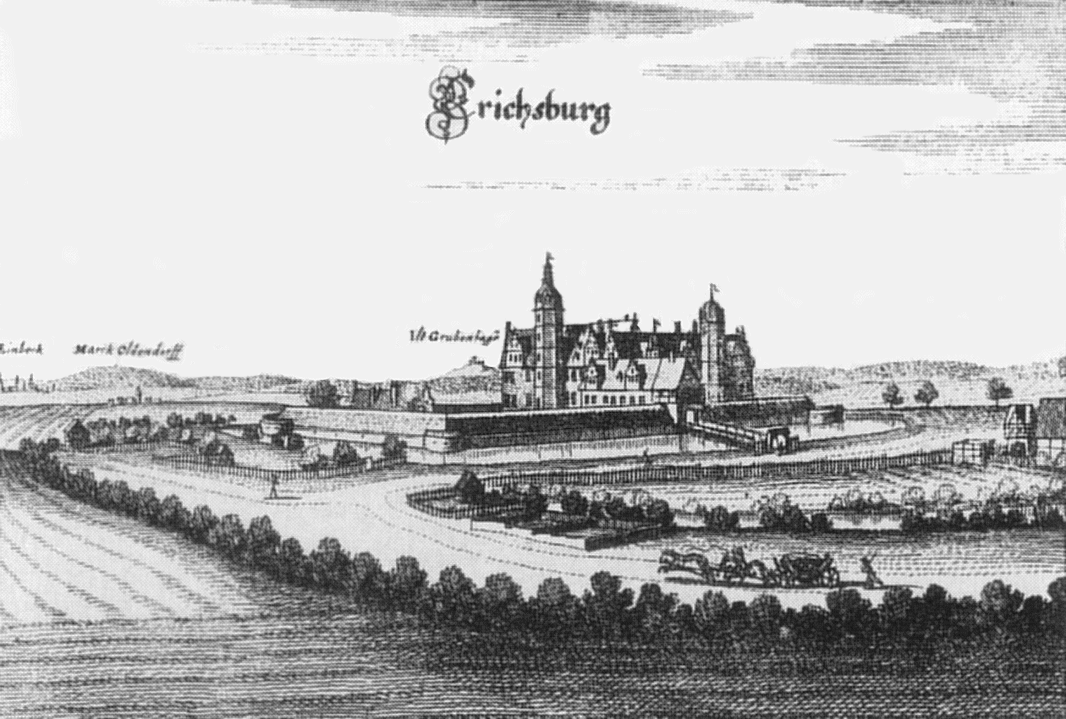
Burg Greene is a notable medieval hill castle located near the village of Greene in the municipality of Einbeck, Germany. Constructed in the late Middle Ages, it served as a strategic fortress for the noble von Homburg family, who built it to protect their lands and control a vital trade route along the Leine River. This castle's history reflects the complex political and military dynamics of medieval Germany, as well as its evolving role through subsequent centuries.
Early defensive structures and founding
Before the establishment of Burg Greene in 1308, the site was preceded by an earlier hillfort situated about one kilometer south on a spur overlooking the Leine valley. Archaeological evidence dates this predecessor to between the 10th and 12th centuries, highlighting the area's long-standing strategic importance. The decision to build Burg Greene in the early 14th century was driven by the von Homburg family's need to fortify their holdings and oversee regional trade routes.
Architectural layout and features
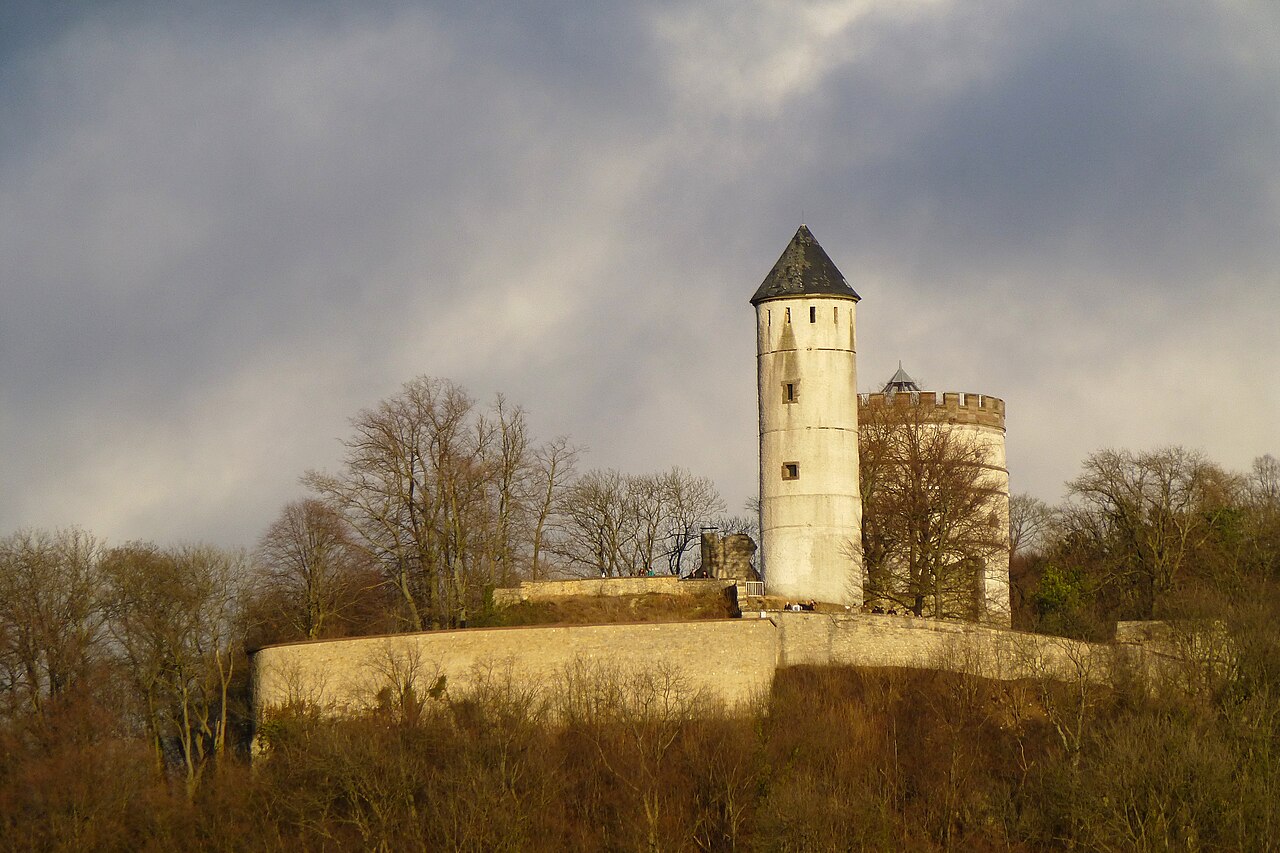
Burg Greene is a classic example of a spur castle, characterized by its location on a projecting ridge that provides natural defensive advantages. The castle's design includes a distinct two-part layout comprising a lower outer bailey and a slightly elevated inner bailey, separated by a robust dividing wall approximately 1.5 meters thick. This wall not only served as a defensive barrier but also supported the imposing bergfried or keep, which remains the most prominent surviving structure.
The bergfried stands about 25 meters tall and features a square base with walls nearly 2.8 meters thick at ground level, emphasizing its defensive purpose as both a lookout and a refuge during attacks. The castle's main buildings were enclosed by an outer curtain wall, likely two stories high and constructed from stone, topped with timber-framed upper floors. This combination provided a balance between strong fortification and habitable living spaces.
Access to Burg Greene was originally from the south, via a drawbridge crossing a neck ditch. This entrance was protected by a modest gatehouse controlling access to the outer bailey, which itself had a roughly triangular courtyard shape. Archaeological traces indicate the presence of various perimeter buildings within the outer bailey, likely serving administrative, residential, and service functions.
Historical ownership and political significance
The castle's history is closely tied to the fortunes of the von Homburg family, who established it as a symbol of their territorial control. After the death of the last male von Homburg in 1409, his widow Schonette exercised her widow's rights over the castle, but this period was marked by contested claims. Duke Bernhard of Brunswick asserted control, leading to disputes with the Bishopric of Hildesheim. In 1414, the castle was sold to the bishopric by the ruling Welf family, although a repurchase clause allowed the Welfs to regain it in 1499.
Following its reacquisition, the Welf family used Burg Greene as an administrative center for regional governance. This shift from purely military fortress to administrative hub illustrates the changing nature of castle functions during the late medieval and early modern periods.
Conflicts, destruction, and restoration
Burg Greene's military role was tested during several conflicts. In 1553, the castle suffered significant damage during a raid led by Vollrad von Mansfeld. The destruction prompted Duke Heinrich the Younger to undertake prompt rebuilding efforts to restore the castle's defensive capabilities. The castle endured further hardship during the Thirty Years' War in the early 17th century, when it fell into the hands of Imperial forces after the Battle of Lutter.
By the late 17th century, the castle's importance as a military and administrative site waned. New government offices were established elsewhere, and Burg Greene was officially abandoned in 1694 under Dukes Rudolf August and Anton Ulrich. The castle's decline accelerated as it was inhabited only by day laborers, and many of its stones were repurposed for local construction. By 1757, only the tower remained largely intact.
20th-century memorial significance
In the 20th century, Burg Greene acquired a new symbolic role. In 1953, the site was designated as a federal memorial dedicated to German prisoners of war from World War II. The castle's bergfried was repurposed as an honorary tower, housing millions of signatures on petitions advocating peace and remembrance. This memorial function continued until 1961, when concerns about the tower's structural stability led to the relocation of the tribute.
The tower's exterior bears a memorial cross commemorating prisoners of war, while inside, wall shrines representing the federal states of Germany were installed. These elements underscore Burg Greene's layered history as both a medieval fortress and a site of modern remembrance.
Current remains and visitor experience
Today, visitors to Burg Greene can explore the remnants of its medieval past, including parts of the outer curtain wall, the restored bergfried, and the gate archway that leads into the inner bailey. The bergfried offers extensive views across the Leine valley, providing a tangible connection to the castle's original defensive purpose.
Though much of the castle has been lost over time, the surviving structures and archaeological traces provide valuable insight into its architectural form and historical functions. Burg Greene stands as a testament to the region's medieval heritage and its evolving role through centuries of conflict, governance, and commemoration.
Frequently asked questions (FAQ)
- When was Burg Greene originally built?
- Burg Greene was constructed in 1308 during the late Middle Ages by the noble von Homburg family to protect their lands and control trade routes.
- What are the main architectural features of Burg Greene?
- The castle features a two-part layout with an outer bailey and an inner bailey separated by a thick dividing wall, and a prominent 25-meter tall bergfried with thick stone walls.
- What role did Burg Greene play during the Thirty Years' War?
- During the Thirty Years' War, Burg Greene was captured by Imperial forces following the Battle of Lutter, reflecting its strategic military importance at the time.
- Is Burg Greene open to visitors today?
- Yes, visitors can explore the restored bergfried, parts of the outer curtain wall, and the gate archway, enjoying panoramic views of the Leine valley.
- Why is Burg Greene significant as a memorial site?
- In the 20th century, Burg Greene served as a federal memorial for German prisoners of war from World War II, with the bergfried housing peace petitions and memorial shrines.
Information
Website
Visit websiteSources & official resources
Verify the information above using these authoritative references.
Loading map...
Visitor reviews
No reviews yet. Been here? Write the first review and help other travelers!
Write the first reviewVisited this castle? Share your experience
Your review helps other travelers and adds first-hand knowledge to our encyclopedia.