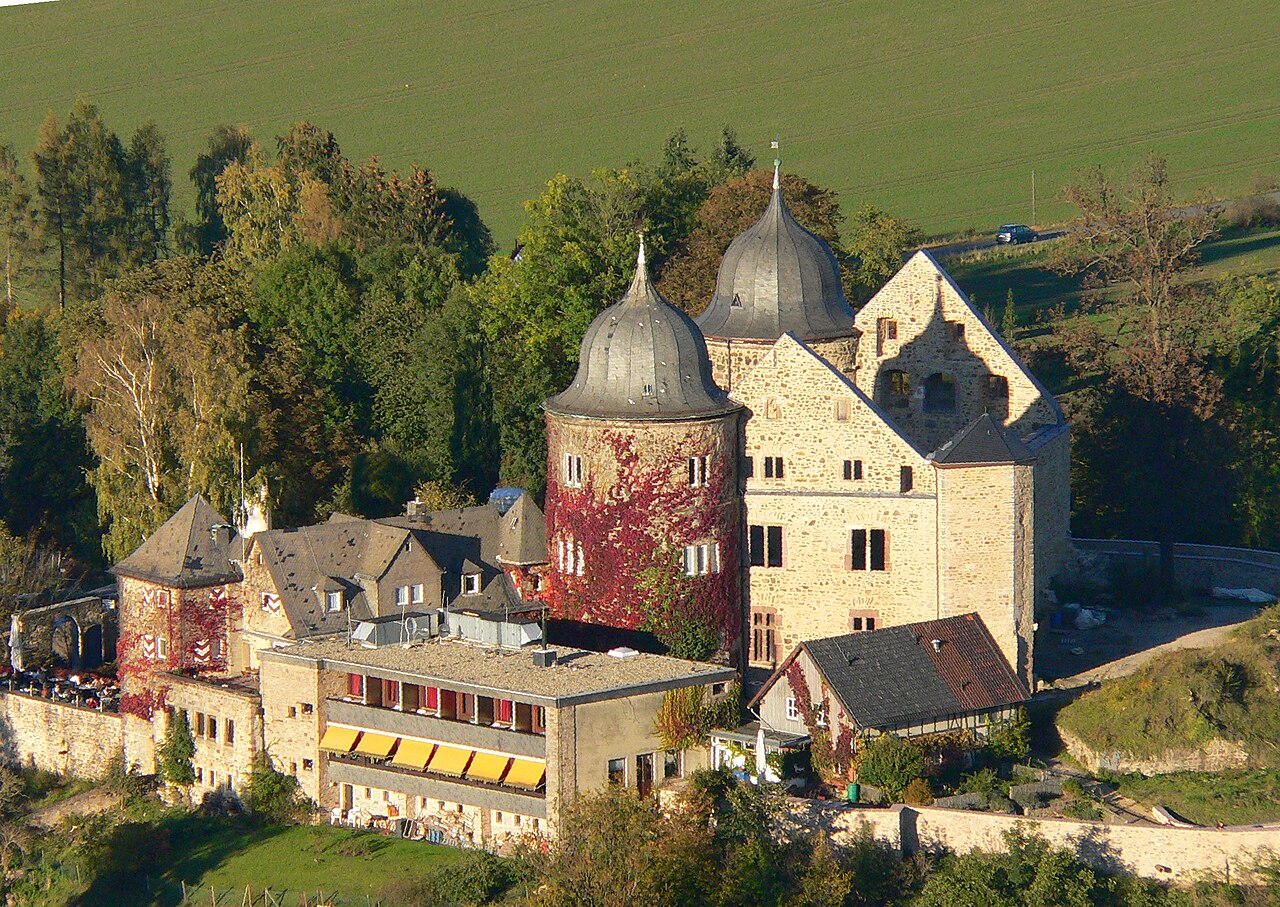
Alte Burg Beverungen
Alte Burg Beverungen stands as a prominent example of a late medieval hill castle located in the town of Beverungen, Germany. Constructed in 1332, this castle has witnessed centuries of history and remains a significant cultural landmark in the region. Its strategic position atop a hill provided defensive advantages typical of medieval fortifications, allowing control over the surrounding landscape and trade routes.
Architectural features and structure
The castle's most striking feature is its imposing tower, which measures approximately 12 meters in width, 20 meters in length, and rises to a height of about 27 meters. This five-story tower above ground served multiple purposes, including defense, residence, and as a lookout point. The robust construction of the tower reflects the late medieval architectural style, characterized by thick stone walls and narrow windows designed for protection against invaders.
Surrounding the tower, the remains of fortified walls and other ancillary buildings hint at a complex layout typical of hill castles from this period. Defensive elements such as battlements and arrow slits would have been integral to the castle's design, although some of these features may now be partially restored or in ruins.
Historical context and significance
Built in the early 14th century, Alte Burg Beverungen was constructed during a time of territorial conflicts and feudal power struggles in the region. The castle likely served as a stronghold for local nobility or a military garrison tasked with securing the area. Its location in Beverungen, near important trade routes along the Weser River, enhanced its strategic importance.
Throughout its history, the castle may have experienced various phases of occupation, siege, and modification, reflecting the changing political and military landscape of medieval Germany. While detailed records of specific events at Alte Burg Beverungen are limited, its enduring presence underscores its role as a symbol of medieval authority and defense.
Preservation and current condition
Today, Alte Burg Beverungen is classified as partially restored, with efforts made to stabilize and conserve the remaining structures. The castle's tower remains a dominant feature, offering visitors a glimpse into medieval construction techniques and defensive architecture.
Preservation initiatives have focused on maintaining the integrity of the tower and key architectural elements, allowing for educational and cultural use. The site attracts history enthusiasts and tourists interested in medieval fortifications and the heritage of the Beverungen region.
Visiting Alte Burg Beverungen
Visitors to the castle can explore the tower and surrounding grounds, which provide panoramic views of the town and the Weser Valley. The castle's elevated position makes it a popular destination for hiking and historical tours.
While facilities may be limited due to the castle's partial restoration status, informational signage and guided tours help contextualize the site's significance. The best time to visit is during the warmer months when access to the hill and castle grounds is easiest.
Architectural legacy and cultural importance
Alte Burg Beverungen exemplifies the characteristics of hill castles built during the late medieval period in Germany. Its enduring tower and defensive structures offer valuable insights into the military architecture and feudal society of the 14th century. As a cultural monument, it contributes to the historical identity of Beverungen and the broader region.
Frequently asked questions (FAQ)
- What are the opening hours of Alte Burg Beverungen?
- Alte Burg Beverungen is typically open to visitors from 10 AM to 6 PM during the tourist season, which runs from April to October. In the winter months, the castle may have reduced hours, so it’s best to check their official website for the most current information before your visit.
- What is the historical significance of Alte Burg Beverungen?
- Alte Burg Beverungen dates back to the 12th century and played a crucial role in the defense of the region during the Middle Ages. Its strategic location made it a key stronghold in the area, and it has witnessed various historical events that shaped the local history.
- Can I access Alte Burg Beverungen with a wheelchair?
- The castle has made efforts to improve accessibility for all visitors, including wheelchair access to certain areas. However, due to its historical nature, some parts may still have limitations, so it's advisable to contact the castle in advance to inquire about specific accessibility options.
- When is the best time to visit Alte Burg Beverungen?
- The best time to visit Alte Burg Beverungen is during the spring and summer months when the weather is pleasant, and the surrounding gardens are in full bloom. Additionally, the castle hosts various events and festivals during this time, enhancing the visitor experience.
- Is it possible to take guided tours of Alte Burg Beverungen?
- Yes, guided tours are available at Alte Burg Beverungen, providing visitors with a deeper insight into the castle's history and architecture. These tours are typically offered in several languages and can be a great way to learn more about the castle's significance.
- What are the ticket prices for visiting Alte Burg Beverungen?
- Ticket prices for Alte Burg Beverungen vary, with discounts often available for students, seniors, and families. It's recommended to check their official website for the latest pricing details and any special offers available during your visit.
- Are there any nearby attractions to visit after Alte Burg Beverungen?
- Yes, there are several nearby attractions worth exploring, including the picturesque town of Beverungen and the scenic Weser River. Additionally, other historical sites and natural parks in the vicinity offer a variety of activities for visitors to enjoy.
- What architectural features should I look for at Alte Burg Beverungen?
- Alte Burg Beverungen boasts impressive medieval architecture, including its imposing stone walls, towers, and beautifully preserved interiors. Visitors should pay special attention to the castle’s defensive structures and the unique design elements that reflect its historical significance.
Information
Loading map...
Visitor reviews
No reviews yet. Been here? Write the first review and help other travelers!
Write the first reviewVisited this castle? Share your experience
Your review helps other travelers and adds first-hand knowledge to our encyclopedia.