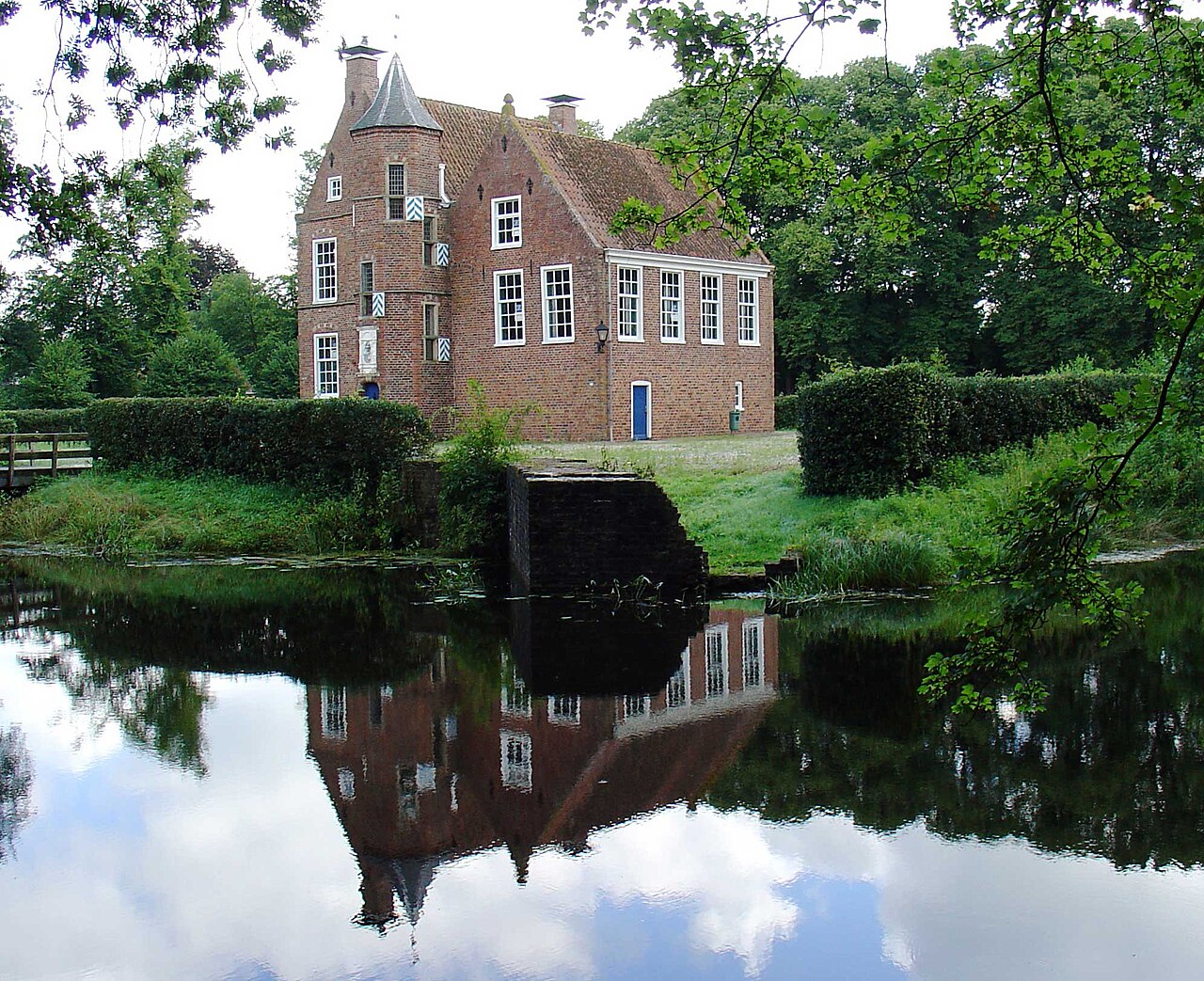
Ennemaborg stands as a remarkable example of a historic borg in Midwolda, Netherlands, embodying centuries of architectural evolution, social history, and landscape transformation. Originally emerging from a medieval stone house or steenhuis possibly dating back to the 14th century, the estate reflects the unique development of the Oldambt region, which was historically governed by the city of Groningen rather than local nobility. This distinctive governance influenced the borg’s status and architectural character, distinguishing it from many other noble manors in the northern provinces.
The estate’s name likely derives from early owners such as Sebo Ennens or Ennema, although documentary evidence more clearly identifies the property as a manor house from the late 17th or early 18th century. Initially functioning as a large farmstead under families like the Duircken and Clinge, Ennemaborg evolved into a symmetrical country house around 1700, reflecting contemporary architectural ideals of balance and order. This transformation was notably driven by the Hora family, especially Wilhelmus Hora and Anna Maria Clinge, who expanded the estate significantly during their tenure.
Medieval origins and early development
The earliest phase of the Ennemaborg site was a fortified stone house typical of the medieval period in the northern Netherlands. Such steenhuizen served as defensive farmhouses for local gentry and farmers, providing protection in a turbulent era. Archaeological research conducted in 2024 uncovered foundational elements beneath the current building that may date back to this medieval period, indicating a continuity of occupation and strategic importance.
Historical records from the late 17th century depict the borg with distinctive corner towers topped by onion-shaped spires and a gatehouse, although physical evidence for these features remains inconclusive. The borg’s early function was closely tied to agricultural management and local governance, with ownership passing through prominent families involved in the region’s civic and economic life.
Architectural transformation around 1700
By around 1700, the original medieval structure was replaced by a new, symmetrical country house embodying the architectural ideals of the time. The newly built borg emphasized symmetry, balance, and order, characteristics of early modern Dutch country houses. This architectural renewal coincided with the estate’s expansion under the Hora family, who acquired extensive lands surrounding the borg, increasing its size to several hundred hectares.
The design of the borg reflects early 18th-century architectural trends in the Netherlands, with a square layout and balanced proportions. The estate included not only the main residence but also numerous functional outbuildings such as stables, a coach house, barns, and workshops, supporting a self-sufficient manor economy. The grounds featured a baroque ornamental garden with symmetrical flower beds and a kitchen garden, showcasing horticultural wealth and aesthetic refinement.
Economic and landscape changes in the 19th century
Following the death of Johan Hora Siccama in the early 19th century, the estate entered a new phase under ownership by investors from Friesland who transformed the borg into a veenborg, or peat extraction center. This industrial shift led to significant landscape changes including land reclamation, drainage canals, and the installation of polder mills between the 1830s and 1860s. These developments facilitated agricultural expansion and the growth of settlements in the surrounding area.
During this period, estate management focused on forestry and peat exploitation, with figures like Oeds Oedes de Leeuw overseeing the transformation of woodland into a managed production forest dominated by oak trees. The peat industry’s rise and decline profoundly influenced the estate’s economic and environmental history.
20th-century restoration and cultural reuse
In the 20th century, as peat extraction waned, Ennemaborg’s function shifted towards education and conservation. The Dutch Heidemaatschappij established an educational center on the estate in 1951, marking a new chapter focused on regional development and learning. In 1965, the Stichting Het Groninger Landschap acquired the borg and its extensive grounds, undertaking restoration of the buildings and converting the surrounding forest into the Midwolderbos nature reserve.
Since the 1970s, Ennemaborg has served as a venue for offices, conferences, and cultural activities. Notably, artist Maya Wildevuur opened her gallery and residence within the borg in 1992, blending historic architecture with contemporary art. The ground floor and cellar are open to the public, decorated with her paintings, offering visitors a unique cultural experience within a historic setting.
Architectural and landscape features
Building layout and structural elements
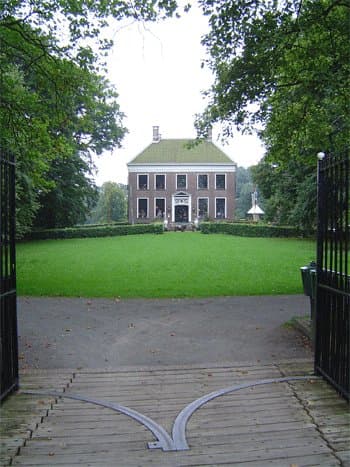
The current borg presents a square and symmetrical layout characteristic of early 18th-century Dutch country houses. Archaeological studies have revealed that parts of the front rooms date from around 1600, while some foundational elements may be medieval, underscoring the layered history of construction. Although historical depictions show corner towers with onion-shaped spires, these features have not been confirmed by physical evidence.
Grounds and gardens
The estate grounds include a large forest measuring approximately 2.5 kilometers long by 300 meters wide, now a protected natural area. In front of the borg lies a lawn planted with stinsen plants, early spring-flowering bulbs historically associated with noble estates in the region. The garden once featured a baroque ornamental layout with symmetrical flower beds and a kitchen garden, which was transformed into an English landscape garden in the 19th century with naturalistic hills and ponds. Late 20th-century restoration efforts reinstated the original baroque garden design, enhancing the estate’s historic character.
A pond behind the borg suggests remnants of a former moat system, possibly serving defensive or ornamental purposes. Historic outbuildings such as a coach house, stables, barns, and workshops reflect the estate’s self-sufficient manor economy. The coach house now operates as a restaurant, integrating hospitality with heritage.
Modern adaptations and conservation
Modern additions include a visitor center established in a converted work shed in 2004 and a concrete viaduct built in the 1980s to facilitate passage for riders and grazing konik horses. This viaduct was later adapted in 2009 to serve as a bat cave, supporting local biodiversity. The estate also preserves historic landscape features such as espaliered lindens replanted in the 1980s and a beech tree estimated to be around 200 years old, which survived the severe 1976 storm.
Frequently asked questions (FAQ)
- What is the historical significance of Ennemaborg?
- Ennemaborg is a well-preserved medieval castle in the Netherlands, dating back to the 14th century. It serves as a remarkable example of Dutch medieval architecture and has played a vital role in the regional history, reflecting the power and influence of the noble families that resided there.
- When was Ennemaborg built?
- Ennemaborg was constructed in the 14th century, with its initial foundations laid around 1400. Over the centuries, it has undergone various renovations and restorations, retaining its historical charm while adapting to changing architectural styles.
- Can I visit Ennemaborg?
- Yes, Ennemaborg is open to visitors who wish to explore its rich history and stunning architecture. Guided tours are available, offering insights into the castle's past and the stories of its former inhabitants.
- What are the opening hours of Ennemaborg?
- Ennemaborg typically opens to the public from Tuesday to Sunday, with specific hours that may vary by season. It is advisable to check the official website for the most up-to-date information on opening times before planning your visit.
- Is it possible to access Ennemaborg for individuals with disabilities?
- Yes, Ennemaborg strives to be accessible to all visitors. While some areas may have restrictions due to the castle's historical structure, efforts have been made to accommodate individuals with mobility challenges.
- What are the ticket prices for visiting Ennemaborg?
- Ticket prices for Ennemaborg are generally affordable, with discounts available for children, students, and seniors. It is recommended to purchase tickets in advance online to secure your preferred time slot and ensure a smooth entry.
- When is the best time to visit Ennemaborg?
- The best time to visit Ennemaborg is during the spring and summer months when the weather is mild, and the gardens are in full bloom. Additionally, special events and festivals often take place during this time, enhancing your overall experience.
- What nearby attractions can I explore after visiting Ennemaborg?
- After visiting Ennemaborg, you can explore several nearby attractions, including the scenic Drentsche Aa National Park and charming local villages. The region is rich in history and natural beauty, making it an ideal area for a full day of exploration.
Photo gallery

Photo by Anad at Dutch Wikipedia•Public domain
Information
Website
Visit websiteSources & official resources
Verify the information above using these authoritative references.
Loading map...
Visitor reviews
No reviews yet. Been here? Write the first review and help other travelers!
Write the first reviewVisited this castle? Share your experience
Your review helps other travelers and adds first-hand knowledge to our encyclopedia.