Bourtange Fortress
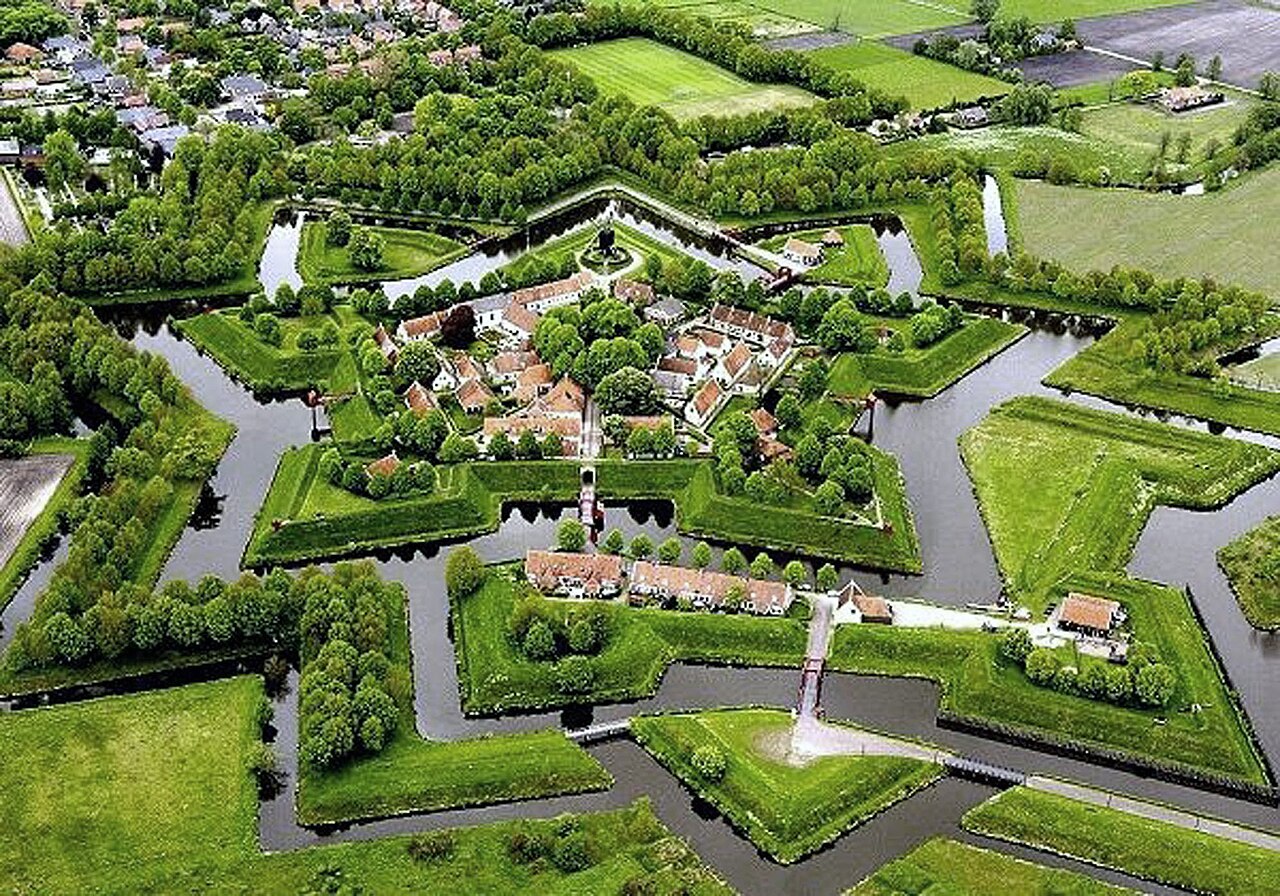
Bourtange fortress is a remarkable example of a star fort located in the province of Groningen, in the northeastern Netherlands, near the border with Germany. Originally constructed in 1593 during the Eighty Years' War, it was strategically built to control the only road linking the Dutch province of Groningen with Germany. This fortification was commissioned by William I of Orange, also known as William the Silent, to defend the region from Spanish forces.
Historical background and strategic importance
The Eighty Years' War (1568–1648) was a prolonged conflict between the Spanish Empire and the Dutch provinces seeking independence. In this context, Bourtange fortress played a crucial role as a military stronghold. Its location was carefully chosen to block Spanish advances and secure the vital trade and military route between Groningen and Germany. The fortress was actively used for military purposes until 1851, spanning over two and a half centuries.
Architectural design and features
Bourtange fortress is an exemplary model of a star-shaped fortification, a design that emerged in the Renaissance period to counter advances in artillery technology. The star shape allowed defenders to cover all approaches with overlapping fields of fire, minimizing blind spots. The fort consists of five bastions connected by thick earth walls and surrounded by a moat, enhancing its defensive capabilities.
Layout and construction
The fortress's layout is a perfect pentagram, with angled bastions designed to deflect cannonballs and provide optimal defensive coverage. The moat surrounding the fort was filled with water from nearby marshes, creating a natural barrier against attackers. Inside the walls, the fortress housed barracks, magazines for storing ammunition, officers' quarters, and a central square used for drills and gatherings.
Defensive elements
The earthworks and ramparts were designed to absorb artillery fire, while the bastions allowed defenders to fire along the walls, covering each other's blind spots. The moat was crossed by a drawbridge, which could be raised to prevent enemy access. The fort's design reflects the military engineering principles of the late 16th century, adapted to the flat and marshy terrain of the region.
Restoration and current status
After its military use ended in 1851, Bourtange fortress gradually fell into disrepair. However, in the mid-20th century, a comprehensive restoration project was undertaken to return the fort to its original 1742 appearance. This restoration included rebuilding the ramparts, bastions, and moat, as well as reconstructing the houses inside the fortress to reflect their historical state.
Today, Bourtange functions as an open-air museum, where visitors can explore the fortress's streets, buildings, and defensive structures. The town's houses have been faithfully reproduced to represent the 18th-century period, complete with period furnishings and exhibits. The site offers educational programs, guided tours, and reenactments that bring the history of the fortress and the Eighty Years' War to life.
Visitor experience and cultural significance
Visitors to Bourtange fortress can walk along the ramparts, cross the drawbridge, and explore the bastions that once defended the region. The fortress's unique star shape is clearly visible from elevated viewpoints, offering excellent photo opportunities. The site also hosts events that celebrate its military and cultural heritage, making it a vibrant historical attraction.
Bourtange is not only a testament to Renaissance military architecture but also a symbol of Dutch resilience and ingenuity during a turbulent period. Its preservation as an open-air museum allows visitors to immerse themselves in the past and appreciate the strategic and architectural brilliance of this fortress.
Frequently asked questions (FAQ)
- What is the historical significance of Bourtange Fortress?
- Bourtange Fortress, built in the 16th century, played a crucial role in the defense against the Spanish during the Eighty Years' War. Its unique star-shaped design was intended to provide strategic advantages in military engagements, making it an important site in Dutch history.
- When was Bourtange Fortress constructed?
- The fortress was originally constructed in 1580 and was later expanded and modified throughout the years. It was designed to serve as a stronghold, and its construction marked a significant development in military architecture of the time.
- What are the opening hours for Bourtange Fortress?
- Bourtange Fortress typically opens to visitors from April to October, with varying hours depending on the season. During peak tourist season, the fortress is generally open daily, while off-peak hours may be more limited, so it's best to check their official website for up-to-date information.
- Can I access Bourtange Fortress by public transport?
- Yes, Bourtange Fortress is accessible by public transport, with bus services connecting the fortress to nearby towns. Visitors can also opt for cycling or driving, as there are parking facilities available near the entrance.
- Is it possible to explore the fortress on my own?
- Absolutely! Visitors can explore Bourtange Fortress at their own pace, enjoying self-guided tours that highlight the historical points of interest. Additionally, guided tours are available for those who prefer a more in-depth understanding of the fortress's history and architecture.
- When is the best time to visit Bourtange Fortress?
- The best time to visit Bourtange Fortress is during the late spring and early autumn months when the weather is pleasant, and the surrounding landscape is vibrant. Visiting during this time also allows you to enjoy various events and reenactments that take place at the fortress.
- What are the ticket prices for Bourtange Fortress?
- Ticket prices for Bourtange Fortress are generally affordable, with discounts available for children, students, and seniors. Admission fees contribute to the maintenance and preservation of the fortress, ensuring it remains a valuable historical site.
- Are there any nearby attractions to visit while at Bourtange Fortress?
- Yes, the area around Bourtange offers several attractions, including beautiful natural parks and historical sites. Visitors can explore the surrounding countryside, enjoy local dining options, or visit the nearby town of Vlagtwedde for additional cultural experiences.
Loading map...
Visitor reviews
No reviews yet. Been here? Write the first review and help other travelers!
Write the first reviewVisited this castle? Share your experience
Your review helps other travelers and adds first-hand knowledge to our encyclopedia.