English Tower

English Tower in Shkodër, Albania
Shkodër, Shkoder, Albania
Modern (19th–20th c.)
Well Preserved

The English Tower, locally known as Kulla Inglizit, is a distinctive historical structure located in the city of Shkodër, within the Shkodër region of Albania. Despite its medieval appearance, this tower was constructed in the last quarter of the 19th century as part of a larger complex including an attached mansion. It was commissioned by Lord Alfred Paget, an English nobleman, who established the site as the headquarters for the Protestant Missionaries in Albania. The tower originally functioned as a clock tower, serving both practical and symbolic roles in the community.

Architectural features and design

The English Tower presents an intriguing blend of stylistic elements that evoke a medieval fortress, though its construction is firmly rooted in the Modern period. The tower's robust stone walls and narrow windows mimic defensive architecture, yet its purpose was far from military. The attached mansion complements the tower with a more domestic architectural style, reflecting the dual function of the complex as both a residence and a mission center.

The tower's original clock mechanism was a prominent feature, symbolizing the missionary presence and the passage of time in a rapidly changing Albania. The design likely incorporated Victorian influences, common in British constructions abroad during the 19th century, though adapted to local materials and conditions.

Historical context and significance

Constructed during a period of significant political and social change in Albania, the English Tower was part of broader efforts by foreign missionaries to establish a foothold in the region. Lord Alfred Paget played a key role in this initiative, using the tower and mansion as a base for religious and cultural activities.

In the early 20th century, the mansion became the residence of George Thomas Cavendish Paget, son of Lord Alfred Paget. George Paget was actively involved in the Anglo-Albanian Association, which advocated for the recognition of an independent Albania during a turbulent era marked by the decline of the Ottoman Empire and the rise of nationalist movements.

Changes during the 20th century

Following the upheavals of World War II and the establishment of a communist regime in Albania, the entire complex was nationalized. The mansion was repurposed as an ethnographic museum, showcasing local culture and history, while the tower was assigned to a fire protection agency. During this period, the tower's clocks were removed on the orders of Enver Hoxha, the communist leader who ruled Albania from 1941 to 1985, reflecting the regime's policy of suppressing foreign influences and symbols.

After the museum relocated in 1990, the complex experienced neglect and deterioration, with the tower becoming inaccessible to the public. Meanwhile, the mansion and its surrounding garden have been adapted for use as a restaurant, preserving some of the site's cultural value and public engagement.

Current status and visitor information

Today, the English Tower stands as a well-preserved monument of 19th-century architecture and missionary history in Shkodër. Although visitors cannot enter the tower itself, the adjacent mansion and garden provide a glimpse into the past and serve as a social and cultural venue. The site's location in the historic center of Shkodër makes it accessible for tourists interested in the city's diverse heritage.

The tower's unique history as a missionary headquarters, combined with its architectural character and connection to notable historical figures like the Paget family, make it a significant landmark in Albania's cultural landscape.

Frequently asked questions (FAQ)

How do I get to English Tower?
You can reach English Tower in Shkodër, Albania, by taking public transportation or a taxi from the city center. The tower is well-signposted, and local maps are available to help guide you to this historic site.
What is the historical significance of English Tower?
English Tower, also known as the "Watchtower of Shkodër," dates back to the 19th century and served as a strategic lookout point during the Ottoman period. It reflects the architectural style of the time and offers insights into the region's complex history.
When was English Tower built?
The English Tower was constructed in the early 19th century, around the 1820s. Its establishment was part of a broader effort to fortify the city of Shkodër during a time of political upheaval in the Balkans.
Can I enter the English Tower?
Yes, visitors are welcome to enter the English Tower. Inside, you can explore the various levels and enjoy panoramic views of the surrounding area, making it a great spot for photography and sightseeing.
Why is English Tower a popular tourist attraction?
The English Tower is popular due to its unique architecture, rich history, and stunning views of Shkodër and the surrounding landscape. It provides a fascinating glimpse into Albania's past and is a must-visit for history enthusiasts.
Is it possible to visit English Tower with children?
Absolutely! English Tower is family-friendly and offers a safe environment for children to explore. The site also provides educational opportunities about the local history and culture, making it an enriching experience for all ages.
What are the opening hours for English Tower?
English Tower is typically open to visitors from 9 AM to 5 PM, but hours may vary during holidays or special events. It’s advisable to check ahead for any changes in the schedule before your visit.
What are the ticket prices for visiting English Tower?
Admission to English Tower is reasonably priced, with tickets generally costing around 200 Albanian Lek for adults and discounts available for students and seniors. This small fee contributes to the maintenance and preservation of this historic site.
What is the best time to visit English Tower?
The best time to visit English Tower is during the spring and early fall when the weather is mild and pleasant. This allows you to fully enjoy the views and the surrounding scenery without the summer heat.
Are there any nearby attractions to visit after English Tower?
Yes, after visiting English Tower, you can explore other nearby attractions such as the Rozafa Castle and the historical museum in Shkodër. Both sites are within a short distance and offer additional insights into the region's rich heritage.

Information

Tower House

Loading map...

Visitor reviews

No reviews yet. Been here? Write the first review and help other travelers!

Write the first review

Visited this castle? Share your experience

Your review helps other travelers and adds first-hand knowledge to our encyclopedia.
Write a review

(5/5)

0/2000 characters

Your review will be visible after admin approval

Nearby castles

2.9 km
Rozafa Castle — Albania castle

Rozafa Castle

Shkodër, Albania

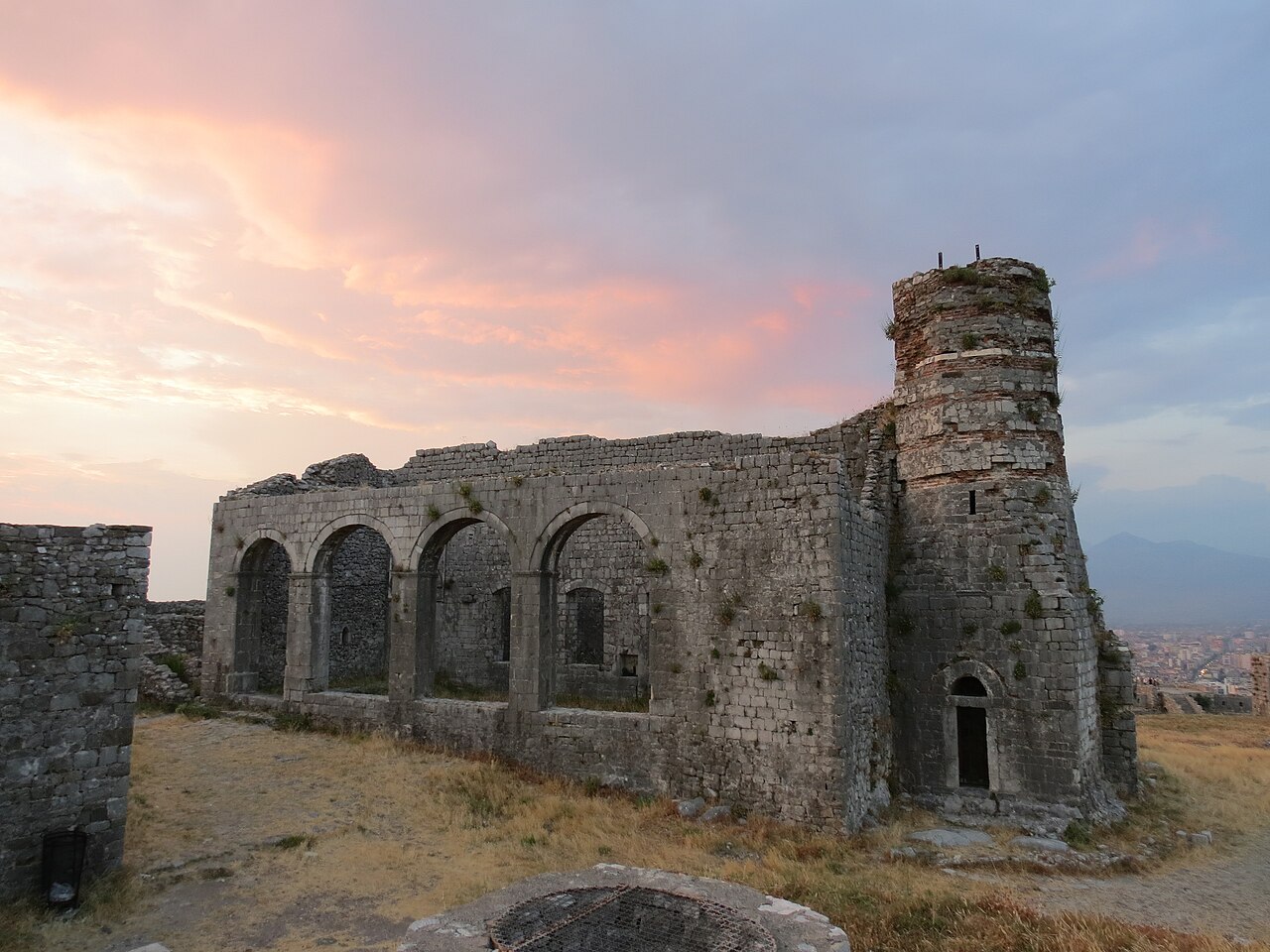
Rozafa Castle, also known locally as Kalaja e Rozafës, is a monumental fortress located on a rocky hill just south of the city of Shkodër in northwestern Albania. Its commanding position at the confluence of the Buna and Drin rivers, near the shores of Lake Skadar, made it a strategic military site for millennia. The castle's history spans over 2,500 years, reflecting the complex cultural and political shifts in the region from the Illyrian tribes through Roman, Byzantine, Venetian, and Ottoman rule. The earliest fortifications on the site date back to the 4th-3rd century BCE, when the Illyrians, an ancient Balkan people, established a citadel here as part of their capital territory known as Scodra or Scutari (modern Shkodër). This Illyrian stronghold was later captured by the Romans in 167 BCE, who incorporated it into their provincial defenses. Subsequently, the fortress was maintained and modified by the Byzantine Empire, serving as a key defensive position in the region. Legend and cultural significance The castle is steeped in local legend, most famously the tale of the three brothers who attempted to build its walls. According to the story, the walls collapsed each night until an old man advised that the wife of the brother who brought food the next day must be immured within the walls to ensure stability. The wife of the third brother sacrificed herself, requesting only that holes be left in the wall for her right eye, hand, breast, and foot to care for her infant son. This poignant legend symbolizes sacrifice and endurance and remains a powerful cultural narrative tied to the castle. Architectural evolution and layout Rozafa Castle features an irregular plan that follows the natural contours of the rocky hill on which it stands. The castle complex is composed of three main baileys (courtyards), each serving distinct functions and containing significant architectural remnants from different historical periods. First bailey Upon entering the fortress through the fortified 15th-century main gate, visitors arrive in the first courtyard. Here, the oldest surviving structure is the 4th-century Illyrian wall, which represents the ancient core of the fortress. This area also contains medieval ruins such as cisterns for water storage, the Balshaj towers named after a prominent local noble family, and remnants of former Venetian residences. Second bailey The second courtyard is dominated by the ruins of the Church of St. Stephen, originally built in the Romanesque style typical of the 13th to 15th centuries under Venetian influence. During the Ottoman period, this church was converted into the Sultan Mehmet Fatih Mosque. The transformation reflects the religious and cultural shifts that occurred when the Ottomans took control. The mosque was eventually abandoned in 1865, but the ruins remain a poignant symbol of the castle's layered history. Third bailey The third courtyard contains a prominent three-story Venetian building known as the Capitol, which served as the residence of the Venetian governor. Today, this building houses the Castle of Shkodra Museum, which presents an extensive exhibition on the castle's 4,000-year history and the influential medieval families of the city. The museum offers information in both Albanian and English, enhancing visitor understanding of the castle's significance. Historical context and military significance Rozafa Castle's strategic location made it a focal point in numerous military conflicts. In the late 14th century, the region came under the control of the Venetian Republic, which undertook significant fortification efforts to counter the growing threat of the Ottoman Empire. The Ottomans, aiming to secure a foothold on the eastern Adriatic coast as a prelude to invading Italy, intensified their campaigns in the 15th century. During the First Ottoman-Venetian War (1463–1479), Rozafa Castle was the site of a brutal siege beginning in May 1478. Despite the castle's strengthened defenses, the siege ended with a peace treaty in April 1479, whereby the Venetians ceded the fortress to the Ottomans. The castle remained under Ottoman control for over four centuries, serving as a military base and administrative center. In the early 20th century, the castle witnessed further conflict during the Balkan Wars. In 1912, the Balkan League—comprising Serbia, Montenegro, Greece, and Bulgaria—laid siege to the fortress during the Siege of Scutari. After a six-month siege, the Ottomans relinquished control, marking the end of their rule in the area. The castle also saw action during the Italian invasion of Albania in 1939, after which it was heavily damaged and largely abandoned. Current condition and visitor experience Today, Rozafa Castle stands as a partially preserved fortress, with many sections in ruins but still retaining significant architectural and historical features. The castle's walls, towers, and courtyards offer visitors a tangible connection to its rich past. The site is freely accessible, although there is a ticket booth that may be operational at times, suggesting some managed access. The castle's location offers spectacular views of the surrounding landscape, including the rivers and Lake Skadar. Visitors can explore the extensive ruins, including the ancient walls, medieval cisterns, and the evocative remains of the church-mosque. The museum within the Capitol building provides valuable context and artifacts, enriching the visitor experience. Archaeological and cultural importance Rozafa Castle and its surroundings form part of Albania's Archaeological Park, highlighting the site's importance as a cultural heritage landmark. The castle's layers of construction and adaptation illustrate the region's complex history of conquest, cultural exchange, and resilience. Its blend of Illyrian, Roman, Byzantine, Venetian, and Ottoman architectural elements make it a unique example of military architecture evolving over centuries. As a symbol of Shkodër and Albanian identity, Rozafa Castle continues to inspire local folklore, scholarship, and tourism. Its legendary narrative, combined with its historical and architectural significance, makes it a must-visit destination for those interested in Balkan history and medieval fortifications.

Early Medieval (5th–10th c.)
Details
10.5 km
Drisht Castle — Albania castle

Drisht Castle

Drisht, Albania

Drisht Castle, known locally as Kalaja e Drishtit, stands as a prominent ruin overlooking the village of Drisht in Shkodër County, Albania. This medieval fortress occupies a strategic position on an approximately 800-meter-high hill, commanding views over the surrounding landscape and historically serving as a significant defensive stronghold in the region. The origins of Drisht Castle trace back to antiquity, with the site originally known as Drivastum during Roman times. Archaeological evidence suggests that the location was fortified as early as the late Neolithic era, highlighting its long-standing strategic importance. The castle's inner section likely functioned as the acropolis of the ancient settlement, a fortified citadel that protected the inhabitants and served as a refuge during attacks. The early medieval fortress and Byzantine influence By the 10th century, Drisht Castle had evolved into a Byzantine fortress, reflecting the shifting political and military landscape of the Balkans during this period. The Byzantine Empire fortified the site to secure its northern borders and maintain control over trade and military routes. The castle's design from this era incorporated typical Byzantine defensive features, including thick stone walls and strategically placed towers to monitor and repel invaders. Medieval developments and the Serbian Principality of Zeta In the 13th and 14th centuries, Drisht Castle came under the influence of the Serbian Principality of Zeta, an important medieval state in the western Balkans. During this time, the fortress was expanded and reinforced to serve as a key stronghold in the principality's defense network. The castle's walls and towers were strengthened, and additional residential and military structures were constructed within its bounds. Architectural features from the medieval period The castle complex is divided into two main sections: the inner castle situated atop the hill, and the outer castle located below it. The inner castle served as the primary defensive position, while the outer castle contained a small settlement that supported the fortress. Remnants of 11 houses have been identified within the castle walls, indicating a modest community living within the protective enclosure. Venetian reconstruction and fortification In 1448, the Venetian Republic seized control of Drisht Castle during their expansion into the region. Recognizing the castle's strategic value, the Venetians undertook significant reconstruction efforts to modernize its defenses. The current surviving walls and towers largely date from the period between 1396 and 1478, reflecting Venetian military architecture of the late medieval period. The Venetians enhanced the castle's fortifications to withstand the evolving artillery technology of the time, reinforcing walls and adding bastions and other defensive elements. This period marked the castle's peak as a military installation, serving as a vital outpost in Venetian Albania. The Ottoman conquest and decline During the siege of Shkodër in 1478–1479, the Ottoman Empire captured Drisht Castle as part of their campaign to dominate the region. The fortress fell to the Ottomans after a prolonged siege, marking the end of its significance as a military stronghold. Following the conquest, the Ottomans showed little interest in maintaining the castle, leading to its gradual abandonment, especially the inner castle. Today, the outer castle area still contains a few inhabited residences, although most of the settlement lies in ruins and is overgrown with vegetation. The inner castle remains largely inaccessible due to rough terrain and lack of maintained paths, but its ruins can be observed from a distance, offering insight into its former grandeur. Architectural and archaeological significance Drisht Castle is classified as an archaeological ruin and is a valuable site for understanding the military architecture and historical developments in northern Albania. The castle exhibits a blend of Byzantine, Serbian medieval, and Venetian architectural styles, illustrating the region's complex history of conquest and cultural exchange. The castle's layout, with its dual inner and outer sections, reflects typical defensive strategies of the medieval period, where a fortified citadel was complemented by a supporting settlement. The surviving structures, including walls, towers, and residential remains, provide important material for archaeological study. Visiting Drisht Castle The outer castle is freely accessible to visitors, offering a glimpse into the castle's historical footprint and the surrounding landscape. Access to the inner castle is more challenging due to the steep and rugged terrain, and no clearly marked paths exist, making the ascent difficult especially in hot weather. Visitors interested in medieval fortifications and Balkan history will find Drisht Castle a compelling destination, combining natural beauty with rich historical layers. The site stands as a testament to the region's strategic importance through centuries of shifting empires and conflicts.

Early Medieval (5th–10th c.)
Details
11 km

Danjë Castle

Deja, Albania

Danjë Castle, also known locally as Kalaja e Danjës, is a historic fortress perched above the village of Deja in the county of Shkodër, northern Albania. This high medieval castle stands on a prominent 120-meter-high rocky hill overlooking the Drin river valley, providing strategic control over the fertile plains and ancient trade routes that have long shaped the region's history. Historical significance and early origins The castle's origins trace back to the 11th and 12th centuries, during which it was first documented as a significant regional episcopal center. Its position allowed it to serve both military and administrative functions, overseeing the surrounding lands and facilitating control over commerce and travel through this part of Albania. Throughout the late 14th and early 15th centuries, Danjë Castle was governed by various noble families, most notably the Zaharia family. The castle's history is marked by local rivalries, including a notable conflict involving the Dukagjini family. In 1447, after the murder of Lekë Zaharia by a member of the Dukagjini family over a personal dispute, the castle was handed over to the Venetians by Lekë’s mother. This transfer was motivated by spite and political maneuvering, marking a significant shift in control. Venetian and Ottoman periods Under Venetian rule, Danjë Castle remained an important outpost until the 1470s, when the expanding Ottoman Empire conquered the region. The Ottomans, however, did not maintain the fortress. Instead, they deliberately demolished it, likely to prevent its use by potential rebels or rival powers. Following its destruction, the castle was never rebuilt, and it gradually fell into ruin. Geographical and architectural features The castle's location on a steep rocky hill provided natural defensive advantages. Its elevated position allowed for extensive views over the surrounding valley and the Drin river, an important waterway for trade and transport. The castle complex included an outer castle area with a chapel, which has been a focal point for restoration efforts. In 1973, the construction of a dam nearby transformed the castle hill into a near-island, altering the landscape and adding to the site's unique character. This geographical change has affected accessibility but also enhanced the scenic appeal of the castle ruins. Current condition and visitor experience Today, Danjë Castle stands as a partially preserved medieval ruin. The remains of the fortress are visible but fragmented, with much of the original structure lost to time and deliberate destruction. The castle chapel in the outer bailey was restored in 2011 after suffering damage during Albania’s communist regime in 1967, reflecting ongoing efforts to preserve the site's cultural heritage. Access to the castle is free, but visitors should be prepared for a challenging hike. There is no clearly maintained path; the existing trail from the village of Deja is interrupted by construction works, requiring visitors to navigate through natural terrain and local livestock. Despite these difficulties, the castle offers rewarding panoramic views and a tangible connection to Albania’s medieval past. Architectural and cultural importance Danjë Castle exemplifies the typical characteristics of high medieval hill castles in the Balkans, combining natural topography with defensive stone structures. Its history reflects the complex political landscape of medieval Albania, marked by noble family rivalries, shifting allegiances, and external influences from Venice and the Ottoman Empire. The castle’s chapel restoration underscores the site's religious and cultural significance, serving as a reminder of the region's ecclesiastical heritage. Although largely in ruins, Danjë Castle remains an important landmark for understanding medieval fortifications and settlement patterns in northern Albania.

High Medieval (11th–13th c.)
Details