Drisht Castle
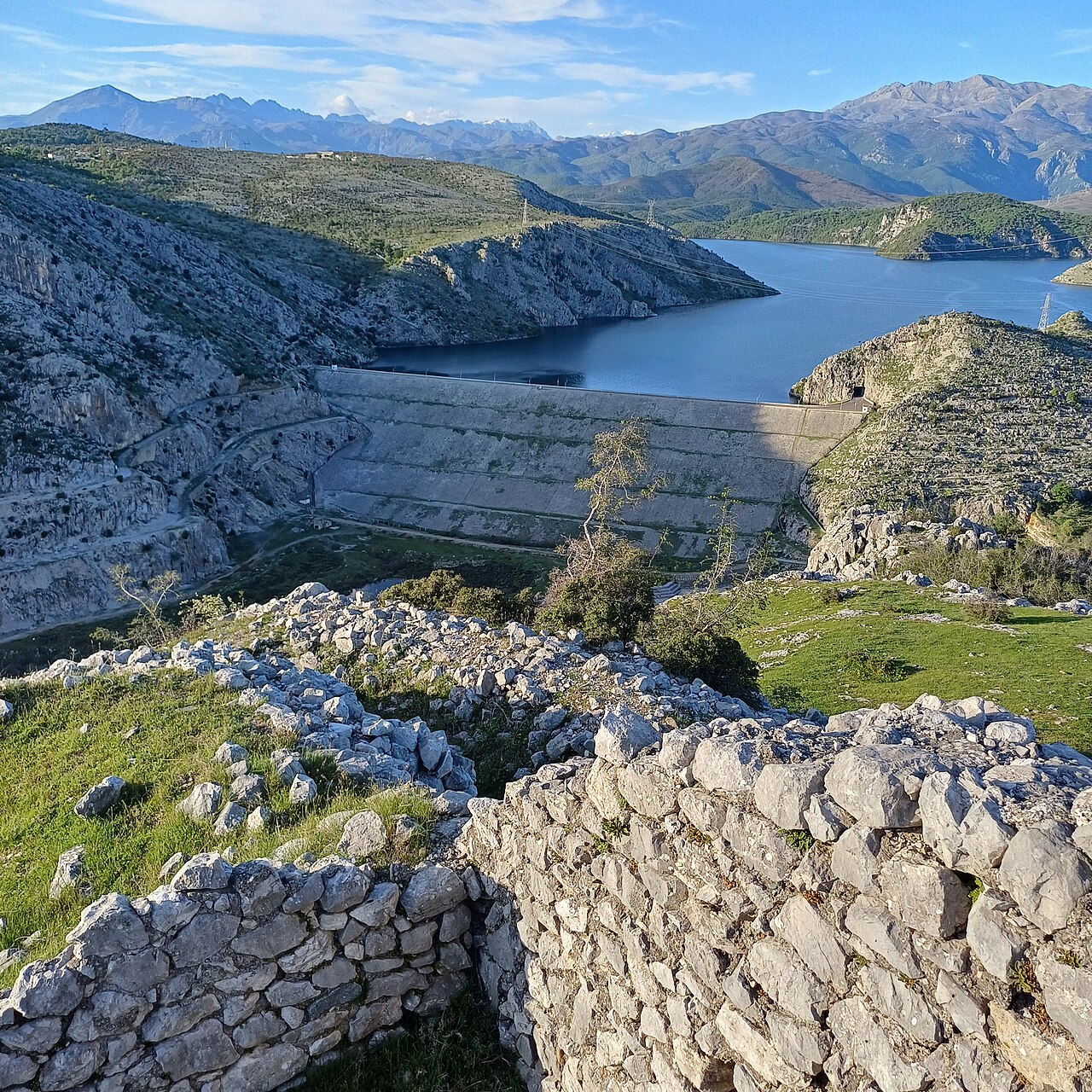
Drisht Castle, known locally as Kalaja e Drishtit, stands as a prominent ruin overlooking the village of Drisht in Shkodër County, Albania. This medieval fortress occupies a strategic position on an approximately 800-meter-high hill, commanding views over the surrounding landscape and historically serving as a significant defensive stronghold in the region.
The origins of Drisht Castle trace back to antiquity, with the site originally known as Drivastum during Roman times. Archaeological evidence suggests that the location was fortified as early as the late Neolithic era, highlighting its long-standing strategic importance. The castle's inner section likely functioned as the acropolis of the ancient settlement, a fortified citadel that protected the inhabitants and served as a refuge during attacks.
The early medieval fortress and Byzantine influence
By the 10th century, Drisht Castle had evolved into a Byzantine fortress, reflecting the shifting political and military landscape of the Balkans during this period. The Byzantine Empire fortified the site to secure its northern borders and maintain control over trade and military routes. The castle's design from this era incorporated typical Byzantine defensive features, including thick stone walls and strategically placed towers to monitor and repel invaders.
Medieval developments and the Serbian Principality of Zeta
In the 13th and 14th centuries, Drisht Castle came under the influence of the Serbian Principality of Zeta, an important medieval state in the western Balkans. During this time, the fortress was expanded and reinforced to serve as a key stronghold in the principality's defense network. The castle's walls and towers were strengthened, and additional residential and military structures were constructed within its bounds.
Architectural features from the medieval period
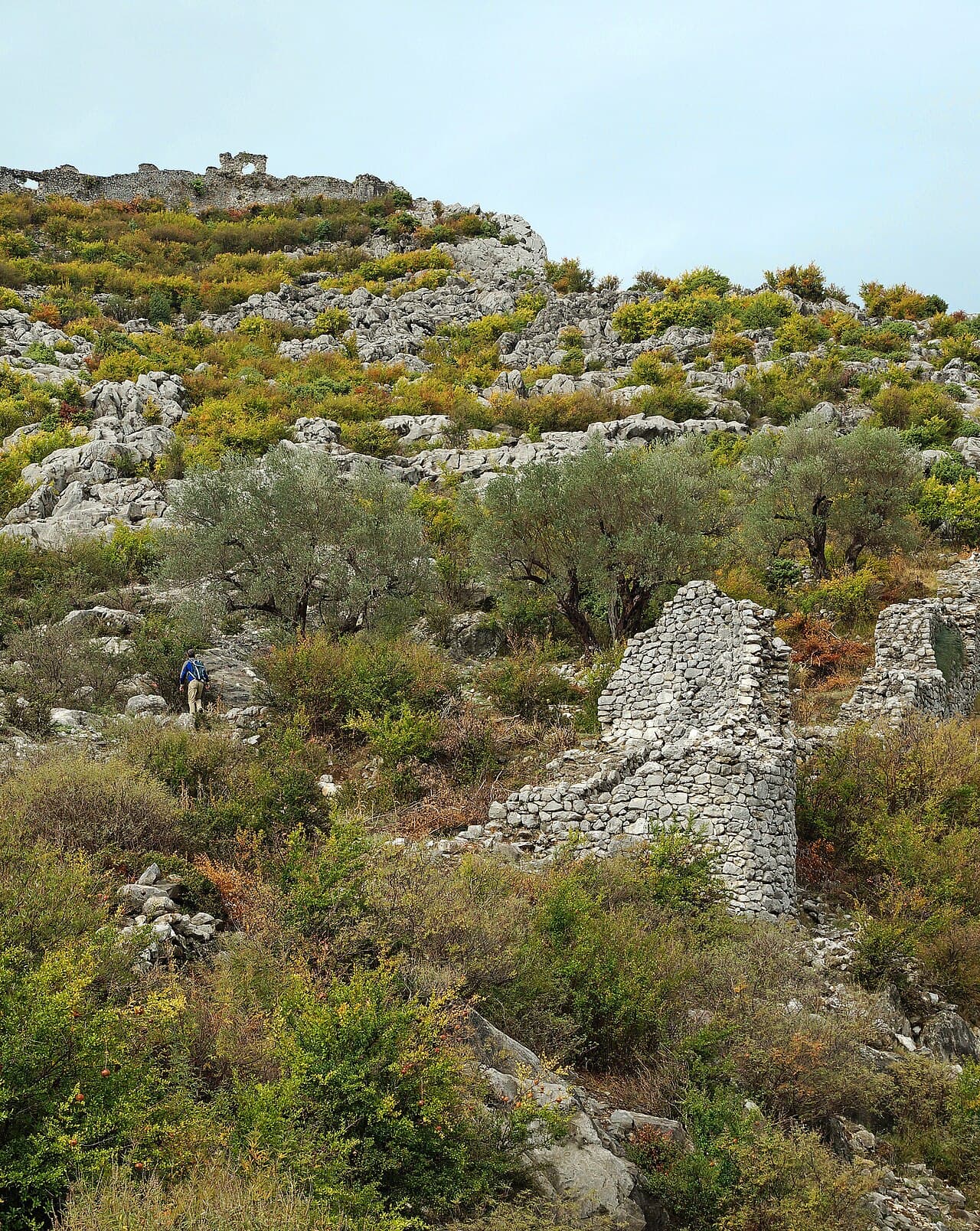
The castle complex is divided into two main sections: the inner castle situated atop the hill, and the outer castle located below it. The inner castle served as the primary defensive position, while the outer castle contained a small settlement that supported the fortress. Remnants of 11 houses have been identified within the castle walls, indicating a modest community living within the protective enclosure.
Venetian reconstruction and fortification
In 1448, the Venetian Republic seized control of Drisht Castle during their expansion into the region. Recognizing the castle's strategic value, the Venetians undertook significant reconstruction efforts to modernize its defenses. The current surviving walls and towers largely date from the period between 1396 and 1478, reflecting Venetian military architecture of the late medieval period.
The Venetians enhanced the castle's fortifications to withstand the evolving artillery technology of the time, reinforcing walls and adding bastions and other defensive elements. This period marked the castle's peak as a military installation, serving as a vital outpost in Venetian Albania.
The Ottoman conquest and decline
During the siege of Shkodër in 1478–1479, the Ottoman Empire captured Drisht Castle as part of their campaign to dominate the region. The fortress fell to the Ottomans after a prolonged siege, marking the end of its significance as a military stronghold. Following the conquest, the Ottomans showed little interest in maintaining the castle, leading to its gradual abandonment, especially the inner castle.
Today, the outer castle area still contains a few inhabited residences, although most of the settlement lies in ruins and is overgrown with vegetation. The inner castle remains largely inaccessible due to rough terrain and lack of maintained paths, but its ruins can be observed from a distance, offering insight into its former grandeur.
Architectural and archaeological significance
Drisht Castle is classified as an archaeological ruin and is a valuable site for understanding the military architecture and historical developments in northern Albania. The castle exhibits a blend of Byzantine, Serbian medieval, and Venetian architectural styles, illustrating the region's complex history of conquest and cultural exchange.
The castle's layout, with its dual inner and outer sections, reflects typical defensive strategies of the medieval period, where a fortified citadel was complemented by a supporting settlement. The surviving structures, including walls, towers, and residential remains, provide important material for archaeological study.
Visiting Drisht Castle
The outer castle is freely accessible to visitors, offering a glimpse into the castle's historical footprint and the surrounding landscape. Access to the inner castle is more challenging due to the steep and rugged terrain, and no clearly marked paths exist, making the ascent difficult especially in hot weather.
Visitors interested in medieval fortifications and Balkan history will find Drisht Castle a compelling destination, combining natural beauty with rich historical layers. The site stands as a testament to the region's strategic importance through centuries of shifting empires and conflicts.
Frequently asked questions (FAQ)
- How do I get to Drisht Castle?
- Drisht Castle is located near the village of Drisht in Shkodër County, Albania. Visitors typically reach the site by car or local transport to the village, followed by a hike to the castle ruins. The outer castle is accessible, but the inner castle requires a challenging climb over rough terrain.
- What is the historical significance of Drisht Castle?
- Drisht Castle has a long history dating back to Roman times as Drivastum, evolving through Byzantine, Serbian, Venetian, and Ottoman periods. It served as a strategic military fortress and settlement in northern Albania, reflecting the region's complex medieval history.
- Can I visit the inner castle ruins?
- The inner castle ruins are accessible but difficult to reach due to steep and rugged terrain with no marked paths. Visitors should be prepared for a strenuous hike and take precautions against heat and rough conditions.
- When was Drisht Castle built?
- The earliest fortifications at Drisht Castle date back to the 10th century, with earlier settlement traces from Roman and late Neolithic periods.
- Is there an entrance fee to visit Drisht Castle?
- There is no entrance fee to visit Drisht Castle. The site is freely accessible to the public.
Photo gallery

Information
Current owner
Municipality
Loading map...
Visitor reviews
No reviews yet. Been here? Write the first review and help other travelers!
Write the first reviewVisited this castle? Share your experience
Your review helps other travelers and adds first-hand knowledge to our encyclopedia.