Engelstein Castle
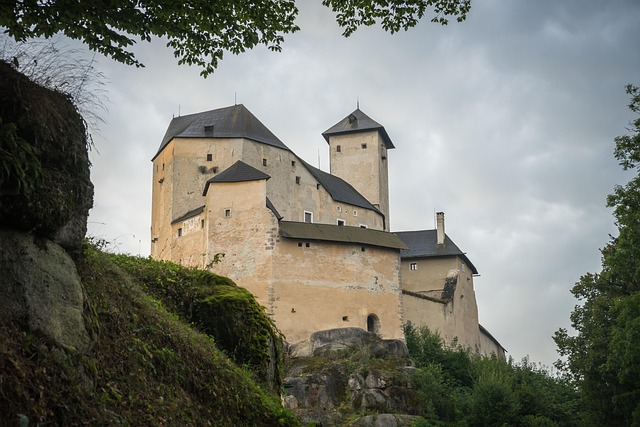
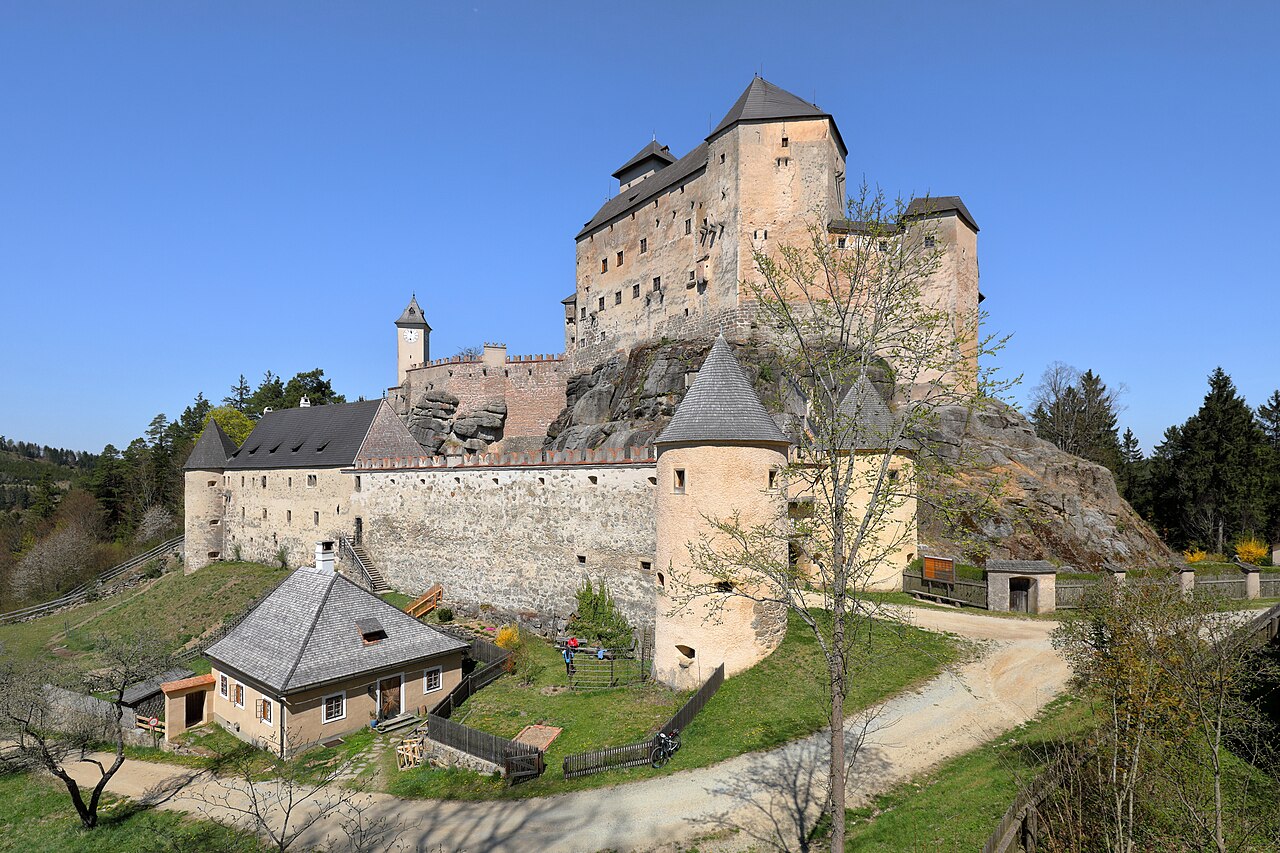
Engelstein Castle, locally known as Burg Engelstein, is a remarkable example of a high medieval fortress located in the village of Engelstein in the province of Lower Austria, Austria. Positioned strategically on a granite cliff and surrounded on three sides by small lakes, this castle exemplifies the defensive ingenuity of its era, combining natural and man-made fortifications.
Early history and medieval origins
The castle was first documented in 1417 as the property of Georg von Klingen, but its origins are likely older, dating back to the 13th century. Initially, Engelstein Castle probably began as a simple watchtower designed to guard a nearby road crossing, a common medieval strategy to control important transit routes and protect territories. This early fortification was later expanded, particularly after the destruction of the nearby Hadmarstein Castle on the Johannisberg mountain at the end of the 13th century.
Following this event, Engelstein was upgraded into a water castle, a type of castle surrounded by water defenses to enhance its protection. Its location on a granite cliff surrounded by lakes made it a formidable stronghold against attackers and an important regional power center.
Renaissance transformation and architectural evolution
In 1531, the castle came into the possession of Benedikt Schaul, who initiated significant renovations transforming the medieval fortress into a Renaissance castle. This period saw the introduction of architectural elements emphasizing comfort and style alongside defensive features, reflecting the broader European trend of castle modernization during the Renaissance.
The Barons of Windhag continued these elaborate reconstructions, further enhancing the castle's appearance and functionality. Their efforts gave Engelstein Castle much of its present-day outlook, blending medieval fortifications with Renaissance aesthetics. However, the extensive renovations were financially burdensome, leading the Barons of Windhag into heavy debt and ultimately resulting in the confiscation of the castle at the end of the 16th century.
Conflicts and ownership changes in the early modern period
In 1619, Engelstein Castle was stormed and plundered by Imperial troops during the turbulent period of the Thirty Years' War, a conflict that profoundly affected many castles and noble estates across Central Europe. Despite this, the castle survived and was later acquired in 1681 by Adam Anton Graf Gundemann, whose family maintained ownership for approximately 150 years.
Subsequently, the castle passed to the Barons of Geusau, who held it until 1916. This long line of noble ownership reflects the castle's continued importance as a regional seat of power and residence through centuries of European history.
20th century decline and modern restoration efforts
After 1916, Engelstein Castle saw several owners until it was purchased in 1964 by the industrialist Erich Meinl. By this time, the castle had suffered significant deterioration due to plundering and neglect during and after World War II. The damage reflected the broader fate of many historical castles in Europe, which faced challenges from warfare, changing political landscapes, and economic difficulties.
Currently, the castle's bailey is inhabited by a descendant of Meinl, and the property remains privately owned. Due to its private status, Engelstein Castle is not open to public visits, although it can be viewed from nearby public roads, allowing visitors to appreciate its imposing silhouette and waterside setting.
Architectural features and defensive design
Engelstein Castle's architecture reflects its evolution from a simple watchtower to a complex water castle with Renaissance modifications. The castle's placement on a granite cliff provided a natural defensive advantage, while the surrounding lakes functioned as a moat, complicating any siege attempts. The transformation during the Renaissance introduced refined living quarters and stylistic enhancements, balancing defense with residential comfort.
Key features likely include robust stone walls, battlements, and possibly a fortified gatehouse controlling access. The castle's water defenses would have included sluices or channels to manage the surrounding lakes, a sophisticated feature demonstrating medieval engineering prowess.
Cultural significance and heritage value
Engelstein Castle stands as a testament to the layered history of Lower Austria, showcasing transitions from medieval military architecture to Renaissance residential refinement. Its survival through centuries of conflict, ownership changes, and modern challenges highlights its resilience and importance in regional history.
Though not accessible to the public, Engelstein Castle remains a subject of interest for historians, architects, and enthusiasts of medieval and Renaissance heritage. Its picturesque setting and architectural evolution continue to inspire appreciation for Austria's rich cultural landscape.
Visiting information and accessibility
As Engelstein Castle is privately inhabited, it is not open for public tours or interior access. Visitors can view the castle from nearby public roads, offering impressive views of its lakeside position and cliffside fortifications. Photography from public vantage points is permitted, allowing visitors to capture the castle's striking exterior.
Frequently asked questions
- When was Engelstein Castle built? Engelstein Castle dates back to the 13th century, with its first recorded mention in 1417.
- What type of castle is Engelstein? It is a water castle built on a granite cliff, surrounded by lakes on three sides.
- Can I visit the interior of Engelstein Castle? No, the castle is privately owned and inhabited, so interior access is not available to the public.
- Who were the notable owners of Engelstein Castle? Notable owners include Georg von Klingen, Benedikt Schaul, the Barons of Windhag, Adam Anton Graf Gundemann, and Erich Meinl.
- What architectural styles are represented in Engelstein Castle? The castle features high medieval defensive structures with significant Renaissance period modifications.
- Is Engelstein Castle visible from public areas? Yes, it can be easily seen from nearby public roads despite being privately inhabited.
- What happened to the castle during the Thirty Years' War? It was stormed and plundered by Imperial troops in 1619 but remained standing.
Frequently asked questions (FAQ)
- When was Engelstein Castle built?
- Engelstein Castle dates back to the 13th century, with its first recorded mention in 1417.
- What type of castle is Engelstein?
- It is a water castle built on a granite cliff, surrounded by lakes on three sides.
- Can I visit the interior of Engelstein Castle?
- No, the castle is privately owned and inhabited, so interior access is not available to the public.
- Who were the notable owners of Engelstein Castle?
- Notable owners include Georg von Klingen, Benedikt Schaul, the Barons of Windhag, Adam Anton Graf Gundemann, and Erich Meinl.
- What architectural styles are represented in Engelstein Castle?
- The castle features high medieval defensive structures with significant Renaissance period modifications.
- Is Engelstein Castle visible from public areas?
- Yes, it can be easily seen from nearby public roads despite being privately inhabited.
- What happened to the castle during the Thirty Years' War?
- It was stormed and plundered by Imperial troops in 1619 but remained standing.
Information
Current owner
Private owner
Loading map...
Visitor reviews
No reviews yet. Been here? Write the first review and help other travelers!
Write the first reviewVisited this castle? Share your experience
Your review helps other travelers and adds first-hand knowledge to our encyclopedia.