Engelbourg Castle
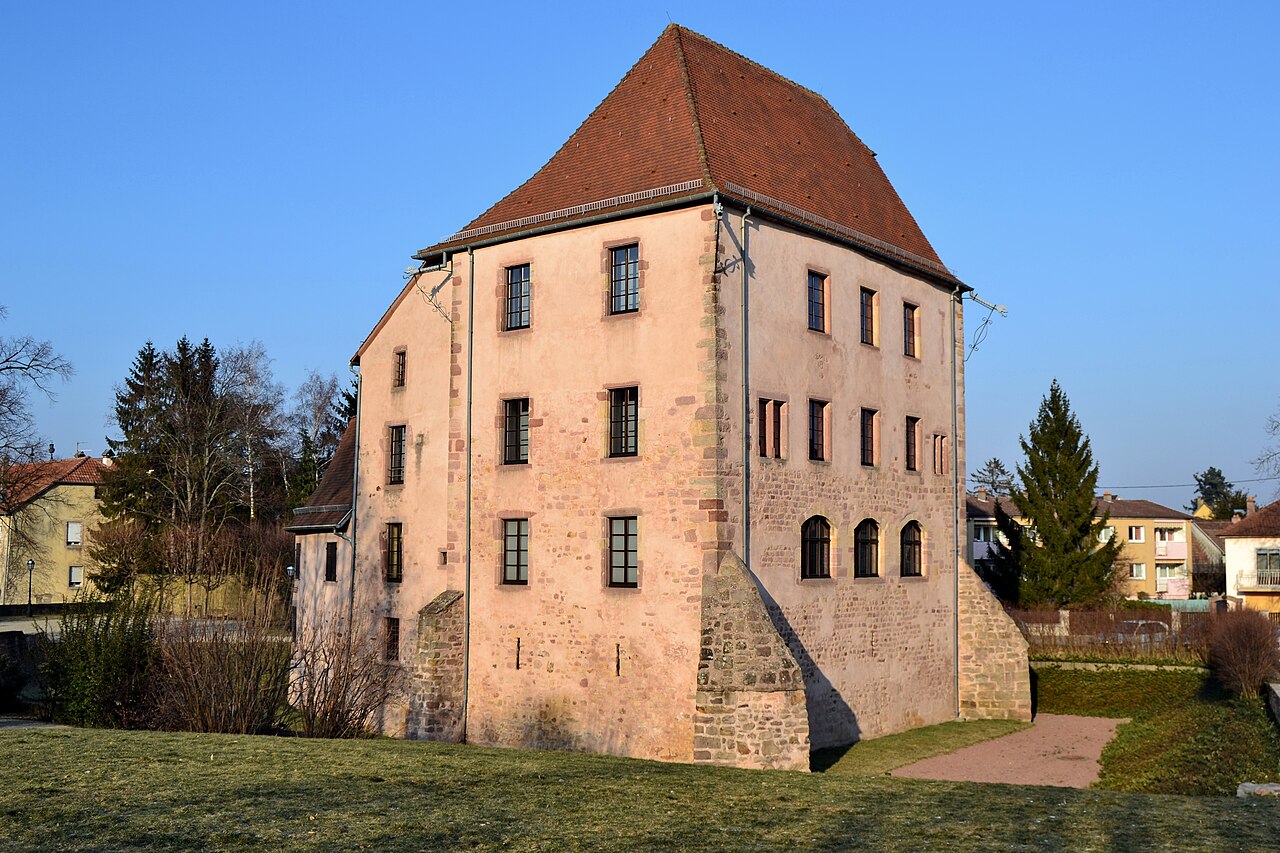
Engelbourg Castle, also known locally as Château d'Engelbourg, is a striking medieval ruin perched on a hill overlooking the town of Thann in the Haut-Rhin department of Grand-Est, France. This castle commands a strategic position at the entrance to the Thur valley, a vital route through the Southern Vosges mountains. Built in the early 13th century, Engelbourg Castle was originally constructed to serve as a defensive stronghold safeguarding the valley and the surrounding region.
Historical background and ownership
The castle's origins trace back to around 1224, when it was commissioned by Count Frederick II of Ferrette. Its primary purpose was to control access to the Thur valley and protect the nearby settlement of Thann. The castle is first documented in 1225, confirming its early role as a military fortress. Over the following decades, Engelbourg Castle changed hands multiple times, reflecting the shifting political landscape of the region.
Between 1234 and 1251, the castle belonged to the Bishop of Strasbourg, before being ceded in 1271 to the Bishop of Basel by the Counts of Ferrette. The castle later passed through marriage to the House of Habsburg in 1324, marking a significant shift in its governance. Throughout the 15th century, Engelbourg was held by Habsburg vassals and endured several sieges during turbulent periods, including attacks by the Count Palatine in 1415 and the Armagnacs in 1444 during the Hundred Years' War.
In 1468, the castle was besieged by forces from Bern and subsequently came under the control of Charles the Bold, Duke of Burgundy, until his death in 1477. The castle's strategic importance continued into the early modern period, although its military significance waned over time.
Architectural features and layout
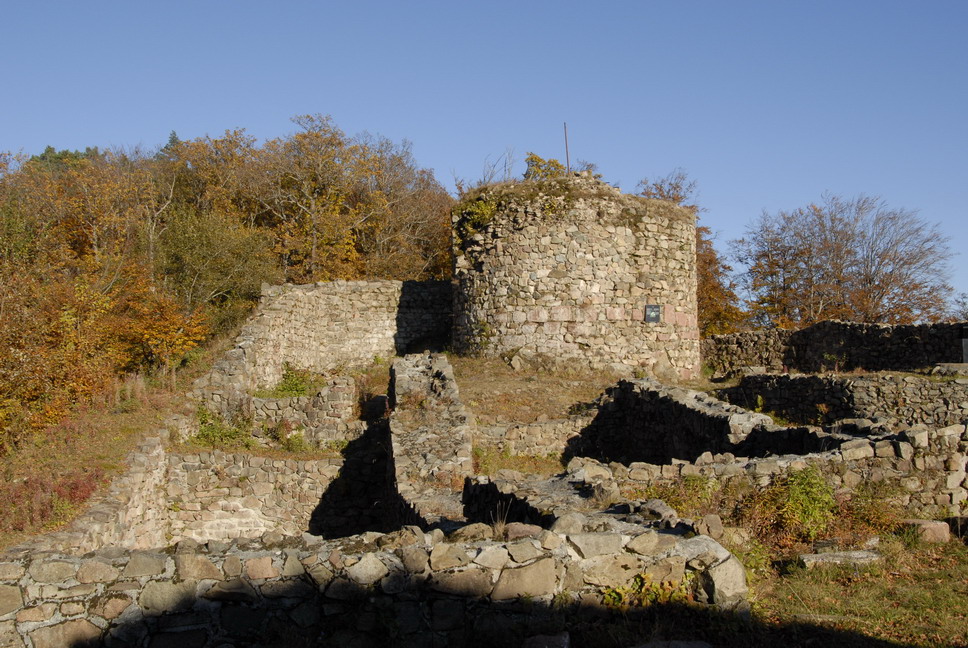
Engelbourg Castle was designed as a hill castle, capitalizing on its elevated position for defense and surveillance. The castle's most notable feature was its round keep, a formidable stone tower that dominated the hilltop and provided a last line of defense. The keep was surrounded by curtain walls and likely included battlements, gatehouses, and courtyards typical of medieval fortifications.
The castle's construction utilized local stone, and its design reflected the military architectural styles of the late medieval period. Although much of the original structure has been lost, the remains suggest a complex layout intended to withstand prolonged sieges and assaults.
Destruction and decline
Engelbourg Castle suffered significant damage during the Thirty Years' War (1618–1648), a devastating conflict that engulfed much of Europe. The war's destructive campaigns severely weakened the castle's defenses and infrastructure. After the war, the Peace of Westphalia in 1648 shifted territorial boundaries, incorporating Alsace into France and diminishing the castle's strategic value.
Ownership passed to Cardinal Mazarin and his descendants from 1658. However, the castle's military purpose was effectively obsolete by this time. In 1673, on the orders of King Louis XIV, Engelbourg Castle was deliberately demolished to prevent its use by enemy forces. The demolition involved mining the structure, causing the iconic round keep to collapse.
Following its destruction, the ruins were scavenged for building materials by local inhabitants. Today, the most distinctive remnant is a peculiar stone formation known as "l'Œil de la Sorcière" or "the Eye of the Witch". This stone ring is part of the fallen keep and appears to gaze toward the town of Thann, lending the site a mysterious and evocative character.
Modern access and visitor experience
Currently, Engelbourg Castle is freely accessible to the public. Visitors can reach the site by a steep forest path from Thann, which takes approximately 20 minutes on foot. An alternative route through the surrounding vineyards offers a longer but scenic 40-minute walk. The climb rewards visitors with panoramic views over the Thur valley, the town of Thann, and the prominent collegiate church.
While the castle's remaining structures offer limited architectural detail due to their ruined state, the site holds significant cultural and historical interest. The Witch's Eye stone ring remains a compelling symbol of the castle's past and a popular subject for photography and local legend.
Cultural significance and legacy
Engelbourg Castle represents a vivid chapter in the history of Alsace, illustrating the region's medieval feudal conflicts and shifting allegiances. Its role in guarding the Thur valley underscores the strategic importance of controlling mountain passes and trade routes during the high and late medieval periods.
The castle's destruction under Louis XIV reflects broader trends in European military strategy, where obsolete fortifications were dismantled to consolidate royal power. Today, Engelbourg Castle stands as a poignant reminder of the region's turbulent history and the enduring legacy of medieval fortifications in shaping local identity.
Visitors to Engelbourg Castle gain not only a glimpse into medieval military architecture but also an appreciation for the natural beauty of the Vosges mountains and the historical landscape of southern Alsace.
Frequently asked questions (FAQ)
- What is the historical significance of Engelbourg Castle?
- Engelbourg Castle, located in Thann, France, is a remarkable example of medieval architecture and holds significant historical value as a fortress from the 13th century. It played a crucial role in the defense strategies of the region during various conflicts, making it a key site in the history of Alsace.
- When was Engelbourg Castle built?
- Engelbourg Castle was constructed in the early 13th century, specifically around 1240. Its strategic location allowed it to serve as a lookout point and stronghold during tumultuous times in the region.
- Can I visit Engelbourg Castle?
- Yes, Engelbourg Castle is open to visitors who wish to explore its rich history and stunning architecture. Guided tours are available, providing insights into the castle's past and its importance in the region.
- What are the opening hours for Engelbourg Castle?
- Engelbourg Castle is typically open to the public from March to November, with specific hours varying by season. It's best to check the official website or contact local tourism information for the most accurate and up-to-date hours before your visit.
- Is Engelbourg Castle accessible for individuals with mobility challenges?
- Engelbourg Castle has some accessibility features, but due to its historical nature, certain areas may be challenging to navigate for those with mobility impairments. It is recommended to contact the castle staff in advance to inquire about specific accommodations.
- What is the best time to visit Engelbourg Castle?
- The best time to visit Engelbourg Castle is during the late spring and early autumn months when the weather is mild and conducive to exploring the outdoor surroundings. Additionally, these seasons often feature fewer crowds, allowing for a more enjoyable experience.
- What are the ticket prices for Engelbourg Castle?
- Ticket prices for Engelbourg Castle vary depending on age and group size, with discounts often available for children, seniors, and students. It is advisable to check the castle's official website for the latest pricing information and any special events that may offer promotional rates.
- Are there nearby attractions to Engelbourg Castle?
- Yes, Engelbourg Castle is surrounded by several attractions, including the picturesque town of Thann, known for its charming streets and historical sites. Visitors can also explore the nearby Vosges Mountains, which offer hiking trails and stunning views of the Alsatian landscape.
Information
Loading map...
Visitor reviews
No reviews yet. Been here? Write the first review and help other travelers!
Write the first reviewVisited this castle? Share your experience
Your review helps other travelers and adds first-hand knowledge to our encyclopedia.