Freundstein Castle
Freundstein Castle, locally known as Château de Freundstein, is a late medieval castle ruin perched atop a 948-meter high mountain near the village of Goldbach-Altenbach in the Haut-Rhin department of France. This region, part of the Southern Alsace or Southern Vosges, is known for its rugged terrain and historical fortifications. The castle's strategic location afforded commanding views over the surrounding landscape, making it a valuable defensive site throughout its history.
The castle was likely constructed in the late 13th century, with the first documented mention dating to 1297. Initially, Freundstein Castle was enfeoffed to the Lords of Waldner, a noble family who adopted the name Waldner von Freundstein after taking possession. Ownership of the castle was complex, being shared between two powerful overlords: the Murbach Abbey and the Bishop of Strasbourg. This dual overlordship reflects the intertwined secular and ecclesiastical power structures typical of the region during the Middle Ages.
Architectural features and construction
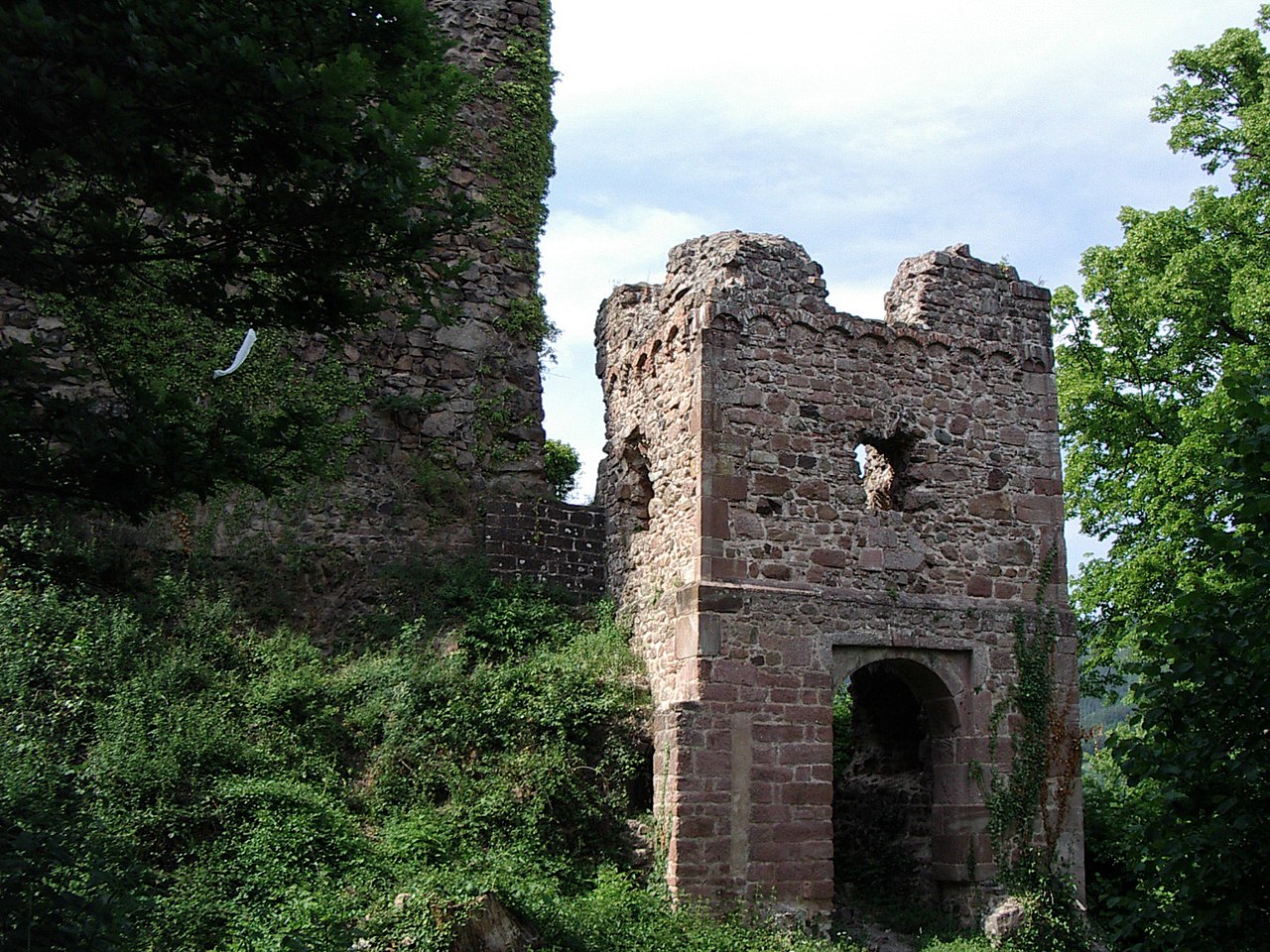
The castle's architecture is characteristic of late medieval fortifications in the Vosges mountains, designed primarily for defense. Although now in ruins, remnants of the high castle walls are still visible, featuring loopholes—narrow vertical slits used for archery—and later period openings that indicate modifications over time. The castle's position on a steep mountain slope added a natural layer of defense, complemented by its stone walls and battlements.
Freundstein's structure would have included essential elements typical of the period, such as a keep or donjon serving as the last line of defense and living quarters, curtain walls surrounding the inner courtyard, and possibly a gatehouse controlling access. The castle's elevation and rugged setting made it a formidable fortress despite its relatively modest size.
Historical events and sieges
Early history and ownership
The castle's earliest recorded history begins in the late 13th century when it was granted to the Waldner family. The Waldners held the castle as vassals under the dual authority of the Murbach Abbey and the Bishopric of Strasbourg, illustrating the feudal complexities of the time. The family's long tenure at Freundstein is notable, as they retained ownership for centuries, a rarity among medieval noble families.
Damage and conflicts in the 14th and 15th centuries
By the 14th century, Freundstein Castle had begun to deteriorate, suffering significant damage from the 1356 Basel earthquake, one of the most devastating seismic events in European history. This natural disaster weakened the castle's structure, leading to gradual decline.
The castle also played a role in regional conflicts. In 1441, it was used as a prison to hold two butchers from the nearby town of Mulhouse. This act provoked a siege by the townspeople, who sought to free their compatriots. Later, in 1490, the castle was again besieged, this time by forces from Stoultz-Haut-Rhine allied with the Bishop of Strasbourg, reflecting ongoing territorial disputes and feudal rivalries involving the Waldner family.
Destruction and abandonment in the 16th century
During the German Peasants' War of 1525, Freundstein Castle was set ablaze by rebellious peasants, a common fate for many feudal strongholds targeted during this widespread uprising. The castle was subsequently rebuilt, demonstrating its continued strategic and symbolic importance.
However, in 1562, the castle suffered further devastation when it was struck by lightning and partially destroyed by fire. Although partially restored afterward, the castle never fully recovered its former stature and was ultimately abandoned by the end of the 16th century. This abandonment reflects broader shifts in military technology and political power that rendered many mountain castles obsolete.
Role during world war i and modern status
Despite its ruinous state, Freundstein Castle's elevated position retained military significance into the 20th century. During World War I, starting in 1915, the French army utilized the castle ruins as an observation post to monitor enemy movements across the Vosges region. This strategic use led to the castle being targeted and shelled multiple times by German forces, adding to its historical narrative of conflict and resilience.
Today, Freundstein Castle stands as a partially preserved ruin accessible to the public. Visitors can explore the remains, though access can be challenging due to the castle's mountainous location and the difficulty of finding a safe route inside. The site offers not only a glimpse into medieval fortification architecture but also spectacular views of the surrounding forested landscape, making the journey to the castle a rewarding experience in itself.
Cultural significance and heritage
Freundstein Castle embodies the complex feudal history of the Alsace region, reflecting centuries of political, religious, and military developments. Its enduring association with the Waldner family highlights the persistence of noble lineages in this borderland area. The castle's ruins serve as a tangible link to the late medieval period, the German Peasants' War, and the turbulent history of the Vosges mountains.
Moreover, the castle's use during World War I connects it to modern European history, illustrating how ancient fortifications were repurposed in new conflicts. As a heritage site, Freundstein Castle attracts visitors interested in medieval architecture, military history, and the natural beauty of the Alsace region.
Visitor experience
Accessing Freundstein Castle requires some effort due to its remote mountain location. The forest paths leading to the ruins are scenic and offer opportunities for hiking and nature observation. While the castle itself is modest in size and partially ruined, the historical ambiance combined with panoramic views makes it a worthwhile destination for enthusiasts of history and outdoor adventure.
Frequently asked questions (FAQ)
- How do I get to Freundstein Castle?
- Freundstein Castle is located near Goldbach-Altenbach in the Haut-Rhin department of France. Visitors can reach the castle by hiking along forest paths from nearby villages. Due to its mountain location, the route can be steep and challenging, so appropriate footwear and preparation are recommended.
- What is the historical significance of Freundstein Castle?
- Freundstein Castle is significant for its role in regional feudal conflicts, its survival through the 1356 Basel earthquake, and its use during the German Peasants' War and World War I. It reflects the complex history of the Alsace region and the persistence of noble families like the Waldners.
- Is Freundstein Castle open to the public?
- Yes, Freundstein Castle is freely accessible to visitors. However, the ruins are in a partially preserved state and access can be difficult due to the rugged terrain. Visitors should exercise caution when exploring the site.
- When was Freundstein Castle built?
- Freundstein Castle was likely built in the late 13th or early 14th century, with the first written record dating to 1297.
- Can I visit Freundstein Castle year-round?
- The castle can be visited year-round, but access is best during the warmer months when forest paths are safer and more navigable. Winter visits may be hazardous due to snow and ice on the mountain trails.
Information
Current owner
Waldner family
Loading map...
Visitor reviews
No reviews yet. Been here? Write the first review and help other travelers!
Write the first reviewVisited this castle? Share your experience
Your review helps other travelers and adds first-hand knowledge to our encyclopedia.