Château de Rougemont
The Château de Rougemont is a significant example of a 12th-century medieval fortress located in the commune of Rougemont-le-Château within the Territoire de Belfort département of France. This castle, now in ruins, offers valuable insights into the high medieval period fortification architecture and the strategic military importance of the region during that era.
Historical context and strategic importance
Constructed in the 12th century, the Château de Rougemont was part of a network of fortifications designed to control key routes and assert territorial dominance in the borderlands between the Kingdom of France and the Holy Roman Empire. Its location in the Territoire de Belfort placed it at a crossroads of political and military tensions, making it a vital defensive stronghold during the high medieval period.
The castle's original purpose was to oversee and protect the surrounding lands, serving both as a military bastion and a symbol of feudal power. Over the centuries, it witnessed numerous conflicts and changes in ownership that reflected the turbulent history of the region.
Architectural features and layout
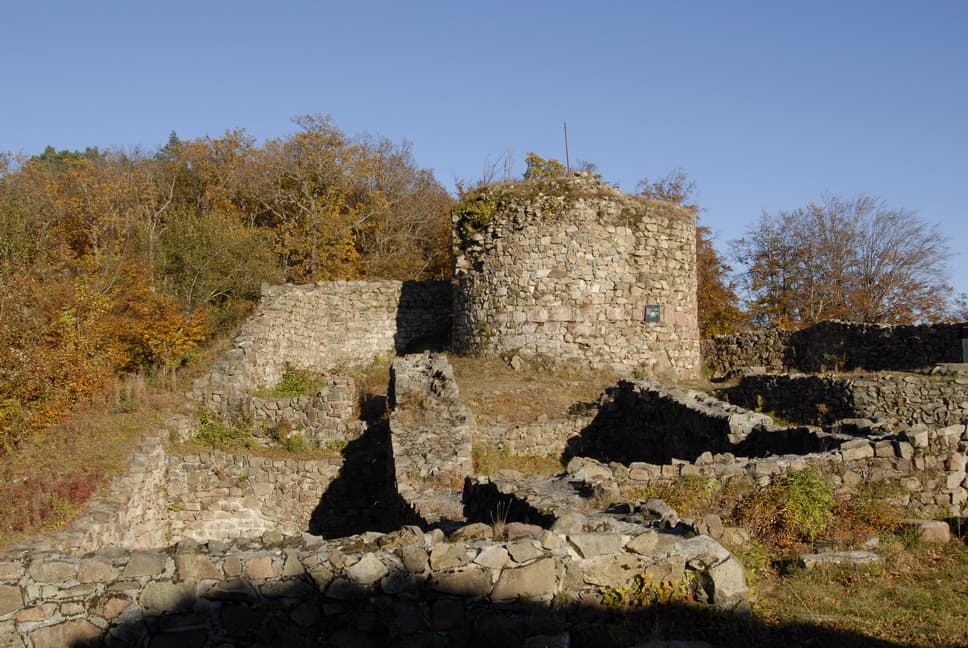
Though now in a state of ruins, the Château de Rougemont retains remnants of its original stone walls and defensive structures. The castle was likely built as a hill castle, utilizing the natural elevation for enhanced defense and visibility over the surrounding landscape.
Typical of high medieval castle architecture, the fortress would have included a keep or donjon as the central stronghold, surrounded by curtain walls with towers at strategic points. Defensive features such as a moat or ditch may have been present, although these elements have not survived intact.
The layout would have incorporated a courtyard for daily activities and possibly residential buildings for the lord and garrison. The use of local stone and medieval masonry techniques is evident in the surviving ruins, reflecting the craftsmanship of the period.
Decline and current condition
Like many medieval castles, Château de Rougemont fell into disuse with the advent of new military technologies and changing political landscapes. The castle was eventually abandoned and fell into ruin, leaving behind only fragments of its former structure.
Today, the site is classified as archaeological ruins, with ongoing interest from historians and archaeologists who study its remains to better understand medieval fortifications in this border region of France. The ruins provide a tangible connection to the past and are a point of cultural heritage for the local community.
Visiting Château de Rougemont
Visitors to the site can explore the remains of the castle and enjoy panoramic views of the surrounding countryside. The castle's elevated position offers insight into its strategic importance and the defensive advantages it once held.
While the ruins are not extensively restored, they provide an evocative glimpse into medieval military architecture. Interpretive signage and local guides may offer additional historical context for those interested in the castle's story.
Nearby attractions
The Territoire de Belfort region is known for its rich history and natural beauty, with other medieval sites and cultural landmarks accessible to visitors. Exploring the castle can be combined with visits to nearby towns and natural parks, enhancing the historical and recreational experience.
Frequently asked questions (FAQ)
- How do I get to Château de Rougemont?
- Château de Rougemont is located in Rougemont-le-Château, France, and can be easily accessed by car or public transport. The nearest major city is Belfort, from where you can take a bus or drive to the castle. Parking is available on-site for visitors.
- What is the historical significance of Château de Rougemont?
- Château de Rougemont dates back to the 13th century and served as a strategic fortress in the region. It played a crucial role in the defense against invasions and has witnessed many historical events throughout its existence. Today, it stands as a testament to medieval architecture and history.
- When was Château de Rougemont built?
- Construction of Château de Rougemont began in the early 13th century, around 1230. Over the centuries, it has undergone several renovations and restorations, preserving its architectural features. The castle reflects the evolving styles and techniques of medieval fortifications.
- Can I visit Château de Rougemont year-round?
- Yes, Château de Rougemont is open for visitors throughout the year, but hours may vary depending on the season. It is advisable to check the official website for the most current opening hours and any seasonal events. Guided tours are available to enhance your experience.
- Why is the architecture of Château de Rougemont noteworthy?
- The architecture of Château de Rougemont is noteworthy for its blend of medieval defensive structures and later Renaissance elements. The castle features impressive stone walls, towers, and a unique layout that showcases its historical functions. Visitors can admire the craftsmanship and design that reflect the era's architectural advancements.
- Is it possible to access Château de Rougemont with a wheelchair?
- Château de Rougemont aims to be accessible to all visitors, but due to its historical nature, some areas may present challenges for wheelchair users. It is recommended to contact the castle's administration in advance to inquire about specific accessibility options and available assistance during your visit.
- What is the best time to visit Château de Rougemont?
- The best time to visit Château de Rougemont is during the spring and early autumn months when the weather is mild and pleasant. These seasons also offer beautiful scenery, as the surrounding landscape comes to life with vibrant colors. Special events and festivals often occur during this time, enhancing the visitor experience.
- Are there any nearby attractions to visit while at Château de Rougemont?
- Yes, there are several nearby attractions to explore, including the picturesque village of Rougemont-le-Château and the scenic grounds of the regional park. Additionally, the city of Belfort, known for its historical sites and cultural offerings, is just a short drive away. Combining these visits can create a rich day of exploration.
- What are the ticket prices for visiting Château de Rougemont?
- Ticket prices for Château de Rougemont vary depending on age and group size, with discounts available for children and seniors. Generally, adult tickets are reasonably priced to encourage visitors to experience the castle's history and architecture. It is advisable to check the official website for the latest pricing information before your visit.
- What are the opening hours of Château de Rougemont?
- Château de Rougemont typically opens at 10 AM and closes at 6 PM, but these hours may vary during peak tourist seasons or holidays. It is best to verify the current opening hours on the castle's official website before planning your visit. Special events may also affect regular hours, so checking in advance is recommended.
Photo gallery

Information
Loading map...
Visitor reviews
No reviews yet. Been here? Write the first review and help other travelers!
Write the first reviewVisited this castle? Share your experience
Your review helps other travelers and adds first-hand knowledge to our encyclopedia.