Emperor Castle
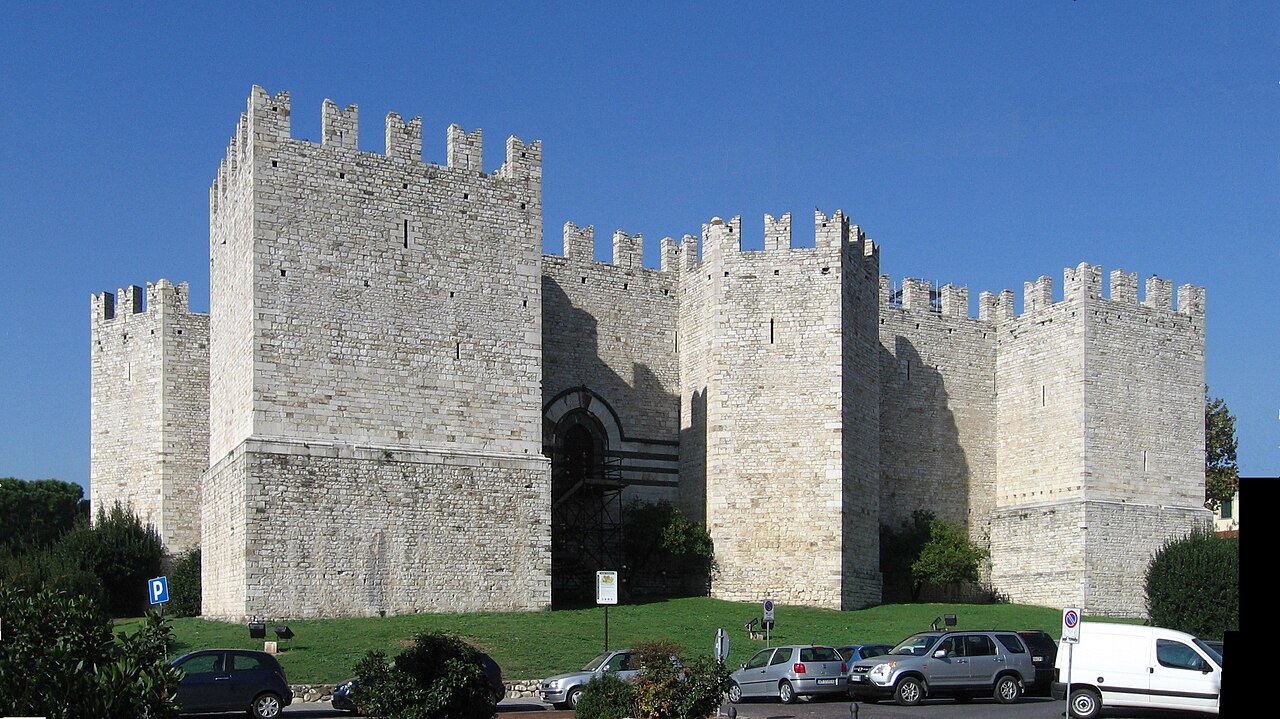
Emperor's Castle, also known as the Fortress of Santa Barbara or Castello Svevo, stands as a remarkable testament to medieval military architecture in Prato, Tuscany. Constructed between the 11th and 13th centuries, it is the most significant architectural relic of this period in the city and represents an exceptional example of a Swabian manor in central-northern Italy. Its strategic location was intended to control the vital communication routes from southern Italy to Germany, particularly the road crossing Montepiano through the Bisenzio valley into the heart of Tuscany.
Historical context and construction
The castle's construction began in 1248 under the directive of Emperor Frederick II of Swabia. This initiative was part of a broader imperial strategy to secure military dominance over key transit routes. The site chosen for the fortress was previously occupied by a smaller fortification, donated to the emperor by a local Ghibelline family from Prato.
The design and construction were overseen by Riccardo da Lentini, an architect and master builder who led a team of skilled craftsmen brought from Puglia. The involvement of these southern artisans influenced the castle's architectural style, blending the Swabian imperial aesthetic with local Tuscan elements.
Architectural design and features
Layout and fortifications
The castle is characterized by a square plan fortified with eight towers—four at the corners and four along the curtain walls. Two of these side towers are spur-shaped, while the other two are remnants of the earlier fortification, originally taller than their current state. The walls and towers are crowned with the distinctive Ghibelline dovetail merlons, a hallmark of imperial fortifications symbolizing allegiance to the emperor.
This octagonal arrangement of towers, while not geometrically perfect due to the integration of pre-existing structures, maintains the symbolic significance associated with the number eight in Swabian architecture, reminiscent of southern Italian castles such as Castel del Monte.
Entrance and decorative elements
The main entrance features a portal with a sesto acuto (pointed) arch, adorned with alternating bands of white and green marble creating a dicromic decorative pattern. This stylistic choice reflects the fusion of Swabian imperial motifs with local Tuscan architectural tastes. Flanking the entrance are two carved lions, emblematic of the imperial house's iconography, reinforcing the castle's status as an imperial stronghold.
Defensive innovations
The castle's defensive design includes carefully positioned arrow slits arranged to allow both frontal and flanking fire. This demonstrates a sophisticated understanding of military architecture, ensuring comprehensive coverage of the surrounding approaches.
Interior layout and usage
Inside, the castle is notably sparse, lacking permanent stone buildings except for a few carved capitals on the walls. The original plan envisioned a complex of buildings arranged on four symmetrical wings around a central courtyard, designed in the Federiciana geometric architectural style. These structures were intended to serve as the residence of the Imperial Vicar in Tuscany, featuring two straight planes of semi-columns.
However, these plans were never fully realized, and the interior was primarily occupied by temporary wooden and masonry structures to house the garrison. For many years, until restoration efforts began in 1975, the castle's interior housed modern buildings and was used as a prison. Additional buildings once stood along the outer walls but have since been removed, with only traces remaining visible near the main entrance.
Significance and preservation
Emperor's Castle is a unique example of Swabian military architecture in central-northern Italy, distinguished by its fusion of imperial symbolism and local stylistic elements. Its preservation offers valuable insights into the military strategies of Frederick II's reign and the architectural innovations of the 13th century.
The castle's restoration has aimed to remove later additions that obscured its original form, allowing visitors to appreciate its historical and architectural significance. Today, it stands as a well-preserved monument reflecting the complex history of Tuscany and the broader political landscape of medieval Italy.
Architectural comparison and influence
The castle's design bears comparison with southern Italian Swabian fortresses, particularly Castel del Monte and Lagopesole. While its geometric perfection is somewhat compromised by the incorporation of earlier structures, the overall layout and symbolism align with the imperial architectural language promoted by Frederick II. This makes Emperor's Castle an important link between the architectural traditions of southern and central Italy during the High Medieval period.
Swabian architectural elements
- Ghibelline merlons crowning the walls and towers
- Octagonal tower arrangement symbolizing imperial power
- Dicromic marble decoration at the main portal
- Arrow slits designed for optimal defense
Local Tuscan influences
- Use of alternating white and green marble bands
- Integration of pre-existing fortification towers
- Adaptation of architectural plans to local topography and structures
Visiting emperor's castle
Visitors to Emperor's Castle can explore a site that encapsulates the military, political, and architectural history of 13th-century Tuscany. The castle's imposing walls and towers offer a tangible connection to the era of Frederick II and his efforts to consolidate imperial control in Italy.
While the interior remains largely empty of its original buildings, the spatial arrangement and surviving architectural details provide a glimpse into the castle's intended grandeur and strategic importance. The castle is an essential destination for those interested in medieval architecture, imperial history, and the cultural heritage of Tuscany.
Frequently asked questions (FAQ)
- What is the historical significance of Emperor Castle?
- Emperor Castle, located in Prato, Italy, dates back to the 12th century and served as a strategic fortress during the Middle Ages. Its architecture reflects the power dynamics of the time, showcasing the blend of military and residential design typical of medieval castles. The castle played a crucial role in the defense of the region and has witnessed numerous historical events over the centuries.
- When was Emperor Castle built?
- Emperor Castle was constructed in the early 12th century, with its origins tracing back to the time when Prato was an important center for trade and military activity. The castle underwent several renovations and expansions in the following centuries, adapting to the changing needs of its inhabitants and the evolving architectural styles.
- Can I visit Emperor Castle?
- Yes, Emperor Castle is open to the public, allowing visitors to explore its rich history and stunning architecture. Guided tours are available to enhance your experience, providing insights into the castle's past and its significance in the region. It's advisable to check the castle's official website for any seasonal events or special exhibitions.
- What are the opening hours for Emperor Castle?
- Emperor Castle is typically open to visitors from 10 AM to 6 PM, but hours may vary depending on the season. It is closed on certain public holidays, so it's best to confirm the current schedule before planning your visit. Always check the official website for the most up-to-date information.
- Is it possible to access Emperor Castle with a wheelchair?
- While Emperor Castle aims to be accessible to all visitors, some areas may pose challenges due to the historical nature of the site and its uneven terrain. There are designated pathways and services available for guests with mobility issues. It is recommended to contact the castle staff in advance to inquire about specific accessibility options.
- What is the best time to visit Emperor Castle?
- The best time to visit Emperor Castle is during the spring (April to June) and fall (September to October) months when the weather is mild and the tourist crowds are smaller. These seasons provide an excellent opportunity to enjoy the beautiful surroundings and participate in various cultural events hosted at the castle. Summer can be quite hot, while winter may see limited access due to weather conditions.
- What are the ticket prices for visiting Emperor Castle?
- Ticket prices for Emperor Castle typically range from €8 for adults to €5 for children and seniors. Discounts may be available for groups or special events, so it’s wise to check the official website for the latest pricing information and any promotional offers. Children under a certain age may even enter for free.
- Are there any nearby attractions to visit after Emperor Castle?
- Yes, after exploring Emperor Castle, visitors can enjoy nearby attractions such as the Prato Cathedral, known for its stunning frescoes, and the Textile Museum, which showcases the city's rich textile history. The charming streets of Prato also offer various cafes and shops, making it a perfect area to relax and soak in the local culture.
Information
Loading map...
Visitor reviews
No reviews yet. Been here? Write the first review and help other travelers!
Write the first reviewVisited this castle? Share your experience
Your review helps other travelers and adds first-hand knowledge to our encyclopedia.