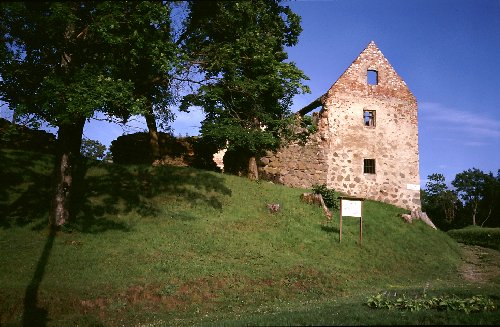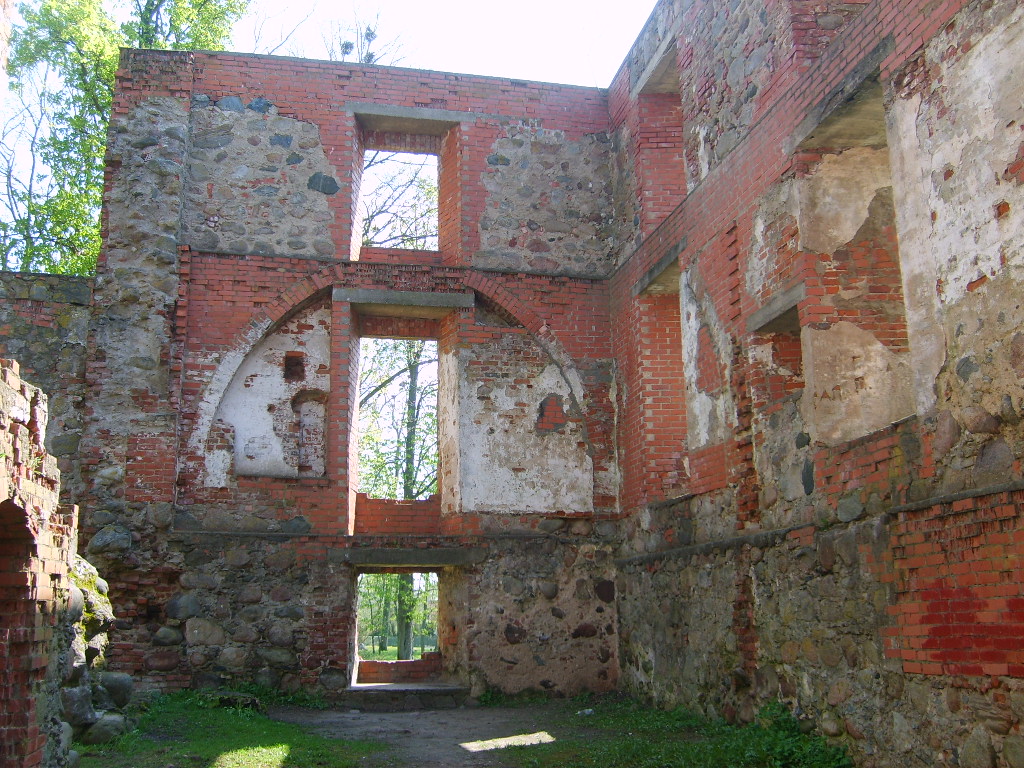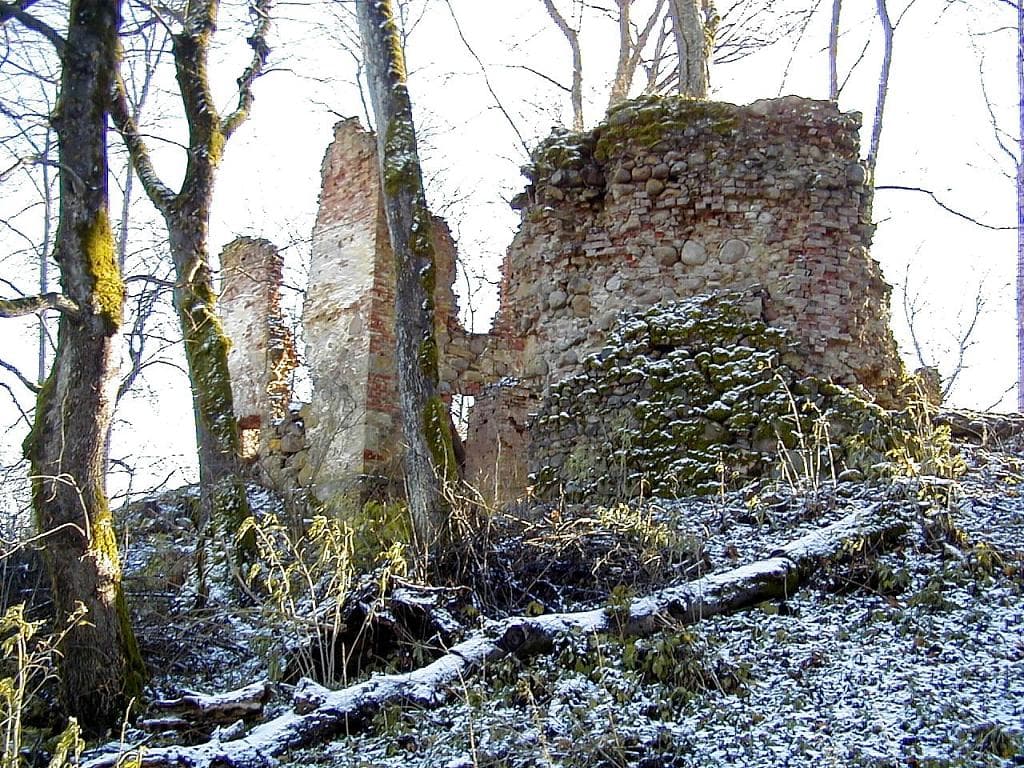
Embute Castle, located in Embute, Latvia, is a significant medieval hill castle whose ruins tell the story of the region's complex history during the Middle Ages. Built in the mid-13th century, around 1265, the castle was originally constructed as a residence for the Bishop of Courland and served as a strategic stronghold in the area. Its location atop a hill, just half a kilometer south of an ancient Curonian defensive fortification, highlights its importance in controlling local territories and resisting incursions.
Historical background and construction
The castle's origins are closely tied to the division of Courland in the 13th century between the Teutonic Knights and the Bishops of Courland. Although the territory of Embute was assigned to the bishops, the local pagan Curonians resisted their rule, maintaining effective independence for some time. The exact date of the castle's construction is not precisely documented, but it is widely accepted that it was built around 1265 by Conrad von Mandern, the Landmeister of the Livonian Order. Initially, the castle served as the seat of the Teutonic Order's local vogt (administrator) before being handed over to the bishops by the late 13th century.
Embute Castle was constructed on a hilltop with a layout adapted to the natural terrain. The fortification featured a single stone curtain wall enclosing the site, with buildings primarily situated on the eastern side. The main entrance was on the northeast side, guarded by two semicircular towers, a common defensive architectural feature of the period. This design provided both protection and control over access to the castle.
Role and ownership through the centuries
Throughout its history, Embute Castle was a symbol of ecclesiastical and feudal power in the region. It remained under the control of the Bishops of Courland until 1537, shortly before the secularization of the Livonian Order's territories. After this period, the castle passed into private hands, owned by several noble families over the ensuing centuries. These families used the castle as a residence and administrative center for their estates.
The castle suffered significant damage during the Great Northern War in 1702, one of the major conflicts that reshaped the Baltic region. The war inflicted serious destruction on the fortifications, leading to its decline as a military stronghold.
Later developments and decline
In the 18th century, a manor house was constructed near the castle ruins, utilizing materials salvaged from the deteriorating medieval walls. This manor was expanded in the 19th century, including the demolition of one of the old gate towers to accommodate new construction needs. The castle itself ceased to function as a fortress and gradually fell into ruin.
The manor and remaining structures were ultimately abandoned after a fire in 1920. The last owner was the widow of Baron Hans von Hahn. Local accounts suggest that the baroness may have deliberately set fire to the property to prevent its nationalization by the newly established Latvian government following the agrarian reforms of the 1920s.
Current state and preservation
Today, the site of Embute Castle is heavily overgrown with trees and shrubs, with only modest remnants of the original stone walls and towers visible. The ruins include fragments of the defensive walls and the remains of the semicircular towers that once guarded the main gate. The castle's condition is classified as ruins, reflecting the extensive damage and neglect it has suffered over the centuries.
During the Soviet era, stones from the castle ruins were repurposed as building materials by local collective farms, further contributing to the site's deterioration. Despite this, the ruins remain an important cultural and historical landmark in Latvia, embodying the region's medieval heritage and the complex history of the Curonian and Livonian peoples.
Architectural features and significance
Embute Castle is a classic example of a hill castle constructed during the High medieval period, reflecting the military and administrative needs of the Teutonic Order and the Bishops of Courland. Its single stone curtain wall, semicircular gate towers, and hilltop location demonstrate typical defensive strategies of the 13th century in the Baltic region.
The castle's proximity to an earlier Curonian fortification highlights the continuity of strategic use of the landscape by successive cultures. The castle's architecture and history provide valuable insight into the medieval power struggles between pagan tribes, the Livonian Order, and ecclesiastical authorities.
Visiting Embute Castle ruins
Visitors to Embute today can explore the atmospheric ruins nestled within a wooded hill. While the remains are modest, the site offers a tangible connection to Latvia's medieval past and the turbulent history of the Baltic region. The surrounding landscape and the proximity to the ancient Curonian hillfort add to the historical ambiance and significance of the location.
Due to the overgrown nature of the site and the fragile condition of the ruins, visitors should exercise caution and respect preservation efforts. The castle ruins are an evocative reminder of the region's layered history and the enduring legacy of medieval fortifications in Latvia.
Frequently asked questions (FAQ)
- When was Embute Castle built?
- Embute Castle was built around 1265 during the High Medieval period as a residence for the Bishop of Courland.
- What is the current condition of Embute Castle?
- Embute Castle is currently in ruins, with only fragments of walls and towers remaining amidst overgrown vegetation.
- Who built Embute Castle?
- The castle was constructed by Conrad von Mandern, the Landmeister of the Livonian Order, in the mid-13th century.
- Can I visit Embute Castle ruins?
- Yes, visitors can explore the ruins of Embute Castle, though the site is overgrown and requires caution due to its fragile condition.
- What historical events affected Embute Castle?
- Embute Castle was damaged significantly during the Great Northern War in 1702 and later abandoned after a fire in 1920.
Photo gallery

Information
Loading map...
Visitor reviews
No reviews yet. Been here? Write the first review and help other travelers!
Write the first reviewVisited this castle? Share your experience
Your review helps other travelers and adds first-hand knowledge to our encyclopedia.