Elphinstone Tower
Elphinstone Tower stands as a remarkable example of a 16th-century Scottish hill castle, located in Dunmore, Falkirk, Scotland. Constructed in the early 1500s, this tower house served as the principal residence and administrative center for the Barony of Elphinstone, a noble family with roots in the region dating back to the 1300s. The tower's design and function reflect the social and feudal dynamics of Scotland during the early modern period, combining fortified defense with residential comfort and status representation.
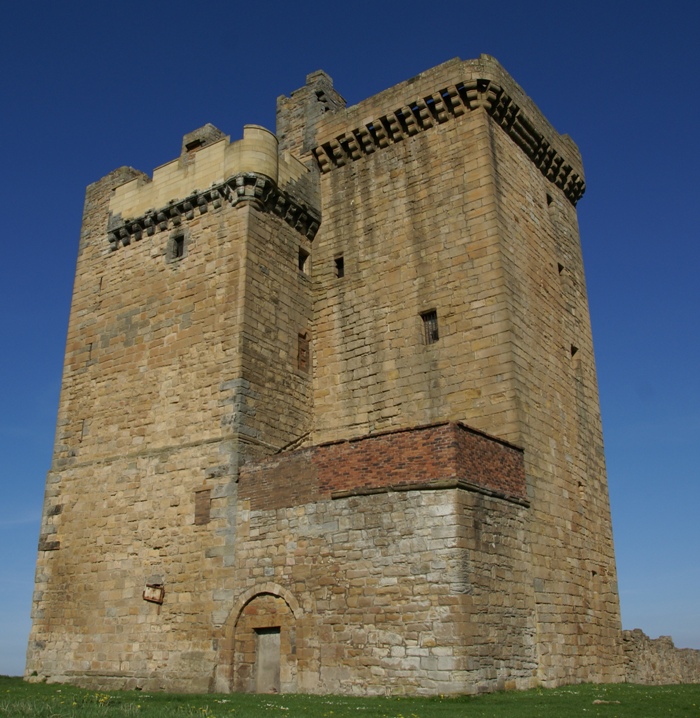
The castle's rectangular stone structure, measuring approximately nine meters by 7.4 meters at its base, originally rose to four storeys, with walls still standing up to 17 meters high, reaching the parapet level. Its south-facing original entrance and the well-preserved eastern wall provide a clear impression of the tower's imposing verticality. A notable architectural feature was the now-lost round tower at the south-west corner, which would have enhanced the tower's defensive capabilities and visual prominence.
Historical development and ownership
In the early 1600s, Alexander Elphinstone, 4th Lord Elphinstone, commissioned significant expansions, including the addition of a gallery and a new hall. These enhancements indicate the tower's ongoing role as a noble residence and a site for social and political gatherings. The 17th century thus marked a period of investment and adaptation to changing tastes and needs.
The estate changed hands in 1754 when John Murray, son of the 3rd Earl of Dunmore, purchased it for £16,000. Upon inheriting the earldom in 1756, Murray renamed the property Dunmore Estate and initiated further developments, most famously commissioning the Dunmore Pineapple folly in 1761. While the tower itself was expanded during this period, it gradually ceased to be a primary residence.
Transformation in the 19th century
The 19th century brought major alterations under George Murray, 5th Earl of Dunmore, who established Dunmore Park as the family's main home in the 1820s. This shift led to the removal of the tower's later additions to make way for St Andrew's Episcopal Church, a private chapel completed around 1850. The tower's ground floor was repurposed as a burial vault for the Murray family, a function that significantly altered its interior layout and accessibility.
Decline and preservation challenges
Following the Murray family's departure from Dunmore Estate in 1911, Elphinstone Tower fell into disrepair. The demolition of St Andrew's Church in the early 1960s and a storm in 1968 that caused the collapse of the tower's north-west corner accelerated its decline. Additionally, the burial vault was reportedly disturbed and plundered around 1990, further compromising the site's integrity.
Architectural features and remains
The tower's surviving walls offer valuable insight into Scottish tower house architecture of the early 16th century. The robust stone construction, vertical emphasis, and defensive elements such as the lost round tower illustrate the blend of military and residential functions typical of the period. Adjacent structures, including a now-vanished two-storey building and the former site of St Andrew's Church, contextualize the tower within a broader estate complex.
The ground floor burial vault, although now filled with rubble and unstable, underscores the tower's later adaptation for funerary purposes. Despite its ruinous state, Elphinstone Tower remains a significant cultural landmark, embodying centuries of Scottish noble history, architectural evolution, and the challenges of heritage preservation.
Visiting and cultural significance
Today, Elphinstone Tower stands as a poignant ruin, offering visitors a tangible connection to Scotland's feudal past and noble lineage. Its location in Falkirk situates it within a region rich in history and heritage, making it a valuable site for those interested in medieval and early modern Scottish architecture. While the tower is not fully accessible due to safety concerns, its imposing remains continue to attract historians, architects, and tourists alike.
Frequently asked questions (FAQ)
- What is the historical significance of Elphinstone Tower?
- Elphinstone Tower is a notable example of a Scottish tower house, dating back to the 16th century. It served as a residence for the Elphinstone family and is a key part of Scotland's architectural heritage, reflecting the feudal history of the region.
- When was Elphinstone Tower built?
- Elphinstone Tower was constructed in the late 1500s, with its first recorded mention in 1575. This period marks the height of castle building in Scotland, showcasing the importance of fortified residences during that era.
- What are the opening hours for visiting Elphinstone Tower?
- Elphinstone Tower is typically open to visitors from April to September, with hours varying by day. It is advisable to check the official website or local visitor information for the most accurate and up-to-date opening times before planning your visit.
- Can I access Elphinstone Tower with a wheelchair?
- Unfortunately, Elphinstone Tower has limited accessibility due to its historic structure, which includes steep stairs and narrow passages. Visitors with mobility concerns may find it challenging to navigate the site, so it is recommended to contact the site management for specific accessibility options.
- Is it possible to take guided tours of Elphinstone Tower?
- Yes, guided tours of Elphinstone Tower are available, providing visitors with an in-depth understanding of its history and architecture. These tours are often led by knowledgeable guides who can share fascinating stories and insights about the tower and its significance.
- What is the best time to visit Elphinstone Tower?
- The best time to visit Elphinstone Tower is during the late spring and summer months when the weather is generally milder and more conducive to outdoor exploration. Additionally, visiting during this period allows you to enjoy the surrounding gardens and landscapes that enhance the castle's beauty.
- Are there any nearby attractions worth visiting while at Elphinstone Tower?
- Yes, there are several nearby attractions, including the picturesque village of Dunmore and the nearby historic sites of the region. Visitors can also explore the scenic countryside that offers walking trails and beautiful views, making it a perfect day trip.
- What are the ticket prices for visiting Elphinstone Tower?
- Ticket prices for Elphinstone Tower vary depending on the visitor's age and whether they are part of a group. It is recommended to check the official website for the most current pricing information and any special offers that may be available during your visit.
Information
Loading map...
Visitor reviews
No reviews yet. Been here? Write the first review and help other travelers!
Write the first reviewVisited this castle? Share your experience
Your review helps other travelers and adds first-hand knowledge to our encyclopedia.