Ellewoutsdijk Fort
Historical context and strategic importance
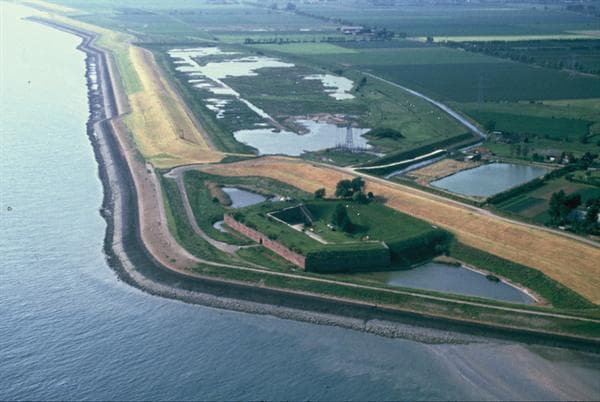
Constructed in the early 1800s, Ellewoutsdijk Fort played a crucial role in the defense system of the Dutch coastline. The fort was strategically positioned to guard the entrance to important estuaries and waterways, which were vital for trade and military movements. Its location allowed control over naval access, making it a key point in the regional defense network.
The fort's development was influenced by the shifting political landscape of Europe after the Napoleonic Wars. The Netherlands sought to strengthen its coastal defenses to prevent incursions by foreign powers, leading to the construction of modern bastioned fortifications like Ellewoutsdijk.
Architectural features and design
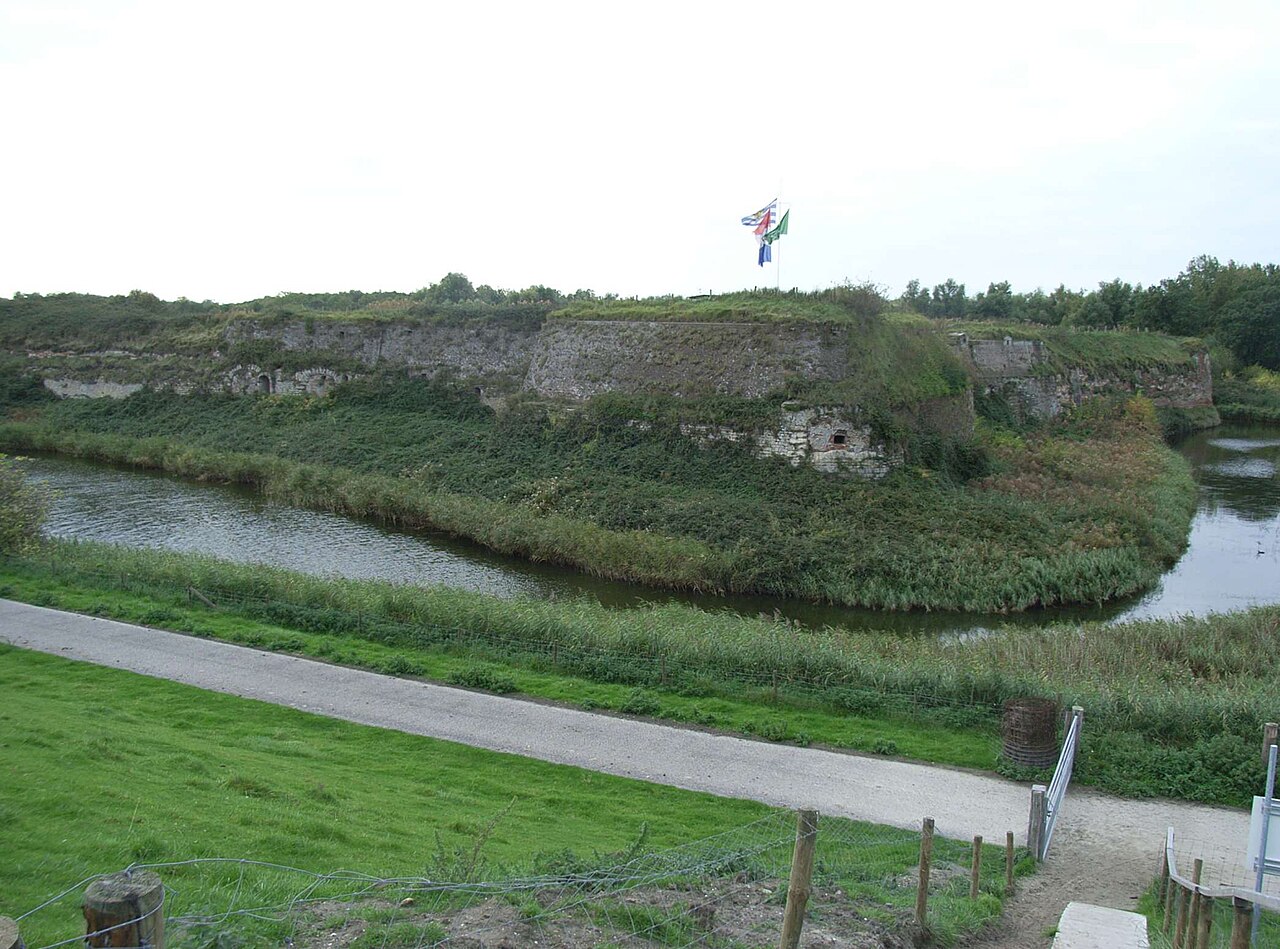
Ellewoutsdijk Fort is characterized by its bastioned design, a style that emerged in the early modern period and was adapted throughout the 19th century to meet new military challenges. The fort's layout includes angled bastions that project outward from the main walls, allowing defenders to cover adjacent walls with overlapping fields of fire. This design minimized blind spots and enhanced the fort's defensive capabilities against artillery assaults.
The fort's walls were constructed using robust masonry and earthworks, combining stone and brick materials to absorb and deflect cannon fire. Surrounding the structure, a moat or water-filled ditch further impeded enemy advances, adding an additional layer of defense.
Internal structures and facilities
Inside the fort, there were barracks for the garrison, ammunition storage magazines, and command posts. The internal layout was designed to support sustained defense during sieges, with provisions for housing troops and storing supplies securely within the fort's protected perimeter.
Role in military history and preservation
While Ellewoutsdijk Fort did not see extensive combat, it served as a deterrent and a stronghold during periods of military tension. Its presence contributed to the security of the Dutch coast throughout the 19th and early 20th centuries.
Today, the fort is recognized for its historical and architectural value. It stands as a well-preserved example of 19th-century bastioned fortress architecture in the Netherlands. Preservation efforts have maintained the structural integrity of the walls and bastions, allowing visitors to appreciate the design principles of this military heritage site.
Visiting Ellewoutsdijk Fort
The fort is accessible to the public during certain times of the year, offering guided tours that explain its history and architectural features. Visitors can explore the bastions, walk along the defensive walls, and learn about the fort's role in Dutch military history.
Its location in the Dutch countryside provides a scenic backdrop, combining cultural heritage with natural beauty. The site is a valuable destination for those interested in military architecture, history, and the evolution of fortifications.
Frequently asked questions (FAQ)
- When was Ellewoutsdijk Fort built?
- Ellewoutsdijk Fort was constructed in the 19th century as part of the Netherlands' coastal defense system following the Napoleonic Wars.
- What type of fortress is Ellewoutsdijk Fort?
- Ellewoutsdijk Fort is a bastioned fortress, featuring angled bastions designed to provide overlapping fields of fire for defense.
- Can visitors tour Ellewoutsdijk Fort?
- Yes, the fort is open to the public during certain times of the year, offering guided tours that showcase its military architecture and history.
- What materials were used in the construction of Ellewoutsdijk Fort?
- The fort was built using a combination of masonry, including stone and brick, along with earthworks to strengthen its defenses against artillery.
- Why was Ellewoutsdijk Fort strategically important?
- Its position allowed control over crucial waterways and estuaries, making it a key defensive point for protecting the Dutch coastline and trade routes.
Photo gallery

Photo by BeeldbankVenW.nl, Rijkswaterstaat.•Attribution
Information
Loading map...
Visitor reviews
No reviews yet. Been here? Write the first review and help other travelers!
Write the first reviewVisited this castle? Share your experience
Your review helps other travelers and adds first-hand knowledge to our encyclopedia.