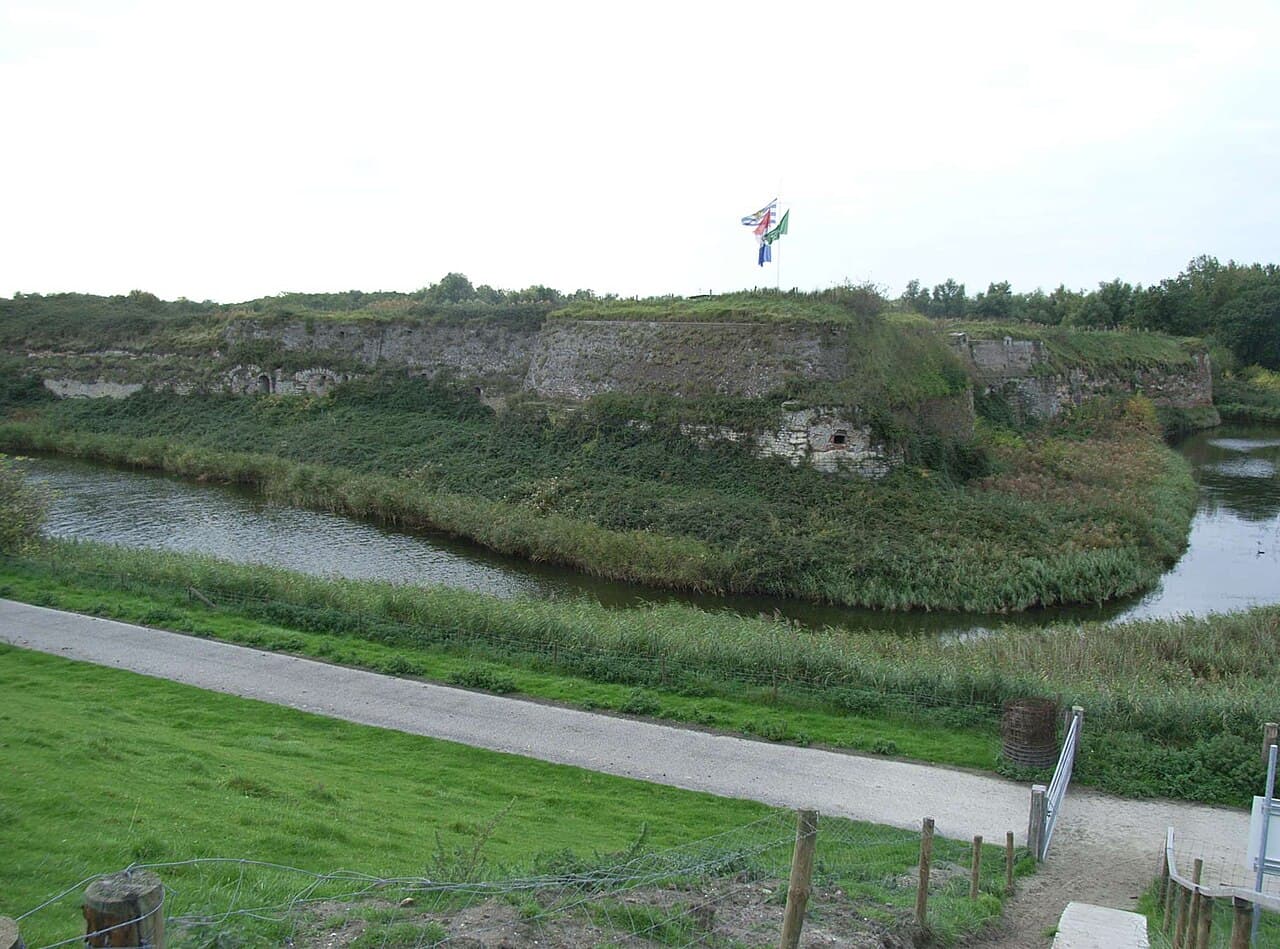
Fort Rammekens
Fort Rammekens, originally known as Zeeburg, is located between the village of Ritthem and the harbor of Vlissingen-Oost in the province of Zeeland, Netherlands. Constructed in 1547 by the Italian military engineer Donato de Boni di Pellizuoli under the orders of Mary of Hungary, then governor of the Habsburg Netherlands, it stands as the oldest seafort in Western Europe. Its strategic position on the north bank of the Western Scheldt estuary allowed it to control and protect vital waterways leading to the important cities of Middelburg and Antwerp.
Renaissance military architecture and design
Fort Rammekens exemplifies Renaissance military engineering, particularly the bastioned fortress style that was emerging in Europe during the 16th century. The fort has a quadrilateral plan with bastions at its corners, designed to provide overlapping fields of fire and to withstand artillery attacks. Originally, it was built on a bend in the dyke with the waters of the Western Scheldt lapping directly against its eastern walls, enhancing its natural defenses.
The fort's construction utilized thick stone walls and angular bastions characteristic of the period, reflecting advances in military technology and fortification theory. This design allowed defenders to repel attackers more effectively than earlier medieval castles, which were vulnerable to cannon fire.
Role in the Eighty Years' War
During the early years of the Eighty Years' War, Fort Rammekens was garrisoned by Spanish troops who used it as a key stronghold to maintain control over the Western Scheldt and access to Middelburg. In 1573, the fort was seized by the Sea Beggars, the Dutch rebel privateers fighting against Spanish rule. This victory was pivotal in the Dutch struggle for independence.
One of the most significant historical events at Fort Rammekens was the signing of the capitulation of Middelburg in 1574. The Spanish commander, Cristóbal de Mondragón, surrendered the city to William I, Prince of Orange, marking a turning point in the war. Later, in 1585, the fort was used as collateral to secure military assistance from Elizabeth I of England, who provided 5,000 soldiers to support the Dutch cause. The fort was returned to Dutch control in 1616.
Later uses and modifications
By 1787, Fort Rammekens had been repurposed as a hospital for sailors of the Dutch East India Company waiting at the anchorage for favorable winds. This shift in function reflects the changing maritime and military needs of the period.
The Napoleonic Wars brought significant changes to the fort. After the failed British Walcheren Campaign in 1809, Napoleon Bonaparte ordered a radical reconstruction of Fort Rammekens. The original courtyard buildings were removed, and robust casemates were constructed to modernize its defenses against contemporary artillery. The fort returned to Dutch hands in 1814 after Napoleon's defeat.
Despite being abolished as a fortress in 1869, the fort remained in use as a powder magazine for some time, though it gradually fell into disrepair.
World War II and post-war period
During World War II, Fort Rammekens became part of the German Atlantic Wall defenses. German forces occupied the fort and built several bunkers and concrete fortifications in and around it. In 1944, Allied bombing targeted the nearby dyke to flood Walcheren island, affecting the fort's surroundings.
After the war, the fort found an unusual use as a mushroom farm for several years. Since 1972, it has been owned and managed by Staatsbosbeheer, the Dutch governmental forestry and nature reserve organization, emphasizing its preservation as a historic site.
Current status and visitor information
Today, Fort Rammekens is a well-preserved example of Renaissance bastioned fortress architecture. Although the surrounding landscape has changed, with a new dyke constructed in 1945 cutting off the fort from the original waterfront, the fort retains much of its historic character and layout.
Visitors can explore the fort on weekends during the summer months for a modest fee. The site offers insight into centuries of military history, architectural evolution, and the strategic importance of Zeeland's waterways.
Frequently asked questions (FAQ)
- What is the historical significance of Fort Rammekens?
- Fort Rammekens is the oldest coastal fort in the Netherlands, built in the 16th century to protect the city of Vlissingen from naval attacks. Its strategic location and robust architecture played a crucial role in the defense against foreign invasions, particularly during the Eighty Years' War. Today, it serves as a reminder of the military history of the region.
- When was Fort Rammekens constructed?
- Construction of Fort Rammekens began in 1547 and was completed in 1550. The fort was designed by the renowned engineer Maarten de Bies, reflecting the military architectural styles of the Renaissance period. Over the centuries, it has undergone various modifications to adapt to changing warfare technologies.
- Can I visit Fort Rammekens?
- Yes, Fort Rammekens is open to visitors. You can explore the fort's grounds, learn about its history through informative displays, and enjoy the scenic views of the surrounding area. Guided tours may be available to provide a deeper understanding of the fort's significance.
- What are the opening hours for Fort Rammekens?
- Fort Rammekens typically opens to visitors from 10 AM to 5 PM, but hours may vary depending on the season or special events. It is advisable to check the official website or contact the fort before your visit to confirm the current opening times. Special events and exhibitions may also have different hours.
- Is it possible to access Fort Rammekens with a wheelchair?
- Yes, Fort Rammekens is committed to accessibility for all visitors. There are pathways and areas that are wheelchair-friendly, although some historical features may have limitations due to their original design. It is recommended to inquire in advance about specific accessibility provisions when planning your visit.
- What is the best time to visit Fort Rammekens?
- The best time to visit Fort Rammekens is during the spring and summer months, when the weather is generally mild and pleasant. This allows for comfortable outdoor exploration and the opportunity to enjoy the beautiful surrounding landscape. Additionally, the fort often hosts events and activities during this time.
- Are there any nearby attractions to visit along with Fort Rammekens?
- Yes, nearby attractions include the city of Vlissingen, known for its beaches and maritime history, and the beautiful nature reserves in the region. You can also explore the local museums and enjoy waterfront dining options. Combining these visits can provide a full day of cultural and recreational experiences.
- What are the ticket prices for visiting Fort Rammekens?
- Ticket prices for Fort Rammekens are generally affordable, with discounts available for children, students, and seniors. Special rates may apply for group visits or guided tours. It's best to check the official website for the most current pricing and any promotions that may be available.
Photo gallery

Information
Loading map...
Visitor reviews
No reviews yet. Been here? Write the first review and help other travelers!
Write the first reviewVisited this castle? Share your experience
Your review helps other travelers and adds first-hand knowledge to our encyclopedia.



