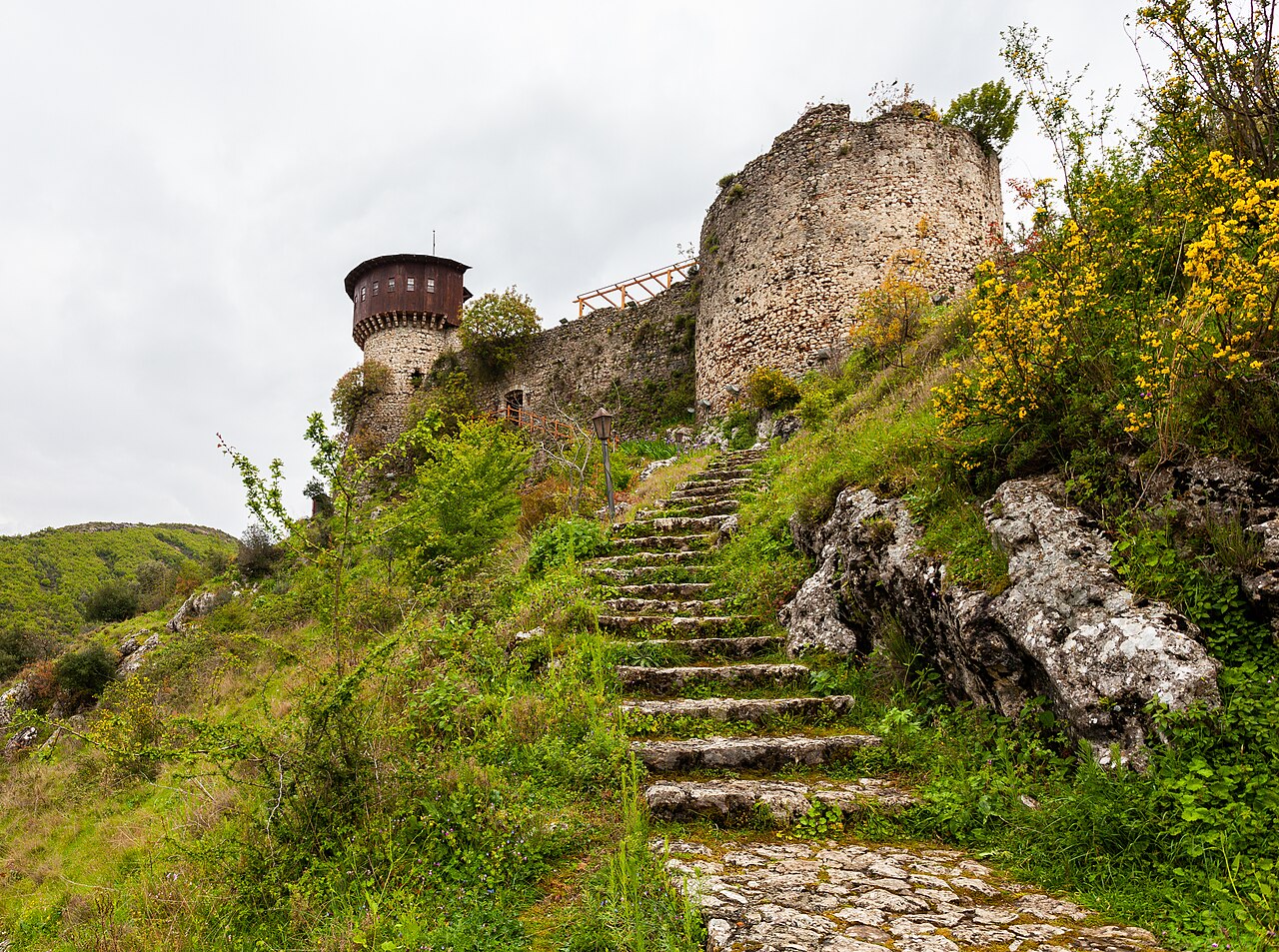
Elbasan Castle
Elbasan Castle, known locally as Kalaja e Elbasanit, is a historic fortress located in the city of Elbasan, within the Elbasan region of Albania. Despite its name, the structure originally served as a Roman castrum, a military fortification designed to house a legion. Constructed during the reign of Emperor Diocletian between 284 and 305 AD, the fort was initially called Mansio Scampis. It occupied a strategic position along the Via Egnatia, a vital Roman road that connected the Adriatic coast to Byzantium, facilitating military and commercial movement.
Roman origins and early medieval reconstruction
The original Roman fortification at Elbasan was built to secure the region and control the important communication route of the Via Egnatia. Following the decline and eventual collapse of the Roman Empire, the military presence diminished, and the legion stationed at Mansio Scampis withdrew. The location's vulnerability, situated in a wide river valley, exposed it to potential invasions and raids.
Recognizing its strategic importance, the fortress was rebuilt in the 6th century under the orders of Byzantine Emperor Justinian I. This reconstruction was part of Justinian's broader efforts to fortify the empire's frontiers and secure key transit points. The rebuilt fortress retained much of its original Roman layout but incorporated Byzantine defensive architectural elements suited to the military needs of the time.
Ottoman reconstruction and significance
After a period of abandonment, the site regained prominence in the 15th century when the Ottoman Empire expanded into the Balkans. In 1466, during the reign of Sultan Mehmed II the Conqueror, the fortress was extensively rebuilt and transformed into a garrison town. This reconstruction was part of the Ottoman military strategy during their conflict with the League of Lezhë, led by the Albanian national hero Skanderbeg.
The Ottomans renamed the fortress Ijl-basan, which translates roughly to "the owned fortress," a name that evolved into the modern name Elbasan. The fortress then became the administrative center and seat of the Sanjak of Elbasan, an Ottoman provincial district, for approximately 445 years.
Architectural features and current remains
Elbasan Castle was originally designed as a Roman castrum, characterized by a rectangular layout with defensive walls and towers at strategic points. The later Byzantine and Ottoman modifications adapted the fortress to changing military technologies and needs. The walls were thick and fortified with towers, providing strong defensive capabilities.
Today, the castle is partially preserved. The most visible remains include the south wall with its towers, alongside fragments of the west and east walls. Much of the original structure has been integrated into the modern urban fabric of Elbasan, with houses and shops built over or adjacent to the old walls. The fortress no longer serves a military purpose and is freely accessible to visitors.
Historical significance and legacy
Elbasan Castle's history reflects the shifting powers in the Balkans, from Roman to Byzantine to Ottoman rule. Its location along the Via Egnatia made it a key military and administrative site for centuries. The dismantling of the fortress in 1832 by Ottoman Grand Vizier Reşid Mehmed Pasha marked the end of its military function, following the suppression of the Bosnian uprising.
Today, Elbasan Castle stands as a testament to the region's layered history, offering insights into Roman military architecture, Byzantine fortification strategies, and Ottoman administrative practices. Its remains contribute to the cultural heritage of Elbasan and serve as a quiet historical landmark amid the busy city.
Visiting Elbasan Castle
The castle is located in a central area of Elbasan and is easily accessible to the public. Visitors can explore the surviving walls and towers, gaining a sense of the fortress's original scale and defensive design. The surrounding neighborhood reflects the castle's integration into the urban environment over centuries.
While the site does not have extensive visitor facilities or a dedicated museum, its open access allows for self-guided exploration. The castle's historical context and architectural features make it a point of interest for those interested in Roman, Byzantine, and Ottoman history in Albania.
Frequently asked questions (FAQ)
- What is the historical significance of Elbasan Castle?
- Elbasan Castle, built in the 15th century, is a symbol of the city's rich history and architectural heritage. It served as a defensive stronghold during various conflicts and has witnessed numerous historical events, making it an important landmark in Albania.
- When was Elbasan Castle constructed?
- Elbasan Castle was constructed in the 15th century, primarily under the rule of Sultan Mehmed II. Over the centuries, it has undergone various renovations and expansions, reflecting the architectural styles of different periods.
- What are the opening hours of Elbasan Castle?
- Elbasan Castle is generally open to visitors from 9:00 AM to 6:00 PM daily. However, it's advisable to check local sources or the castle's official website for any changes in hours due to holidays or events.
- Can I visit Elbasan Castle year-round?
- Yes, Elbasan Castle is open for visitors year-round, allowing you to explore its historic walls and stunning views at any time. However, the best time to visit is during spring and autumn when the weather is mild and pleasant.
- Is there an entrance fee to visit Elbasan Castle?
- Yes, there is a small entrance fee to access Elbasan Castle, which helps with its maintenance and preservation. The ticket prices are typically affordable, making it accessible for both locals and tourists.
- How do I get to Elbasan Castle?
- Elbasan Castle is located in the center of Elbasan, making it easily accessible by walking from various points in the city. Public transportation options, such as buses and taxis, are also available for those traveling from nearby cities.
- What nearby attractions can I visit after Elbasan Castle?
- After visiting Elbasan Castle, you can explore other nearby attractions such as the Ethnographic Museum and the Saint Mary Church. The city also offers charming local markets and restaurants to experience Albanian culture.
- Is Elbasan Castle accessible for visitors with disabilities?
- While Elbasan Castle has some pathways and areas that may be accessible, the uneven terrain and historical architecture can present challenges. It is advisable to check with local authorities for specific accessibility options before planning your visit.
Information
Loading map...
Visitor reviews
No reviews yet. Been here? Write the first review and help other travelers!
Write the first reviewVisited this castle? Share your experience
Your review helps other travelers and adds first-hand knowledge to our encyclopedia.