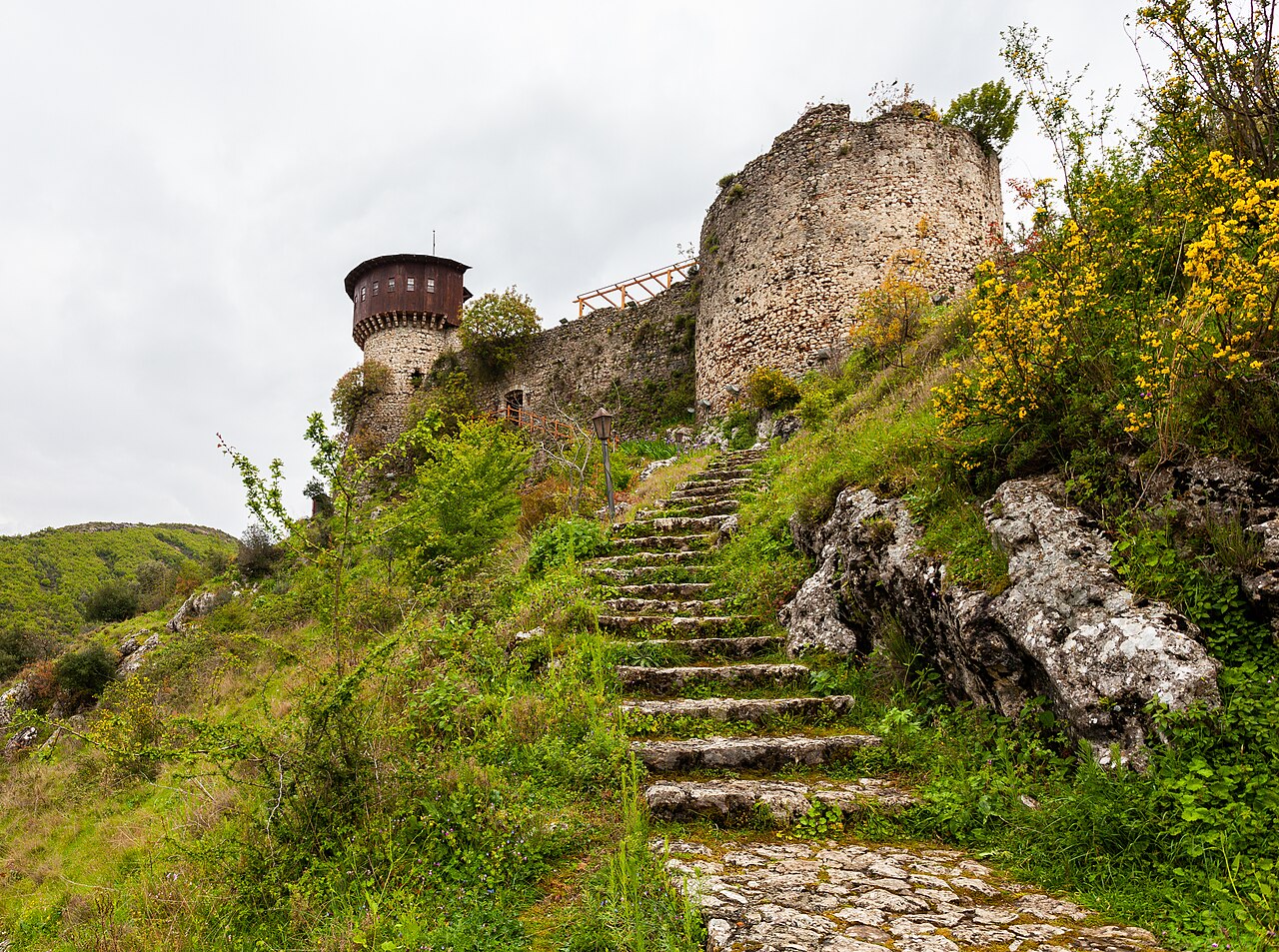
Elbasan Castle Walls
Elbasan Castle Walls represent a significant example of 15th-century Ottoman military architecture in Elbasan, Albania. Originally constructed under the orders of Sultan Mehmet II in 1466, the fortress was strategically built to consolidate Ottoman control in the region and counter the resistance led by the Albanian national hero Skanderbeg. The castle's name, "Elbasan," translates to "conquered country" in Turkish, reflecting its role as a symbol of Ottoman dominance during a turbulent period of Balkan history.
Historical context and strategic importance
The site of Elbasan Castle had earlier significance, but it was largely abandoned until the mid-15th century when the Ottoman army established a military camp there. The construction of the fortress was part of Sultan Mehmet II's broader campaign to secure Ottoman territories in the Balkans following the fall of Constantinople in 1453. The castle was intended to serve both as a military stronghold and as a center for urban development, facilitating Ottoman administrative control in the area.
Architectural features and fortifications
The castle originally comprised 26 equidistant towers, each approximately 9 metres high, arranged in a roughly rectangular formation. These towers were connected by thick defensive walls designed to withstand sieges and artillery attacks common in the late medieval period. Surrounding the castle was a deep moat, enhancing its defensive capabilities by impeding enemy advances.
The fortress featured three main gates, which controlled access and egress, each strategically placed to monitor different directions of approach. The design reflected Ottoman military engineering principles of the time, emphasizing both defense and the ability to project power in the region.
Construction techniques and materials
The walls and towers were constructed using local stone and mortar, materials typical for the period and region. The masonry work demonstrates the skilled craftsmanship of Ottoman builders, with attention to durability and defensive strength. The towers likely housed garrisons and served as vantage points for surveillance over the surrounding landscape.
Urban development and legacy
Following the castle's construction, Sultan Mehmet II initiated an urban reconstruction program around the fortress, transforming Elbasan into a fortified town. This development included the establishment of administrative buildings, residential quarters, and markets, integrating the castle into the urban fabric as a focal point of governance and commerce.
Elbasan Castle Walls have endured through centuries as a testament to the region's complex history of conflict and cultural exchange. Despite periods of neglect, many of the original towers and sections of the walls remain visible today, offering valuable insights into late medieval Ottoman fortification architecture.
Current condition and preservation
The castle is currently classified as partially preserved. While some towers and sections of the defensive walls remain intact, others have suffered damage or collapse over time. Efforts have been made to preserve and maintain the site due to its historical and cultural significance within Albania.
Visiting elbasan castle walls
Visitors to Elbasan can explore the castle walls and appreciate the scale and design of this late medieval fortress. The site offers a glimpse into the military architecture of the Ottoman Empire and its role in the Balkans during the 15th century. The castle's location within the city makes it accessible for those interested in history and architecture.
Frequently asked questions (FAQ)
- What is the historical significance of Elbasan Castle Walls?
- Elbasan Castle Walls date back to the 15th century and were built during the Ottoman Empire to protect the city of Elbasan. The castle played a crucial role in the region's defense and has witnessed various historical events, making it a vital landmark in Albanian history.
- When was Elbasan Castle Walls built?
- The construction of Elbasan Castle Walls began in 1466 and was completed shortly thereafter. The castle was strategically designed to fortify the city against potential invasions and has since become a symbol of the area's rich history.
- Can I visit Elbasan Castle Walls?
- Yes, visitors are welcome to explore Elbasan Castle Walls. The site offers a unique opportunity to learn about Albanian history and enjoy stunning views of the surrounding area.
- What are the opening hours for Elbasan Castle Walls?
- Elbasan Castle Walls are typically open to visitors from 9 AM to 7 PM during the summer months and from 9 AM to 5 PM in the winter. It's advisable to check local resources for any changes in hours before your visit.
- Is it possible to access Elbasan Castle Walls with a wheelchair?
- While some areas of Elbasan Castle Walls may be accessible, the terrain can be uneven and challenging for wheelchair users. It’s recommended to contact local authorities for the most accurate accessibility information prior to your visit.
- What is the best time to visit Elbasan Castle Walls?
- The best time to visit Elbasan Castle Walls is during the spring and fall when the weather is mild. This allows for a comfortable exploration of the castle and its surroundings without the heat of summer.
- Are there any nearby attractions to visit?
- Yes, nearby attractions include the Ethnographic Museum and the Historical Museum of Elbasan. These sites provide further insight into the rich cultural heritage of the region and complement your visit to the castle.
- What are the ticket prices for Elbasan Castle Walls?
- Admission to Elbasan Castle Walls is generally affordable, with ticket prices around 200 Albanian Lek for adults. Discounts may be available for children and students, so it’s worth checking for any special offers on-site.
Information
Loading map...
Visitor reviews
No reviews yet. Been here? Write the first review and help other travelers!
Write the first reviewVisited this castle? Share your experience
Your review helps other travelers and adds first-hand knowledge to our encyclopedia.