El Morro Castle
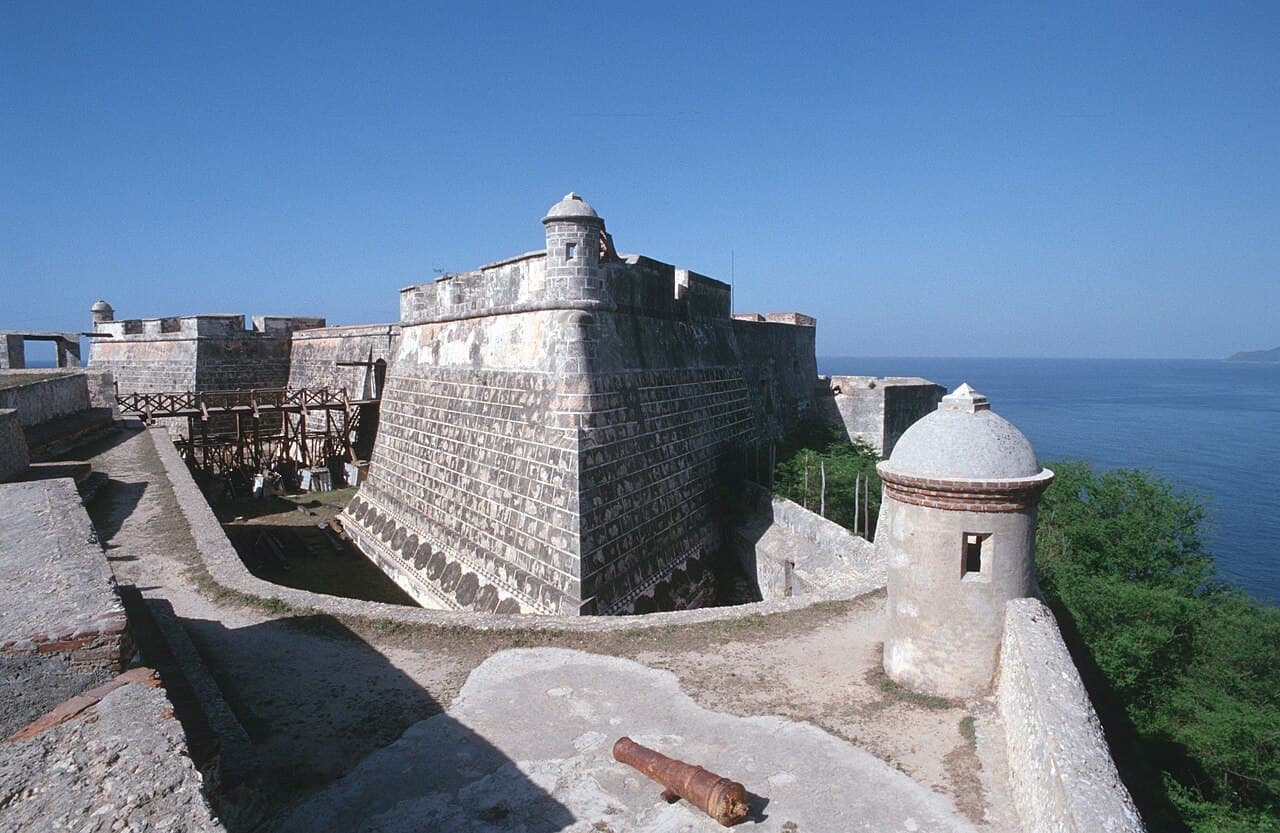
El Morro Castle, officially named Castillo de San Pedro de la Roca del Morro, stands prominently on a rocky promontory guarding the entrance to the bay of Santiago de Cuba. This fortress is a prime example of Spanish-American military architecture, blending Italian Renaissance design principles adapted to the Caribbean's strategic and geographic demands. Not to be confused with the similarly named fort in Havana, this castle has played a crucial role in the defense of Santiago de Cuba since the early 17th century.
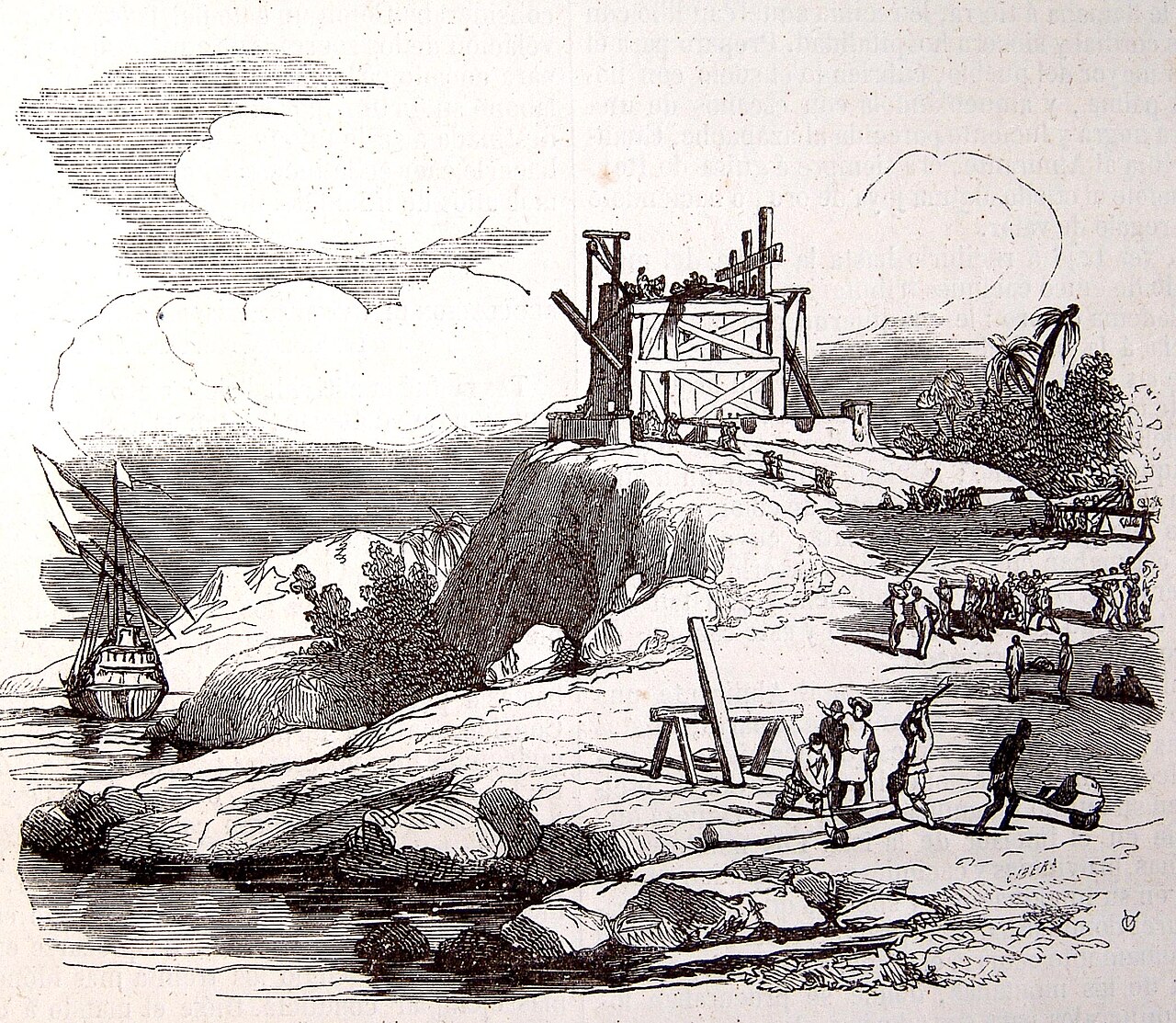
The site originally hosted an earlier fortification built between 1590 and 1610. The current castle's design was commissioned in 1637 by the town governor Pedro de la Roca de Borja and executed by the renowned Italian military engineer Giovanni Battista Antonelli, who was also responsible for Havana's El Morro and La Punta castles. Construction began in 1638 and continued intermittently over 42 years, incorporating parts of the earlier fort into the new, more formidable structure.
Strategic location and architectural design
El Morro Castle is situated on a 60-meter-high promontory with steep cliffs, commanding sweeping views over the bay and city. Antonelli's design cleverly adapts to the site's natural topography, featuring a series of terraces connected by stairs, with four main levels and three large bulwarks designed to house artillery. This terraced layout maximizes defensive coverage and allows for overlapping fields of fire against approaching enemies.
The fortress incorporates bastions, curtain walls, magazines, barracks, cisterns, a chapel, officers' quarters, dungeons, and vaults, reflecting a comprehensive military complex. The castle's geometric layout emphasizes symmetry, proportionality, and the bastion system, hallmarks of Renaissance military architecture adapted to the Caribbean context.
Historical context and military engagements
During the 17th and 18th centuries, the Caribbean was a theater of intense commercial rivalry and frequent pirate attacks, necessitating robust defenses. While El Morro Castle was under construction, in 1662, English buccaneers led by Admiral Christopher Myngs attacked and sacked Santiago de Cuba, holding it for two weeks and damaging the fort. The Spanish government quickly restored the fortress and increased its garrison to 300 men.
The castle endured multiple earthquakes, notably in 1675, 1692, 1757, and 1766, each time undergoing repairs and improvements. It successfully repelled French pirate attacks in 1678 and 1680, demonstrating its strategic importance. By 1700, the castle's construction was complete, with further enlargements between 1738 and 1740 enhancing its defensive capabilities.
As the threat of piracy declined by the late 18th century, parts of El Morro Castle were repurposed as a political prison. However, it returned to military use during the Spanish-American War in 1898, when the United States fleet attacked Santiago de Cuba.
Associated fortifications and later developments
El Morro Castle is part of a larger defensive network protecting Santiago de Cuba Bay, including the batteries of La Estrella, Santa Catalina, and Aguadores. These fortifications collectively secured the port, which was vital due to its geographic position, favorable currents, and sheltered anchorage.
Additional structures were added over time, such as the Tower Semaphore, Chapel of the Holy Christ, and a lighthouse built in the 19th century. Two batteries, Scopa Alta and Vigia, were constructed in 1898, reflecting ongoing military adaptations.
Preservation and visitor experience
Despite suffering damage from natural disasters and neglect, El Morro Castle was restored in the 20th century and now functions as a museum. Visitors can explore the fortress for a modest fee, experiencing its impressive architecture and panoramic views of the bay and city.
The castle's preservation offers insight into the Spanish-American school of military architecture and the historical conflicts that shaped the Caribbean. Its terraces, bastions, and artillery platforms stand as a testament to the ingenuity of Renaissance military engineering adapted to colonial defense needs.
El Morro Castle remains a must-see cultural landmark in Santiago de Cuba, embodying centuries of military history, architectural excellence, and the strategic importance of the Caribbean in global geopolitics.
Frequently asked questions (FAQ)
- How do I get to El Morro Castle?
- El Morro Castle is located in Santiago de Cuba and is easily accessible by car or public transportation. Taxis are a common way to reach the castle from the city center, and there are also local buses that can take you close to the entrance.
- What is the historical significance of El Morro Castle?
- El Morro Castle, officially known as Castillo de los Tres Reyes del Morro, was built in the late 16th century to protect the harbor of Santiago de Cuba from pirates and invaders. It has played a crucial role in the defense of the city and is a symbol of Cuba's colonial history and military architecture.
- When was El Morro Castle built?
- Construction of El Morro Castle began in 1587 and was completed in 1638. The castle was designed by Italian architect Giovanni Battista Antonelli and has since been declared a UNESCO World Heritage Site for its historical importance.
- Can I visit El Morro Castle during the pandemic?
- Yes, El Morro Castle is open to visitors, but it is essential to check local health guidelines and restrictions before planning your visit. Masks may be required, and visitor numbers may be limited to ensure safety.
- Why is El Morro Castle a popular tourist attraction?
- El Morro Castle is popular due to its stunning views of Santiago Bay and its impressive historical architecture. Visitors are drawn to its well-preserved fortifications and the opportunity to learn about the rich history of Cuba.
- Is it possible to explore the interior of El Morro Castle?
- Yes, visitors can explore the interior of El Morro Castle, which includes various rooms, exhibition areas, and the lighthouse. Guided tours are available, providing insights into the castle's history and significance.
- What are the opening hours for El Morro Castle?
- El Morro Castle typically opens from 9:00 AM to 5:00 PM daily, but these hours may vary on holidays or during special events. It's best to check the official website or local information for the most current opening times before your visit.
- What are the ticket prices for El Morro Castle?
- Entrance fees for El Morro Castle are generally quite affordable, with discounts available for students and seniors. Prices may vary, so it's advisable to check the latest information prior to your visit.
- When is the best time to visit El Morro Castle?
- The best time to visit El Morro Castle is during the dry season, from November to April, when the weather is more pleasant. Morning or late afternoon visits can also help you avoid the heat and enjoy beautiful views at sunrise or sunset.
- Are there any nearby attractions to visit after El Morro Castle?
- Yes, nearby attractions include the historic city of Santiago de Cuba itself, with sites like the Cathedral of Santiago and the Castillo de San Pedro de la Roca. Visitors can also explore local markets and enjoy Cuban cuisine in the area.
Photo gallery

Information
Address
Carretera del Morro, Santiago de Cuba, Cuba
Loading map...
Visitor reviews
No reviews yet. Been here? Write the first review and help other travelers!
Write the first reviewVisited this castle? Share your experience
Your review helps other travelers and adds first-hand knowledge to our encyclopedia.