El Badi Palace
El Badi Palace (Arabic: قصر البديع, meaning "Palace of the Creator of Wonder" or "Palace of Wonder") stands as a monumental example of Saadian dynasty architectural and cultural achievement in Marrakech, Morocco. Commissioned by Sultan Ahmad al-Mansur shortly after his accession in 1578, the palace was conceived as a lavish royal residence to symbolize the power and wealth of the Saadian rule during the Renaissance period. Its construction was financed in part by the substantial ransom paid by the Portuguese following the Battle of the Three Kings in 1578, marking the palace not only as an architectural marvel but also as a monument to a pivotal historical event.
The palace complex originally spanned a vast area and was designed to impress with its scale and opulence. Construction began soon after 1578 and took approximately fifteen years to complete, finishing around 1593. The design incorporated the finest craftsmanship of the era, showcasing the intricate artistry and luxurious materials that defined Saadian architecture. The palace's layout included a massive rectangular courtyard measuring approximately 135 by 110 meters, centered around a large reflective pool about 90 by 20 meters in size, which enhanced the visual grandeur and cooling effect within the palace grounds.
Architectural design and features
The palace was constructed using some of the most expensive and exotic materials available at the time, including gold, onyx, and extensive use of marble. Notably, the marble columns that adorned the colonnades were reportedly acquired through trade with Italian merchants, exchanged for their equivalent weight in sugar, highlighting the international connections and economic wealth of the Saadian court.
The original palace is believed to have contained around 360 richly decorated rooms, each featuring elaborate plasterwork, zellij tile mosaics, and carved cedar wood ceilings, all hallmark elements of Moroccan Islamic art and architecture. The palace's design reflects a sophisticated blend of traditional Moroccan styles with influences from Andalusian and Mediterranean craftsmanship, creating a unique and richly textured environment.
The fifty pavilion
Among the palace's most notable structures is the large pavilion known as al-Quba al-Khamsiniya (القُبة الخمسينية), or "The Fifty Pavilion." This pavilion earned its name either from its surface area, approximately fifty cubits, or from the fifty columns it once contained. The pavilion was likely used as a summer house or reception hall, exemplifying the palace's role as a multifunctional royal residence. The pavilion also inspired a poem by Abd al-Aziz al-Fishtali, the poet laureate of Sultan Ahmad al-Mansur's court, underscoring its cultural significance.
The palace complex also included several stables and dungeons, indicating its role not only as a luxurious residence but also as a fortified stronghold and administrative center.
Historical context and decline
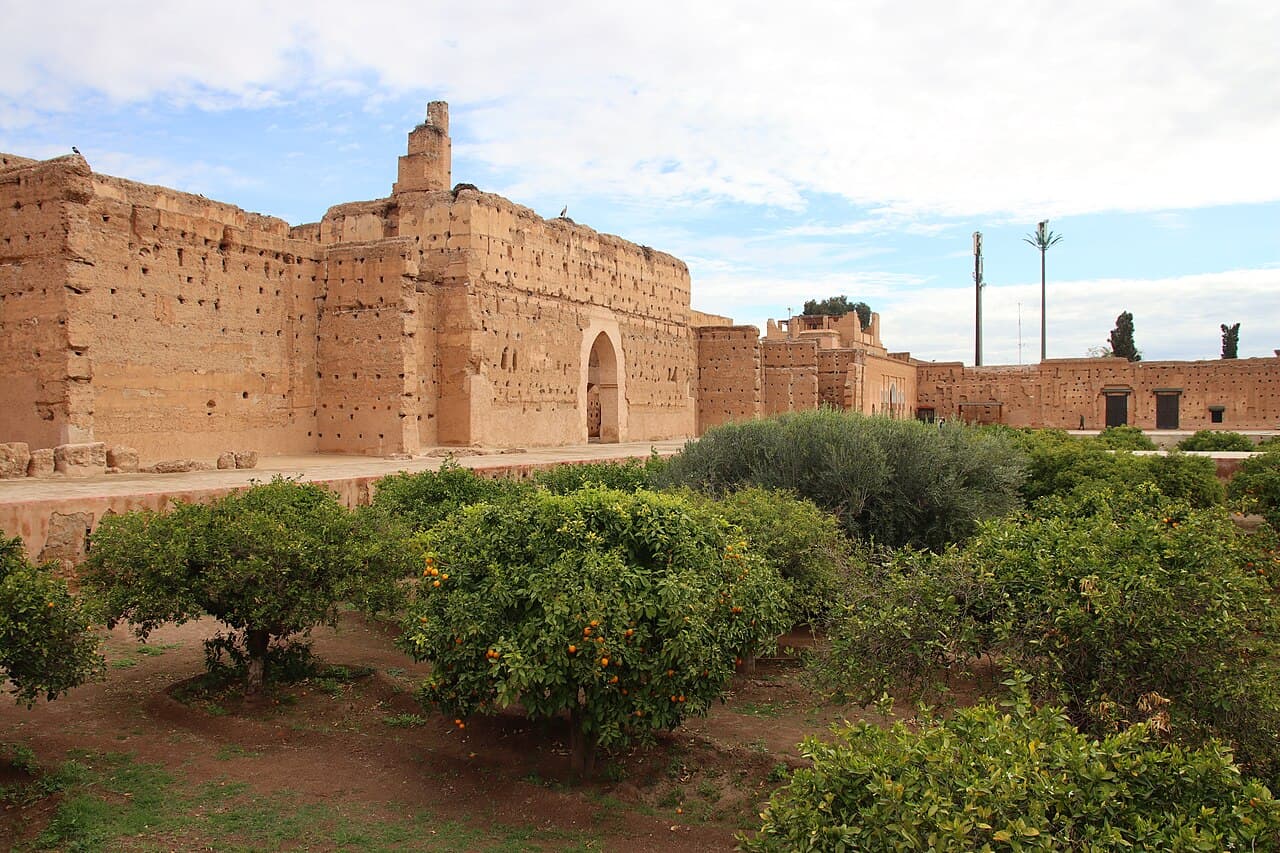
Following the decline of the Saadian dynasty and the rise of the Alaouite dynasty in the 17th century, El Badi Palace experienced a rapid period of neglect and dismantling. Sultan Ismail Ibn Sharif of the Alaouite dynasty stripped the palace of its valuable materials, including marble, gold, and other decorations, to repurpose them for his own architectural projects in Meknes, the new capital. This systematic plundering led to the palace's current state as ruins, with only the foundational structures and some walls remaining intact.
Modern significance and preservation
Today, El Badi Palace is a prominent tourist attraction in Marrakech, drawing visitors fascinated by its historical grandeur and evocative ruins. The site includes a museum housing important artifacts, such as a restored 12th-century minbar originally from the Koutoubia Mosque, offering insight into Moroccan religious and artistic heritage.
The palace grounds serve as a cultural venue, hosting events like the Marrakesh Folklore Festival, which celebrates traditional music and dance, thereby continuing the palace's legacy as a center of cultural life.
Despite its ruined state, El Badi Palace remains a powerful symbol of the Saadian dynasty's architectural innovation and Morocco's rich historical tapestry. Its vast courtyard, monumental scale, and intricate decorative elements continue to inspire admiration and scholarly interest, making it an essential site for understanding Moroccan history and Islamic architecture during the Renaissance.
Frequently asked questions (FAQ)
- What is El Badi Palace?
- El Badi Palace, located in Marrakech, Morocco, is a historic palace built in the late 16th century by Sultan Ahmad al-Mansur. Renowned for its grand architecture and sprawling gardens, it once served as a symbol of the wealth and power of the Saadian dynasty. Today, it stands as a magnificent ruin, showcasing intricate designs and the remnants of its former glory.
- When was El Badi Palace constructed?
- Construction of El Badi Palace began in 1578 and was completed in 1602. The palace was built to celebrate the victory over the Portuguese at the Battle of the Three Kings. Although it is now in ruins, its historical significance remains a vital part of Morocco's heritage.
- What are the opening hours for El Badi Palace?
- El Badi Palace is typically open to visitors daily from 9:00 AM to 5:00 PM. However, hours may vary during public holidays or special events, so it's advisable to check in advance before planning your visit. The site offers a serene atmosphere to explore at your own pace.
- Can I take photographs inside El Badi Palace?
- Yes, visitors are permitted to take photographs inside El Badi Palace. The stunning architecture and picturesque gardens provide numerous opportunities for memorable photos. However, it's important to be respectful of other visitors and the site itself while capturing your memories.
- Is it possible to access El Badi Palace with a wheelchair?
- El Badi Palace has limited accessibility for wheelchair users due to its historic structure and uneven surfaces. While some areas may be accessible, it’s recommended to check with onsite staff for assistance and to understand which parts of the palace can be navigated comfortably. Visitors with mobility concerns should plan accordingly.
- What is the best time to visit El Badi Palace?
- The best time to visit El Badi Palace is during the spring (March to May) or fall (September to November) when the weather is mild and pleasant. These seasons allow for comfortable exploration of the ruins and gardens. Additionally, visiting early in the morning or late in the afternoon can help you avoid the larger crowds.
- What are the ticket prices for El Badi Palace?
- As of now, the entrance fee for El Badi Palace is quite affordable, typically around 10 Moroccan Dirhams for adults. Discounts may be available for students and children, but be sure to check current prices upon arrival as they can change. This nominal fee grants you access to this historical landmark and its beautiful grounds.
- Are there any nearby attractions to El Badi Palace?
- Yes, El Badi Palace is conveniently located near several other attractions in Marrakech. Visitors can easily explore the bustling Jemaa el-Fnaa square, the stunning Saadian Tombs, and the vibrant souks within walking distance. These nearby sites provide a rich cultural experience, making it a perfect spot to immerse yourself in the city's heritage.
Photo gallery

Information
Loading map...
Visitor reviews
No reviews yet. Been here? Write the first review and help other travelers!
Write the first reviewVisited this castle? Share your experience
Your review helps other travelers and adds first-hand knowledge to our encyclopedia.