Ksar of Taourirt — Morocco castle

Ksar of Taourirt

Ksar of Taourirt in Ouarzazate, Morocco
Ouarzazate, Morocco
Renaissance (15th–17th c.)
Partially Preserved

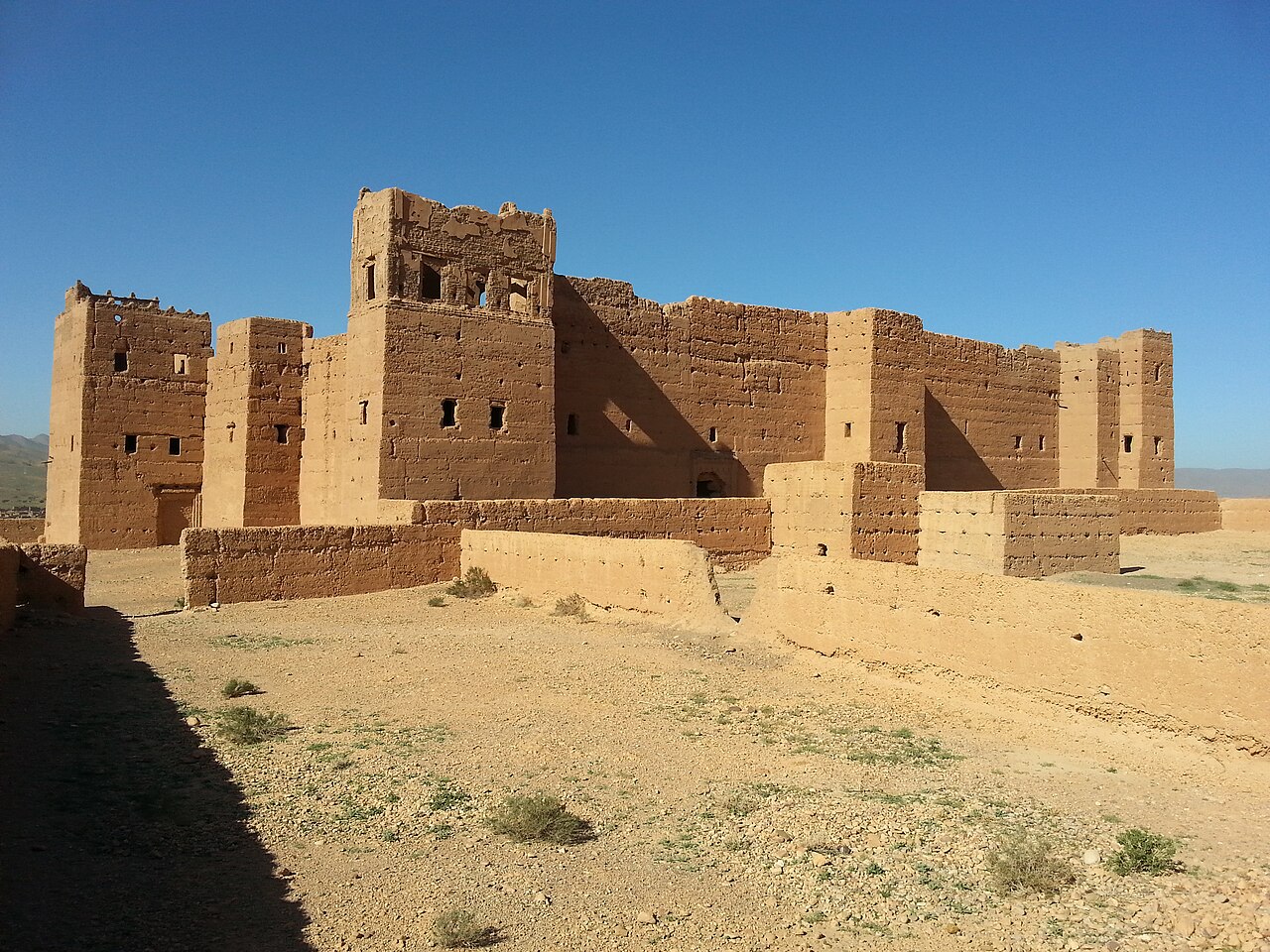
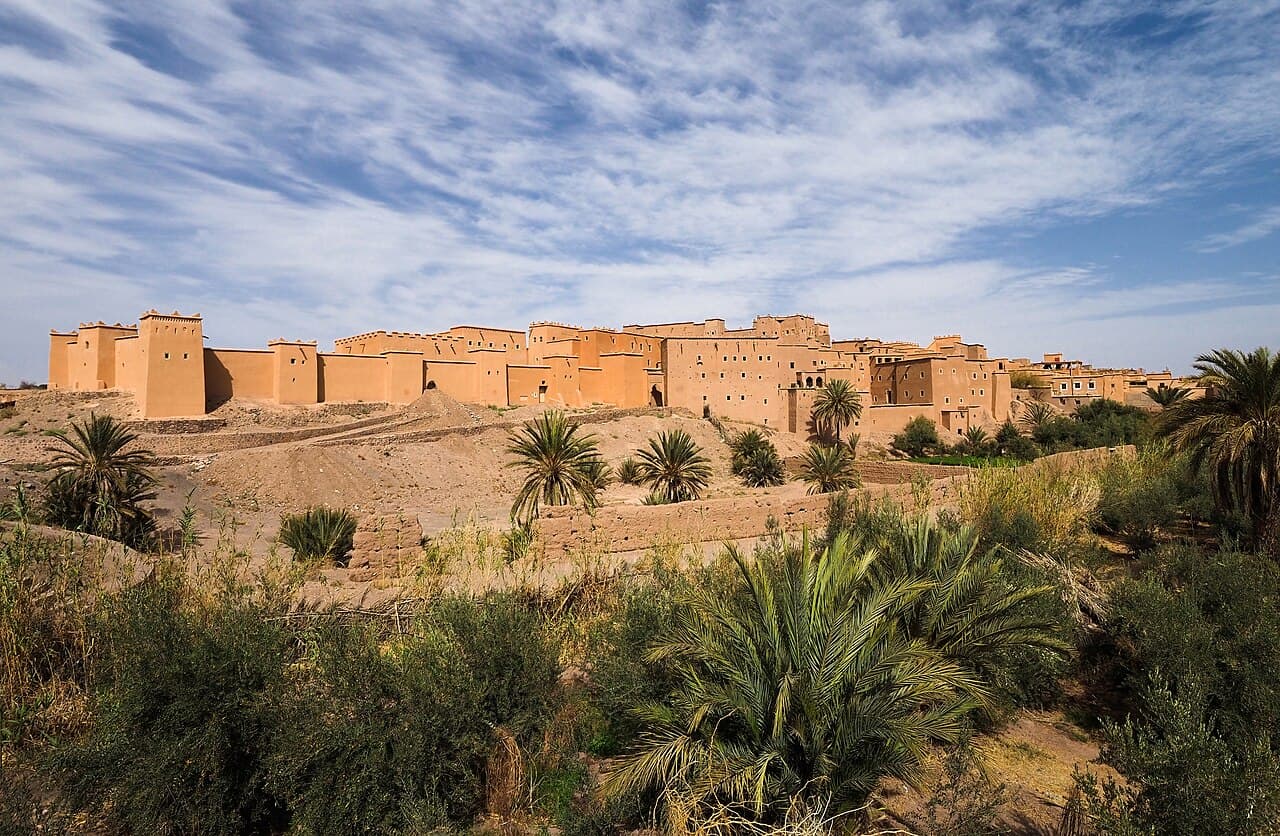
Ksar of Taourirt, located in Ouarzazate, Morocco, is a remarkable example of a fortified kasbah complex that dates back to the 17th century. This hill castle stands out for its distinctive earthen architecture, constructed primarily from rammed earth and mud brick, which is characteristic of traditional Berber fortifications in the region. The kasbah served both as a residence and a defensive stronghold, illustrating the dual purpose of many such structures in Moroccan history.

Historical context and significance

The Ksar of Taourirt was originally built by the Glaoui family, a powerful Berber clan who rose to prominence in the 17th century. The kasbah became a symbol of their power and influence in southern Morocco. Throughout its history, it played a strategic role controlling caravan routes that connected the Sahara Desert with the northern cities of Morocco. This position made it a vital trading post and a center for regional administration.

During the 19th and early 20th centuries, the kasbah was expanded and fortified further under the leadership of Thami El Glaoui, the Pasha of Marrakech, who used it as one of his main residences. The structure's complex layout with multiple courtyards and defensive walls reflects the need for security during turbulent periods in Moroccan history.

Architectural features and layout

The architecture of Ksar Taourirt is a prime example of traditional Moroccan earthen construction. The walls are made from pisé (rammed earth) and adobe, materials that provide excellent insulation against the harsh desert climate. The kasbah's exterior is characterized by high, thick walls with merlons and battlements for defense, as well as narrow windows and slits used by archers.

The kasbah is composed of a series of interconnected courtyards, residential quarters, storerooms, and defensive towers. Its labyrinthine design was intended to confuse invaders and provide multiple layers of protection. The interiors feature intricate stucco work and wooden ceilings, showcasing the skilled craftsmanship of local artisans.

Defensive structures

The kasbah includes several towers strategically placed to oversee the surrounding landscape and protect the complex from attacks. The main entrance is fortified with a heavy gate and guarded passageways. The walls are punctuated with arrow slits and small openings for surveillance.

Preservation and current status

Today, the Ksar of Taourirt is classified as a partially preserved monument. While some sections have suffered damage due to natural erosion and neglect, ongoing restoration efforts aim to stabilize and conserve the site. It is managed as a cultural heritage site and is open to visitors interested in Morocco's architectural and historical legacy.

The kasbah's location in Ouarzazate, often called the "Gateway to the Sahara," makes it a popular tourist destination. It provides valuable insight into the lifestyle and defensive strategies of Moroccan rulers during the early modern period.

Visiting the kasbah

Visitors to the Ksar of Taourirt can explore its extensive courtyards, towers, and living quarters. The site offers a glimpse into the traditional construction techniques and the strategic importance of fortified residences in Moroccan history. Guided tours are available and provide detailed explanations of the kasbah's history and architecture.

The best time to visit is during the cooler months from October to April, as the summer heat can be intense. Photography is permitted, allowing visitors to capture the striking contrast of the kasbah's earthen walls against the desert landscape.

Nearby attractions

Ouarzazate is also home to other historical sites and modern film studios, making it a cultural hub. Visitors often combine a trip to the Ksar of Taourirt with excursions to nearby kasbahs such as Aït Benhaddou, a UNESCO World Heritage Site, and the Atlas Film Studios.

Frequently asked questions (FAQ)

What is the Ksar of Taourirt?
The Ksar of Taourirt is a historic fortified village located in Ouarzazate, Morocco. Known for its stunning architecture and intricate earthen structures, it served as a vital stop for traders crossing the Sahara and is an exemplary representation of Moroccan earthen heritage.
When was the Ksar of Taourirt built?
The Ksar of Taourirt dates back to the 17th century, with its construction reflecting the wealth and power of the Glaoui family who ruled the region. Its impressive design has been preserved through the centuries, making it a significant site for understanding Morocco's history.
Can I visit the Ksar of Taourirt?
Yes, the Ksar of Taourirt is open to visitors, allowing you to explore its fascinating architecture and rich history. Guided tours are available to enhance your experience and provide deeper insights into the site's cultural significance.
What are the opening hours for the Ksar of Taourirt?
The Ksar of Taourirt typically opens daily from 9 AM to 5 PM. However, it's advisable to check ahead for any seasonal changes or special closures before your visit.
Is it possible to take photos inside the Ksar of Taourirt?
Yes, photography is generally allowed inside the Ksar of Taourirt, making it a perfect opportunity for capturing the stunning architecture and landscapes. However, be respectful of the site and its visitors while taking photos.
What is the best time to visit the Ksar of Taourirt?
The best time to visit the Ksar of Taourirt is during the spring (March to May) and fall (September to November) when temperatures are mild and pleasant for exploration. Summer can be quite hot, while winter may bring cooler temperatures.
Are there any nearby attractions to visit?
Yes, nearby attractions include the Atlas Film Studios, where many famous movies were filmed, and the stunning Ait Benhaddou, a UNESCO World Heritage site. These sites provide a perfect complement to your visit to the Ksar of Taourirt.
What are the ticket prices for the Ksar of Taourirt?
Ticket prices for the Ksar of Taourirt are generally affordable, with discounts available for students and children. It’s best to check the official site or local information for the most current pricing details before your visit.
How do I get to the Ksar of Taourirt?
The Ksar of Taourirt is easily accessible by car or bus from Ouarzazate, which is well-connected to major cities. Local taxis are also available and can provide a convenient option for reaching the site directly.

Photo gallery

Ksar of Taourirt
Click to view

Photo by Petar Milošević•CC BY-SA 4.0

1 photo • Click any image to view in full screen

Information

Hill Castle

Loading map...

Visitor reviews

No reviews yet. Been here? Write the first review and help other travelers!

Write the first review

Visited this castle? Share your experience

Your review helps other travelers and adds first-hand knowledge to our encyclopedia.
Write a review

(5/5)

0/2000 characters

Your review will be visible after admin approval

Nearby castles

52 km
Telouet Kasbah — Morocco castle

Telouet Kasbah

, Morocco

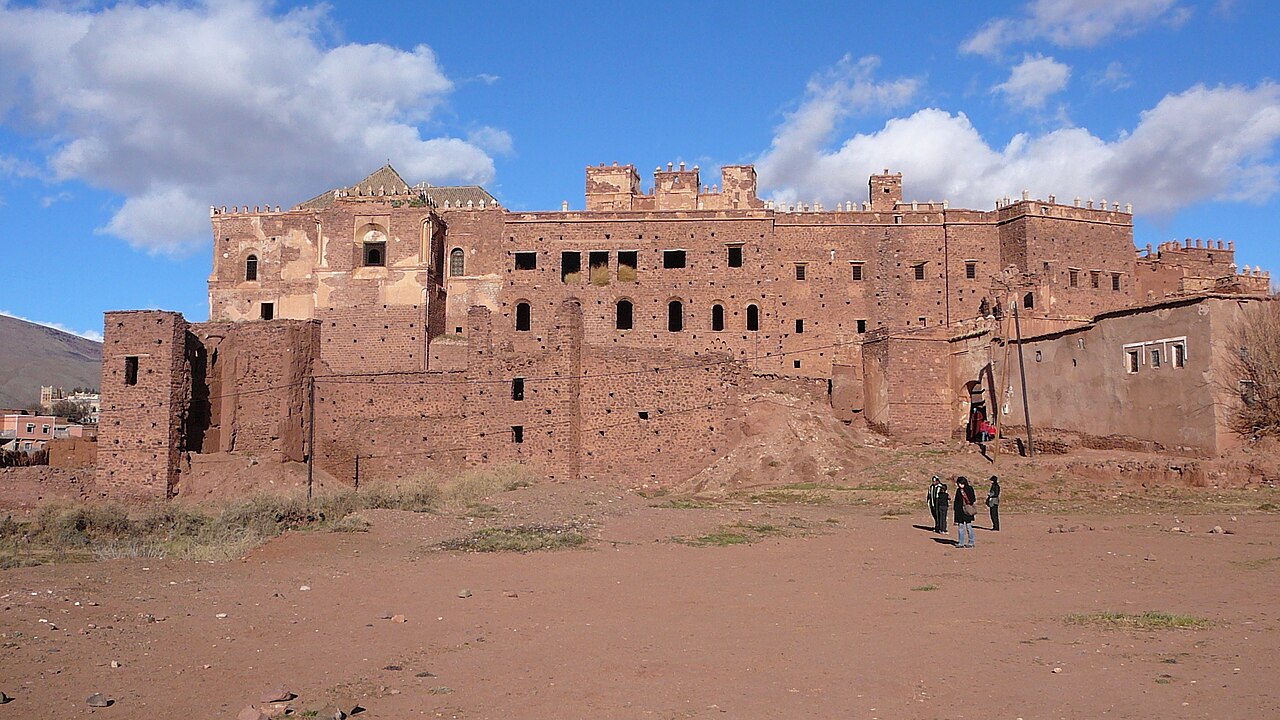
Telouet Kasbah (Berber: ⵉⵖⵔⵎ ⵏ ⵜⵍⵡⴰⵜ; Arabic: قصبة تلوات; French: Casbah de Télouet) is a significant bastioned fortress located in the northern part of Ouarzazate Province in Morocco. This kasbah occupies a strategic position along the historic caravan route that connected the Sahara Desert to the city of Marrakesh by crossing the Atlas Mountains. The site served as the seat of power for the influential El Glaoui family, who were among the most powerful tribal leaders in southern Morocco during the late 19th and early 20th centuries. For this reason, the kasbah is sometimes referred to as the Palace of Glaoui. Historical context and significance The construction of Telouet Kasbah began around 1860, during a period when the El Glaoui family was consolidating its influence over the region. The kasbah functioned both as a fortified residence and as an administrative center, controlling caravan trade and regional politics. Its location on the caravan route made it a vital hub for commerce and communication between the Sahara and northern Morocco. Throughout the late 19th century and into the early 20th century, the El Glaoui family expanded the kasbah, adding new wings and fortifications. The kasbah not only symbolized their wealth and power but also served as a defensive stronghold in a region marked by tribal conflicts and shifting alliances. The family's prominence peaked during the French Protectorate era, when Thami El Glaoui, also known as the "Lord of the Atlas," wielded considerable political influence. Architectural features and layout Telouet Kasbah is an example of a bastioned fortress that combines traditional Moroccan kasbah architecture with defensive elements designed to withstand attacks. The complex includes thick, high walls punctuated by bastions that provided vantage points for surveillance and defense. The walls are constructed from rammed earth and stone, materials typical of the region's architecture. The kasbah's interior is arranged around several courtyards, which are surrounded by residential quarters, reception halls, and storage areas. The decorative elements inside the kasbah reflect the wealth of the El Glaoui family, with intricate zellij tilework, carved cedar wood ceilings, and ornate plasterwork adorning the walls and ceilings. These artistic features highlight the fusion of Berber, Arab, and Andalusian influences characteristic of Moroccan palace architecture. The kasbah also includes towers and gatehouses that controlled access to the complex. These features enhanced the defensive capabilities of the kasbah while also serving ceremonial and symbolic purposes. Decline and conservation efforts After the decline of the El Glaoui family's power following Moroccan independence in the mid-20th century, Telouet Kasbah gradually fell into disrepair. The kasbah has suffered from neglect, natural erosion, and damage caused by earthquakes. Despite its deteriorating condition, the kasbah remains accessible to visitors who can explore its evocative ruins and appreciate its historical significance. In the early 21st century, efforts have been initiated to preserve and restore parts of the kasbah. Restoration work started around 2010 aimed to stabilize the structure and protect its valuable decorative elements. However, the kasbah is still considered to be in a partially preserved and partially restored state, with ongoing challenges related to conservation funding and environmental exposure. Visiting telouet kasbah today Today, Telouet Kasbah is a cultural heritage site that attracts tourists interested in Moroccan history, architecture, and the legacy of the El Glaoui family. Visitors can explore the kasbah's courtyards, halls, and towers, gaining insight into the lifestyle of one of Morocco's most powerful families during the 19th and early 20th centuries. The kasbah's location near the High Atlas Mountains offers scenic views and opportunities for combined visits with other regional attractions, such as the nearby city of Ouarzazate, known as the "Gateway to the Sahara" and a center for film production. While the kasbah is open to the public, visitors should be aware that some areas may be unstable due to the building's age and condition. Guided tours are recommended to fully appreciate the historical and architectural context.

Modern (19th–20th c.)
Details
55.7 km
Tamnougalt — Morocco castle

Tamnougalt

, Morocco

Tamnougalt kasbah is a notable historical fortress located in the Draa River valley within the Atlas Mountains of Morocco. Situated approximately 75 kilometers south of Ouarzazate, near the village of Agdz, this kasbah stands as a significant example of traditional Moroccan defensive architecture and regional history. The kasbah is part of a larger date palm oasis that has supported local communities for centuries. Historical significance and regional role Tamnougalt served as the former capital of the Mezguita region and was the residence of the caïds, local rulers who governed the area. The name "Tamnougalt" translates to "meeting point" in the Tachelhit language, reflecting its historical importance as a center for regional gatherings and administration. The kasbah was a strategic stronghold controlling access to the Draa Valley, a vital trade and travel route through the southern Atlas Mountains. Architectural features and layout The kasbah is built in the traditional style of southern Moroccan fortified dwellings, characterized by high earthen walls made from rammed earth and mudbrick. These materials provide excellent insulation against the harsh desert climate. The structure includes towers and battlements designed for defense, with narrow windows and fortified gates. Inside, the kasbah contains a complex of rooms, courtyards, and storage areas arranged to support both residential and military functions. The surrounding date palm oasis is integral to the kasbah's environment, providing agricultural sustenance and contributing to the settlement's sustainability. The kasbah's location near the Jbel Kissane mountain, which rises prominently to the north, adds to its commanding presence in the landscape. Cultural importance and festivals Every year during the first week of October, the Moussem Ellama is held in Tamnougalt. This cultural and religious festival brings together people from neighboring villages to celebrate local traditions, music, and religious observances. The moussem reinforces communal bonds and preserves the cultural heritage of the Mezguita region. Preservation and current status While Tamnougalt remains a well-known kasbah, its condition varies, with some parts well-preserved and others showing signs of age and weathering typical of earthen architecture in desert climates. It continues to attract visitors interested in Moroccan history, traditional architecture, and the unique cultural landscape of the Draa Valley. Geographical context and accessibility The kasbah's setting in the Atlas Mountains and proximity to the Draa River valley situates it within a region known for its dramatic landscapes and historical caravan routes. The nearby town of Ouarzazate serves as a gateway for travelers exploring southern Morocco's kasbahs and desert oases. Tamnougalt's location makes it accessible for cultural tourism and exploration of traditional Berber settlements.

Details
129.2 km
El Badi Palace — Morocco castle

El Badi Palace

Marrakech, Morocco

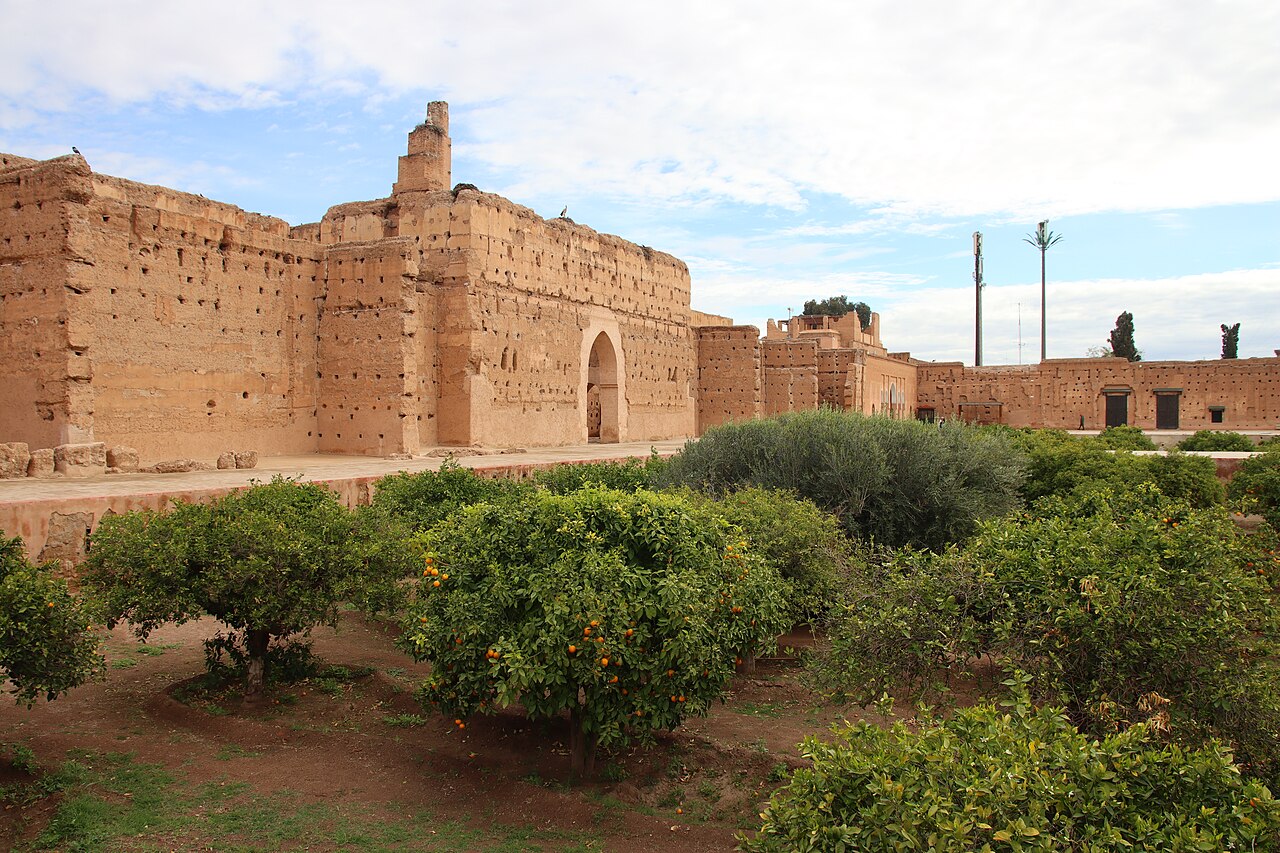
El Badi Palace (Arabic: قصر البديع‎, meaning "Palace of the Creator of Wonder" or "Palace of Wonder") stands as a monumental example of Saadian dynasty architectural and cultural achievement in Marrakech, Morocco. Commissioned by Sultan Ahmad al-Mansur shortly after his accession in 1578, the palace was conceived as a lavish royal residence to symbolize the power and wealth of the Saadian rule during the Renaissance period. Its construction was financed in part by the substantial ransom paid by the Portuguese following the Battle of the Three Kings in 1578, marking the palace not only as an architectural marvel but also as a monument to a pivotal historical event. The palace complex originally spanned a vast area and was designed to impress with its scale and opulence. Construction began soon after 1578 and took approximately fifteen years to complete, finishing around 1593. The design incorporated the finest craftsmanship of the era, showcasing the intricate artistry and luxurious materials that defined Saadian architecture. The palace's layout included a massive rectangular courtyard measuring approximately 135 by 110 meters, centered around a large reflective pool about 90 by 20 meters in size, which enhanced the visual grandeur and cooling effect within the palace grounds. Architectural design and features The palace was constructed using some of the most expensive and exotic materials available at the time, including gold, onyx, and extensive use of marble. Notably, the marble columns that adorned the colonnades were reportedly acquired through trade with Italian merchants, exchanged for their equivalent weight in sugar, highlighting the international connections and economic wealth of the Saadian court. The original palace is believed to have contained around 360 richly decorated rooms, each featuring elaborate plasterwork, zellij tile mosaics, and carved cedar wood ceilings, all hallmark elements of Moroccan Islamic art and architecture. The palace's design reflects a sophisticated blend of traditional Moroccan styles with influences from Andalusian and Mediterranean craftsmanship, creating a unique and richly textured environment. The fifty pavilion Among the palace's most notable structures is the large pavilion known as al-Quba al-Khamsiniya (القُبة الخمسينية), or "The Fifty Pavilion." This pavilion earned its name either from its surface area, approximately fifty cubits, or from the fifty columns it once contained. The pavilion was likely used as a summer house or reception hall, exemplifying the palace's role as a multifunctional royal residence. The pavilion also inspired a poem by Abd al-Aziz al-Fishtali, the poet laureate of Sultan Ahmad al-Mansur's court, underscoring its cultural significance. The palace complex also included several stables and dungeons, indicating its role not only as a luxurious residence but also as a fortified stronghold and administrative center. Historical context and decline Following the decline of the Saadian dynasty and the rise of the Alaouite dynasty in the 17th century, El Badi Palace experienced a rapid period of neglect and dismantling. Sultan Ismail Ibn Sharif of the Alaouite dynasty stripped the palace of its valuable materials, including marble, gold, and other decorations, to repurpose them for his own architectural projects in Meknes, the new capital. This systematic plundering led to the palace's current state as ruins, with only the foundational structures and some walls remaining intact. Modern significance and preservation Today, El Badi Palace is a prominent tourist attraction in Marrakech, drawing visitors fascinated by its historical grandeur and evocative ruins. The site includes a museum housing important artifacts, such as a restored 12th-century minbar originally from the Koutoubia Mosque, offering insight into Moroccan religious and artistic heritage. The palace grounds serve as a cultural venue, hosting events like the Marrakesh Folklore Festival, which celebrates traditional music and dance, thereby continuing the palace's legacy as a center of cultural life. Despite its ruined state, El Badi Palace remains a powerful symbol of the Saadian dynasty's architectural innovation and Morocco's rich historical tapestry. Its vast courtyard, monumental scale, and intricate decorative elements continue to inspire admiration and scholarly interest, making it an essential site for understanding Moroccan history and Islamic architecture during the Renaissance.

Renaissance (15th–17th c.)
Details