Telouet Kasbah
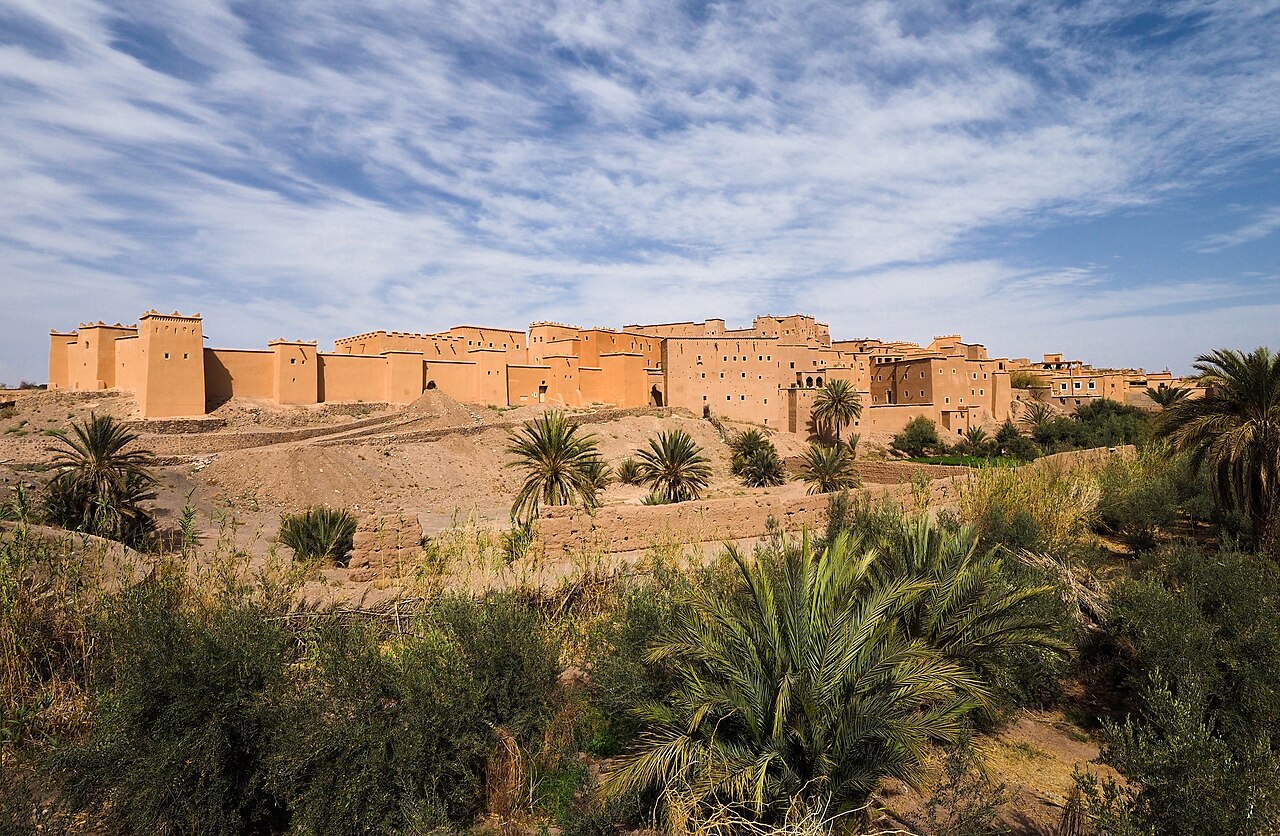
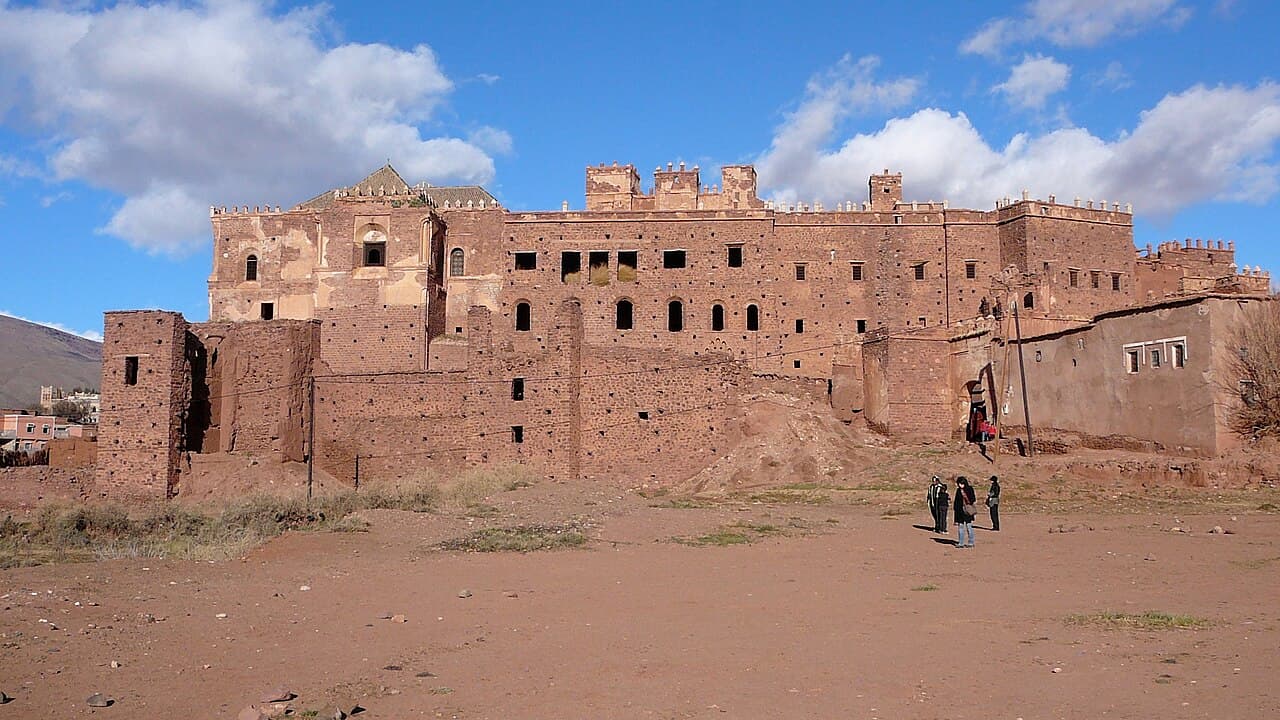
Telouet Kasbah (Berber: ⵉⵖⵔⵎ ⵏ ⵜⵍⵡⴰⵜ; Arabic: قصبة تلوات; French: Casbah de Télouet) is a significant bastioned fortress located in the northern part of Ouarzazate Province in Morocco. This kasbah occupies a strategic position along the historic caravan route that connected the Sahara Desert to the city of Marrakesh by crossing the Atlas Mountains. The site served as the seat of power for the influential El Glaoui family, who were among the most powerful tribal leaders in southern Morocco during the late 19th and early 20th centuries. For this reason, the kasbah is sometimes referred to as the Palace of Glaoui.
Historical context and significance
The construction of Telouet Kasbah began around 1860, during a period when the El Glaoui family was consolidating its influence over the region. The kasbah functioned both as a fortified residence and as an administrative center, controlling caravan trade and regional politics. Its location on the caravan route made it a vital hub for commerce and communication between the Sahara and northern Morocco.
Throughout the late 19th century and into the early 20th century, the El Glaoui family expanded the kasbah, adding new wings and fortifications. The kasbah not only symbolized their wealth and power but also served as a defensive stronghold in a region marked by tribal conflicts and shifting alliances. The family's prominence peaked during the French Protectorate era, when Thami El Glaoui, also known as the "Lord of the Atlas," wielded considerable political influence.
Architectural features and layout
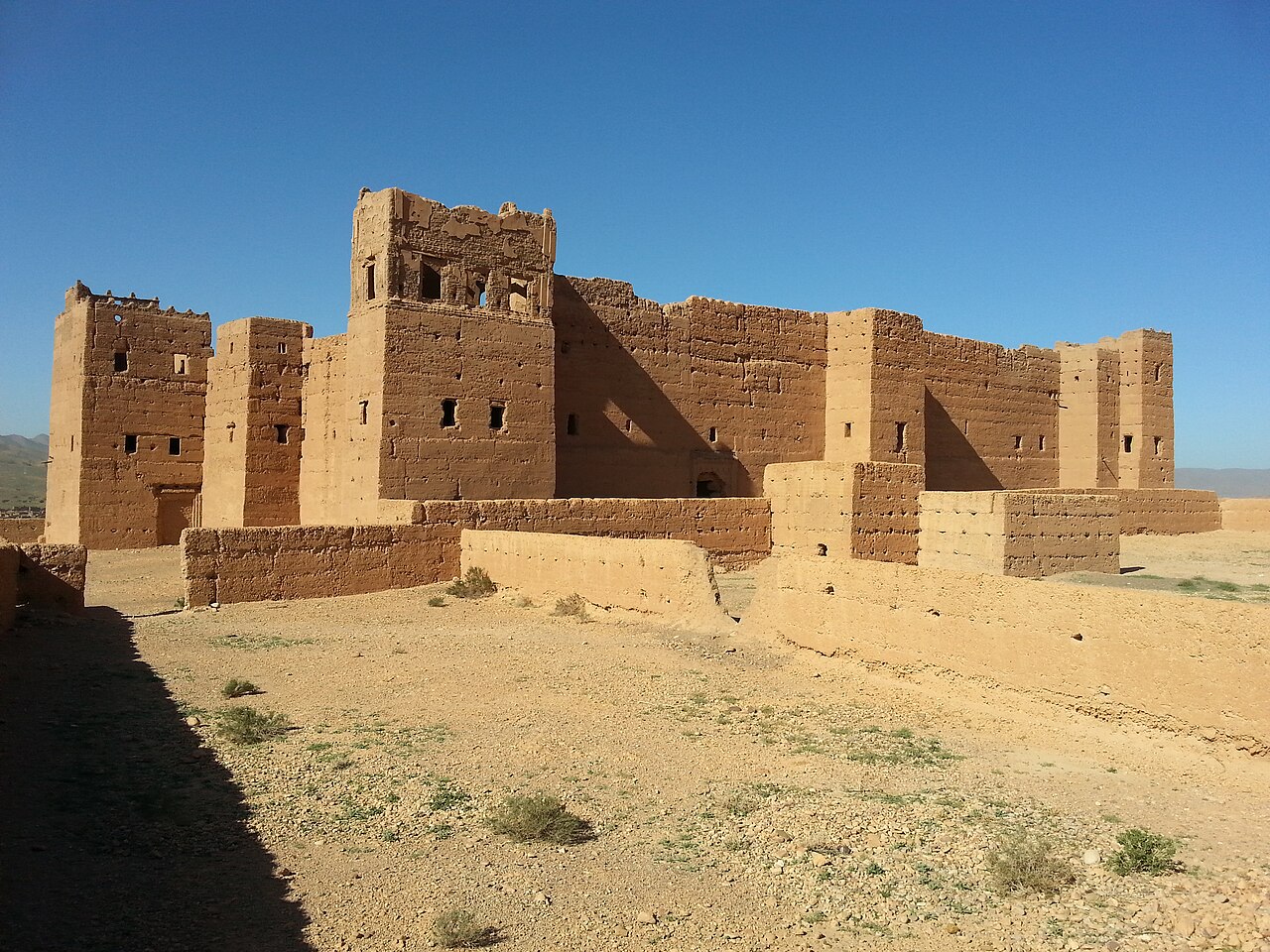
Telouet Kasbah is an example of a bastioned fortress that combines traditional Moroccan kasbah architecture with defensive elements designed to withstand attacks. The complex includes thick, high walls punctuated by bastions that provided vantage points for surveillance and defense. The walls are constructed from rammed earth and stone, materials typical of the region's architecture.
The kasbah's interior is arranged around several courtyards, which are surrounded by residential quarters, reception halls, and storage areas. The decorative elements inside the kasbah reflect the wealth of the El Glaoui family, with intricate zellij tilework, carved cedar wood ceilings, and ornate plasterwork adorning the walls and ceilings. These artistic features highlight the fusion of Berber, Arab, and Andalusian influences characteristic of Moroccan palace architecture.
The kasbah also includes towers and gatehouses that controlled access to the complex. These features enhanced the defensive capabilities of the kasbah while also serving ceremonial and symbolic purposes.
Decline and conservation efforts
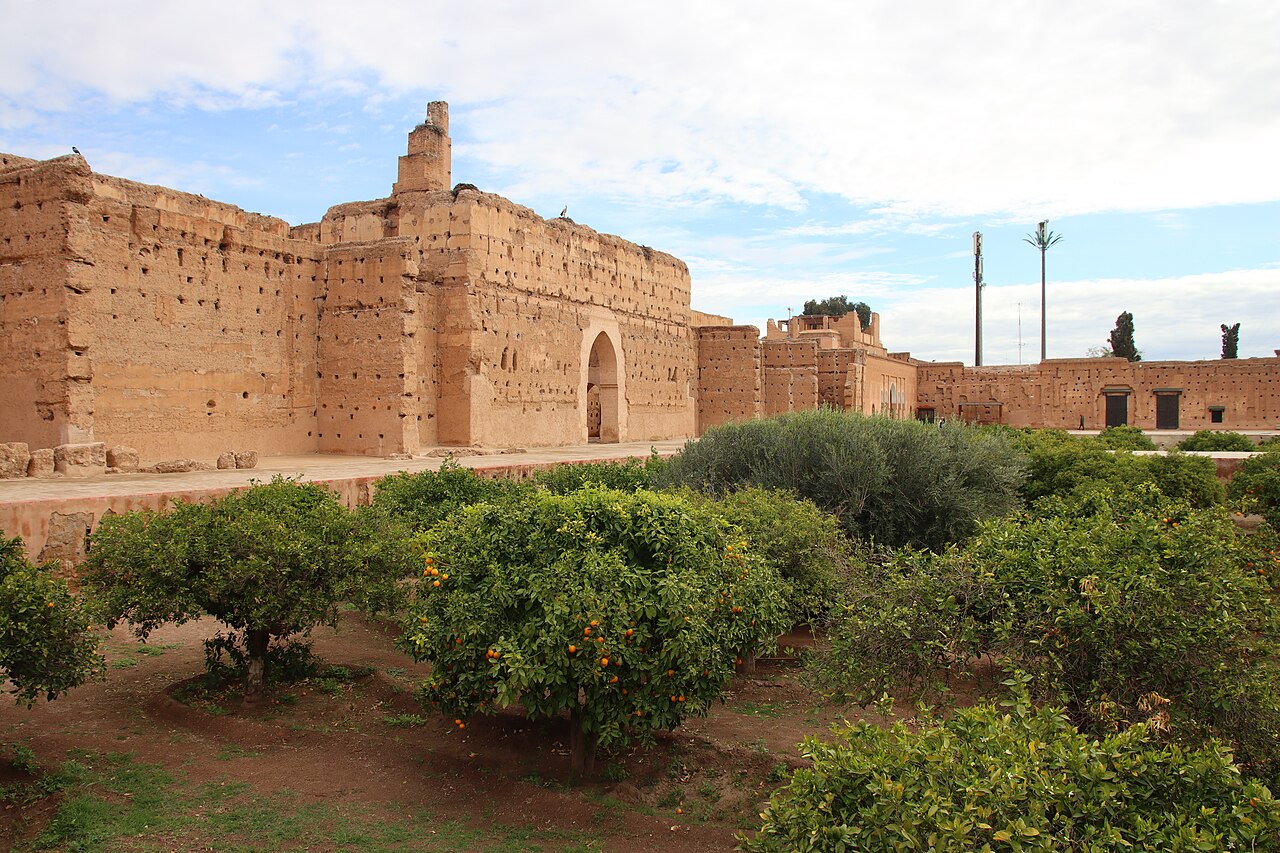
After the decline of the El Glaoui family's power following Moroccan independence in the mid-20th century, Telouet Kasbah gradually fell into disrepair. The kasbah has suffered from neglect, natural erosion, and damage caused by earthquakes. Despite its deteriorating condition, the kasbah remains accessible to visitors who can explore its evocative ruins and appreciate its historical significance.
In the early 21st century, efforts have been initiated to preserve and restore parts of the kasbah. Restoration work started around 2010 aimed to stabilize the structure and protect its valuable decorative elements. However, the kasbah is still considered to be in a partially preserved and partially restored state, with ongoing challenges related to conservation funding and environmental exposure.
Visiting telouet kasbah today
Today, Telouet Kasbah is a cultural heritage site that attracts tourists interested in Moroccan history, architecture, and the legacy of the El Glaoui family. Visitors can explore the kasbah's courtyards, halls, and towers, gaining insight into the lifestyle of one of Morocco's most powerful families during the 19th and early 20th centuries.
The kasbah's location near the High Atlas Mountains offers scenic views and opportunities for combined visits with other regional attractions, such as the nearby city of Ouarzazate, known as the "Gateway to the Sahara" and a center for film production.
While the kasbah is open to the public, visitors should be aware that some areas may be unstable due to the building's age and condition. Guided tours are recommended to fully appreciate the historical and architectural context.
Frequently asked questions (FAQ)
- How do I get to Telouet Kasbah?
- Telouet Kasbah is located approximately 80 kilometers from Marrakech. You can reach it by car, taxi, or through organized tours that often include transportation from the city. The drive offers stunning views of the Atlas Mountains, making the journey itself a memorable experience.
- What is the historical significance of Telouet Kasbah?
- Telouet Kasbah was once the residence of the Glaoui family, powerful leaders during the French protectorate in Morocco. It played a crucial role in the political and social landscape of the region in the 19th and early 20th centuries. Today, it stands as a testament to the rich history and architecture of Moroccan kasbahs.
- When was Telouet Kasbah built?
- The construction of Telouet Kasbah began in the 18th century, with various renovations and expansions occurring over the years. The kasbah reached its peak during the reign of Thami El Glaoui, who was a significant figure in Moroccan history. Its intricate designs and structures reflect the historical grandeur of its time.
- Can I take a guided tour of Telouet Kasbah?
- Yes, guided tours are available and highly recommended to fully appreciate the history and architecture of Telouet Kasbah. Local guides offer insights into the kasbah's past, its strategic importance, and details about its stunning architecture. Tours can be arranged on-site or through local tour operators.
- Why is Telouet Kasbah famous for its architecture?
- Telouet Kasbah is renowned for its unique blend of traditional Moroccan and Islamic architectural styles, featuring intricate tile work, stucco decorations, and grand archways. The kasbah's design reflects both the local Berber culture and the influences of the period's ruling powers. Its stunning aesthetics make it a popular subject for photography and art.
- Is it possible to visit Telouet Kasbah year-round?
- Yes, Telouet Kasbah is open to visitors year-round, but the best time to visit is during the spring (March to May) and fall (September to November) when the weather is mild. Summer can be quite hot, while winter may bring cooler temperatures in the region. Planning your visit during these seasons will enhance your experience.
- What are the ticket prices for visiting Telouet Kasbah?
- As of now, the entrance fee to Telouet Kasbah is quite affordable, typically around 20 Moroccan Dirhams. This small fee contributes to the maintenance of the site and helps preserve its historical significance. Prices may vary slightly, so it's advisable to check on arrival.
- What are the opening hours for Telouet Kasbah?
- Telouet Kasbah is generally open to visitors from 9 AM to 5 PM daily. However, hours may vary during holidays or special events, so it's a good idea to confirm before your visit. Early morning visits are recommended to avoid crowds and enjoy the tranquility of the site.
- Are there nearby attractions to visit after Telouet Kasbah?
- Yes, there are several nearby attractions worth exploring, including the scenic Ounila Valley and the ancient village of Ait Ben Haddou, a UNESCO World Heritage site. These locations offer stunning landscapes and a glimpse into traditional Moroccan life. A day trip combining these sites can provide a rich cultural experience.
Photo gallery

Information
Loading map...
Visitor reviews
No reviews yet. Been here? Write the first review and help other travelers!
Write the first reviewVisited this castle? Share your experience
Your review helps other travelers and adds first-hand knowledge to our encyclopedia.