Edsberg Castle
Edsberg Castle, located in Sollentuna, Sweden, is a distinguished example of a rococo manor house from the 18th century that has evolved into a renowned center for musical education. The estate's origins date back to around 1630, when the first building was constructed of wood as a private estate for Henrik Olofsson. Shortly after, in 1647, the property was acquired by Count Gabriel Bengtsson Oxenstierna, who transformed it into a manor, marking the beginning of its significance in Swedish aristocratic history.
Early history and aristocratic connections
The manor quickly became a site of royal interest. Queen Christina of Sweden visited and stayed at the house in 1645, underscoring its importance in the 17th century Swedish nobility. By 1670, under the ownership of Gabriel Gabrielsson Oxenstierna, the manor hosted visits from King Charles XI of Sweden and Queen Dowager Hedvig Eleonora of Holstein-Gottorp. These visits highlight the manor's role as a noble residence and a hub for royal engagement during the post-medieval period.
Architectural transformation in the 18th century
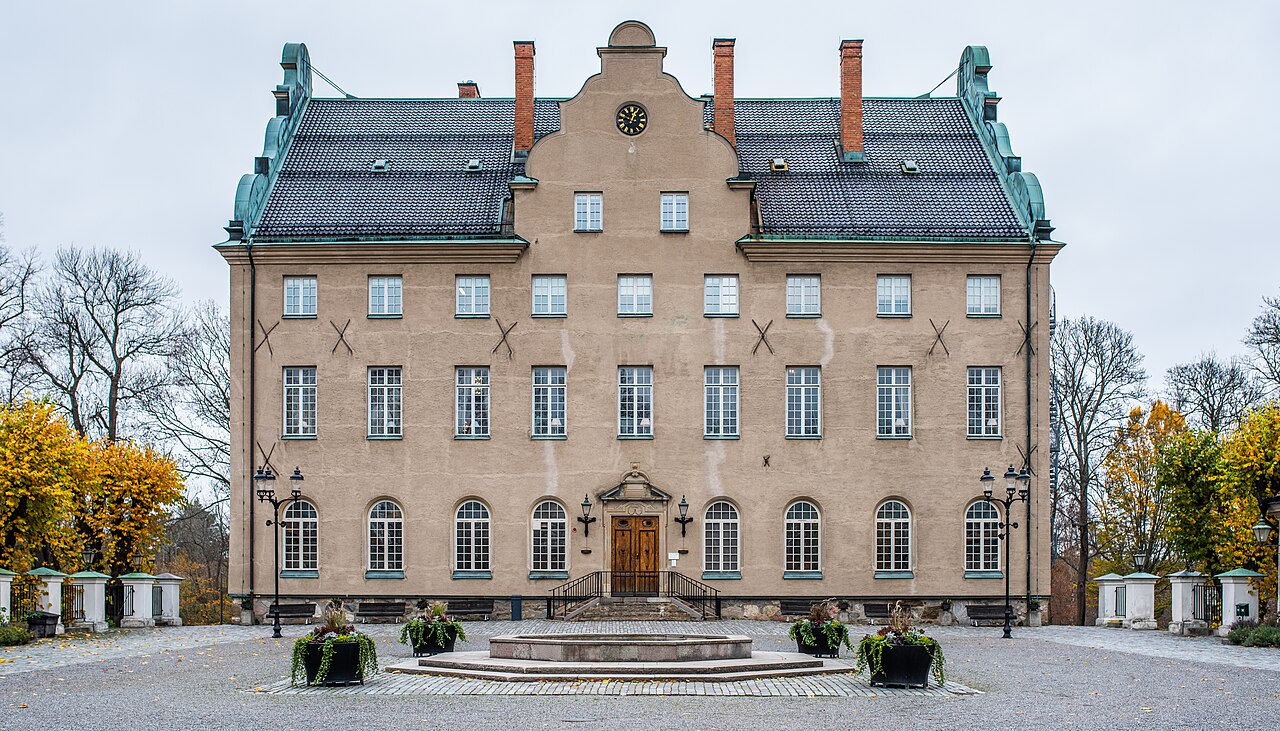
In 1760, the estate underwent a significant transformation under the ownership of Thure Gustaf Rudbeck, the Over-Governor of Stockholm and a member of the prominent Rudbeck family. He replaced the original wooden structure with the current stone building, which remains largely intact today. The new manor was designed in a simplified French rococo style, most likely by the architect Carl Wijnblad. The building features a plastered façade, two floors, and two wings, embodying the elegance and restrained ornamentation characteristic of rococo architecture in Sweden.
Rococo style and design elements
The manor's design reflects the rococo movement, which emphasized lightness, grace, and decorative artistry, although the style here is notably simplified compared to more elaborate European examples. The two-story layout with symmetrical wings allowed for both residential comfort and formal functions. The plastered exterior was typical of the period, providing a smooth, refined surface that contrasted with the rustic wooden structures it replaced.
The rudbeck family era and cultural significance
The Rudbeck family retained ownership of Edsberg Castle for approximately two centuries, during which time the estate became a center of cultural and intellectual activity. One notable figure was Malla Silfverstolpe (1782-1861), who grew up in the castle. Her diaries provide rich insights into the social life and cultural milieu of the manor during the 18th and 19th centuries, offering valuable historical perspectives on Swedish aristocratic life.
Modern use and preservation
In 1959, ownership of Edsberg Castle passed to the county of Sollentuna. Since then, the castle has been repurposed for educational and cultural functions, most notably housing Sveriges Radios Musikskola, the music school affiliated with the Swedish National Radio. Today, it is home to the Edsbergs Musikinstitut, the independent chamber music division of the Royal College of Music, Stockholm. This modern use ensures the castle remains a vibrant part of Sweden's cultural landscape.
Renovations and current facilities
The castle has undergone extensive renovations to preserve its architectural integrity while adapting its interiors for musical education and events. Part of the castle and its gardens are available for private and corporate events, blending historical ambiance with contemporary functions. Additionally, the Edsvik Konsthall, an art gallery, is located on the castle grounds, further enhancing its role as a cultural venue.
Architectural features and estate layout
Edsberg Castle's architecture is characterized by its two-story stone construction, plastered façade, and balanced wings, which create a harmonious and elegant manor house typical of post-Renaissance rococo style in Sweden. The estate includes formal gardens and parkland that complement the building's refined aesthetic. The preservation of these elements provides visitors with a tangible connection to the architectural and social history of 18th-century Swedish nobility.
Frequently asked questions (FAQ)
- How do I visit Edsberg Castle?
- Edsberg Castle is located in Sollentuna, Sweden. Visitors should check the official Edsbergs Musikinstitut website or local tourist information for current visiting hours and event schedules, as the castle is primarily an educational institution and event venue.
- What architectural style is Edsberg Castle built in?
- Edsberg Castle is built in a simplified French rococo style, characterized by its elegant plastered façade, two floors, and two wings, typical of 18th-century Swedish manor houses.
- When was Edsberg Castle constructed?
- The current stone building of Edsberg Castle was constructed in 1760, replacing an earlier wooden manor dating back to around 1630.
- Can I host private events at Edsberg Castle?
- Yes, parts of Edsberg Castle and its gardens are available for private and corporate events, offering a historical setting with modern amenities.
- What is the current use of Edsberg Castle?
- Edsberg Castle currently houses the Edsbergs Musikinstitut, the chamber music division of the Royal College of Music, Stockholm, and also features the Edsvik Konsthall art gallery on its premises.
Information
Architect
Carl Wijnblad
Current owner
County of Sollentuna
Loading map...
Visitor reviews
No reviews yet. Been here? Write the first review and help other travelers!
Write the first reviewVisited this castle? Share your experience
Your review helps other travelers and adds first-hand knowledge to our encyclopedia.