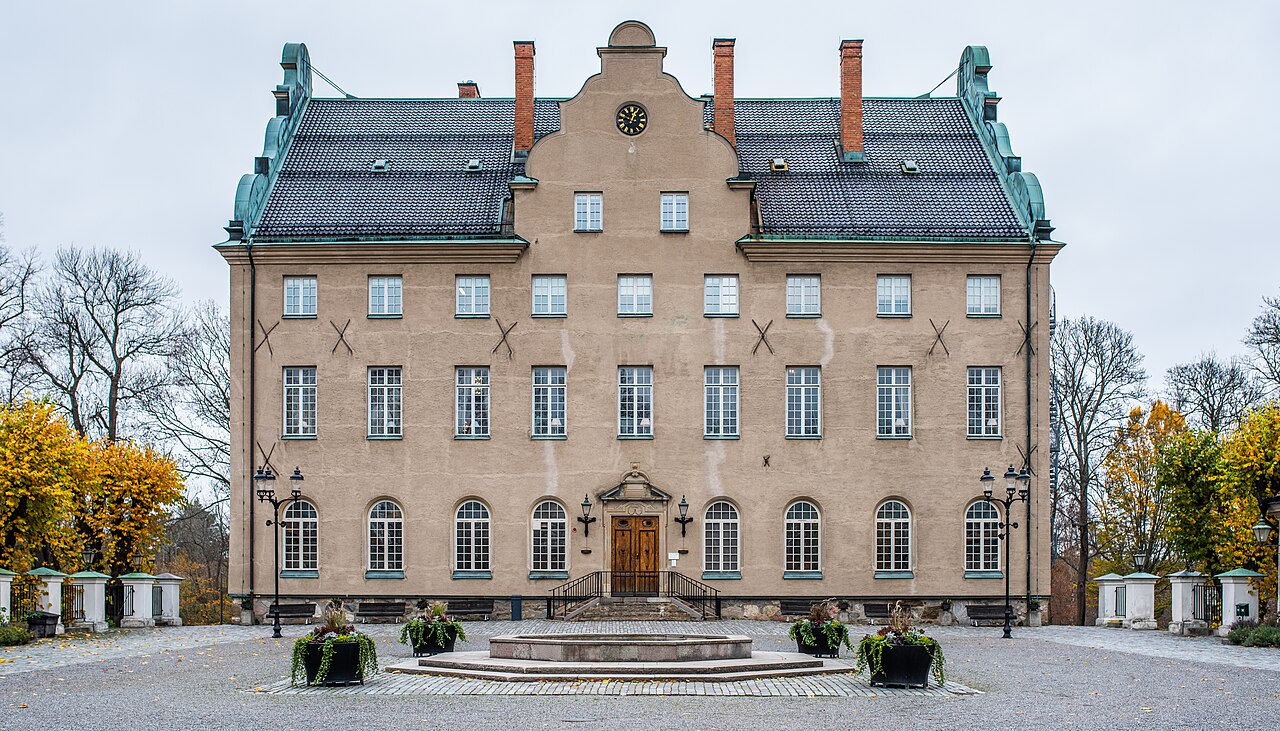
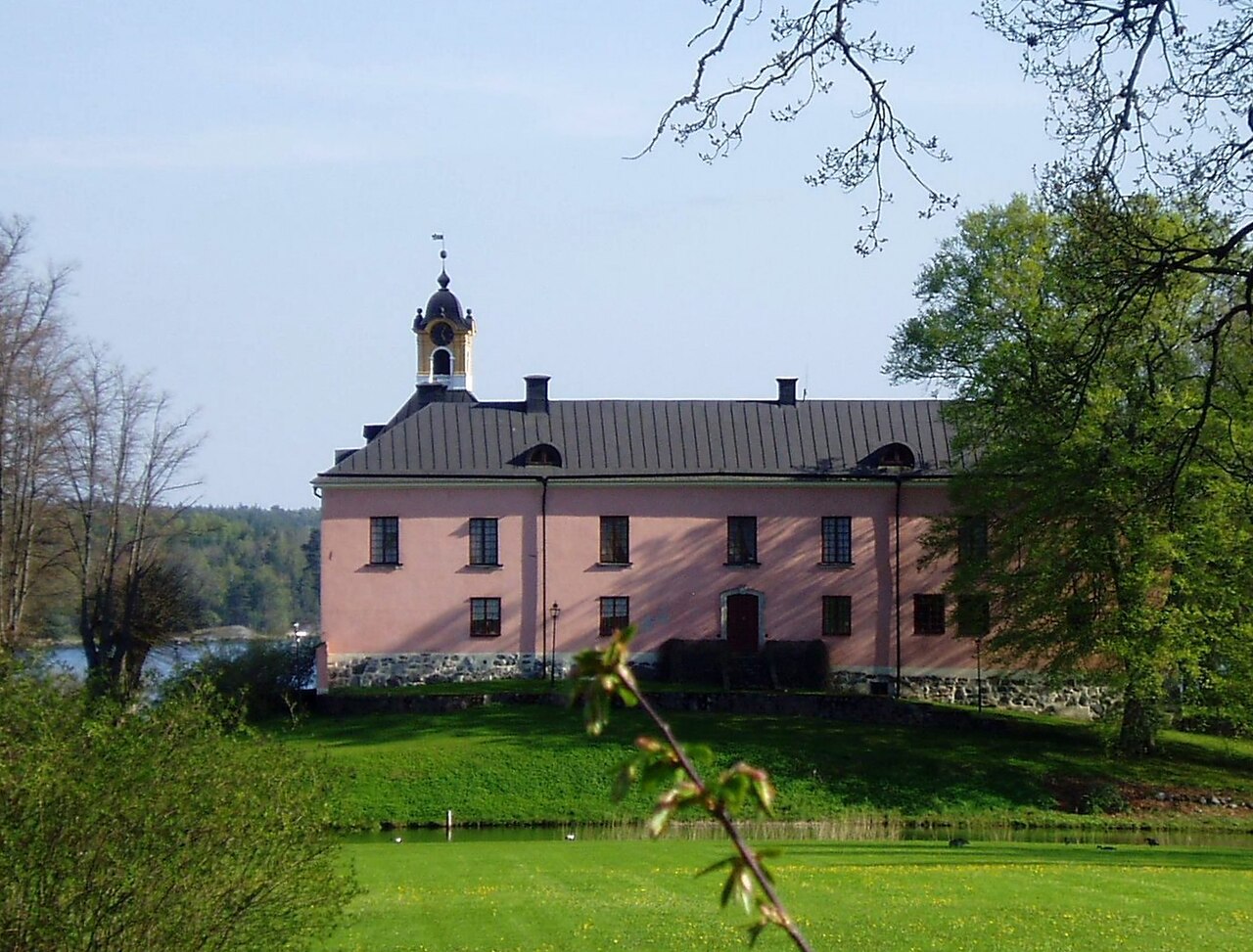
Näsby Castle stands as a notable example of 17th-century Swedish aristocratic architecture, located in the municipality of Täby, Sweden, near the scenic waters of Näsbyviken. Its history traces back to the medieval period, with the estate originally belonging to the Uppsala archbishopric in the 1300s. This early ownership highlights the estate's longstanding significance in Swedish ecclesiastical and noble circles. In the 1520s, the estate was granted to Kristina Nilsdotter (Gyllenstierna), a member of a prominent noble family, marking a transition from church to noble hands.
The estate changed hands again in 1571 when it was acquired by Gustav Axelsson Baner, a nobleman whose family played an influential role in Swedish history. The present-day castle was constructed in the 1660s, designed by the renowned architect Nicodemus Tessin the Elder, who was a leading figure in Swedish Baroque architecture. Tessin's design for Näsby Castle incorporated the elegant yet functional characteristics typical of the period, emphasizing symmetry, classical proportions, and refined details that reflected the status of its owners.
Architectural features and design
The castle originally showcased the Baroque architectural style, which was prevalent in Sweden during the mid-17th century. Tessin the Elder's work is recognized for its balanced façades, grand staircases, and ornamental interiors, all of which would have been integral to Näsby Castle's design. The building was strategically situated to take advantage of the natural beauty of Näsbyviken, offering picturesque views and a harmonious relationship between the structure and its surrounding landscape.
The estate also included extensive gardens, part of which have survived to this day. These gardens were designed in the formal style typical of Baroque landscaping, with geometric patterns, carefully trimmed hedges, and avenues that emphasized order and control over nature. The preservation of these garden elements provides valuable insight into 17th-century Swedish garden design and complements the architectural heritage of the castle itself.
The 1897 fire and reconstruction
In 1897, Näsby Castle suffered a devastating fire that destroyed much of the original structure. This event marked a significant turning point in the castle's history. However, the castle was meticulously rebuilt according to the original plans, a rare and valuable example of architectural restoration that sought to preserve the authenticity of Tessin the Elder's design. This reconstruction was initiated by Carl Robert Lamm and Dora Lamm, who took residence in the castle in 1905. Their dedication ensured that the castle's historical and architectural integrity was maintained, allowing future generations to appreciate its Baroque heritage.
Current use and preservation
Today, Näsby Castle functions as a conference center, hotel, and restaurant, blending its historical ambiance with modern hospitality services. The castle's well-preserved state and its setting near Näsbyviken make it a popular destination for both cultural tourism and business events. The survival of parts of the original gardens adds to the site's charm and historical value, offering visitors a glimpse into the estate's aristocratic past.
The castle's location in Täby places it within easy reach of Stockholm, making it accessible for day trips and longer stays. Its architectural significance, combined with its rich history and natural surroundings, positions Näsby Castle as an important heritage site in Sweden's cultural landscape.
Historical context and significance
Näsby Castle reflects the evolution of Swedish noble estates from medieval ecclesiastical holdings to Baroque aristocratic residences. The involvement of figures like Nicodemus Tessin the Elder connects it to the broader narrative of Swedish architecture during the 17th century, a period marked by the country's rise as a European power. The castle's survival through destruction and careful restoration illustrates the value placed on cultural heritage in Sweden.
Its continuous adaptation—from a noble residence to a modern conference venue—demonstrates the ways in which historic buildings can be preserved through functional reuse. The castle remains a testament to the architectural and social history of the region, offering insights into the lives of Sweden's nobility and the architectural trends that shaped their estates.
Frequently asked questions (FAQ)
- When was Näsby Castle originally built?
- Näsby Castle was originally built in the 1660s, designed by Nicodemus Tessin the Elder, a prominent Swedish architect of the Baroque period.
- What happened to Näsby Castle in 1897?
- In 1897, Näsby Castle was destroyed by a fire but was carefully rebuilt according to the original design and reopened in 1905.
- Who were Carl Robert Lamm and Dora Lamm?
- Carl Robert Lamm and Dora Lamm were the couple who initiated the reconstruction of Näsby Castle after the 1897 fire and moved into the restored castle in 1905.
- What architectural style is Näsby Castle known for?
- Näsby Castle is known for its Baroque architectural style, characterized by symmetry, classical proportions, and ornamental details typical of the 17th century.
- Is Näsby Castle open to the public?
- Today, Näsby Castle operates as a conference center, hotel, and restaurant, welcoming visitors and guests for various events and stays.
Information
Sources & official resources
Verify the information above using these authoritative references.
Loading map...
Visitor reviews
No reviews yet. Been here? Write the first review and help other travelers!
Write the first reviewVisited this castle? Share your experience
Your review helps other travelers and adds first-hand knowledge to our encyclopedia.