Dynge Castle Ruins
Dynge Castle, historically known as Dyngehus, is a medieval fortress ruin located in Uddevalla, within the historic province of Bohuslän, Sweden. Originally built around 1250 during the high medieval period, the castle was a Norwegian stronghold before the region was transferred to Swedish control. The castle's remains offer a rare glimpse into medieval fortification techniques in this part of Scandinavia.
Historical background and strategic importance
Dynge Castle was constructed in the mid-13th century, a time marked by territorial conflicts between Norway and Sweden. Its position on a cliff overlooking Gullmarsfjorden provided strategic control over maritime routes and local land access. The castle's location in central Bohuslän made it a key defensive site in the Norwegian kingdom's southern borderlands. It was mentioned multiple times in Norwegian historical records, indicating its significance in regional power struggles.
The castle remained in use until the early 16th century when it was destroyed by fire. This event marked the end of its military and administrative role. Following the cession of Bohuslän to Sweden in the 17th century, Dynge Castle passed into Swedish possession, but it was never rebuilt or used again as a fortress.
Architectural features and layout
Dynge Castle was constructed in the style of a motte-and-bailey fortress, a common design in medieval Scandinavia and Europe. The core of the castle was a stone keep situated on a raised motte, which is a natural or artificial mound providing a defensive advantage. Surrounding the keep was a small moat, adding an extra layer of protection against attackers.
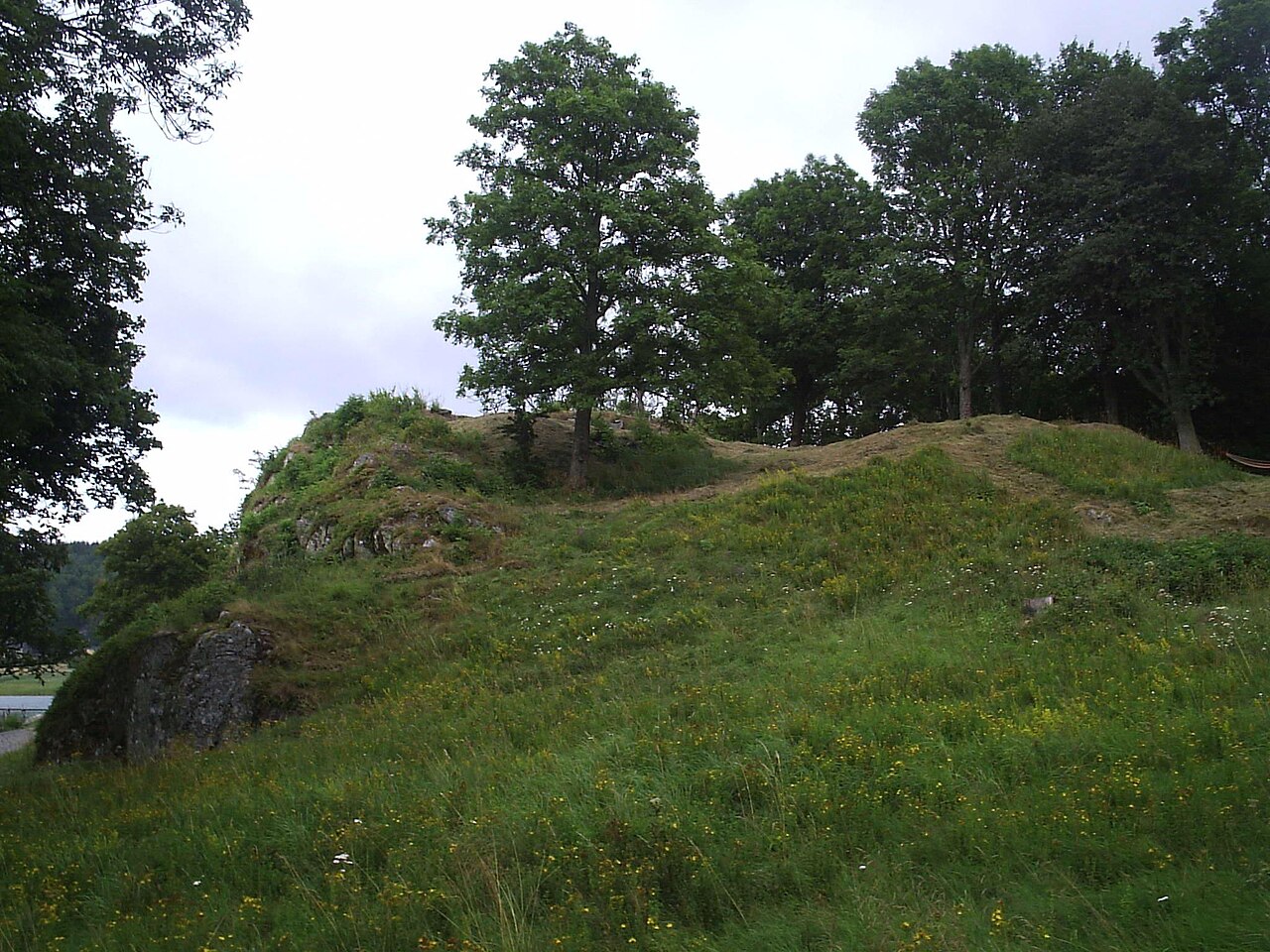
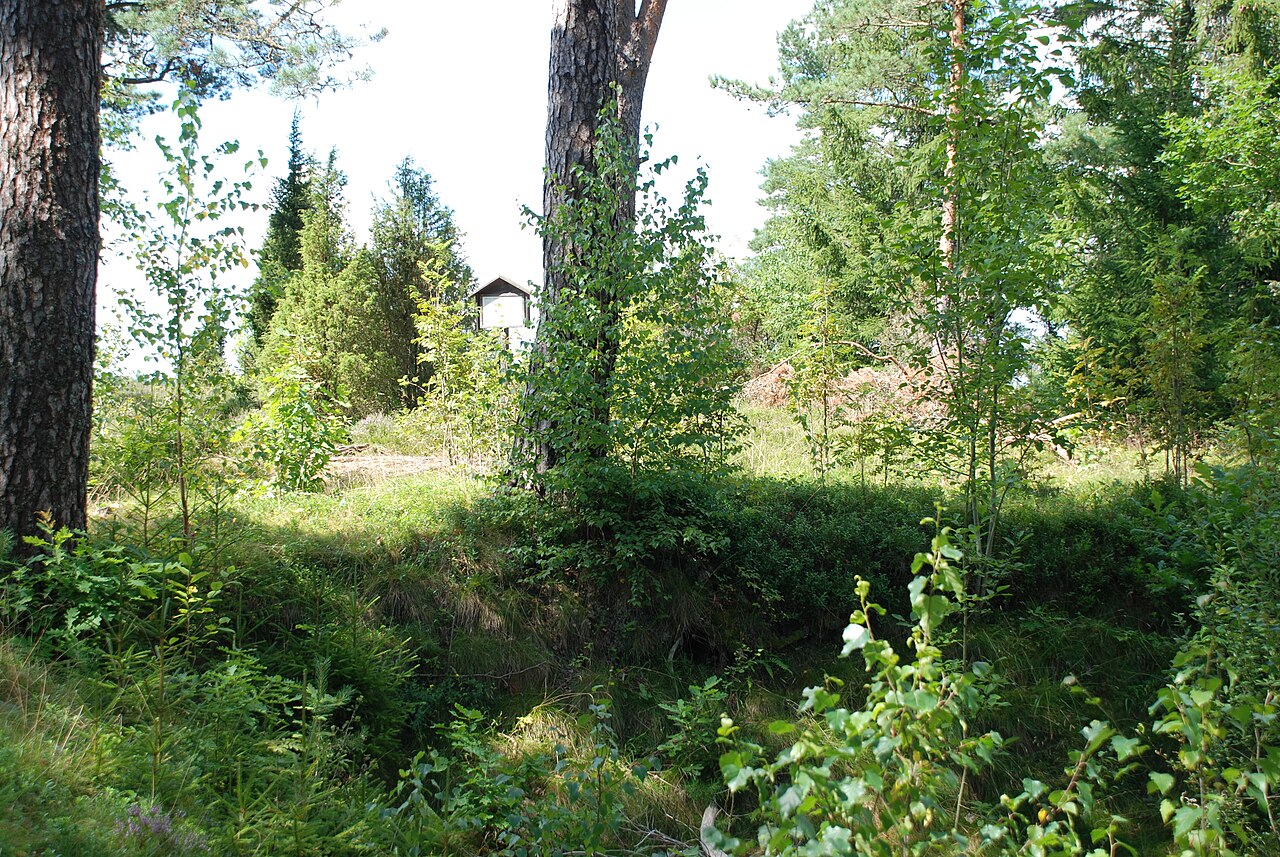
The keep's foundations remain clearly visible today, revealing the castle's original footprint and robust construction methods. The walls were built of stone, typical for high medieval fortifications aiming to withstand sieges and attacks. The moat, still discernible, encircled the keep and likely connected to natural water sources to maintain its defensive function.
The castle's design exploited the natural topography, with the cliff providing a formidable natural barrier on one side, enhancing its defensive capabilities. This combination of natural and man-made defenses reflects the military architectural strategies of the period.
Comparison with contemporary castles
Dynge Castle shares architectural similarities with other regional castles excavated by archaeologist Wilhelm Berg, notably Ragnhildsholmen Castle and Olsborg Castle. These castles also feature motte-and-bailey elements and stone keeps, illustrating a common defensive approach in medieval Bohuslän. Berg's excavations in the early 20th century provided valuable insights into the construction and use of these fortifications.
Archaeological excavations and preservation
The site was excavated between 1912 and 1913 by Wilhelm Berg, a pioneer in Swedish medieval archaeology. His work uncovered the castle's foundational remains and moat, confirming its motte-and-bailey structure and Norwegian origins. Since these early excavations, no extensive archaeological investigations have been conducted, leaving much of the site unexplored.
Today, Dynge Castle remains a ruin with visible stone foundations and moat outlines. It is one of the few surviving medieval structures in Uddevalla Municipality, alongside Dragsmark Abbey and Bokenäs Old Church. The ruins provide valuable cultural heritage and attract visitors interested in medieval history and architecture.
Visiting dynge castle ruins
Visitors to Dynge Castle can explore the ruins situated on the cliff edge, offering scenic views of Gullmarsfjorden. The site is accessible year-round, although facilities are minimal due to its status as a ruin. Interpretive signage may be limited, so visitors are encouraged to research the castle's history beforehand to fully appreciate its significance.
The castle's remote location and natural surroundings make it a compelling destination for those interested in medieval fortifications and Scandinavian history. Its preservation as a ruin allows for an authentic experience of a high medieval Norwegian fortress.
Frequently asked questions (FAQ)
- What is the historical significance of Dynge Castle Ruins?
- Dynge Castle Ruins date back to the 13th century and served as a strategic fortress during various conflicts in the region. Its remnants provide insight into medieval architecture and the feudal system in Sweden, making it a valuable site for historical research and education.
- When was Dynge Castle built?
- Dynge Castle was constructed in the early 1200s, with significant renovations occurring in the following centuries. It played a vital role in the defense of the area until it fell into disrepair in the 17th century.
- Can I visit Dynge Castle Ruins throughout the year?
- Yes, Dynge Castle Ruins are open to visitors year-round. However, the best time to visit is during the summer months when the weather is pleasant, and guided tours are more readily available.
- Is there an entrance fee to visit Dynge Castle Ruins?
- Access to Dynge Castle Ruins is free of charge, allowing visitors to explore the site at their leisure. Donations are appreciated to help with the maintenance and preservation of the ruins.
- What are the opening hours for Dynge Castle Ruins?
- Dynge Castle Ruins can be visited at any time, as the site is open to the public without specific opening hours. However, it's recommended to visit during daylight to fully appreciate the castle's features and surroundings.
- How do I get to Dynge Castle Ruins from Uddevalla?
- Dynge Castle Ruins are located just a short drive from Uddevalla, approximately 10 kilometers away. Visitors can take public transportation or drive, with parking available near the site.
- Are there any nearby attractions to visit along with Dynge Castle Ruins?
- Yes, nearby attractions include the beautiful Bohuslän coastline and the picturesque town of Uddevalla, which offers shopping, dining, and cultural experiences. The area is rich in natural beauty, making it perfect for a day of exploration.
- Is Dynge Castle accessible for visitors with mobility challenges?
- The ruins are set in a natural landscape, which can present some challenges for visitors with mobility issues. While the site itself does not have formal accessibility features, efforts have been made to ensure pathways are navigable for most visitors.
Loading map...
Visitor reviews
No reviews yet. Been here? Write the first review and help other travelers!
Write the first reviewVisited this castle? Share your experience
Your review helps other travelers and adds first-hand knowledge to our encyclopedia.