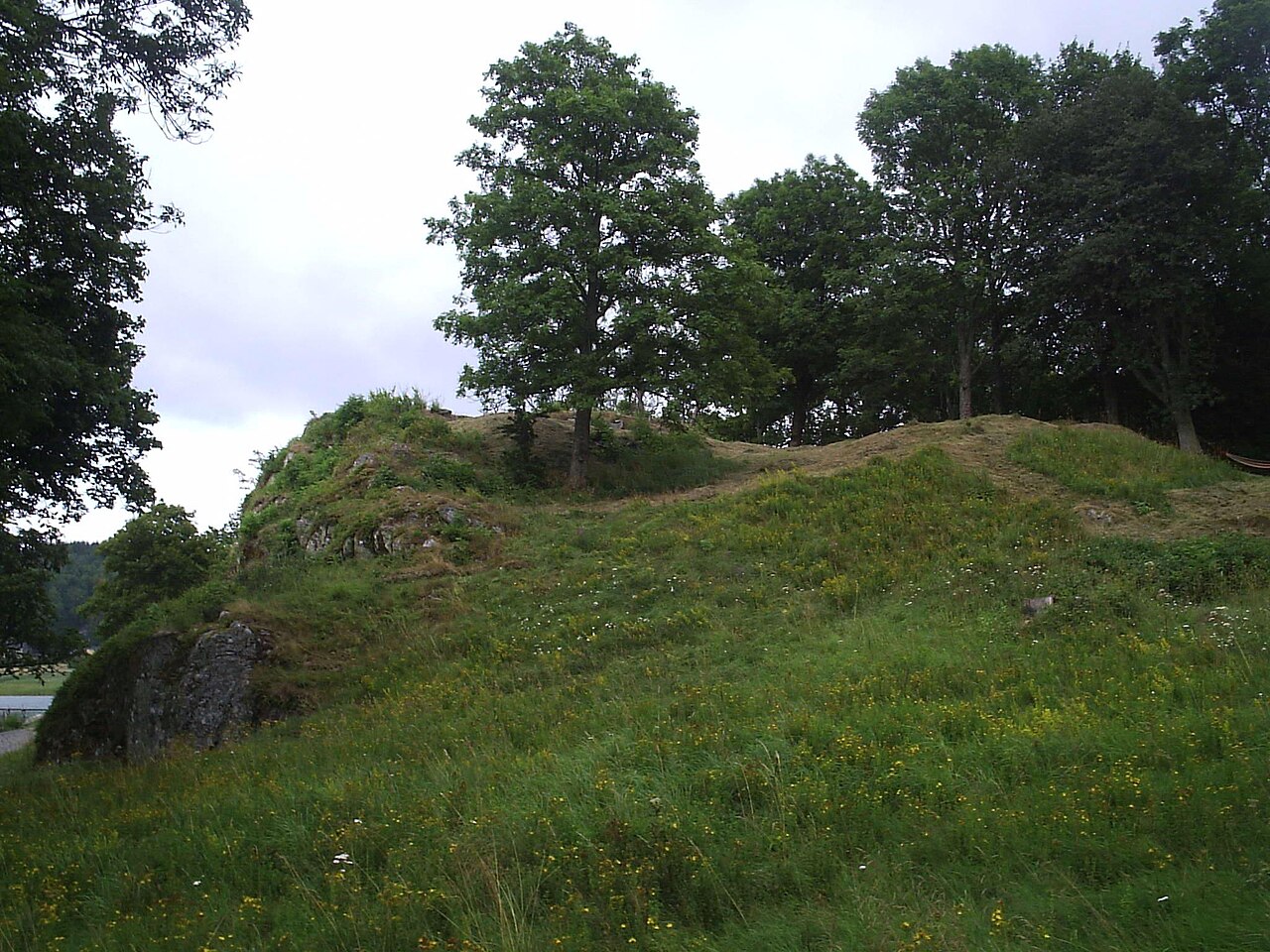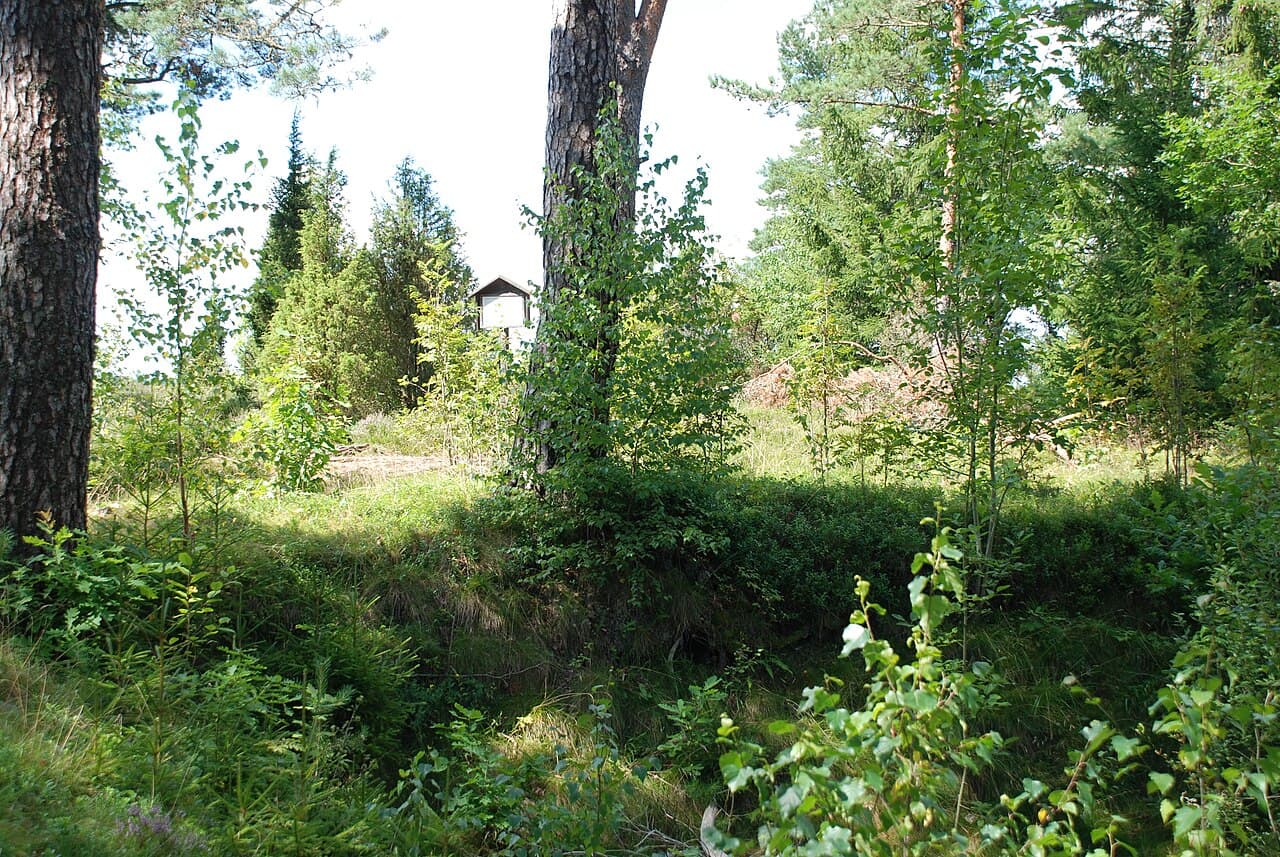
Olsborg Castle Ruins
Olsborg Castle, also known as Olofsborg, is a historic fortified castle ruin located in Bohuslän, within the present-day municipality of Sotenäs, Sweden. Perched dramatically on a steep cliff, the site likely served as an early hill fort before its transformation into a Renaissance fortress. The castle's strategic position provided commanding views over the surrounding landscape, crucial for defense and regional control during its active years in the early 16th century.
The construction and early history of Olsborg Castle
Olsborg Castle was constructed in 1503-1504 by the squire Nils Ragvaldsson from Åby, following a Swedish military campaign against the Danish-controlled region of Viken. This period was marked by intense territorial conflicts between Sweden, Denmark, and Norway, with Bohuslän being a contested borderland. The castle was built rapidly as a fortified stronghold to secure Swedish advances in the area.
The original structure was likely built using local stone and timber, typical of early Renaissance military architecture in Scandinavia, combining hill castle defensive principles with Renaissance fortification ideas. Its location on a steep cliff enhanced its natural defenses, making direct assaults difficult.
The Christmas night attack of 1504
Shortly after its construction, Olsborg Castle faced a significant setback. On Christmas night of 1504, the castle was attacked and mostly destroyed by Otto Rud, the commander of the nearby Bohus Fortress. This surprise assault was part of the ongoing struggle for control over Bohuslän and demonstrated the vulnerability of newly established fortifications against experienced defenders.
Swedish administration and reconstruction efforts
The castle's fortunes shifted following the political upheaval caused by the dethronement of the Danish king Christian II. During the subsequent power vacuum, Swedish forces returned to the region and reclaimed Olsborg. Between 1523 and 1525, the castle served as the administrative center for the brief Swedish rule over northern Bohuslän. This administration was led by notable nobles such as Lars Siggesson (Sparre) and Ture Jönsson (Tre Rosor).
During this period, the castle's defenses were significantly improved, particularly in 1526. These enhancements likely included strengthening the walls, improving battlements, and possibly adding artillery positions, reflecting the evolving military technology of the Renaissance era.
Relocation of administration and further conflicts
In 1525, the administrative center was moved to Karlsborg Castle, located south of Hamburgsund, indicating a strategic shift in regional governance. However, Olsborg remained a key defensive site.
During the attempts by Christian II to regain his throne, the region again became a battleground. In December 1531, Norwegian forces attacked the Swedish-held part of Bohuslän, resulting in the destruction of both Karlsborg and Olsborg castles. This marked a decisive blow to Swedish control in the area.
Later attempts at rebuilding and archaeological significance
Despite its destruction, Olsborg Castle remained a site of military interest. Swedish monarchs Eric XIV in 1564 and Johan III in 1569 and 1570 made several unsuccessful attempts to rebuild the fortress. These efforts reflect the ongoing strategic importance of the location, although the castle never regained its former prominence.
By the early 20th century, the castle was in ruins but still visible. It was excavated by the archaeologist Wilhelm Berg, who also worked on other regional castles such as Ragnhildsholmen Castle and Dynge Castle. These excavations helped to document the castle's layout and historical significance, contributing to the understanding of Renaissance fortifications in Bohuslän.
Architectural features and defensive design
Olsborg Castle's design capitalized on its natural cliffside location, incorporating steep slopes as a defensive barrier. The castle likely featured stone curtain walls, battlements, and towers to provide vantage points for surveillance and defense. The improvements made in the 1520s suggest adaptation to contemporary military needs, possibly including embrasures for early firearms and reinforced gatehouses.
The castle's layout would have included a central courtyard, living quarters, and storage facilities, typical of Renaissance military architecture. Its location and construction reflect the transition from medieval fortifications to more modern defensive structures designed to withstand artillery.
Olsborg Castle in the context of Bohuslän's history
Olsborg Castle is an important historical site that illustrates the turbulent history of the Bohuslän region during the early 16th century. The castle's construction, destruction, and attempted reconstructions mirror the shifting political landscape involving Sweden, Denmark, and Norway. Its role as a military stronghold and administrative center highlights the strategic importance of Bohuslän as a border province.
Today, the castle remains a significant archaeological ruin, offering insights into Renaissance military architecture and the complex history of Scandinavian territorial conflicts. Its ruins attract historians, archaeologists, and visitors interested in the region's heritage and medieval fortifications.
Frequently asked questions (FAQ)
- What is the best time to visit Olsborg Castle ruins?
- The best time to visit Olsborg Castle ruins is during the late spring to early autumn months when weather conditions are favorable for outdoor exploration. The site is open year-round, but accessibility can be limited in winter due to snow and ice.
- How do I get to Olsborg Castle ruins?
- Olsborg Castle ruins are located in Sotenäs Municipality, Bohuslän, Sweden. Visitors can reach the site by car or local transport, followed by a short hike up to the steep cliff where the ruins stand.
- Is there an entrance fee to visit Olsborg Castle ruins?
- Visiting Olsborg Castle ruins is free of charge as it is an open archaeological site managed by the Municipality of Sotenäs.
- Can I explore the ruins safely?
- Yes, visitors can explore the ruins safely, but should exercise caution due to uneven terrain and steep cliffs. It is recommended to wear sturdy footwear and stay on marked paths.
- What is the historical significance of Olsborg Castle?
- Olsborg Castle played a crucial role in the early 16th-century conflicts between Sweden, Denmark, and Norway. It served as a fortified stronghold and administrative center during Swedish rule over northern Bohuslän.
Photo gallery

Information
Current owner
Municipality of Sotenäs
Loading map...
Visitor reviews
No reviews yet. Been here? Write the first review and help other travelers!
Write the first reviewVisited this castle? Share your experience
Your review helps other travelers and adds first-hand knowledge to our encyclopedia.