Dutch Fort, locally known as Kota Belanda, is a historic fortification situated on Pangkor Island in the Manjung District of Perak, Malaysia. This fort represents a significant chapter in the colonial history of the Malay Peninsula, serving as a strategic outpost for the Dutch East India Company during the 17th century. The fort was originally constructed in 1670 to secure and protect the valuable tin supplies obtained from the Sultanate of Perak, reflecting the intense competition among European powers for control over Southeast Asian trade routes and resources.
Historical context and construction
The Dutch Fort was named Fort Dindingh by the Dutch, after the nearby Dinding River on the Perak mainland. The fort's location on Pangkor Island was strategically chosen for its proximity to the tin-rich regions and its accessibility by sea. The original structure was built primarily for storage and defense purposes, allowing the Dutch to maintain a foothold in the region's lucrative tin trade.
The fort's initial construction was characterized by robust brick walls designed to withstand attacks and protect the valuable mineral stockpiles. However, tensions with the local Malay population escalated due to the Dutch's aggressive methods of resource extraction. This unrest culminated in the fort's destruction in 1690 by Malay forces dissatisfied with Dutch control and exploitation.
Rebuilding and decline
Recognizing the fort's importance, the Dutch undertook a reconstruction effort in 1743. The rebuilt fort maintained its defensive purpose, and a garrison of approximately 60 soldiers was stationed there to guard the premises. This military presence lasted until 1748, when the Dutch abandoned the fort and disbanded the troops, marking the beginning of the fort's decline as a colonial stronghold.
Architectural features and layout
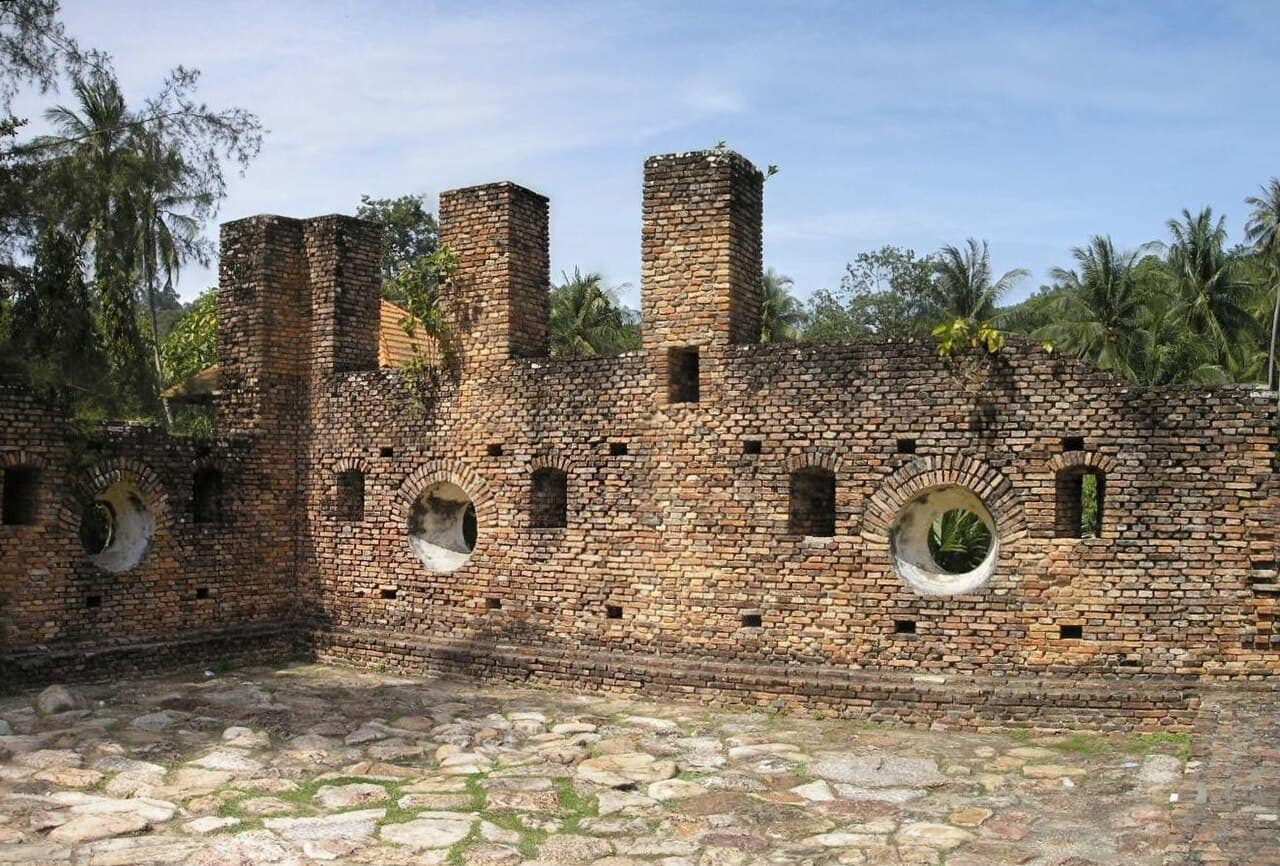
The remains of the Dutch Fort today consist primarily of three brick walls arranged to form a defensive enclosure. These walls feature round windows at regular intervals, which would have served as gun ports or observation points. The fort's position a short distance from the ocean allowed it to monitor maritime activity and protect the trading interests of the Dutch in the region.
Although much of the fort lies in ruins, the surviving walls provide insight into the 17th-century military architecture employed by European colonial powers in Southeast Asia. The design reflects a practical approach focused on defense and functionality rather than ornate embellishments.
Preservation and modern significance
In 1973, the fort was reconstructed by Malaysia's museum department, which undertook efforts to stabilize and preserve the site. Subsequently, it was officially gazetted as an ancient monument and historical site under the Antiquities Act 1976 No. 242 Perak Gazette on 21 March 1978. This designation protects the site from vandalism and unauthorized alterations, with legal penalties including fines and imprisonment for offenders.
Today, the Dutch Fort serves as a cultural and historical attraction for visitors to Pangkor Island. The surrounding area has been developed to include a small park and souvenir shops, enhancing the visitor experience while maintaining the site's historical integrity. The fort stands as a tangible reminder of the colonial struggles for control over the Malay Peninsula's resources and trade routes.
Visiting the dutch fort
The fort is accessible to the public and offers a glimpse into the colonial past of Malaysia. Visitors can explore the ruins, observe the surviving architectural elements, and learn about the fort's role in the region's history. Its location near the ocean provides scenic views and contextualizes the strategic importance of the site during the 17th and 18th centuries.
Photo gallery

Photo by Gryffindor•Public domain
Information
Loading map...
Visitor reviews
No reviews yet. Been here? Write the first review and help other travelers!
Write the first reviewVisited this castle? Share your experience
Your review helps other travelers and adds first-hand knowledge to our encyclopedia.