Fort Siloso
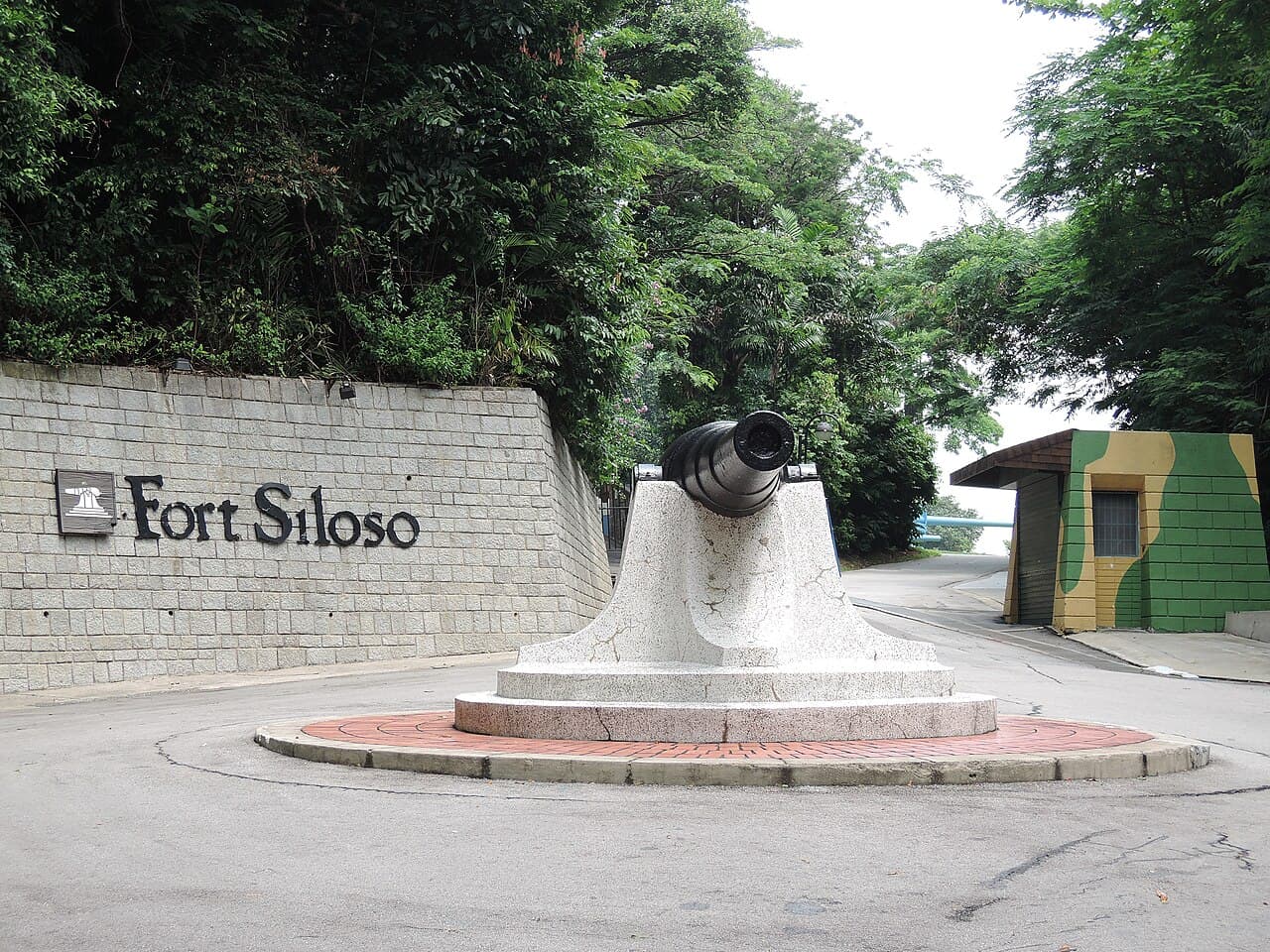
Fort Siloso is a prominent 19th-century bastioned fortress located on Sentosa Island, Singapore. It is the only preserved coastal artillery battery of the original twelve that formed part of "Fortress Singapore", a network of defenses constructed to protect the strategic port city during the British colonial period. Built primarily to defend against naval attacks, Fort Siloso played a significant role during the Battle of Singapore in World War II.
Historical background and strategic importance
The construction of Fort Siloso began in the late 19th century, as part of the British Empire's efforts to fortify Singapore, a key trading hub and naval base in Southeast Asia. The fort was designed to guard the western entrance to Singapore's harbor, providing artillery coverage against enemy warships attempting to enter the harbor from the Malacca Strait. Fort Siloso was equipped with coastal artillery guns mounted on bastions and gun emplacements, making it a classic example of a bastioned fortress adapted to modern artillery warfare of the time.
Sentosa Island, formerly known as Pulau Blakang Mati, was selected for its strategic vantage point, allowing Fort Siloso to oversee and control maritime access. The fort was part of a larger defensive system that included other batteries and fortifications around Singapore, collectively known as Fortress Singapore.
Architectural features and military design
Fort Siloso's design reflects the military engineering principles of the 19th century, emphasizing strong defensive walls, bastions for mounting artillery, and underground magazines for ammunition storage. The fortress features a series of gun emplacements arranged to provide overlapping fields of fire, maximizing coverage of the sea approaches. The walls and structures were constructed using reinforced concrete and brick, materials chosen for their durability and resistance to bombardment.
The fort also includes observation posts and command centers that coordinated the firing of the guns. These facilities were connected by a network of underground tunnels, allowing safe movement of personnel and supplies during combat. The layout allowed defenders to withstand prolonged attacks and maintain control of the surrounding waters.
Role in World War II and the Battle of Singapore
During World War II, Fort Siloso was a critical component of Singapore's coastal defense system. It saw action during the Battle of Singapore in early 1942, when Japanese forces launched a major assault to capture the island. Although the fort's artillery was primarily designed to counter naval threats, it was pressed into service against advancing ground forces as well.
Despite the fortifications and determined defense, Singapore fell to the Japanese in February 1942. Fort Siloso was subsequently occupied by Japanese forces and used as a military installation throughout the occupation period. The fort's role during the war exemplifies the challenges faced by fixed coastal defenses in the face of modern combined arms warfare.
Post-war history and preservation
After World War II, Fort Siloso was decommissioned as a military facility, reflecting changes in defense technology and strategy. In the decades that followed, the site was preserved as a historical monument and converted into a military museum open to the public. The museum displays a collection of artifacts, photographs, and exhibits detailing the fort's history and Singapore's wartime experiences.
A notable feature of the museum is the Surrender Chambers, which reopened in June 2017 with a refreshed exhibition. This exhibit focuses on the events surrounding the British surrender of Singapore to Japanese forces, providing visitors with immersive and educational insights into this pivotal moment in history. Admission to the museum is free, encouraging educational tourism and public engagement with Singapore's heritage.
Visitor experience and educational value
Today, Fort Siloso offers visitors a chance to explore preserved bastioned walls, gun emplacements, and underground tunnels. The site provides interpretive signage and guided tours that explain the fort's construction, military function, and historical context. Visitors can gain a deeper understanding of coastal defense strategies and the impact of World War II on Singapore.
The museum's location on Sentosa Island also allows visitors to enjoy the natural surroundings and other attractions, making Fort Siloso a significant cultural and historical destination. The preservation of this modern period fortress offers valuable insights into the evolution of military architecture and the geopolitical history of Southeast Asia.
Frequently asked questions (FAQ)
- What are the opening hours of Fort Siloso?
- Fort Siloso is generally open daily from 9:00 AM to 7:00 PM, allowing visitors ample time to explore the museum and grounds.
- Is there an admission fee to visit Fort Siloso?
- Admission to Fort Siloso and its military museum is free, making it accessible to all visitors interested in Singapore's military history.
- What can I see at Fort Siloso?
- Visitors can explore preserved coastal artillery batteries, bastioned walls, underground tunnels, and the Surrender Chambers museum with exhibits on World War II.
- How do I get to Fort Siloso?
- Fort Siloso is located on Sentosa Island, accessible by cable car, monorail, or road transport from mainland Singapore.
- When was Fort Siloso built and what was its purpose?
- Fort Siloso was built in the 19th century as part of British colonial defenses to protect Singapore's harbor from naval attacks.
Photo gallery

Information
Address
Siloso Point, Sentosa Island, Singapore
Loading map...
Visitor reviews
No reviews yet. Been here? Write the first review and help other travelers!
Write the first reviewVisited this castle? Share your experience
Your review helps other travelers and adds first-hand knowledge to our encyclopedia.