Fort Cornwallis
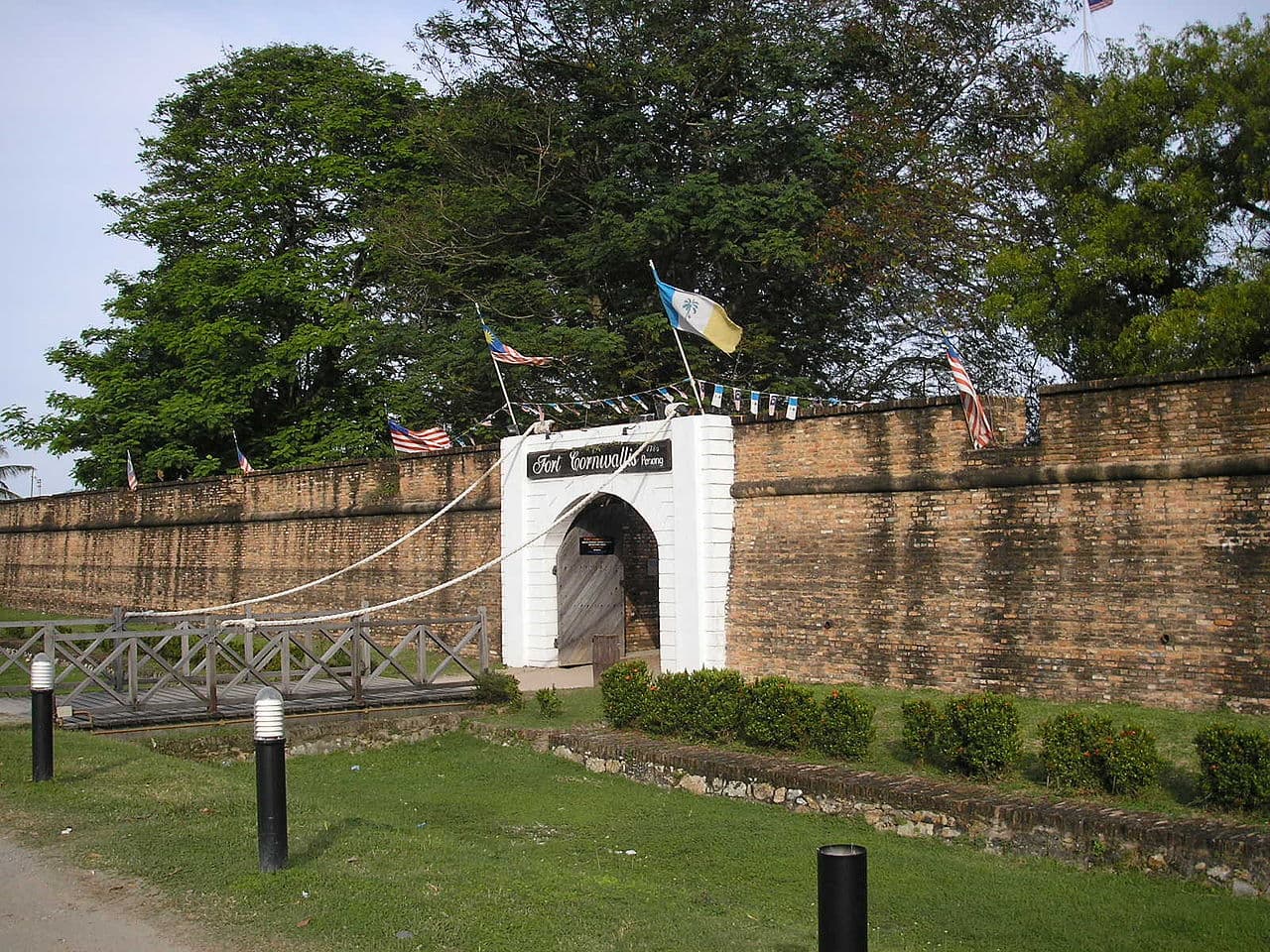
Fort Cornwallis stands as the largest bastioned fortress in Malaysia, located in George Town, Penang. Constructed in the late 18th century by the British East India Company, the fort was named after Lieutenant-General Charles Cornwallis, 2nd Earl Cornwallis (1738–1805), who was the Governor-General of Bengal during its construction. This fortification was strategically built to defend the British settlement against potential threats during the Napoleonic Wars, although these threats never came to fruition.
Historical background and strategic purpose
Fort Cornwallis was established shortly after the British took control of Penang Island in 1786, under the leadership of Captain Francis Light. The fort was intended to protect the new British trading post from possible attacks by rival European powers and local forces. Its construction began in the late 18th century and evolved over time, reflecting the military architectural trends of the post-Renaissance period.
The fort was named in honor of Lord Cornwallis, a prominent British military figure and colonial administrator, acknowledging his role in expanding British influence in Southeast Asia. Despite its imposing design and strategic location near the waterfront, the fort never faced a direct military assault, serving more as a deterrent and symbol of British authority in the region.
Architectural design and features
Fort Cornwallis is a classic example of a bastioned fortress, a style characterized by angled bastions projecting from the main walls, designed to provide overlapping fields of fire and eliminate blind spots. The fort's layout is roughly rectangular, enclosed by thick brick walls with four prominent bastions named after British monarchs: King George III, Queen Charlotte, Prince of Wales, and Prince Frederick.
The walls are punctuated by cannon embrasures, and the fort originally housed a variety of artillery pieces intended to defend the harbor and town. Inside the fort, visitors can find remnants of the officers' quarters, powder magazine, chapel, and prison cells. The fort's moat, although no longer filled with water, was part of its defensive system.
The construction materials primarily include bricks and laterite stone, common in colonial military architecture in tropical climates. The fort's design reflects both European military engineering principles and adaptations to local environmental conditions.
Role in colonial administration and local history
Beyond its military function, Fort Cornwallis also served as an administrative center during British rule. It housed various government offices and was a symbol of colonial power in Penang. The fort witnessed the growth of George Town as a key trading hub in the Straits of Malacca, facilitating British economic and political interests in the region.
Over time, as military technology advanced and threats diminished, the fort's strategic importance declined. By the late 19th and early 20th centuries, it was largely obsolete as a military installation but remained a prominent historical landmark.
Preservation and tourism today
Today, Fort Cornwallis is a well-preserved historical site and a popular tourist attraction in Penang. The site has been maintained to showcase its original structures and provide educational exhibits about its history and architecture. Visitors can explore the bastions, ramparts, and internal buildings, gaining insight into colonial military life and the fort's role in regional history.
The fort is open to the public with a modest entrance fee, making it accessible for both local and international tourists. It also hosts cultural events and exhibitions that highlight Penang's diverse heritage.
Visitor information
- Opening hours: Typically open daily from 9:00 AM to 6:00 PM, but visitors should check current times before planning their visit.
- Entrance fees: RM10 for Malaysian citizens and RM20 for foreign visitors.
- Accessibility: The site is mostly accessible, with paved pathways suitable for most visitors.
Frequently asked questions (FAQ)
- What is the historical significance of Fort Cornwallis?
- Fort Cornwallis is a key historical landmark in George Town, Malaysia, built in the late 18th century by the British East India Company. It served as a defensive fortification and played a crucial role in the early colonial history of Penang, making it a vital site for understanding the region's colonial past.
- When was Fort Cornwallis built?
- Construction of Fort Cornwallis began in 1786 shortly after the British established their presence in Penang. The fort was completed in 1804 and has since undergone various renovations and restorations to preserve its historical integrity.
- What are the opening hours for Fort Cornwallis?
- Fort Cornwallis is open to visitors daily from 9:00 AM to 7:00 PM. It is advisable to check for any special events or public holidays that may affect the opening hours before your visit.
- Can I enter Fort Cornwallis for free?
- There is a nominal entrance fee to visit Fort Cornwallis, which helps maintain the site and its facilities. Tickets are usually affordable, making it accessible for both locals and tourists alike.
- Is Fort Cornwallis accessible for visitors with disabilities?
- Yes, Fort Cornwallis is designed to be accessible for visitors with disabilities. There are pathways and facilities in place to ensure that everyone can enjoy the historical site comfortably.
- When is the best time to visit Fort Cornwallis?
- The best time to visit Fort Cornwallis is during the cooler months from December to February when the weather is more pleasant. Early morning or late afternoon visits can also help you avoid the midday heat and crowds.
- What nearby attractions can I visit after Fort Cornwallis?
- After visiting Fort Cornwallis, you can explore other nearby attractions such as the Penang State Museum, the Esplanade, and the famous hawker food stalls in George Town. These sites provide a rich cultural experience that complements your visit to the fort.
- How do I get to Fort Cornwallis?
- Fort Cornwallis is conveniently located in the heart of George Town, making it easily accessible by public transport, taxis, or on foot. If you're staying in the city, consider taking a leisurely stroll to enjoy the surrounding historic architecture.
Photo gallery

Information
Current owner
State museum
Loading map...
Visitor reviews
No reviews yet. Been here? Write the first review and help other travelers!
Write the first reviewVisited this castle? Share your experience
Your review helps other travelers and adds first-hand knowledge to our encyclopedia.