Dussen Castle
Dussen Castle, locally known as Kasteel Dussen, is a remarkable example of a late medieval fortified residence located in the village of Dussen in the North Brabant province of the Netherlands. Its history is deeply intertwined with the region's feudal past, noble families, and the turbulent events that shaped Dutch history over the centuries.
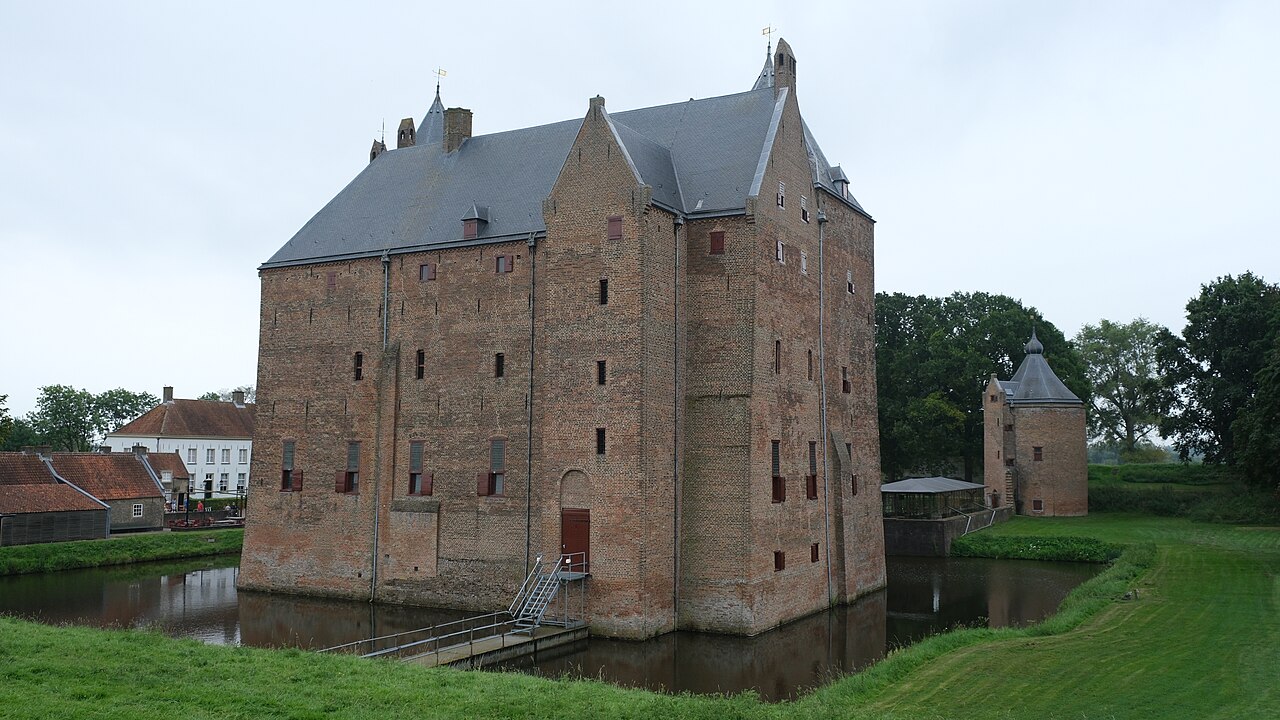
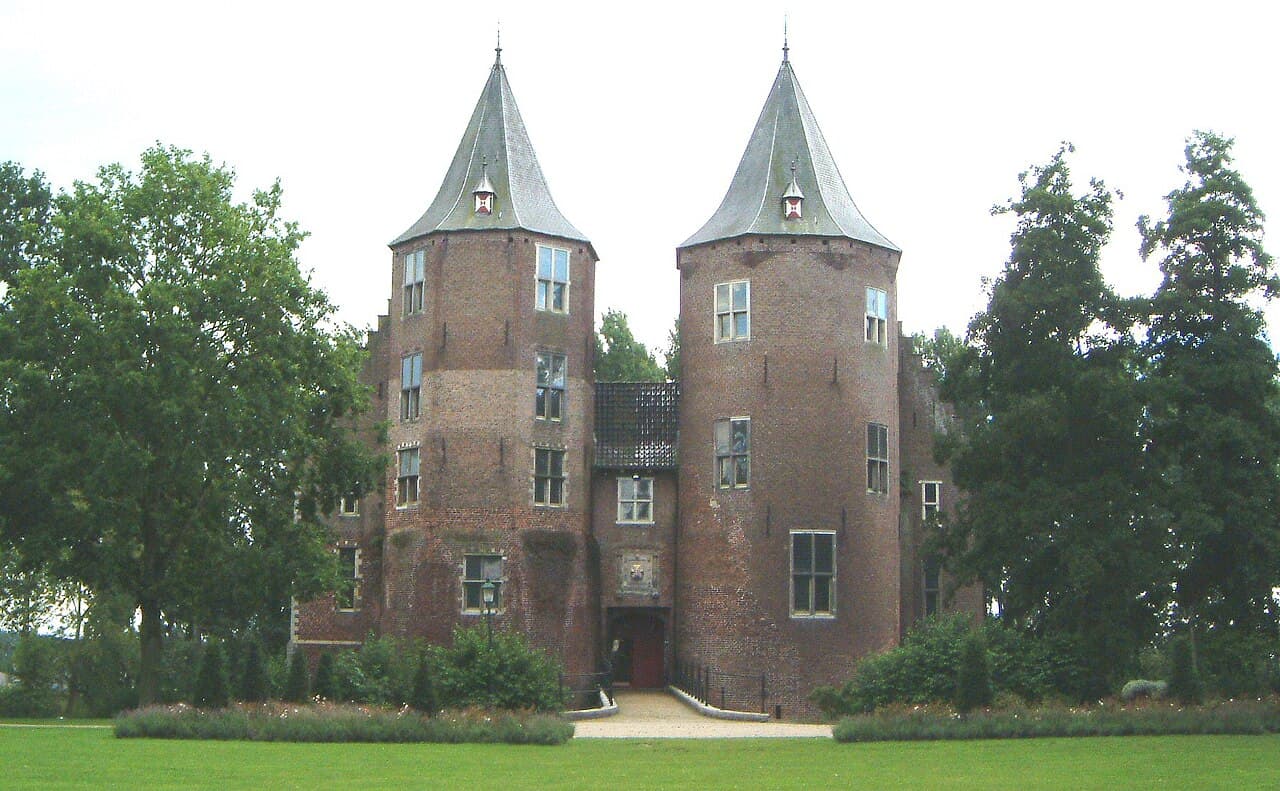
The castle's origins trace back to the late 14th century when Lord Arent van der Dussen received permission from Duke Albrecht in 1387 to construct a fortified house. Unlike many castles that evolved from earlier structures, Dussen Castle was built anew as a square fortress with sides measuring approximately 28 meters. The design featured a prominent entrance on the north side, flanked by two massive round towers projecting outward. The residential wings enclosed a raised courtyard on the other three sides, with a probable square keep located at the southeast corner. The walls were notably thick, ranging from 2.7 to 3 meters, providing formidable defense. An eastern tower near the entrance housed a pit prison, underscoring the castle's defensive and judicial functions.
Architectural design and medieval fortifications
The original construction of Dussen Castle reflected typical late medieval military architecture with its square layout, heavy curtain walls, and round towers designed to withstand siege warfare. The thick walls and strategic positioning of towers allowed defenders to cover all approaches effectively. The presence of a dungeon and a raised courtyard was characteristic of castles serving both as noble residences and military strongholds.
Following the devastating St. Elizabeth's flood of 1421, which severely damaged the castle, restoration efforts began about 50 years later. During these renovations, the castle's outer walls were hollowed out internally, reducing their thickness from 3 meters to about 1.2 meters to increase interior space. However, much of this 15th-century restoration was later lost due to damage sustained during the Eighty Years' War.
Historical events and ownership transitions
The castle suffered significant damage during a siege on April 7, 1573, when Spanish troops led by Nicolaas and Harra Basta captured it amid the conflict of the Eighty Years' War. The northwest corner was especially affected. In 1607, Lord Walraven, Baron of Ghent, acquired the castle and undertook partial rebuilding, including the addition of an arcade around the courtyard, though he left the damaged northwestern tower unrestored.
Subsequently, in 1620, the castle was sold to Eduart Jacot van Axel from Alkmaar, whose descendants maintained ownership until the 20th century. During the 18th and 19th centuries, the owners preferred to reside elsewhere, leading to the castle's gradual decline but also preserving its original medieval character by avoiding extensive renovations common in that era.
20th century restoration and modern use
In the early 1900s, the castle was briefly occupied by a religious order until 1920, after which it stood vacant until purchased by the Suringar family. The castle's unique history includes eccentric anecdotes, such as a female resident who insisted on nocturnal guards and unusual care for her donkey within the castle towers.
In 1935, the local municipality acquired Dussen Castle and initiated restoration to repurpose it as a town hall. Unfortunately, during World War II in 1944, heavy shelling caused severe damage, destroying one wing and damaging both towers. Post-war reconstruction from 1947 to 1953 restored much of the castle's structure.
Further renovations in 1980 helped preserve the castle, which today serves as a town hall and an event venue. The castle is surrounded by its original 14th-century moat, and its three residential wings enclose the courtyard, maintaining the medieval layout. The vaulted cellar, dating back to 1387, remains a significant historical feature, though it is not open to the public.
Cultural significance and visitor information
Dussen Castle is not only an architectural monument but also a cultural heritage site that reflects the history of North Brabant and the Netherlands. It hosts weddings, business meetings, and various events, accommodating up to 300 guests with full catering services available. The Friends of Castle Dussen Foundation organizes guided tours, offering visitors insights into the castle's rich past and architectural details.
The castle's preservation of its original moat and medieval defensive features makes it a valuable example of late medieval fortification in the Dutch context. Its layered history, from noble residence to religious use, wartime damage, and municipal function, illustrates the adaptive reuse of historic structures in modern times.
Architectural highlights
- Square layout with approximately 28-meter sides
- Two heavy, round projecting towers flanking the northern entrance
- Thick curtain walls originally 2.7 to 3 meters thick
- Raised courtyard enclosed by three residential wings
- Probable square keep at the southeast corner
- Dungeon with pit prison in the eastern tower
- Original 14th-century moat surrounding the castle
- Arcade around the courtyard added in the early 17th century
- Vaulted cellar dating back to 1387
Historical timeline
- 1330: Dungeon built by John VI of Heusden
- 1387: Construction of the castle began by Arent van der Dussen
- 1421: Severe damage caused by St. Elizabeth's flood
- 1473-1474: Rebuilding by Jan van der Dussen V
- 1573: Siege and capture by Spanish troops during the Eighty Years' War
- 1607: Acquisition and partial rebuilding by Lord Walraven
- 1620: Sale to Eduart Jacot van Axel and family ownership
- 1901-1920: Occupied by religious order
- 1935: Purchased by municipality and restoration began
- 1944: Damage from World War II shelling
- 1947-1953: Post-war reconstruction
- 1980: Renovations and preservation efforts
Visitor tips
Visitors interested in exploring Dussen Castle can join guided tours organized by the Friends of Castle Dussen Foundation. The castle is primarily used for events, so checking availability and tour schedules in advance is recommended. Its picturesque moat and medieval architecture offer excellent photographic opportunities, while the castle's event hosting capabilities make it a popular venue for weddings and corporate functions.
Frequently asked questions (FAQ)
- How do I visit Dussen Castle?
- Dussen Castle offers guided tours organized by the Friends of Castle Dussen Foundation. Visitors should check the foundation's website for tour dates, times, and ticket prices to plan their visit accordingly.
- What is the historical significance of Dussen Castle?
- Dussen Castle is a prime example of late medieval fortifications in the Netherlands, with a history spanning from its construction in 1387 through significant events like the St. Elizabeth's flood and the Eighty Years' War.
- Can I host events at Dussen Castle?
- Yes, Dussen Castle serves as an event venue accommodating up to 300 guests, offering facilities for weddings, business meetings, and other gatherings with catering services available.
- Is Dussen Castle accessible for visitors with mobility issues?
- While the castle is a historic structure, efforts have been made to accommodate visitors with mobility challenges. It is advisable to contact the castle's administration in advance to discuss specific accessibility needs.
- When is the best time to visit Dussen Castle?
- The castle can be visited year-round, but spring and summer offer the most pleasant weather for exploring the grounds and moat. Guided tours are scheduled periodically, so checking in advance is recommended.
Photo gallery

Photo by Ivory•Public domain
Information
Current owner
Municipality of Dussen
Address
Binnen 1, Dussen, Netherlands
Loading map...
Visitor reviews
No reviews yet. Been here? Write the first review and help other travelers!
Write the first reviewVisited this castle? Share your experience
Your review helps other travelers and adds first-hand knowledge to our encyclopedia.