Duntrune Castle
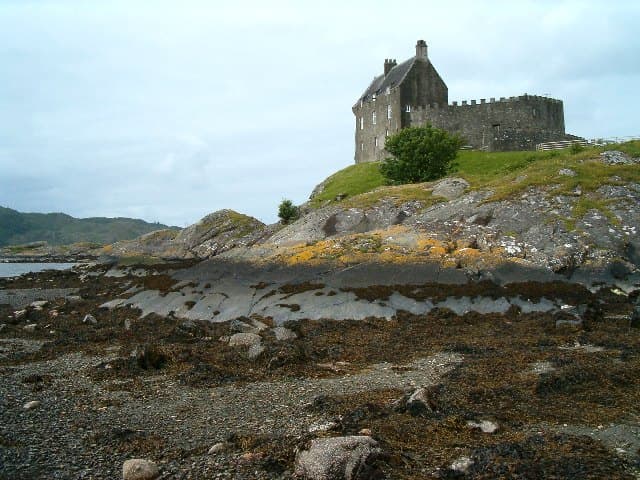
Duntrune Castle stands prominently on the north side of Loch Crinan, directly opposite the village of Crinan in the historic county of Argyll and Bute, Scotland. Recognized as the oldest continuously inhabited castle on mainland Scotland, Duntrune offers a remarkable glimpse into medieval Scottish history and architecture. The castle's enduring presence since the 12th century highlights its strategic importance and resilient construction through centuries of conflict and change.
Historical origins and clan heritage
The castle was originally constructed by the MacDougall clan in the 12th century, during the High Medieval period. The MacDougalls were a powerful family in Argyll and built several fortifications in the region, including Dunollie Castle near Oban. Duntrune was strategically placed to control access along the western coast and the vital waterways of Loch Crinan.
Ownership of the castle shifted over time, with the Clan Campbell eventually seizing control. The castle's strategic position made it a focal point in regional clan conflicts, notably during the turbulent 17th century. In 1644, Duntrune was besieged by the MacDonald clan, led by the famed warrior Alasdair MacColla, as part of the wider struggles during the Wars of the Three Kingdoms.
In 1792, the Campbells sold the castle to the Malcolms of Poltalloch. The castle remains in the hands of the Malcolm family, currently owned by Robin Neill Malcolm, the clan chief of Clan Malcolm, preserving its legacy as a living symbol of Scottish clan heritage.
Architectural features and construction phases
The castle's curtain walls date back to the 13th century, showcasing medieval defensive architecture designed to withstand sieges and attacks. These thick stone walls form a protective enclosure around the main structures and courtyard.
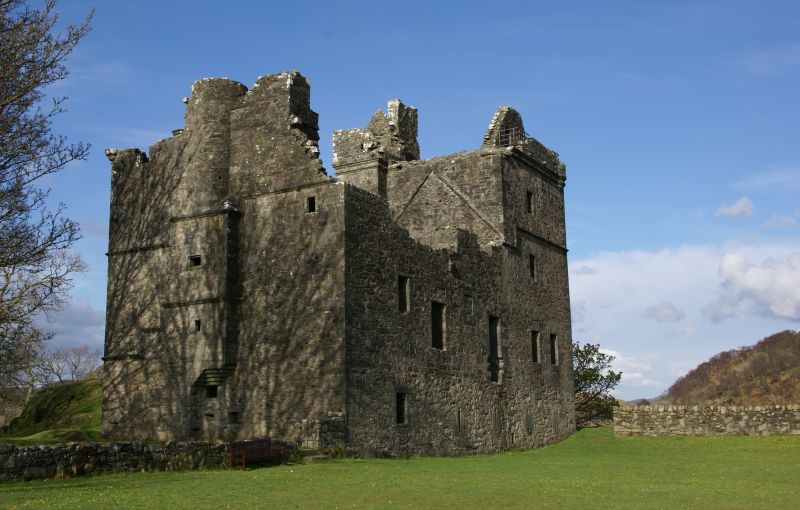
The main residential structure of Duntrune Castle is a 17th-century tower house, which was added during a period of renovation and expansion. This tower house serves as the central living quarters and is an excellent example of Scottish tower house architecture, characterized by its vertical emphasis, narrow windows, and defensive features such as battlements and gun loops.
The castle's gatehouse, which controls the main approach, is also a significant architectural element. Although it is separately listed as a Category B building, the gatehouse integrates seamlessly with the castle's overall defensive design. It was constructed or substantially rebuilt in the 17th century, reflecting evolving military needs and architectural styles of the period.
Renovations and preservation
Duntrune Castle underwent significant renovations in 1954, which helped preserve its structural integrity and historical character. These works ensured that the castle remained habitable and safeguarded its medieval features while adapting to modern living standards.
Today, the castle is well-preserved and retains much of its original medieval fabric, making it a valuable example of High Medieval and early modern Scottish castle architecture. Its status as a Category B listed building by Historic Scotland underscores its architectural and historical importance.
Landscape and setting
The castle is set within grounds that were included in the Inventory of Gardens and Designed Landscapes of Scotland in 1987, highlighting the cultural and aesthetic value of its surrounding environment. The location on Loch Crinan provides natural defensive advantages and stunning views, enhancing its strategic and residential appeal.
The proximity to the village of Crinan and the Crinan Canal adds to the castle's historical significance as a point of control over important maritime routes in western Scotland.
Significance in Scottish history
Duntrune Castle's continuous occupation since the 12th century makes it a rare and important monument in Scottish history. It reflects the evolution of castle architecture from the early medieval period through the Renaissance and into the modern era.
The castle's association with prominent Scottish clans such as the MacDougalls, Campbells, MacDonalds, and Malcolms illustrates the complex and often turbulent history of clan rivalries and alliances that shaped Scotland's cultural landscape.
Its survival through sieges, ownership changes, and centuries of political upheaval attests to the resilience of its design and the significance placed on it by its successive owners.
Visiting Duntrune Castle
While Duntrune Castle remains a private residence, its historical and architectural significance attracts interest from historians, architects, and enthusiasts of Scottish heritage. The castle's well-preserved state offers insights into medieval defensive strategies and domestic life in a Scottish castle.
The castle's inclusion in heritage listings and inventories ensures ongoing protection and recognition as a cultural landmark.
Frequently asked questions (FAQ)
- When was Duntrune Castle built and by whom?
- Duntrune Castle was built in the 12th century by the MacDougall clan during the High Medieval period.
- What is the significance of Duntrune Castle in Scottish history?
- Duntrune Castle is the oldest continuously inhabited castle on mainland Scotland, reflecting centuries of clan history and architectural evolution.
- Can I visit Duntrune Castle?
- Duntrune Castle is a private residence and not generally open to the public, but its exterior and grounds can be appreciated from nearby public areas.
- What architectural features does Duntrune Castle have?
- The castle features 13th-century curtain walls and a 17th-century tower house and gatehouse, showcasing medieval defensive architecture and later expansions.
- Who owns Duntrune Castle today?
- The castle is currently owned by Robin Neill Malcolm, the chief of Clan Malcolm.
Photo gallery

Information
Sources & official resources
Verify the information above using these authoritative references.
Loading map...
Visitor reviews
No reviews yet. Been here? Write the first review and help other travelers!
Write the first reviewVisited this castle? Share your experience
Your review helps other travelers and adds first-hand knowledge to our encyclopedia.