Dunadd Hill Fort
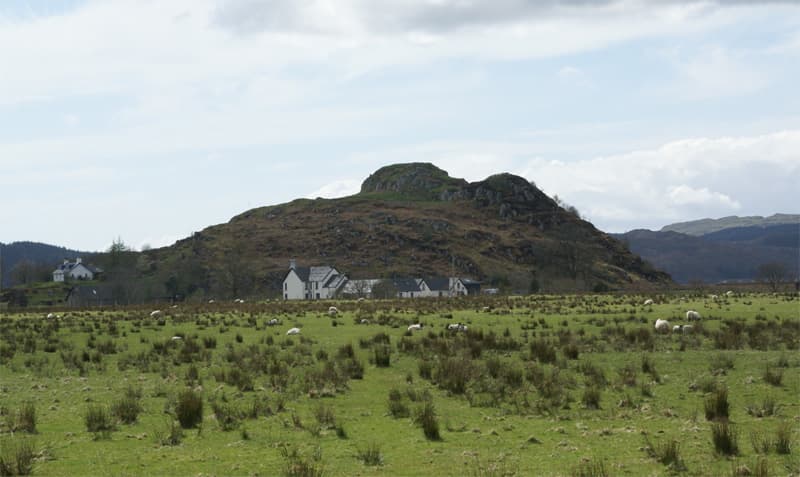
Dunadd hill fort is a significant archaeological site located near Kilmartin in Argyll and Bute, Scotland. This site, dating back to the Iron Age and extending into the early medieval period, served as a major stronghold and royal center for the ancient kingdom of Dál Riata. Dál Riata was a Gaelic kingdom that spanned parts of what is now western Scotland and northeastern Ireland during the early centuries AD. The fort's strategic position on a rocky hilltop overlooking the surrounding landscape made it an ideal location for defense and control.
Historical significance of Dunadd hill fort
Dunadd is renowned as the probable capital of Dál Riata, a kingdom that played a crucial role in the early medieval history of Scotland and Ireland. The site was originally occupied during the Iron Age, but it gained prominence in the 8th century AD as a royal fortress. Historical records such as the Annals of Ulster mention Dunadd multiple times, highlighting its importance in regional conflicts and power struggles. In 683 AD, the annals record the "siege of Dún At," and in 736 AD, they describe how Aengus, son of Fergus and king of the Picts, captured and burned Dunadd, taking prisoners from the ruling family of Dál Riata.
Despite these conflicts, archaeological evidence shows that Dunadd continued to be occupied into the 9th century and retained a degree of significance for centuries afterward. It is mentioned in documents as late as the 15th and early 16th centuries, notably in 1436 when Alan MacLachlan of Dunadd was appointed seneschal of the lands of Glassary, indicating the site's continued association with local nobility. In 1506, royal commissioners met at Dunadd to collect rents and settle disputes, demonstrating its ongoing administrative role.
Archaeological features and discoveries
The fort sits atop a flat rock outcrop, which contains several remarkable carved features. Among these are a footprint and basin carved into the stone, believed to have been used in the coronation rituals of Dál Riata kings. These carvings are unique and provide rare insight into the ceremonial practices of early medieval Scotland. Nearby, there is an incised boar in Pictish style and an Ogham inscription referencing a figure named Finn Manach, dated to the late 8th century or later.
Excavations conducted in the 20th century (notably in 1904–05, 1929, and 1980) have uncovered a rich assemblage of artifacts spanning from the 6th to the 8th centuries AD. These finds include tools, weapons, quernstones for grinding grain, imported pottery, and molds for producing fine metalwork and jewelry. Such discoveries highlight Dunadd as a center of craftsmanship and trade, reflecting its status as a royal seat.
Architectural characteristics of the hill fort
Dunadd is classified as a hillfort, characterized by its elevated position and natural defenses. The fort's layout includes an upper enclosure on the summit of the hill, surrounded by defensive ramparts and ditches. The rocky outcrop itself was modified with stone walls and earthworks to enhance its defensibility.
The site’s design reflects typical Iron Age fortification principles, adapted over time to meet the needs of early medieval rulers. Its commanding views allowed control over the surrounding territory and access routes, essential for maintaining power in a turbulent historical period marked by frequent warfare and shifting alliances.
Legacy and cultural importance
Dunadd remains one of the most important archaeological sites in Scotland for understanding the early medieval kingdom of Dál Riata. Its well-preserved ruins and distinctive carvings provide valuable evidence of the political and cultural landscape of the time. The site is a focus for historians and archaeologists studying the transition from Iron Age societies to medieval kingdoms in Britain.
Today, Dunadd is protected as a scheduled monument and attracts visitors interested in Scotland's ancient history. Its evocative ruins and striking location offer a tangible connection to the past, illustrating the complex history of power, identity, and cultural exchange in early medieval Scotland.
Visiting Dunadd hill fort
The site is accessible to the public, though visitors should be prepared for a steep climb to reach the summit. Interpretive signage provides information about the site's history and archaeological significance. Dunadd's remote setting in Argyll and Bute also makes it a destination for those interested in scenic landscapes and outdoor exploration.
Efforts continue to preserve the site and promote awareness of its historical value. Dunadd is a key highlight in the study of early Scottish history and remains a symbol of the ancient kingdom of Dál Riata.
Frequently asked questions (FAQ)
- How do I get to Dunadd Hill Fort?
- Dunadd Hill Fort is located in Argyll and Bute, easily accessible by car or public transportation. The nearest town is Kilmartin, from where you can take a short walk to the fort. Be sure to check local travel schedules for the best routes.
- What is the historical significance of Dunadd Hill Fort?
- Dunadd Hill Fort is an ancient stronghold that dates back to the 6th century and served as a capital for the Kingdom of Dal Riata. It is a vital archeological site that offers insights into early Scottish history and the Gaelic culture. The site features a footprint stone and other remnants that indicate its importance as a ceremonial and political center.
- When was Dunadd Hill Fort built?
- Dunadd Hill Fort was established around the 6th century AD and remained significant for several centuries as a royal site. Archaeological evidence suggests it was continuously occupied until the 10th century. Its long history reflects the development of early Scottish kingdoms.
- Can I visit Dunadd Hill Fort year-round?
- Yes, Dunadd Hill Fort is open to visitors throughout the year, although access may vary depending on weather conditions. It's advisable to check local guidance and the fort's condition before planning your visit. Always dress appropriately for outdoor exploration.
- Why is Dunadd Hill Fort a popular attraction?
- Dunadd Hill Fort is renowned for its rich history and stunning views of the surrounding landscape. Visitors are drawn to its archaeological significance and the opportunity to connect with Scotland's ancient past. Additionally, the site is a great spot for hiking and enjoying the natural beauty of Argyll.
- Is it possible to access Dunadd Hill Fort with limited mobility?
- While Dunadd Hill Fort may present challenges for those with limited mobility due to its elevated location and uneven terrain, there are paths leading to the site. It is advisable to contact local visitor services for specific accessibility options and assistance before your visit.
- What are the opening hours for Dunadd Hill Fort?
- Dunadd Hill Fort is generally open to the public from dawn until dusk, allowing visitors ample time to explore. However, specific opening times may vary seasonally, so checking local resources or the official website before your visit is recommended. Ensure you plan your visit accordingly to make the most of your experience.
- Are there any ticket prices to visit Dunadd Hill Fort?
- There is no admission fee to visit Dunadd Hill Fort, making it an accessible attraction for all visitors. However, donations are appreciated to help maintain the site and its facilities. Be sure to support local heritage initiatives during your visit.
- What nearby attractions should I consider visiting?
- While at Dunadd Hill Fort, consider exploring the nearby Kilmartin Glen, known for its rich collection of prehistoric monuments and stone circles. The Kilmartin Museum is also highly recommended, offering insights into the area's archaeological significance. These sites complement your visit to Dunadd and enrich your understanding of Scotland's history.
Photo gallery

Information
Loading map...
Visitor reviews
No reviews yet. Been here? Write the first review and help other travelers!
Write the first reviewVisited this castle? Share your experience
Your review helps other travelers and adds first-hand knowledge to our encyclopedia.