Barcaldine Castle
Barcaldine Castle stands as a remarkable example of a 17th-century Scottish tower house, located near the village of Benderloch in Argyll and Bute, Scotland. Constructed between 1601 and 1609 by Sir Duncan Campbell of Glenorchy, the castle embodies the architectural and historical heritage of the Scottish Renaissance period. Its L-shaped design and defensive features reflect the dual residential and military functions typical of Scottish strongholds of its era.
Architectural features and construction
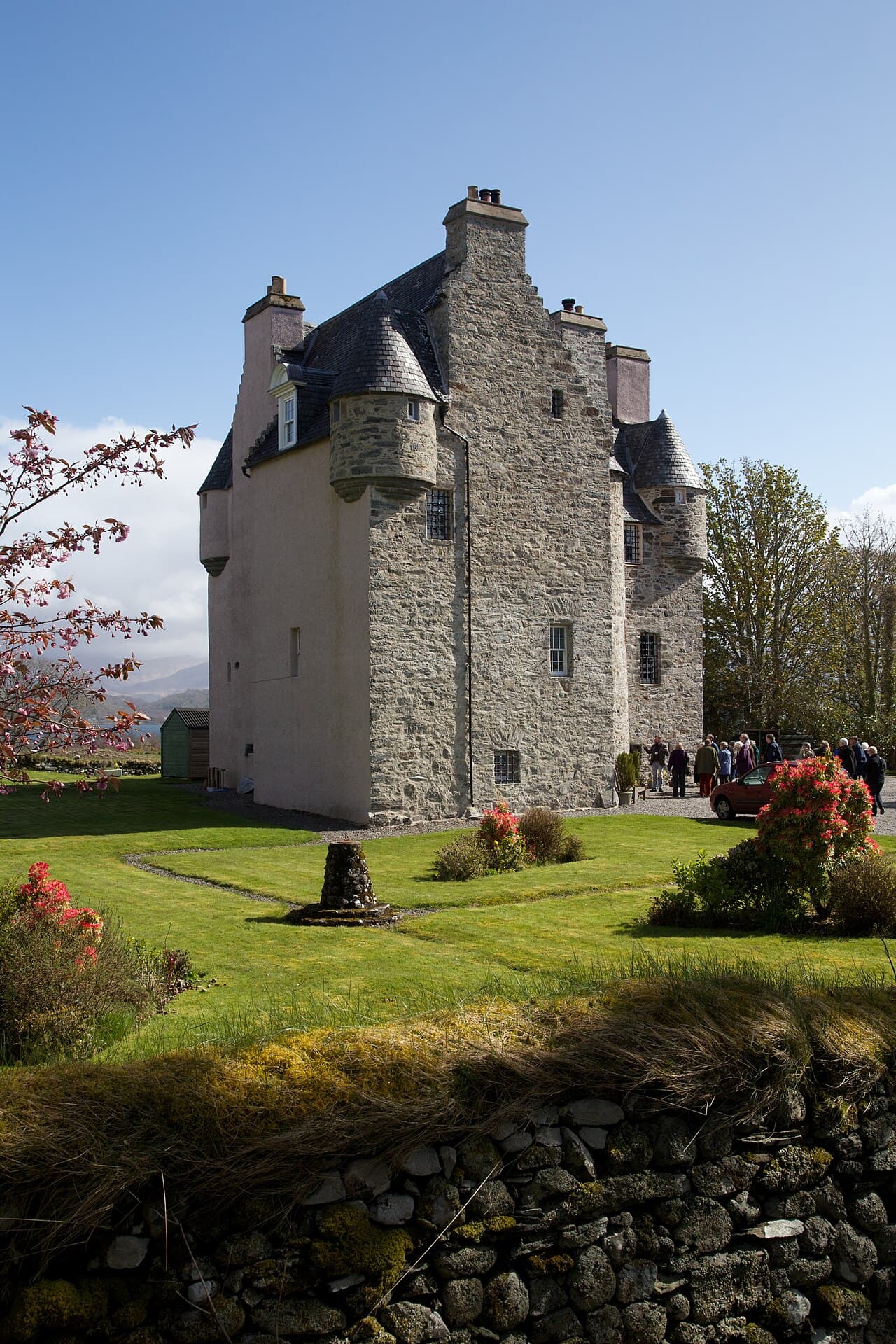
The castle is primarily built from rubble stone masonry, a common material in Scottish castles, providing both strength and resilience. The structure rises three stories high with an L-shaped plan, a design that allowed for both efficient use of space and enhanced defense. At the inner corner of the "L" stands a distinctive round stair tower topped with a conical slate roof, which houses the main entrance. This entrance is secured by an oak door reinforced with an iron gate, emphasizing the castle's defensive nature.
Each corner of the main block features turrets, with three being oriel towers that project outward, covered by half-conical slate roofs. The main roof is pitched and clad in slate, punctuated by dormer windows that illuminate the attic spaces. The castle's outer walls have been restored with traditional Scottish harling, a roughcast render that protects the masonry and preserves its historic character.
Internally, the castle includes a vaulted basement containing the kitchen and storage cellars, highlighting the practical aspects of household management in the 17th century. Notably, the presence of a bottle dungeon—a small, windowless prison chamber shaped like an upside-down bottle—demonstrates the castle's defensive and punitive functions. Additionally, two concealed passageways hint at the strategic need for secrecy and protection during times of conflict.
Historical context and significance
Barcaldine Castle was built shortly after the Campbells acquired the land in 1597, marking their expanding influence in the region. The castle served as the family residence for the Campbells of Glenorchy and played a military role, evidenced by its garrisoning in 1645 and 1687. These periods correspond to turbulent times in Scottish history, including the Wars of the Three Kingdoms and subsequent clan conflicts.
In the late 17th century, the Campbells of Barcaldine attempted to assert their authority through a military incursion into Caithness to reclaim debts, an effort that ultimately failed but underscored their regional power. Their status was further elevated when they were granted the Earldom of Breadalbane, reflecting their prominence in Scottish nobility.
Despite its initial importance, the castle fell into disrepair by the end of the 17th century, with repair attempts in the early 1700s proving insufficient. By 1724, the family had moved to the nearby Barcaldine House, signaling a shift away from the tower house as their primary residence.
The castle's history is intertwined with notable events such as the 1752 murder of Sir Colin Campbell of Glenure, known as the "Red Fox," a crime immortalized in Robert Louis Stevenson's novel Kidnapped. The Barcaldine Campbells' connection to this event adds a layer of historical intrigue to the site.
In the 19th century, the family was elevated to baronetcy in 1841, but the castle was sold the following year. It was reacquired in 1896, and between 1897 and 1911, extensive restoration was carried out under architect Alexander Buttar, reviving the castle from near ruin.
The castle also witnessed the aftermath of the 1692 Massacre of Glencoe, during which it came under attack. Recognizing its cultural and architectural value, Barcaldine Castle was designated a Category A listed building in 1971, marking it as a site of national importance in Scotland.
Location and surroundings
Situated approximately 500 meters south of Loch Creran, the castle commands views over the loch and the surrounding Glen Coe mountains. This strategic position would have been vital for surveillance and defense, allowing the occupants to monitor both land and water approaches.
Nearby, the Barcaldine Stones—two standing prehistoric stones located west of the main A828 road—add an archaeological dimension to the castle's setting, linking the site to ancient human activity in the region.
Restoration and current status
By the late 19th century, Barcaldine Castle had fallen into significant ruin, with its roof collapsed and walls deteriorating. The restoration efforts led by Alexander Buttar between 1897 and 1911 were crucial in stabilizing the structure and restoring its historical features. These works included repairing the roof, restoring the harling on the walls, and preserving key architectural elements such as the turrets and stair tower.
Today, Barcaldine Castle operates as a bed and breakfast hotel, allowing visitors to experience its historic ambiance firsthand. The castle remains privately owned and stands as a testament to Scotland's rich architectural and clan heritage, attracting guests interested in history, architecture, and the scenic beauty of Argyll and Bute.
Architectural legacy and cultural importance
Barcaldine Castle exemplifies the Renaissance architectural style as adapted in Scottish tower houses, blending defensive features with residential comforts. Its combination of turrets, vaulted basements, concealed passageways, and bottle dungeon offers a comprehensive insight into the multifaceted nature of Scottish castles during the early 1600s.
The castle's historical associations with the powerful Campbell clan and its role in regional conflicts and clan politics underscore its significance in Scottish history. Its survival and restoration contribute to the understanding of Scotland's architectural evolution and the social dynamics of its noble families.
Frequently asked questions (FAQ)
- How do I visit Barcaldine Castle?
- Barcaldine Castle operates as a bed and breakfast hotel, so visitors can stay overnight or arrange visits by contacting the owners directly. It is located near Benderloch in Argyll and Bute, Scotland.
- What is the historical significance of Barcaldine Castle?
- Barcaldine Castle was built in the early 17th century by the Campbells of Glenorchy and played a role in Scottish clan history, including military garrisoning and connections to notable events like the 1752 murder of Sir Colin Campbell of Glenure.
- When was Barcaldine Castle restored?
- The castle was restored between 1897 and 1911 under architect Alexander Buttar, reviving it from a state of ruin and preserving its Renaissance architectural features.
- Can I see the Barcaldine Stones near the castle?
- Yes, the Barcaldine Stones are two standing prehistoric stones located near the castle, west of the main A828 road, adding archaeological interest to the visit.
- Is Barcaldine Castle open to the public?
- While primarily a private residence and bed and breakfast, Barcaldine Castle can be visited by guests who book accommodations or arrange visits in advance.
Photo gallery

Information
Sources & official resources
Verify the information above using these authoritative references.
Loading map...
Visitor reviews
No reviews yet. Been here? Write the first review and help other travelers!
Write the first reviewVisited this castle? Share your experience
Your review helps other travelers and adds first-hand knowledge to our encyclopedia.