Dunfermline Palace
Dunfermline Palace stands as a significant historical monument nestled in Dunfermline, Scotland, bearing witness to centuries of royal history and architectural evolution. Originating in the 11th century, the site gained prominence when Malcolm III established Dunfermline as his capital, marking the beginning of its royal associations. The original royal seat, known as Malcolm's Tower, was located just west of the later palace site, underscoring the area's early importance to Scottish monarchy.
The palace's origins are closely intertwined with Dunfermline Abbey, a major religious institution whose guest house formed the nucleus of the palace complex. By the 14th century, this guest house had evolved into a royal residence, hosting significant events such as the births of David II and James I. Around 1500, under the reign of James IV, the palace underwent extensive remodeling, transitioning from monastic lodgings to a formal royal palace. This period saw the introduction of Renaissance architectural elements, reflecting contemporary tastes and the crown's growing prestige.
Architectural development and royal enhancements
The early 16th century was a vibrant period for Dunfermline Palace. James IV and his queen, Margaret Tudor, frequently resided here, emphasizing the palace's role as a favored royal home. Successive monarchs, including James V and Mary of Guise, continued to utilize the palace, with Mary, Queen of Scots visiting in 1562 to engage in diplomatic discussions, notably concerning potential meetings with Queen Elizabeth I.
A pivotal moment came in 1589 when James VI gifted the palace to his queen, Anne of Denmark, as a wedding present. Anne significantly enhanced the palace's facilities, commissioning the construction of the Queen's House in 1600. This cruciform building featured a distinctive vaulted passageway, or pend, running through its cellar, which served as a grand entrance and replaced an earlier gateway. The Queen’s House exemplified Renaissance architectural innovation and royal luxury.
Strategic location and structural features
Dunfermline Palace occupies a commanding position between Dunfermline Abbey and a deep gorge to the south, highlighting its strategic and scenic importance. The palace was linked to the abbey’s residential buildings by a gatehouse constructed above a pend, a covered passageway that also functioned as a medieval town gate or yett. The original palace structure, dating from the early 14th century, was a two-story guest house with storage rooms below, reflecting its monastic origins.
The remodeling under James IV around 1500 established much of the palace's later architectural form. Notably, in 1590, the master of works William Schaw rebuilt the western section almost entirely and installed large rectangular windows on the first floor, enhancing natural light and elegance. The palace featured battlements and stair towers topped with conical roofs, blending defensive elements with Renaissance stylistic details.
Architectural remnants and decorative elements
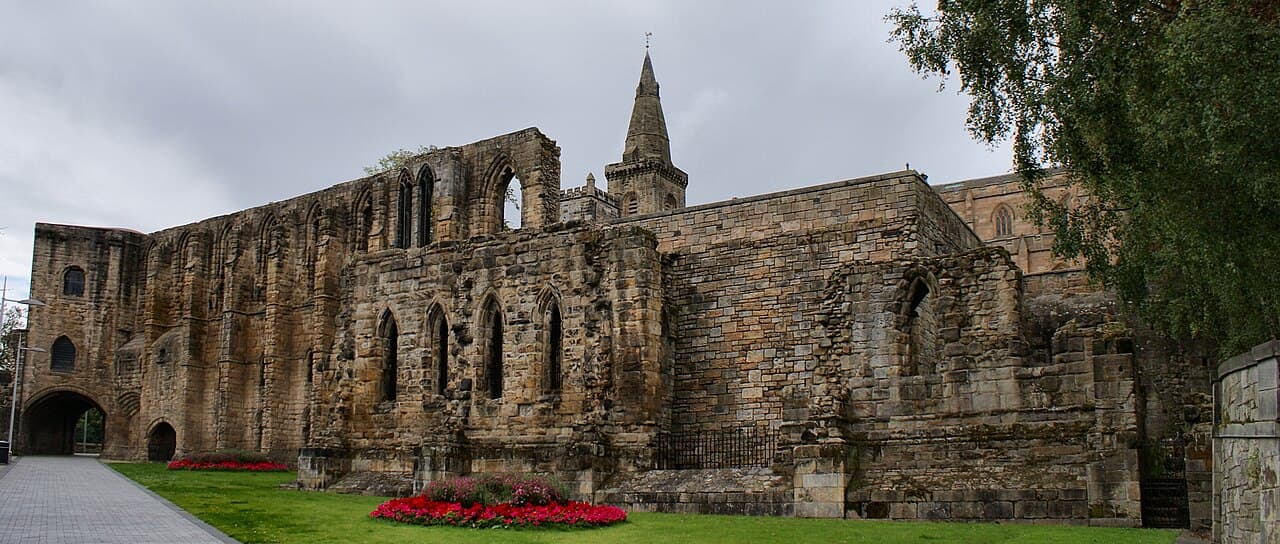
Today, surviving parts of the palace include the kitchen areas, cellars, and a prominent south wall offering expansive views over the Firth of Forth. This wall's commanding position underscores the palace’s strategic location. Among the decorative stonework preserved is a carved panel depicting the Annunciation, featuring the Archangel Gabriel and the Virgin Mary. This fragment originally formed part of a window and is now housed in the palace museum.
Recreational and residential aspects
The palace grounds once included a tennis court situated within the former abbey cloister, between the monastic refectory and the tower. Historical illustrations reveal a complex with battlements and towers, indicating both defensive and aesthetic considerations. The palace also contained residences for senior officials managing Anne of Denmark’s estates, located near the abbey’s west front.
Historical significance and royal occupancy
The palace remained a key royal residence through the 16th century. After the Union of the Crowns in 1603, when the Scottish court moved to London, Dunfermline Palace’s importance declined. However, it still served as the childhood home of Prince Charles (later Charles I) until 1604. Charles I returned briefly in 1633 for his Scottish coronation, and Charles II was the last monarch to reside at the palace in 1650 before the Battle of Pitreavie.
Following the Cromwellian occupation, the palace fell into disuse and decay. By the early 18th century, it was roofless, and the Queen’s House was demolished in 1797. Despite the lack of formal archaeological excavations, historical documents and artistic depictions have chronicled the palace’s architectural evolution and its gradual decline.
Materials and construction techniques
While detailed records of construction materials are limited, surviving accounts mention the use of stone masonry combined with timber for royal lodgings and lead roofing, typical of grand Renaissance buildings. Repairs to roofing and structural elements were documented, indicating ongoing maintenance during its active use.
Cultural heritage and preservation
Today, Dunfermline Palace stands as a partially preserved ruin, offering valuable insights into Scotland’s royal past and architectural heritage. Its close association with Dunfermline Abbey and its role in the lives of notable monarchs make it a site of considerable cultural significance. The palace’s remains, including its distinctive vaulted pend and stone carvings, continue to attract historians, architects, and visitors interested in Scotland’s medieval and Renaissance history.
Efforts to maintain and interpret the site have ensured that Dunfermline Palace remains an important monument within Scotland’s historic landscape, highlighting the intersection of monastic, royal, and architectural history over several centuries.
Frequently asked questions (FAQ)
- What is the historical significance of Dunfermline Palace?
- Dunfermline Palace was a royal residence closely linked to Scottish monarchs from the 11th century through the 17th century. It served as a favored home for kings and queens, including James IV, Mary, Queen of Scots, and Anne of Denmark, reflecting its importance in Scotland's royal history.
- Can visitors explore the remains of Dunfermline Palace today?
- Yes, visitors can explore the partially preserved ruins of Dunfermline Palace, including its kitchen areas, cellars, and the south wall with views over the Firth of Forth. The site is open daily from 10:00 to 16:00 and admission is free.
- What architectural styles are represented at Dunfermline Palace?
- Dunfermline Palace features a mix of medieval and Renaissance architectural elements. The original monastic guest house evolved into a formal palace with Renaissance features such as large rectangular windows and the cruciform Queen's House with a vaulted pend.
- When was the Queen's House added to Dunfermline Palace and what was its purpose?
- The Queen's House was constructed in 1600 by Anne of Denmark as part of the palace complex. It featured a distinctive cross-shaped plan with a vaulted passageway (pend) through its cellar, serving as a grand entrance and enhancing the palace's facilities.
- Why did Dunfermline Palace decline in importance after 1603?
- The Union of the Crowns in 1603 led to the Scottish royal court relocating to London, which significantly reduced Dunfermline Palace's role as a royal residence. Although it remained in use for some years, it gradually fell into disuse and decay.
Photo gallery

Information
Opening hours
10:00-16:00, daily
Ticket prices
Free
Current owner
Historic Environment Scotland
Website
Visit websiteSources & official resources
Verify the information above using these authoritative references.
Loading map...
Visitor reviews
No reviews yet. Been here? Write the first review and help other travelers!
Write the first reviewVisited this castle? Share your experience
Your review helps other travelers and adds first-hand knowledge to our encyclopedia.