Dundrum Castle
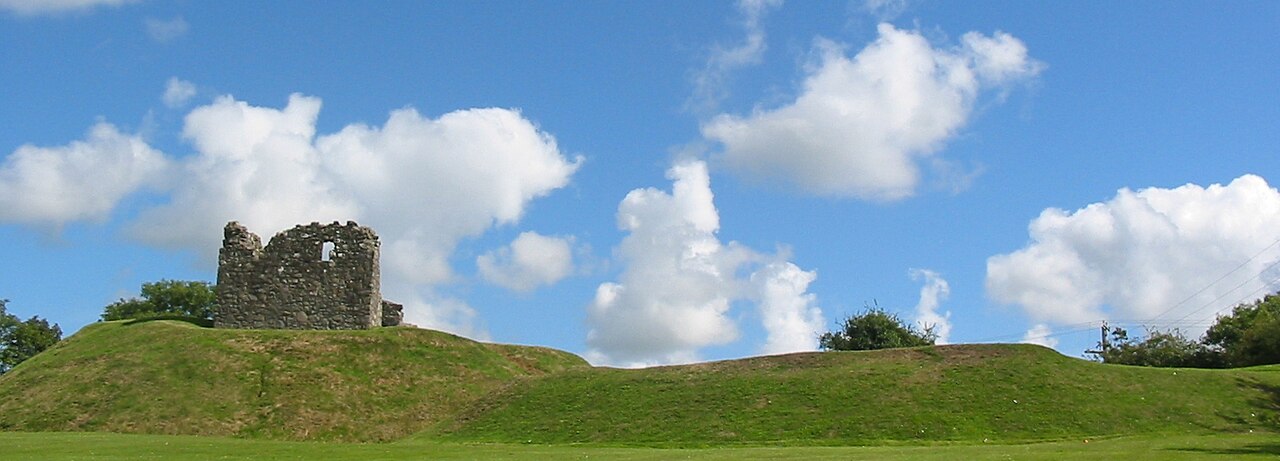
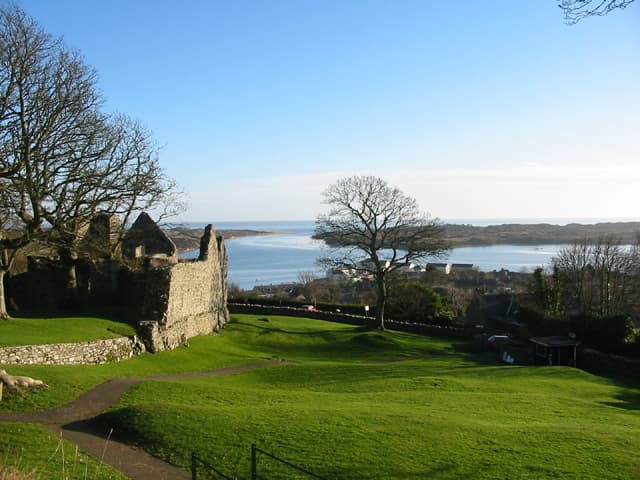
Dundrum Castle is a prominent Norman castle ruin located above the town of Dundrum in County Down, Northern Ireland. Founded in 1177 by John de Courcy following his invasion of Ulster, the castle was strategically positioned on a rocky hilltop to control access into the Lecale barony from the west and south. This commanding location offers expansive views over Dundrum Bay to the south and across the surrounding countryside, including the Mourne Mountains and the plains of Lecale.
The earliest fortifications at Dundrum were likely composed of earth and timber defenses, typical of early Norman military architecture. However, by the late 12th century, the castle saw the construction of a stone polygonal curtain wall enclosing the upper ward, which is surrounded by a substantial rock-cut ditch. This curtain wall, probably built in the 1180s, lacked towers initially but featured covered wall walks along its exterior for defense.
Architectural evolution and key features
The curtain wall and upper ward
The polygonal curtain wall of the upper ward is a significant feature, enclosing the main defensive area of the castle. It includes a double-latrine built into the curtain wall near the site of an early timber hall, suggesting the presence of domestic buildings within the enclosure. The absence of towers in the original curtain wall design aligns with early Norman fortification styles, where defense relied on high walls and protected wall walks.
The massive round keep
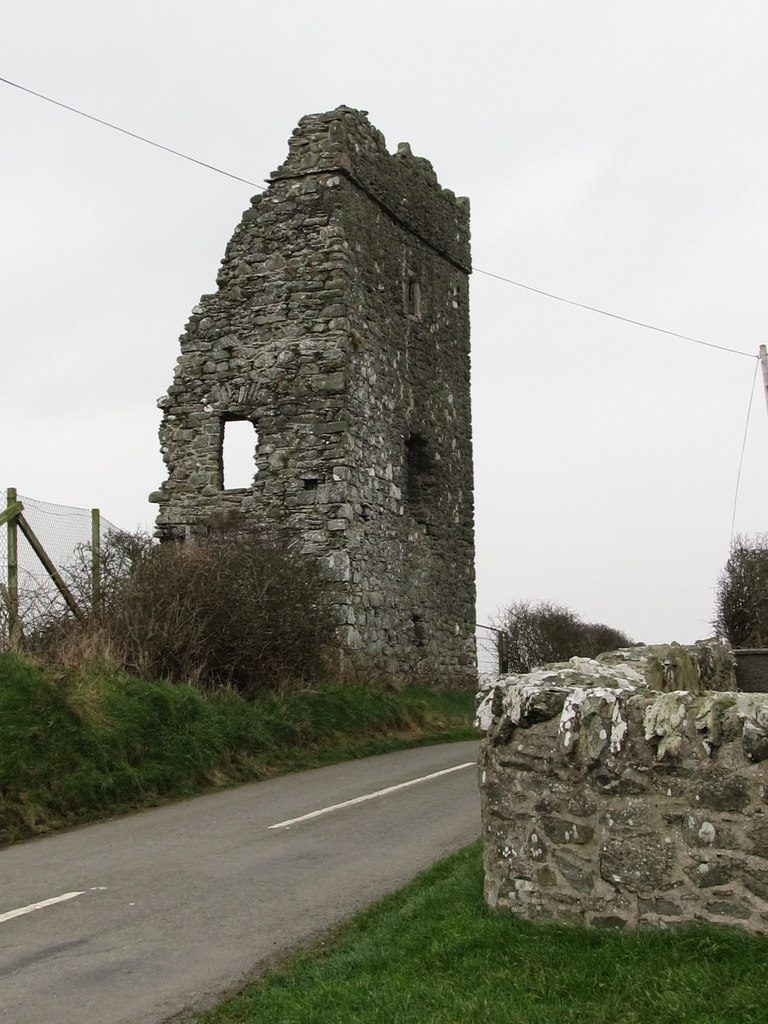
In 1210, King John captured Dundrum Castle and undertook major strengthening works, including the construction of a massive round keep. This keep, likely built by masons experienced in the Welsh Marches where round keeps were popular, originally stood at least three storeys high. The basement served as storage and included a cistern below the first floor. The first floor functioned as the great chamber for the lord's daily activities, while the upper floors housed private chambers. Architectural evidence such as the survival of the original fireplace flue and spiral staircase confirms the keep's original height and layout. The keep was partially rebuilt in the 15th century but retains much of its early medieval character.
Gatehouse and outer defenses
A twin-towered gatehouse was added in 1260 on the southeast side of the enclosure. This gatehouse features an unusual lopsided design with only one projecting tower protecting the approach along a narrow ramp from the southwest. Its design bears resemblance to the gatehouse at Pembroke Castle, reflecting architectural influences from contemporary fortifications.
In the late medieval period, the Magennis family added a second circuit of walls forming an outer bailey below the original castle. These outer defenses included a stone curtain wall likely constructed by the Mac Artáin chiefs, who controlled Dundrum in the late 15th century. The outer bailey provided additional protection and space for domestic buildings and ancillary functions.
Historical context and ownership changes
Founding and early conflicts
John de Courcy established Dundrum Castle as part of his campaign to conquer Ulster. By 1204, the castle was captured by Hugh de Lacy, who expelled de Courcy from the region. De Courcy attempted to retake the castle in 1205 with naval support from his brother-in-law, Rǫgnvaldr Guðrøðarson, King of the Isles, but failed.
Royal control and enhancements
King John seized the castle in 1210, strengthening its defenses with the construction of the round keep. The castle remained Crown property until Hugh de Lacy was reinstated as Earl of Ulster in 1226. During de Lacy's second tenure (1227–1243), the twin-towered gatehouse was added, enhancing the castle's southern defenses.
Medieval and early modern transitions
By the 1330s, Dundrum Castle was in poor condition when the Magennis family took control. They fortified the site further with the outer bailey walls. The castle's ownership changed hands multiple times in the 16th and 17th centuries, reflecting the turbulent political landscape of Ireland. It was captured by the Earl of Kildare in 1517 and by Lord Deputy Grey in 1538. In 1601, it was surrendered to Lord Mountjoy, then transferred to Lord Cromwell in 1605, and sold to Sir Francis Blundell in 1636.
Sieges, dismantling, and later use
The Magennis family briefly recaptured Dundrum in 1642 during the Irish Confederate Wars but lost it to the Parliamentarians, who dismantled the castle in 1652 after withdrawing their garrison. Following the Restoration in 1660, the Blundells returned and constructed a gabled L-shaped mansion within the southwest corner of the outer bailey. By the early 19th century, this mansion had fallen into ruin, and the estate passed to the second Marquess of Downshire, who likely planted the trees currently seen on the hill.
Cultural significance and current status
Dundrum Castle is an important example of Norman military architecture in Northern Ireland, illustrating the evolution of castle design from timber fortifications to complex stone structures with multiple defensive layers. Its location provides strategic views and control over access routes into Lecale, underscoring its historical military significance.
Today, Dundrum Castle is managed as a State Care Historic Monument and is open to visitors for a small fee. The site attracts tourists, history enthusiasts, and school groups interested in medieval architecture and Irish history. Despite its ruined condition, the castle's extensive remains, including the curtain walls, round keep, gatehouse, and outer bailey, offer valuable insights into medieval fortification techniques and the region's turbulent past.
Frequently asked questions (FAQ)
- How do I get to Dundrum Castle?
- Dundrum Castle is located on Castle Hill in the United Kingdom of Great Britain and Northern Ireland. Visitors can reach the castle by car, with parking available nearby, or by using public transport options, including buses that serve the area. The castle is also accessible via scenic walking trails that offer beautiful views of the surrounding landscape.
- What is the historical significance of Dundrum Castle?
- Dundrum Castle dates back to the 12th century and is a prime example of Norman military architecture in Ireland. Its historical significance lies in its strategic location and its role in the defense against invasions. The castle has witnessed numerous historical events and has been a focal point of local heritage.
- When was Dundrum Castle built?
- Construction of Dundrum Castle began in the 12th century, specifically around 1177, under the command of the Anglo-Norman lord, John de Courcy. The castle was expanded and modified over the centuries, reflecting the architectural styles and military needs of the time. Today, it stands as a testament to medieval engineering and history.
- Can I enter Dundrum Castle?
- Visitors are welcome to explore the grounds of Dundrum Castle, which is mostly an open-air historic site. While there may be limited access to certain areas due to preservation efforts, the impressive ruins and panoramic views from the castle are accessible to all. Be sure to check for any special events or guided tours that may enhance your visit.
- Why is Dundrum Castle a popular tourist destination?
- Dundrum Castle attracts tourists for its rich history, stunning architecture, and breathtaking views of the surrounding countryside. The castle's picturesque setting and historical significance make it a favorite spot for photography and exploration. Additionally, its proximity to other attractions in the area enhances its appeal.
- Is it possible to visit Dundrum Castle year-round?
- Yes, Dundrum Castle is open to visitors year-round, although specific opening hours may vary by season. It is advisable to check the official website or local tourism information for the most current details on visiting times. Each season offers a unique experience, with the castle surrounded by changing landscapes.
- What are the ticket prices for Dundrum Castle?
- Admission to Dundrum Castle is typically free, allowing everyone to enjoy this historical site without a fee. However, there may be charges for special guided tours or events, so it’s a good idea to check in advance for any updates. This accessibility makes it a wonderful destination for families and history enthusiasts alike.
- What are the opening hours for Dundrum Castle?
- Dundrum Castle is generally open to visitors from dawn until dusk, providing ample time to explore the site. However, it's important to verify the specific hours before your visit, as they may vary based on the season or special events. Planning ahead ensures you can make the most of your time at the castle.
- Are there nearby attractions to visit after Dundrum Castle?
- Yes, there are several attractions near Dundrum Castle, including the charming village of Dundrum itself, which offers local shops and eateries. The nearby Mourne Mountains provide excellent hiking opportunities for outdoor enthusiasts. Additionally, visitors can explore the stunning coastline and other historical sites in the region for a well-rounded experience.
Photo gallery

Information
Loading map...
Visitor reviews
No reviews yet. Been here? Write the first review and help other travelers!
Write the first reviewVisited this castle? Share your experience
Your review helps other travelers and adds first-hand knowledge to our encyclopedia.