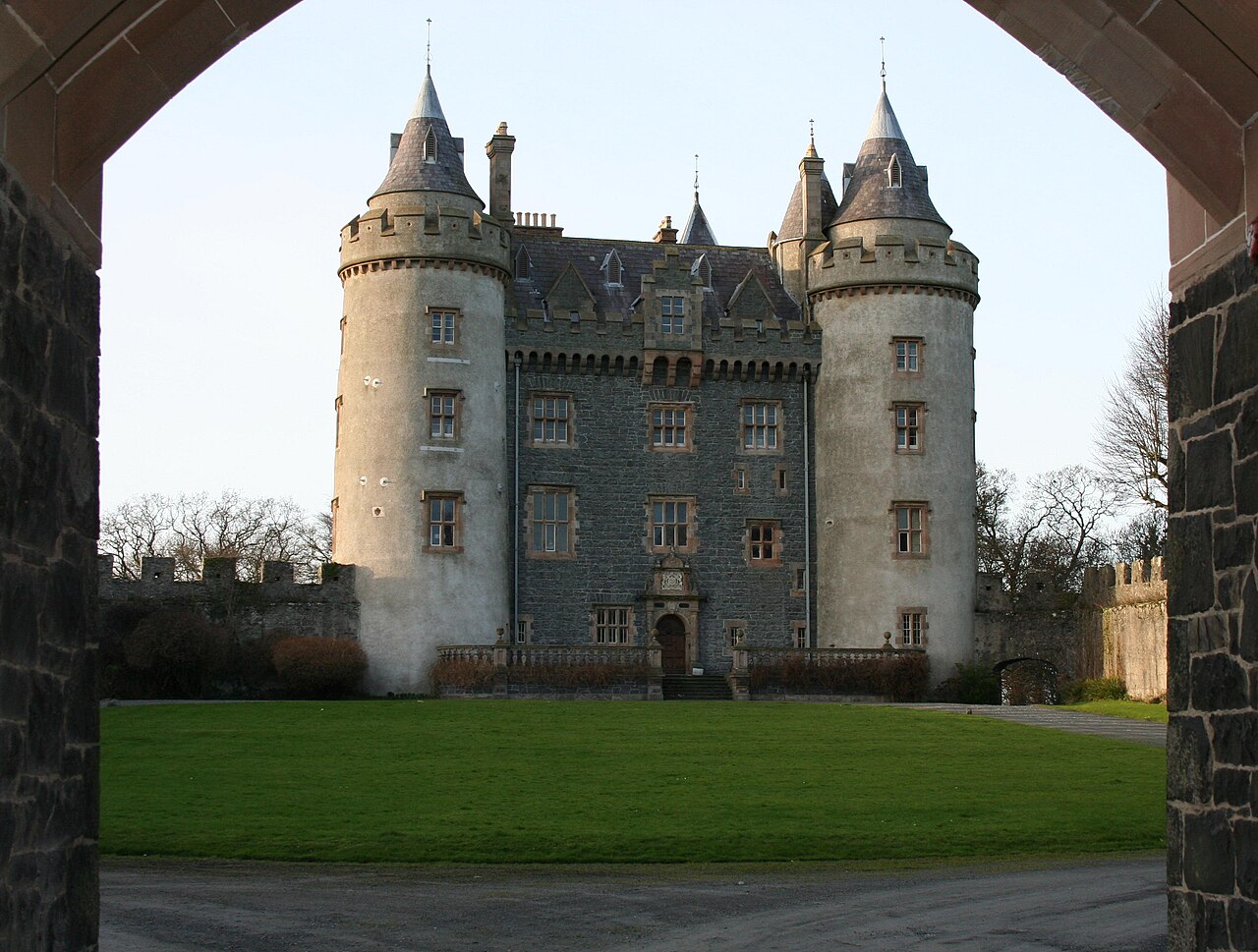
Quoile Castle
Quoile Castle stands as a significant example of a 16th-century Irish tower house located north of the town of Downpatrick in County Down, Northern Ireland. Situated on the banks of the River Quoile, this castle was likely constructed in the late 1500s by Captain Richard West, a local notable figure. Tower houses such as Quoile Castle were typical fortified residences built by Gaelic or Anglo-Irish landowners during a turbulent period marked by frequent clan conflicts and the expansion of English influence in Ireland.
Built primarily from split stone rubble with sandstone dressings, Quoile Castle exemplifies the architectural style and defensive needs of the Renaissance period in Ireland. The castle’s square plan rises three stories high, a common feature among tower houses designed to combine residential comfort with military defense. The robust walls and narrow openings reflect the dual purpose of such structures: to serve as a family home and a stronghold against small-scale attacks.
Architectural features and layout
The castle’s square tower house design is characteristic of the late medieval and Renaissance tower houses found throughout Ireland. The use of stone rubble for the main walls and sandstone for dressings provided both strength and a degree of aesthetic refinement. The castle originally stood with four corner turrets, though the southeast corner has collapsed, revealing a rare cross-section of the internal structure and construction techniques.
Entrance and defensive elements
The main entrance is located in the northeast wall and has been rebuilt in later years. This doorway leads into a vaulted ground-floor chamber, which was likely used for storage or as a defensive space. The chamber is fortified with numerous small gun loops, narrow vertical slits that allowed defenders to fire muskets or other small arms while remaining protected. Behind this vaulted room lies a second similar chamber, indicating a practical division of space for defense and utility.
Access between floors is provided by straight mural staircases embedded within the thick walls, one in the northeast and another in the northwest wall. These stairways are protected by murder-holes at both the top and bottom, defensive features that allowed defenders to attack intruders attempting to ascend. The staircases’ positions within the walls enabled secure movement between floors without exposing occupants to outside threats.
Interior rooms and residential features
The first floor contains two main rooms, one of which includes a fireplace, suggesting it served as a living or gathering space requiring heating. The presence of fireplaces on both the first and second floors indicates an emphasis on residential comfort alongside defense. The second floor is reached by the northwest staircase and also contains a room with a fireplace, reflecting the castle’s use as a family residence.
Historical context and significance
Quoile Castle was constructed during a period of significant political and religious upheaval in Ireland, coinciding with the reign of Queen Elizabeth I. The presence of coins from her reign discovered during archaeological excavations confirms the castle’s active use in the late 16th century. This era was marked by the English crown’s efforts to consolidate control over Ireland, leading to frequent local conflicts and the need for defensible homes among the Gaelic and Anglo-Irish gentry.
Owned and inhabited by the West family into the 18th century, the castle reflects the endurance of the tower house tradition well beyond its initial defensive purpose. By the 19th century, the castle had fallen into disuse and was repurposed as a cowhouse by 1836, illustrating a common fate for many such structures as their military relevance diminished.
Today, Quoile Castle is located within the grounds of the Quoile Countryside Centre, where it stands as a protected monument of regional heritage. Although the interior is not open to the public due to safety concerns, the castle’s visible architectural features provide valuable insight into the design and function of Irish tower houses.
Structural condition and preservation
The castle is currently in a partially preserved state, with the southeast corner collapsed. This collapse exposes the internal layout, including the vaulted chambers and defensive staircases, offering a unique opportunity to study the construction methods of the period. Despite this damage, much of the tower’s exterior walls and defensive features remain intact, allowing visitors to appreciate its original form and purpose.
Efforts to maintain the castle focus on preserving its remaining structure and preventing further deterioration. As a historic tower house, Quoile Castle contributes to understanding the social and military history of late medieval and Renaissance Ireland.
The cultural heritage of quoile castle
Quoile Castle is an important cultural landmark in County Down, representing the architectural and historical legacy of Irish tower houses. These structures were widespread across Ireland from the 15th to the 17th centuries and served as symbols of local power and defense. The castle’s association with the West family and its survival into the modern era highlight the continuity of local history and the evolution of domestic fortifications.
Its location near Downpatrick, a town rich in medieval history and religious significance, further enhances its cultural value. The castle stands as a testament to the complex interactions between Gaelic, Anglo-Irish, and English influences during a formative period in Irish history.
Visitor information
While the interior of Quoile Castle is not accessible, visitors to the Quoile Countryside Centre can view the castle’s exterior and appreciate its historical context. The site offers educational opportunities about the region’s natural and cultural heritage, making it a valuable destination for those interested in Irish history and architecture.
Visitors are encouraged to explore the surrounding countryside and nearby historical sites in Downpatrick, which include medieval churches and other heritage landmarks.
Architectural comparison and legacy
Quoile Castle shares many features with other Irish tower houses, such as strong defensive walls, vaulted chambers, murder-holes, and gun loops. These elements reflect a broader architectural tradition that balanced the need for security with residential comfort. Tower houses like Quoile Castle were typically smaller and less fortified than large castles or fortresses but were highly effective for local defense and control.
The castle’s preservation, despite partial ruin, provides valuable insights into the construction techniques and living conditions of the period. Its enduring presence enriches the architectural heritage of Northern Ireland and offers scholars and visitors alike a tangible connection to the past.
Frequently asked questions (FAQ)
- What is the historical significance of Quoile Castle?
- Quoile Castle is a 16th-century tower house that reflects the defensive and residential architecture of late medieval and Renaissance Ireland, built during a period of local conflicts and English expansion.
- Can visitors enter the interior of Quoile Castle?
- The interior of Quoile Castle is not open to visitors due to safety concerns, but the exterior can be viewed from the grounds of the Quoile Countryside Centre.
- Where is Quoile Castle located and how can I visit it?
- Quoile Castle is located north of Downpatrick in County Down, Northern Ireland, within the Quoile Countryside Centre grounds, accessible via Quay Road.
- What architectural features does Quoile Castle have?
- Quoile Castle features a square tower house design with stone rubble walls, sandstone dressings, vaulted chambers, gun loops, murder-holes, and straight mural staircases.
- When was Quoile Castle built and by whom?
- Quoile Castle was likely built in the late 16th century by Captain Richard West, a local notable associated with the site.
Information
Current owner
Quoile Countryside Centre
Website
Visit websiteAddress
Quay Road, Downpatrick, County Down, Northern Ireland
Sources & official resources
Verify the information above using these authoritative references.
Loading map...
Visitor reviews
No reviews yet. Been here? Write the first review and help other travelers!
Write the first reviewVisited this castle? Share your experience
Your review helps other travelers and adds first-hand knowledge to our encyclopedia.