Dun Ringill
Dun Ringill stands as a remarkable testament to Scotland's ancient and medieval past, located on the Strathaird peninsula of the Isle of Skye. This historic site, overlooking the serene waters of Loch Slapin, originated as an Iron Age broch around the start of the Common Era. Brochs are distinctive dry-stone towers unique to Scotland's Atlantic coast, characterized by their substantial circular walls and complex internal structures. Dun Ringill exemplifies this architectural tradition with its robust stone construction and strategic coastal position.
The site’s initial function was likely as a fortified residence or defensive stronghold, leveraging its natural promontory for protection. Over the centuries, Dun Ringill evolved through multiple phases of occupation and adaptation, reflecting changing social and military needs. It gained particular prominence in the medieval period as the ancestral seat of Clan MacKinnon, a significant Highland clan. Historical records from the 14th century onward document the clan's association with the site, which remained central to their identity and territorial control well into the 16th century and beyond.
Architectural features and layout
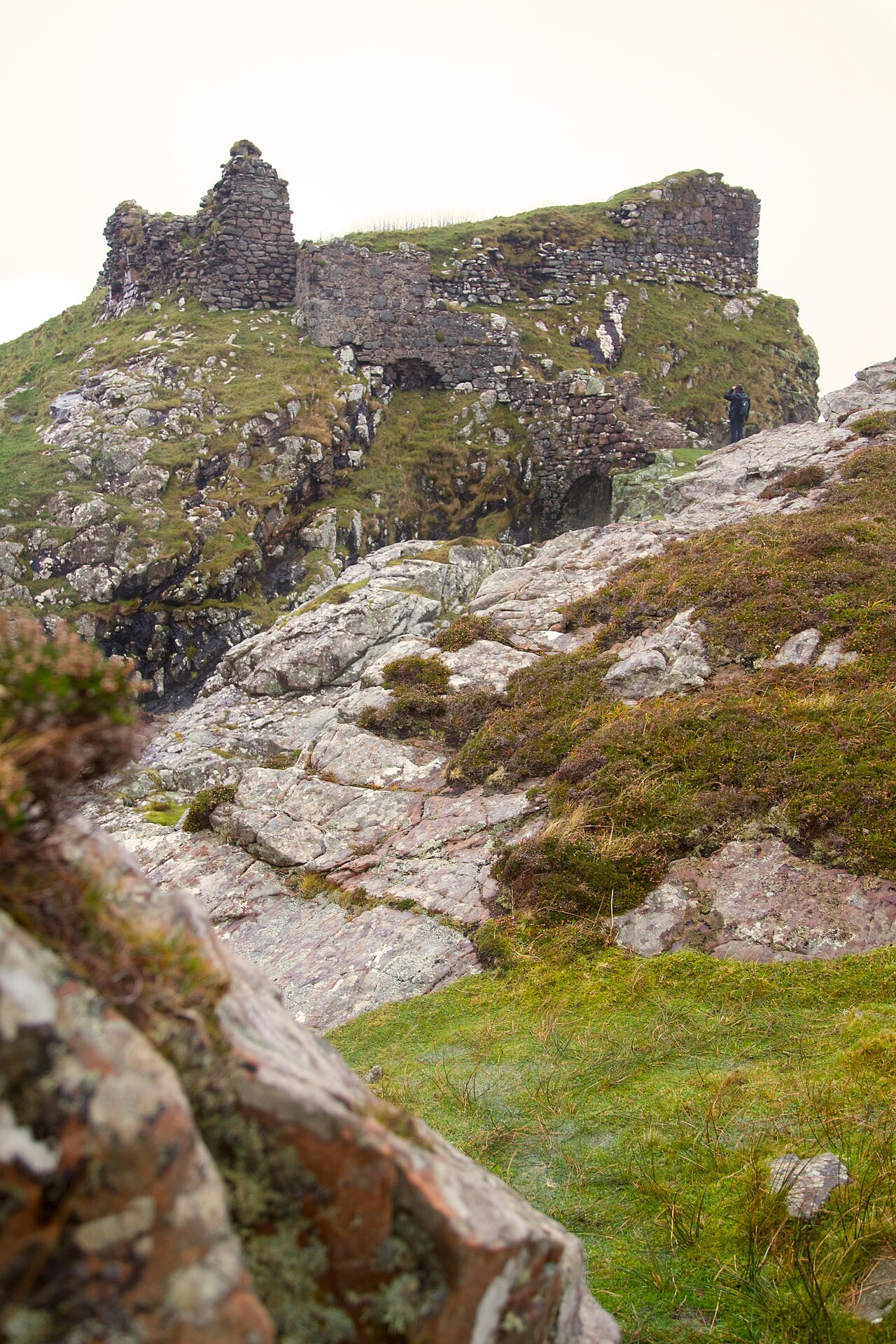
The most prominent surviving structure at Dun Ringill is a square stone tower approximately 16 meters across and standing about 4 meters high. This tower, constructed without mortar using carefully laid stones, retains the characteristic solidity of Iron Age broch architecture. The tower's walls are thick and robust, designed to withstand both natural elements and human attack.
Access to the fort is controlled by a landward-facing entrance nearly 1.8 meters tall, which includes a small guard cell adjacent to the doorway. This cell would have served as a defensive feature, allowing defenders to monitor and control access. Post holes near the entrance indicate the presence of a locking mechanism, underscoring the fort's defensive sophistication.
Within the enclosure, there are two rectangular stone buildings measuring about 4.5 by 2.4 meters. These structures likely served domestic or storage functions during later phases of occupation. A notable architectural element is the corbelled cell built into the wall, featuring a crag-stone vaulted roof formed by overlapping stones inward until they meet. This technique provided a durable and weatherproof chamber within the thick walls.
Surrounding the main tower and buildings, the remains of a low stone wall suggest a combined defensive perimeter and livestock enclosure. Though much of this wall is obscured by vegetation today, its foundations reveal careful planning to protect both inhabitants and animals. The fort's irregular shape follows the natural contours of the coastal promontory, demonstrating an adaptive architectural approach that integrates with the rugged landscape.
Defensive enhancements from the late medieval period include a ditch cutting across the promontory, adding an additional barrier against attackers. Earth and stone ramps on either side of the fort slope down to the sea, providing vital access for boats. This maritime connection was essential for transportation, trade, and resupply before the development of road networks.
Historical significance and clan mackinnon
Dun Ringill's long history reflects its enduring strategic and domestic importance. Initially constructed by Iron Age peoples, the site maintained its relevance through the early medieval and late medieval periods. From at least the 14th century, it served as the seat of Clan MacKinnon, one of the prominent clans in the Scottish Highlands. The clan's historical documents from the 16th century affirm Dun Ringill as a central stronghold and administrative center.
During the medieval period, the clan established a nearby farming settlement to the north of the dun, supporting the community with agricultural resources. This settlement underscores the integration of defensive and domestic functions at Dun Ringill, illustrating a self-sufficient stronghold that balanced warfare readiness with everyday life.
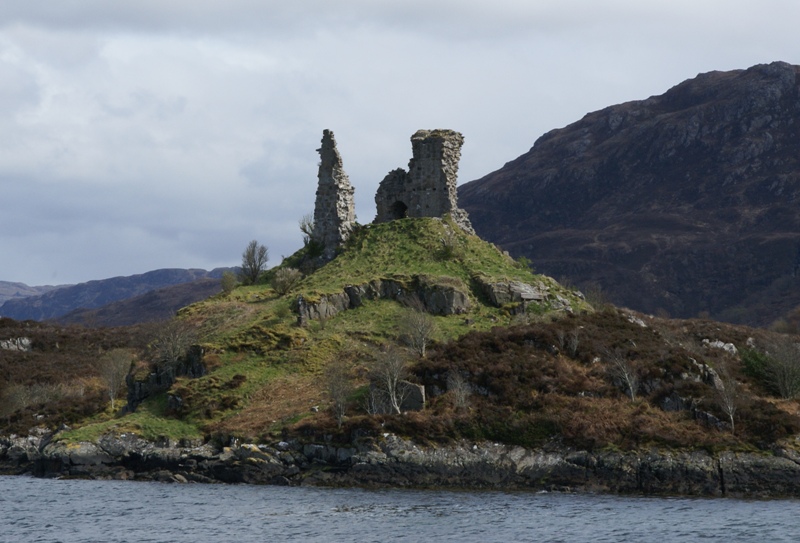
By the 16th century, the MacKinnon family shifted their primary residence to Dunakin (also known as Moll Castle or Dun Acainn), another fortified site on Skye. Despite this relocation, Dun Ringill remained under clan control and was fortified further, reflecting its ongoing military and symbolic significance. The addition of the ditch and rectangular buildings during this late medieval phase enhanced the site's defensibility and utility.
Archaeological investigations and preservation
Modern archaeological surveys at Dun Ringill have revealed a complex stratigraphy of occupation layers, spanning from the original Iron Age broch to medieval and post-medieval modifications. Excavations have uncovered multiple building phases, demonstrating the site's continuous adaptation over nearly two millennia.
The preservation of Dun Ringill is partial, with the main tower and some ancillary structures surviving as ruins. The dry-stone construction technique, typical of brochs, has endured well against the coastal climate, though vegetation and erosion have obscured some features. The site is accessible to visitors, offering a tangible connection to Scotland's ancient past and the legacy of Clan MacKinnon.
Geographical context and strategic location
Situated on a rocky promontory overlooking Loch Slapin, Dun Ringill's location was strategically chosen for defense and control of maritime routes. The natural cliffs and slopes provided formidable natural defenses, while the proximity to the sea facilitated transport and communication. This coastal position allowed the inhabitants to monitor and control access to the peninsula, making it a critical stronghold in the region.
The surrounding landscape of the Isle of Skye, with its rugged terrain and scattered settlements, further emphasizes Dun Ringill's role as a hub of local power and community life. The site’s enduring occupation highlights the importance of combining natural topography with human engineering to create defensible and sustainable living spaces.
Frequently asked questions (FAQ)
- How do I get to Dun Ringill?
- Dun Ringill is located on the Isle of Skye in Scotland, easily accessible by car or public transport. The nearest major town is Portree, from where you can drive or take a bus to the castle site.
- What is the historical significance of Dun Ringill?
- Dun Ringill is a notable example of a brooch or fort, dating back to the Iron Age. It is believed to have served as a defensive structure and has significant archaeological value, providing insights into the ancient history of Scotland.
- When was Dun Ringill built?
- Dun Ringill is estimated to have been constructed around 1000 BC, making it one of the oldest structures on the Isle of Skye. Its age and architectural features contribute to its historical importance in understanding early Scottish life.
- Can I visit Dun Ringill year-round?
- Yes, Dun Ringill is open to visitors year-round, although access may be affected by weather conditions, especially during winter months. It’s advisable to check local conditions before planning your visit.
- Why is Dun Ringill popular among tourists?
- Dun Ringill attracts visitors due to its stunning coastal views and rich history. The unique architecture and the opportunity to explore ancient ruins make it a favorite spot for history enthusiasts and photographers alike.
- Is it possible to access the castle site with mobility issues?
- The site of Dun Ringill may present challenges for visitors with mobility issues due to rugged terrain and limited pathways. It’s recommended to check with local visitor services for any available assistance or alternative viewing options.
- What are the best times to visit Dun Ringill?
- The best times to visit Dun Ringill are during the late spring and early autumn months when the weather is generally milder and more stable. This period allows for comfortable exploration and fewer crowds compared to the peak summer months.
- Are there any nearby attractions to Dun Ringill?
- Yes, there are several nearby attractions, including the scenic landscapes of the Isle of Skye and other historical sites like the Fairy Pools and Dunvegan Castle. These sites offer additional opportunities for exploration and enjoyment during your visit.
- What are the ticket prices for visiting Dun Ringill?
- Dun Ringill is free to visit, allowing everyone the chance to explore its historical significance without any entry fees. However, donations to local preservation efforts are appreciated to help maintain the site.
- What are the opening hours for Dun Ringill?
- Dun Ringill does not have specific opening hours, as it is an open site. Visitors can explore the area at their convenience, but it is advisable to visit during daylight hours for safety and the best experience.
Information
Website
Visit websiteSources & official resources
Verify the information above using these authoritative references.
Loading map...
Visitor reviews
No reviews yet. Been here? Write the first review and help other travelers!
Write the first reviewVisited this castle? Share your experience
Your review helps other travelers and adds first-hand knowledge to our encyclopedia.