Caisteal Maol
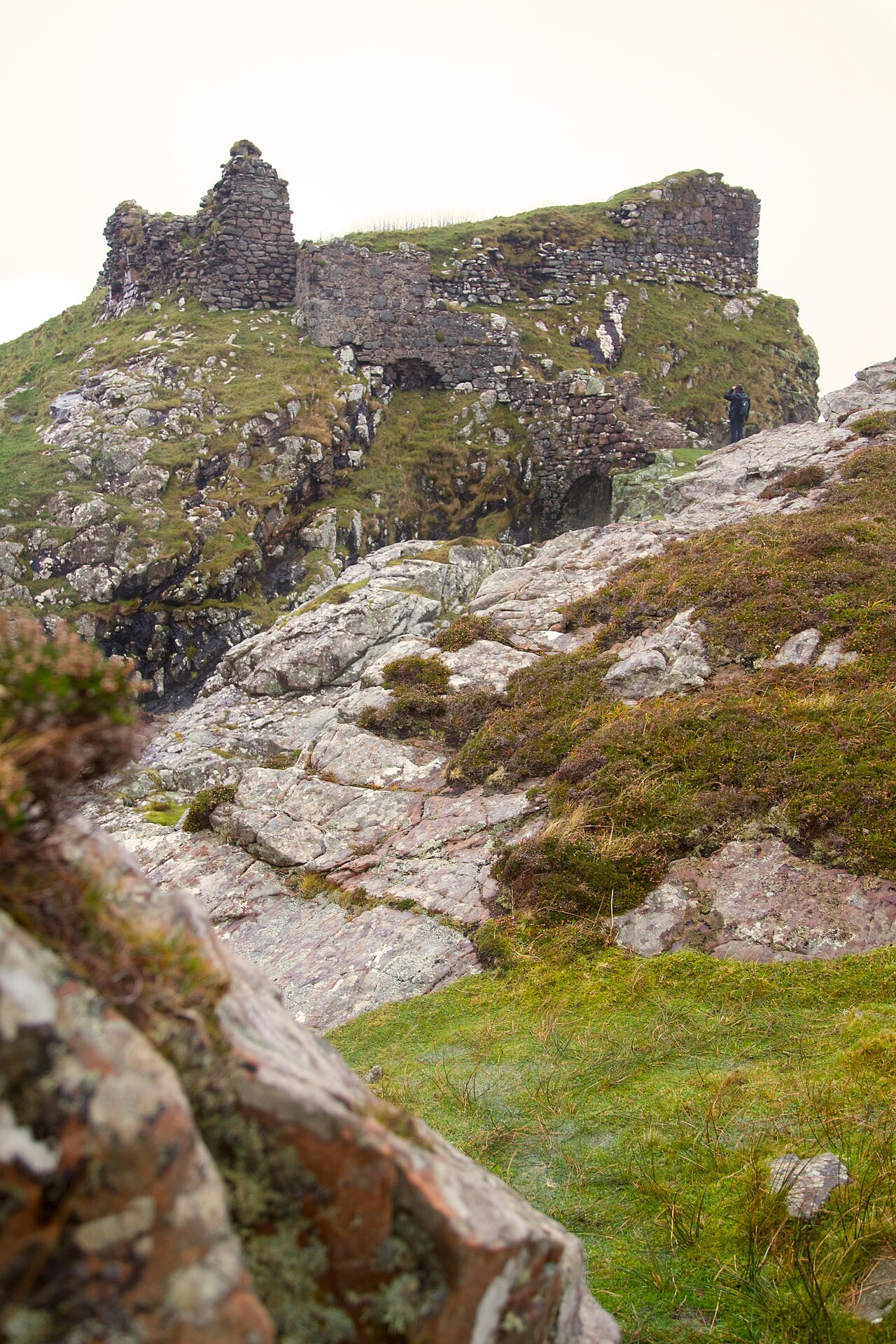
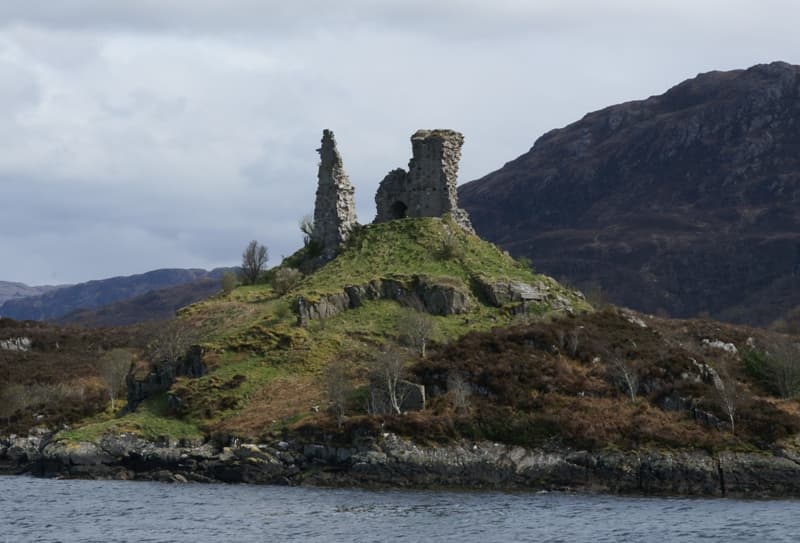
Caisteal Maol, known in Scots Gaelic as the "bare castle," is a striking example of a late medieval hill castle perched on a rugged promontory overlooking Kyleakin Harbor on the Isle of Skye, Scotland. Though now in a state of ruin, the castle's remains evoke a rich tapestry of history intertwined with Norse influence and Scottish clan heritage, commanding a strategic maritime passage between Skye and the mainland.
The castle's origins are steeped in legend and history. While the current ruins date primarily from the late 15th to early 16th centuries, the site is believed to have hosted a fortification as early as the 9th century, possibly established by Vikings. This early connection is underscored by the castle's alternate historical names, Dunakin and Dun-Haakon, reflecting its ties to Norse rulers and maritime power in the region.
Historical background and clan legacy
The heritage of Caisteal Maol is closely linked to the MacKinnon clan, who used the castle as their stronghold to control the vital strait of Kyleakin. According to clan tradition, the castle was originally known as Dunakin Castle and came under MacKinnon control through the marriage of Findanus, the fourth chief of the clan and a descendant of Alpín mac Echdach, to a Norse princess nicknamed "Saucy Mary" in the 10th century. This alliance symbolized the blending of Norse and Gaelic cultures in the region.
Legend holds that the princess and her family levied tolls on passing ships by stretching a heavy chain across the strait, a practice that underscored the castle's strategic importance in controlling maritime traffic. This toll system capitalized on the preference of ship captains to navigate the safer Kyleakin strait rather than the dangerous waters of The Minch, the sea between Skye and the Outer Hebrides.
Norse influence and medieval significance
The castle's Norse connections extended well into the Middle Ages. It is believed that King Haakon IV of Norway assembled his naval forces at the site before the pivotal Battle of Largs in 1263, a conflict that marked the decline of Norse dominance over the Scottish isles. The castle's strategic location made it a key maritime fortress during this period of shifting power dynamics.
In the early 16th century, specifically in 1513, Caisteal Maol served as a gathering place for clan chiefs who pledged allegiance to Donald MacDonald, Lord of the Isles. This event highlights the castle's continued political and military significance in the turbulent history of the Western Highlands and Islands.
Architectural features and structural details
The surviving structure of Caisteal Maol is characteristic of a rectangular keep typical of Scottish castles from the late medieval period. The castle originally rose to between three and four stories, with walls up to 3.4 meters thick constructed from local stone, designed to withstand both attack and harsh coastal weather.
The castle's layout included a basement or cellar level, now inaccessible and filled with rubble, likely used for kitchens, storerooms, and other practical functions. The main floor, accessible to visitors today, functioned historically as the great hall or public dining area where clan gatherings and feasts would have taken place.
Upper floors housed private chambers for the clan chief and family, accessible by narrow stone staircases. Defensive features such as battlements and narrow windows would have provided protection while allowing surveillance of the surrounding sea and land approaches.
Damage and preservation efforts
Over the centuries, Caisteal Maol has suffered extensive damage from natural forces. Severe storms in 1949 and 1989 caused significant collapses, and a lightning strike in 2018 further damaged the fragile ruins. Following these events, stabilization work was undertaken to prevent further deterioration and to secure the site for visitors.
Despite its dilapidated state, the castle remains a prominent landmark visible from both the mainland and the Isle of Skye. The ruins continue to weather the elements, standing as a testament to the enduring legacy of the clans and Norse rulers who once controlled this vital maritime gateway.
Access and visitor information
Caisteal Maol is accessible by a footpath from Kyleakin harbour, though visitors should be aware that the coastal location means the path can be affected by tides. The castle's remote and exposed position offers dramatic views of the surrounding strait and mainland, making it a popular site for those interested in Scottish history and coastal landscapes.
While the site is largely a ruin and lacks extensive visitor facilities, it offers a unique glimpse into medieval Scottish and Norse history. The absence of formal archaeological excavations means much of the castle's secrets remain buried, inviting further exploration and study.
Cultural significance and legacy
Caisteal Maol holds a special place in Scottish cultural heritage as a symbol of the complex interplay between Norse and Gaelic influences in the Western Isles. The castle's association with legendary figures such as "Saucy Mary" and its role in regional power struggles reflect the rich narrative of clan alliances, maritime control, and medieval warfare.
Today, the ruins attract historians, tourists, and locals alike, serving as a poignant reminder of the Isle of Skye's strategic importance and the enduring spirit of its people. The castle's silhouette against the rugged coastline continues to inspire stories and preserve the memory of a bygone era.
Frequently asked questions (FAQ)
- How do I get to Caisteal Maol castle on the Isle of Skye?
- Caisteal Maol is accessible via a footpath from Kyleakin harbour. Visitors should be aware that the path can be affected by tides due to the castle's coastal location, so checking tide times before visiting is advisable.
- What is the historical significance of Caisteal Maol?
- Caisteal Maol was a strategic stronghold for the MacKinnon clan, controlling the vital maritime passage of the Kyleakin strait. It also has strong Norse connections and was linked to King Haakon IV of Norway and the Battle of Largs in 1263.
- When was Caisteal Maol built?
- The current ruins date primarily from the late 15th century, though the site may have had earlier Viking fortifications dating back to the 9th century.
- Can I visit the interior of Caisteal Maol?
- Visitors can access the main floor of the ruins, which historically served as the great hall. However, the basement is filled with rubble and upper floors are not safe to explore due to the castle's ruined condition.
- Why is Caisteal Maol also called the bare castle?
- The name 'Caisteal Maol' translates from Scots Gaelic as 'bare castle,' reflecting its exposed and weather-beaten ruins perched on a windswept headland overlooking the sea.
Photo gallery

Information
Website
Visit websiteSources & official resources
Verify the information above using these authoritative references.
Loading map...
Visitor reviews
No reviews yet. Been here? Write the first review and help other travelers!
Write the first reviewVisited this castle? Share your experience
Your review helps other travelers and adds first-hand knowledge to our encyclopedia.