Dun Aengus
Dún Aengus (also spelled Dún Aonghasa) is a remarkable prehistoric hill fort located on the largest of the Aran Islands, Inis Mór, off the coast of County Galway, Ireland. This ancient site is perched dramatically on the edge of a 100-metre-high cliff, overlooking the Atlantic Ocean, offering commanding views that once served defensive purposes. As one of the best-preserved and most iconic prehistoric forts in Ireland, it attracts visitors interested in archaeology, history, and stunning landscapes.
Historical context and dating
The origins of Dún Aengus trace back to the Bronze Age, with construction phases spanning from approximately the 2nd century BC through the early medieval period. Archaeological evidence suggests that the fort was built and expanded over several centuries, reflecting the evolving defensive needs and social organization of the island's inhabitants. The fort's name derives from the legendary figure Aengus, a god of love and youth in Irish mythology, although the site's actual builders predate these myths.
Architectural features and layout
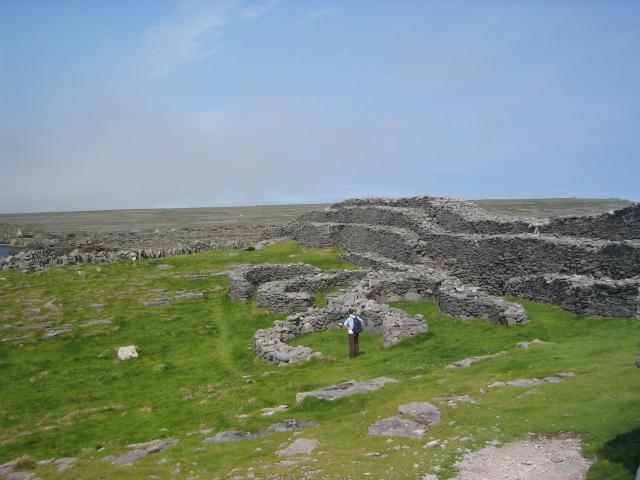
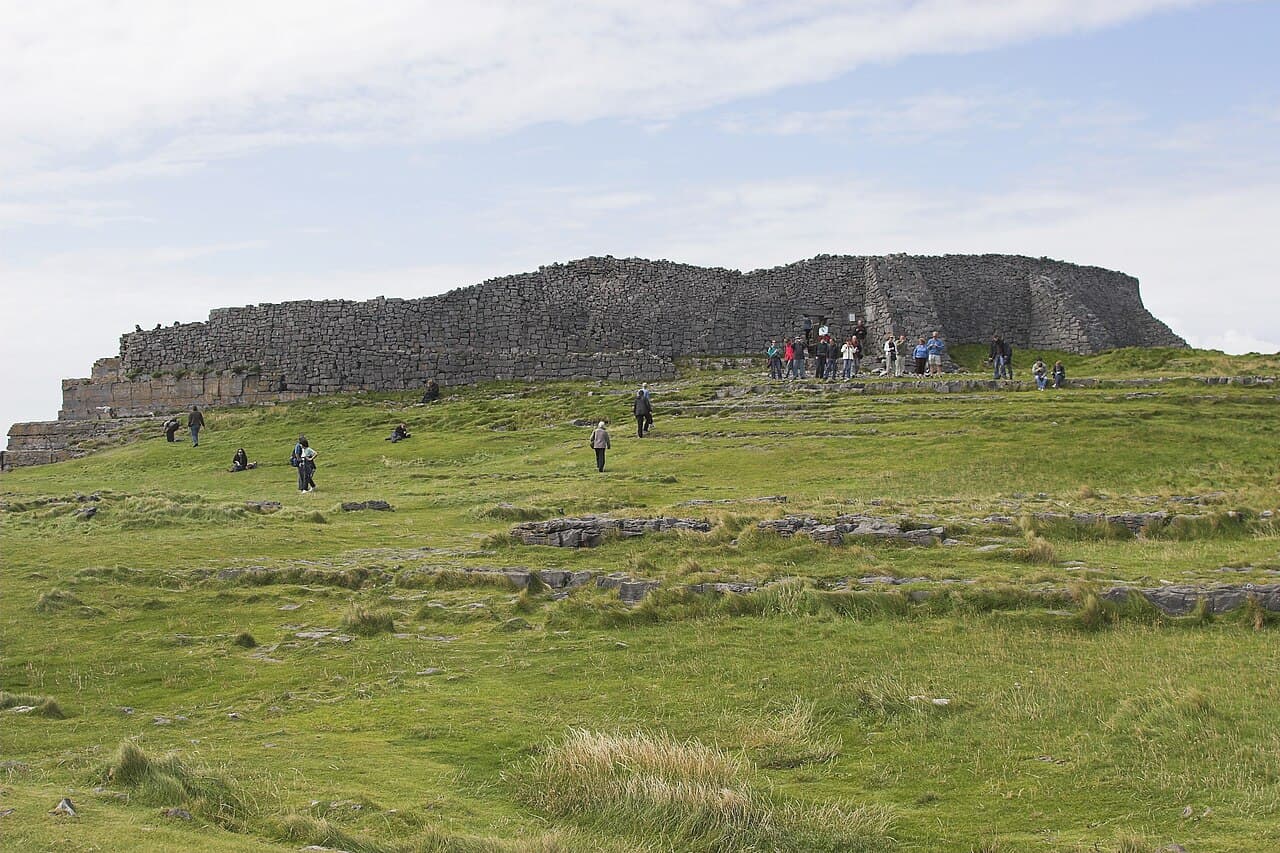
Dún Aengus is a classic example of a prehistoric ringfort or hill fort, characterized by its concentric stone walls arranged in a roughly oval shape. The fort's outer wall, constructed from massive limestone blocks, stands up to 6 meters high in places and encloses an area approximately 100 meters long and 50 meters wide. The walls are built without mortar, relying on the careful placement and weight of the stones for stability.
The fort comprises three main walls, each forming a series of defensive rings. The innermost wall surrounds a central enclosure that likely served as a protected living or ceremonial space. The middle and outer walls provided additional layers of defense, with narrow gaps and gateways designed to control access and slow attackers.
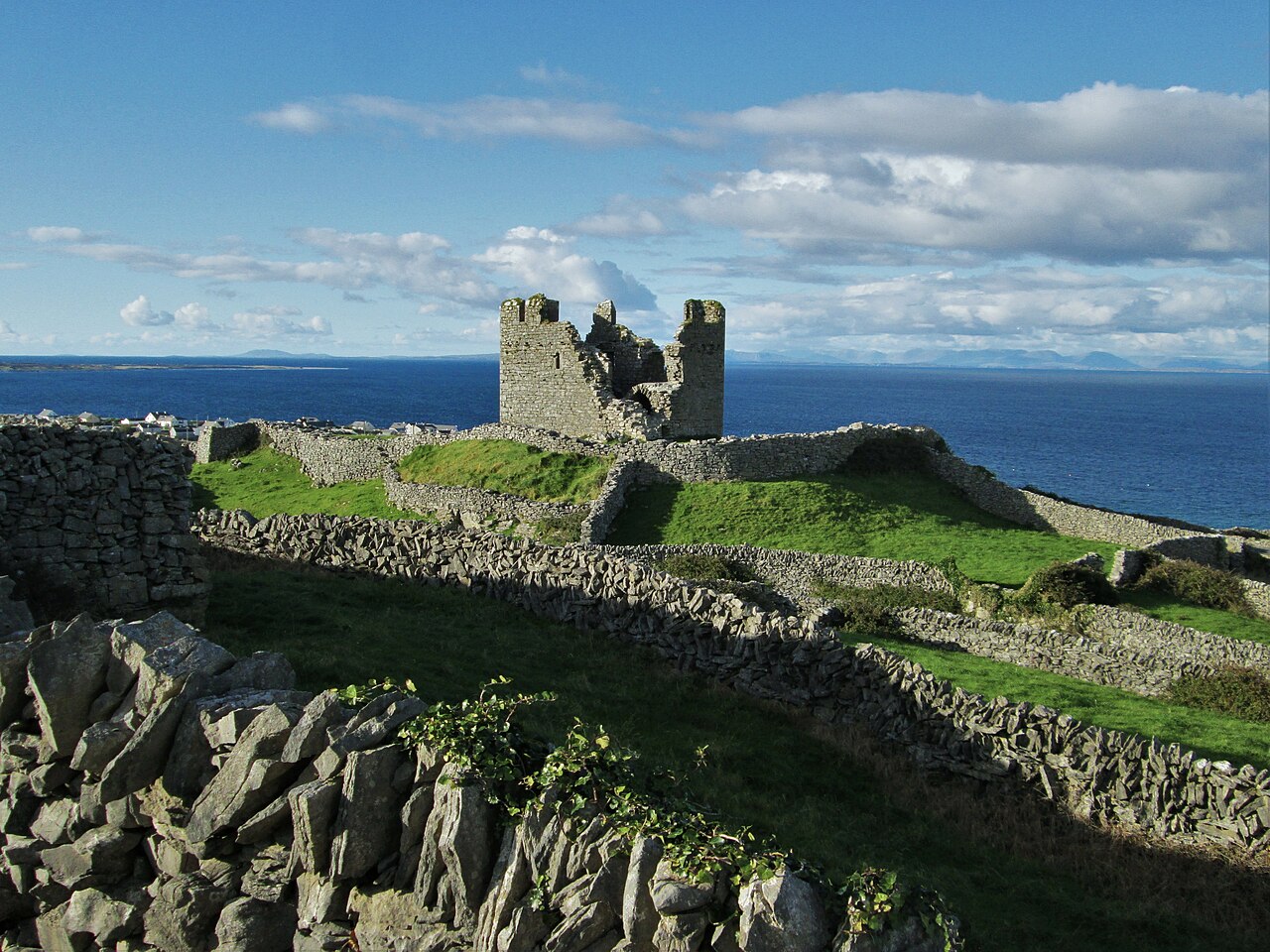
One of the most striking architectural elements is the fort's position on a steep cliff edge, with sheer drops on the seaward side providing a natural defense. The landward side is protected by the stone walls and a series of terraces and ditches, enhancing the fort's defensibility.
Construction techniques
The builders of Dún Aengus employed dry-stone walling techniques typical of prehistoric Atlantic Europe. The careful stacking of large limestone blocks without mortar required skilled craftsmanship to ensure the walls' longevity and resistance to harsh coastal weather. The fort's walls exhibit a slight inward batter, increasing stability and preventing collapse.
Archaeological significance and excavations
Dún Aengus is one of the most important archaeological sites in Ireland, providing valuable insights into prehistoric life on the Aran Islands. Excavations have uncovered evidence of habitation, including pottery fragments, tools, and animal bones, indicating the fort was not only a defensive structure but also a settlement.
Archaeologists have studied the site extensively to understand the social and economic organization of its builders. The fort's strategic location suggests it played a role in controlling maritime routes and local resources. Its preservation allows researchers to examine prehistoric construction methods and settlement patterns in western Ireland.
Tourism and preservation
Today, Dún Aengus is a popular tourist destination, drawing visitors from around the world to experience its dramatic setting and ancient history. The site is managed to balance public access with conservation efforts, ensuring the fragile stone walls and surrounding landscape are protected.
The fort is accessible via walking paths from the village of Kilronan on Inis Mór. Signage and guided tours help visitors understand the site's historical context and architectural features. The cliff-top location offers breathtaking views, making it a highlight of any visit to the Aran Islands.
Visitor information
Visitors should wear sturdy footwear due to uneven terrain and be cautious near cliff edges. The best time to visit is during the warmer months when weather conditions are more favorable. Facilities on Inis Mór support tourism, including accommodations and transport links to the mainland.
Frequently asked questions (FAQ)
- How do I get to Dun Aengus?
- Dun Aengus is located on Inis Meain, one of the Aran Islands in Ireland. You can reach it by taking a ferry from Galway or Doolin to Inis Meain, followed by a short walk or bike ride to the castle. Make sure to check the ferry schedules in advance, as they can vary depending on the season.
- What is the historical significance of Dun Aengus?
- Dun Aengus is a prehistoric fort believed to have been constructed around 1000 BC. It is one of the most important archaeological sites in Ireland, showcasing the ancient engineering skills of the Celts and providing insight into early Irish life. The fort's impressive stone walls and stunning cliffside location make it a symbol of Ireland's rich cultural heritage.
- When was Dun Aengus built?
- Dun Aengus dates back to the Bronze Age, with its construction likely occurring around 1100 BC. It has been a site of habitation and fortification for thousands of years, making it a significant landmark in Irish history. The fort has evolved over time, reflecting the changing needs and lifestyles of its inhabitants.
- Is it possible to explore the interior of Dun Aengus?
- While visitors can walk around the fort and enjoy the breathtaking views from its cliffs, the interior of Dun Aengus is not fully accessible due to its ancient structure. However, guided tours often provide insights into the fort’s history and architecture, allowing you to appreciate its significance from various vantage points. Remember to wear sturdy shoes for the rocky terrain.
- What are the opening hours for Dun Aengus?
- Dun Aengus is generally open year-round, with specific hours that can vary seasonally. Typically, the fort opens at 9 AM and closes at sunset, allowing visitors ample time to explore during daylight hours. It's advisable to check local resources for the most current opening times before your visit.
- Can I bring my dog to Dun Aengus?
- Unfortunately, pets are not allowed at Dun Aengus to preserve the site and ensure the safety of all visitors. However, service animals are permitted. If you're traveling with a pet, consider exploring other areas of the Aran Islands that may be more pet-friendly.
- What is the best time to visit Dun Aengus?
- The best time to visit Dun Aengus is during the late spring and early autumn months, from May to September, when the weather is typically milder. During this period, you can enjoy clearer skies and vibrant landscapes. However, be prepared for occasional rain, as Ireland's weather can be unpredictable.
- Are there any nearby attractions to visit after Dun Aengus?
- Yes, after visiting Dun Aengus, you can explore other nearby attractions such as the stunning cliffs of Inis Meain and the ancient remains of other forts like Dun Eochla. The island is also home to beautiful walking trails and local artisan shops, providing a glimpse into traditional Irish culture. Don’t miss the opportunity to sample local cuisine at one of the island’s charming restaurants.
- What are the ticket prices for Dun Aengus?
- Entry to Dun Aengus typically costs around €6 for adults, with reduced rates for students and seniors. Children under a certain age may enter for free, so be sure to check the specific pricing details when planning your visit. Tickets can usually be purchased on-site, but it's a good idea to bring cash as card facilities may be limited.
Photo gallery

Information
Loading map...
Visitor reviews
No reviews yet. Been here? Write the first review and help other travelers!
Write the first reviewVisited this castle? Share your experience
Your review helps other travelers and adds first-hand knowledge to our encyclopedia.